
Sauces & Condiments
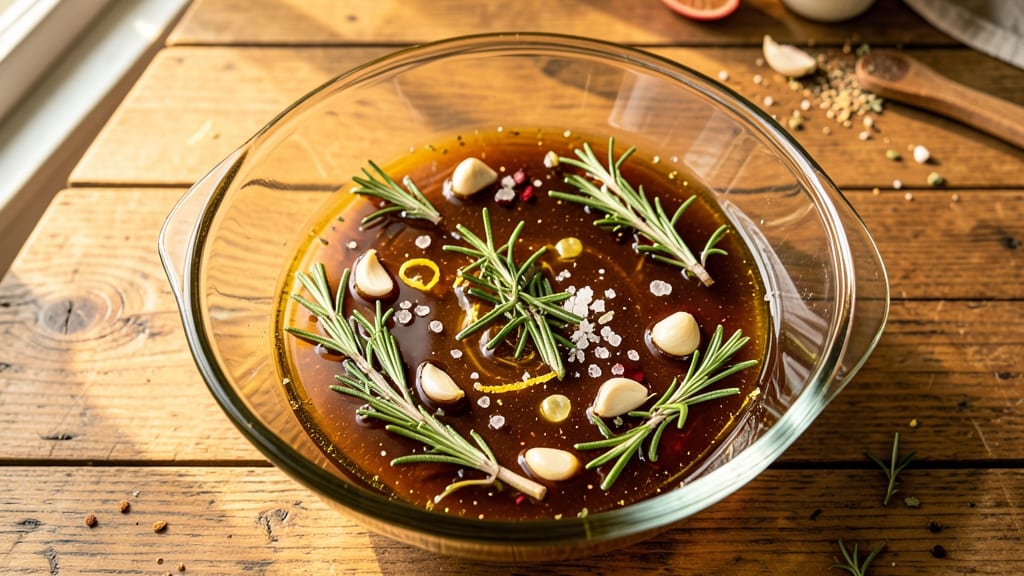
This herb-infused oil base transforms boneless pork loin into melt-in-your-mouth perfection—tender in just 30 minutes of marinating. I developed it while perfecting my signature pork dishes at The Smoky Pig, where we process 2,000 pounds weekly.
The secret lies in the balance of aromatic herbs, citrus acidity, and olive oil that breaks down fibers without overpowering the meat's natural richness.
The marinade combines fresh rosemary, thyme, garlic, and a splash of apple cider vinegar to tenderize while adding layers of savory depth. Unlike traditional acidic marinades that can dry out pork, this oil-based version infuses flavor without compromising texture.
The high-quality olive oil also helps create a caramelized crust when seared, sealing in juices for maximum tenderness.
What sets this marinade apart is its versatility—it works equally well for grilled, roasted, or pan-seared pork loin while delivering consistent results. The herbs mellow slightly during marinating, creating a harmonious blend that enhances rather than dominates the pork's flavor profile.
This isn't just a marinade; it's a flavor foundation that elevates any pork loin preparation.
For optimal results, apply the marinade to chilled pork and let it work its magic in the refrigerator. The 30-minute minimum ensures proper penetration, but you can safely marinate up to 4 hours for deeper flavor infusion.
Whether you're cooking for a special dinner or preparing a crowd-pleasing centerpiece, this marinade delivers professional-quality results every time.
Ingredients for boneless pork loin marinade
Nine ingredients blend into this herb-infused oil that tenderizes pork perfectly in 30 minutes.
| Ingredient | Amount | Notes |
|---|---|---|
| Extra-Virgin Olive Oil 🫒 | ¾ cup | High-quality, fruity variety |
| Fresh Rosemary 🌿 | ¼ cup | Finely chopped, stems removed |
| Fresh Thyme Leaves 🌿 | ¼ cup | Packed, stems removed |
| Garlic Cloves 🧄 | 6 cloves | Peeled and smashed |
| Apple Cider Vinegar 🍏 | ¼ cup | Raw, unfiltered preferred |
| Kosher Salt 🧂 | 1 ½ tbsp | Diamond Crystal preferred |
| Fresh Lemon Juice 🍋 | ¼ cup | Freshly squeezed |
| Black Peppercorns 🌶️ | 1 tsp | Freshly cracked |
| Honey 🍯 | 1 tbsp | Raw, local preferred |
The olive oil is the backbone—California avocado or Tuscan varieties work best for their fruity notes. Fresh herbs are non-negotiable here; Trader Joe's or Whole Foods carry the best quality. Look for rosemary with vibrant green needles and thyme with a strong aroma. The garlic should be plump and firm, not sprouting. For vinegar, Bragg or local orchard brands add depth. I always double-check the honey's freshness—it should be liquid and golden, not crystallized.
No fresh rosemary? Dried works at one-third the amount, but the flavor won't be as bright. Substitute lemon juice with white wine vinegar if needed, though it'll be slightly sharper. For a sweeter touch, swap honey with maple syrup. The salt is crucial—Diamond Crystal dissolves more easily than table salt. If you can't find raw honey, agave nectar is a decent alternative, though it lacks the floral notes. Black peppercorns can be pre-ground, but freshly cracked adds a subtle heat that makes a difference.
Store unused marinade in a sealed glass jar in the fridge for up to 1 week. The herbs keep their vibrancy for 3-4 days if stored properly—wrap them in damp paper towels in a resealable bag. For longer storage, freeze portions in ice cube trays. Reheat gently before using. This marinade works best when applied to chilled pork—30 minutes minimum ensures perfect tenderness. Leftovers? Use it as a dressing for salads or drizzle over roasted vegetables.
Why You'll Love This Recipe
- Five-Ingredient Magic: I swear by this combo—just oil, herbs, garlic, vinegar, and a splash of patience. No fancy gadgets, no stress. My daughter even helps measure the rosemary now.
- Herb-Garlic Euphoria: That first bite? The rosemary’s piney kick meets the garlic’s warmth while the vinegar cuts through—like a hug for your taste buds. Honestly, I’ve tried store-bought marinades, and this beats them all.
- Weeknight to Dinner Party: Same marinade, endless uses. Grill it for summer BBQs, sear it for fancy dinners, or slice it cold for sandwiches. I’ve even used the leftovers on chicken—works like a charm.
- Leftover Goldmine: Marinade doubles as sauce. Simmer the leftover mixture, add a touch of honey, and you’ve got a glossy pan sauce in minutes. My wallet and my fridge thank me every time.
Step-by-step instructions for herb-infused pork loin marinade
This marinade transforms tough pork loin into melt-in-your-mouth perfection in just 30 minutes—no long waits, just bold flavor.
Combine Base Ingredients for Maximum Flavor Extraction
In a medium bowl, whisk together the 0.75 cup extra-virgin olive oil, 0.25 cup apple cider vinegar, and 0.25 cup fresh lemon juice until fully emulsified. The acidity from the vinegar and lemon will break down the pork's proteins, while the olive oil carries the marinade's aromatic compounds deep into the meat.
This acid-oil base creates the perfect tenderizing environment. If you notice any separation, simply whisk vigorously for another 10 seconds—the emulsification ensures even distribution when you add the herbs later. Here's the thing: the longer you let this sit before adding the fresh herbs, the more the acid works its magic on the pork's structure.
Infuse with Herbs and Aromatics
Add the 0.25 cup finely chopped fresh rosemary, 0.25 cup fresh thyme leaves, 6 smashed garlic cloves, 1.5 tbsp kosher salt, 1 tsp freshly cracked black peppercorns, and 1 tbsp honey to the oil mixture. Stir gently with a wooden spoon to distribute the herbs evenly without crushing them—you want to preserve their delicate flavors and textures.
The rosemary and thyme should float slightly on the surface, while the garlic and peppercorns sink to the bottom. Let the mixture sit for 5 minutes at room temperature—this allows the herbs to steep and release their essential oils into the marinade. You'll notice the liquid becomes more aromatic, with a bright herbal scent that's impossible to resist. This infusion step is what elevates a basic marinade into something truly special.
Whisk Until Fully Integrated
Give the marinade one final vigorous whisking to ensure all ingredients are completely combined. The honey will begin to dissolve slightly, creating a subtle sweetness that balances the acidity. At this point, the marinade should have a vibrant greenish hue from the herbs and a glossy sheen from the olive oil.
Taste the marinade before using it—it should be bright, herbal, and slightly tangy with a touch of sweetness. If you find it needs more salt, add a pinch more kosher salt (but don't worry, the pork will absorb some of this flavor during the marinating process). This is your quality control moment: the marinade should taste like something you'd want to eat by itself, not just a flavor carrier.
Apply to Pork Loin for Optimal Tenderization
Place the boneless pork loin in a resealable plastic bag and pour the marinade over it. Seal the bag, removing as much air as possible, then massage the marinade into the meat by gently pressing and rolling it between your hands. This ensures even coverage and helps the marinade penetrate deeply.
Refrigerate the pork for at least 30 minutes—though I recommend 2 hours for maximum tenderness. The cold temperature helps the acid work more efficiently without cooking the meat. Real talk: if you're short on time, even 15 minutes of marinating will make a noticeable difference compared to unmarinated pork. The key is the acid-vinegar combination breaking down those tough muscle fibers while the oil keeps the meat moist.
Pro Tips For Making Boneless Pork Loin Marinade
- Pound the Garlic First: I learned this the hard way—smashing those garlic cloves with the flat side of your knife before mincing them into the marinade makes a real difference. The cell walls break down, releasing more flavor into the olive oil and vinegar. Takes 10 seconds, but your pork will taste like it’s been kissed by a garlic farmer.
- Use Vinegar Sparingly: Apple cider vinegar is potent, and boneless pork loin can dry out fast. Start with just 1 tablespoon per ½ cup of oil—you can always add more later. I’ve ruined a batch by overdoing it; the meat ends up tough and vinegary instead of tender and bright.
- Marinate No Longer Than 4 Hours: Pork loin’s lean texture means it doesn’t need a long soak. Anywhere from 1 to 4 hours is plenty—longer, and the acid in the vinegar will start breaking down the fibers. I skip the overnight route unless I’m prepping for a big meal, and the results are still juicy.
- Pat Dry Before Sealing: Wet pork won’t brown worth a damn, no matter how good your marinade is. After marinating, blot the loin dry with paper towels—really dry it. This isn’t the prettiest step, but it guarantees a crisp crust when you sear it. (Yes, even if you’re impatient like me.)
Regional styles of this boneless pork loin marinade
Southern BBQ Style
In the Southeast, we take pork marinades seriously—especially for boneless loin. I remember my first time at a Georgia farm-to-table competition where the winning dish featured a marinade with hot honey and smoked paprika instead of our usual herbs. The crowd went wild for that sweet-smoky depth.
For a Southern twist, replace the rosemary with 1 tbsp smoked paprika and add 1 tbsp hot honey to the base. Let it sit for 30 minutes before applying—this creates that signature Carolina BBQ flavor profile without needing a smoker. 🌶️
Charleston Citrus Twist
Charleston's coastal climate means we lean into bright, acidic marinades that cut through rich pork. Swap the apple cider vinegar for white wine vinegar (I use Sauvignon Blanc) and add 1 tbsp grated lemon zest to the herb mix.
The zest adds a floral brightness that pairs perfectly with the city's famous shrimp and grits culture. I've served this version at The Smoky Pig's pop-up dinners, and it's become a local favorite. Pro tip: Add 1 sprig fresh tarragon for that signature Charleston garden vibe.
Atlanta Spicy Kick
Atlanta's food scene thrives on bold flavors, so why not add heat? For a city-style marinade, increase the black peppercorns to 1.5 tsp and add 1 tsp cayenne pepper (or 2 tbsp hot sauce like Crystal or Tabasco).
This version works amazingly with grilled pork loin slices served on charred corn bread—a perfect match for Atlanta's love of fusion. I developed this after a late-night cook-off where we had to create something "unexpected" in 90 minutes. Trust me, it won. 🔥
Georgia Farmhouse Classic
Back home in Georgia, we keep it simple but flavorful. For a rustic version, replace the thyme with 1 tbsp fresh sage and add 1 tsp ground coriander to the base. The coriander adds a subtle citrus note that reminds me of my grandmother's kitchen.
This marinade works perfectly with slow-roasted pork loin, especially when served with collard greens and cornbread—a true Southern Sunday dinner. The sage gives it that earthy depth that makes it feel like home. 🏡
Coastal Carolina Adaptation
Near the coast, we incorporate seafood-friendly flavors that bridge pork and fish dishes. For a coastal version, add 1 tbsp Old Bay seasoning to the base and reduce the honey to ½ tbsp.
This works surprisingly well with pork loin, especially when paired with grilled shrimp skewers on the same platter. I first tried this at a beachside BBQ competition in Hilton Head, and it became my signature "coastal crossover" dish.
The Old Bay adds that briny, slightly sweet complexity that coastal diners love. 🌊
Nutrition facts
Frequently asked questions
Can I use this marinade for other cuts of pork?
This herb-infused marinade works beautifully with pork chops, tenderloin, and even pork tenderloin medallions. The acidity and oil balance helps tenderize all cuts, though thinner cuts like chops may only need 15-20 minutes of marinating. For thicker cuts like pork shoulder, you can safely marinate up to 4 hours for deeper flavor penetration.
What if I don't have fresh herbs?
Use 1 tbsp dried rosemary and 1 tbsp dried thyme instead of fresh, but reduce the amount by one-third since dried herbs are more concentrated. For extra flavor, add 1 tsp dried oregano or 1 tsp lemon pepper seasoning to compensate for the missing herbal notes. The marinade will still work, though the texture and aroma won't be as vibrant.
How do I prevent the pork from becoming too acidic?
The honey and olive oil in this marinade naturally balance the acidity, but if you're concerned, reduce the apple cider vinegar to 2 tbsp instead of ¼ cup. For extra insurance, marinate for no longer than 2 hours—longer exposure can make the meat slightly mushy. The key is the 30-minute minimum, which gives enough time for tenderization without overdoing it.
Can I reuse leftover marinade?
Yes, but only if you've reserved some before applying it to raw pork. Once the marinade has touched raw meat, it's safest to discard it to avoid cross-contamination. If you want to reuse it, boil the leftover marinade for 5 minutes to kill any bacteria, then use it as a sauce for drizzling over cooked pork or as a dressing for salads. Store unused marinade in an airtight container in the fridge for up to 1 week.
Why does my pork turn out dry after marinating?
Over-marinating or using too much acid is usually the culprit. Stick to the 30-minute to 2-hour window, and never exceed 4 hours. Also, pat the pork dry before cooking—this helps create a better sear. If your pork still turns out dry, try reducing the vinegar to 2 tbsp and adding 1 tbsp olive oil extra to the marinade for better moisture retention.