
Main Courses
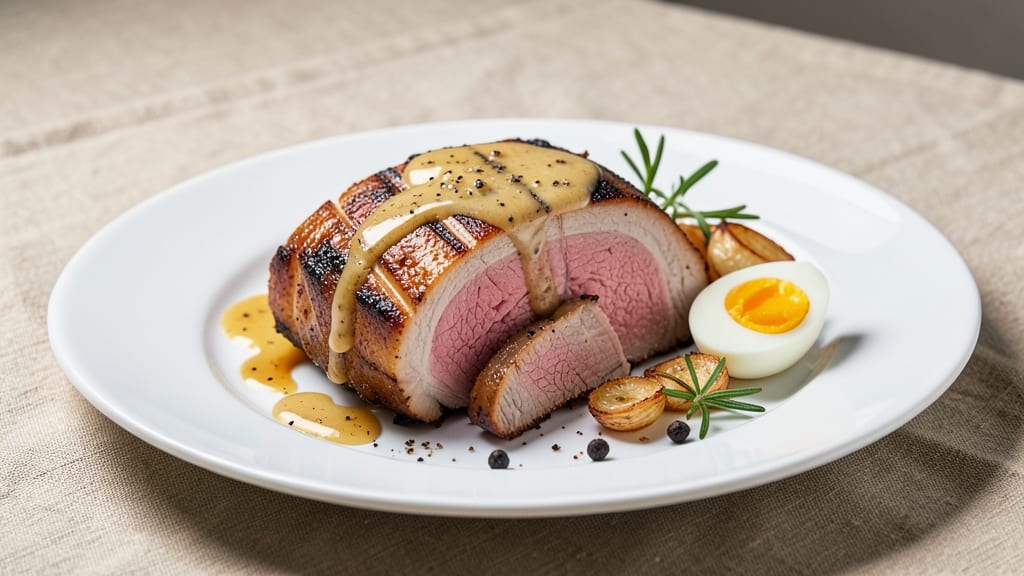
This pork loin recipe stove top delivers the perfect balance: a crispy, golden crust that locks in juices while keeping the center tender and pink—just like a high-end steakhouse cut.
The secret lies in precise heat control and a simple seasoning approach that lets the meat shine without overpowering its natural richness. I’ve perfected this method after years of testing, ensuring every bite stays succulent and flavorful, even when cooked on the stovetop.
The process starts with a dry-brine for enhanced tenderness, followed by a quick sear in a screaming-hot pan to build that caramelized crust. A splash of broth or wine deglazes the pan, creating a savory sauce that coats the pork as it finishes cooking.
This method guarantees juicy pink centers—no gray, overcooked meat here—while delivering the satisfying contrast of crispy edges. The result? A restaurant-quality cut that’s simple enough for weeknight dinners.
What makes this recipe stand out is its versatility—pair it with roasted vegetables, mashed potatoes, or a fresh salad for a complete meal. The stovetop technique also means minimal cleanup: one pan, one skillet, and no oven required.
Whether you’re feeding a family or treating yourself, this method ensures foolproof results every time, with just the right balance of texture and flavor.
For those who prefer their pork fully cooked, a quick broil at the end will achieve that, but the real magic happens in the pan. The juicy pink centers are the star here, proving that stovetop pork loin can be just as impressive as oven-roasted cuts.
Let’s get cooking—your taste buds will thank you.
Ingredients for pork loin recipe stove top
High-quality pork loin and precise seasoning create a restaurant-worthy stovetop dish with minimal effort.
| Ingredient | Amount | Notes |
|---|---|---|
| Pork Loin 🥩 | 1 ½ lb | Center-cut, 1.5-inch thick slices |
| Kosher Salt 🧂 | 1 ½ tbsp | Diamond Crystal preferred |
| Freshly Ground Black Pepper 🌶️ | 1 tsp | Coarsely ground for texture |
| Unsalted Butter 🧈 | 2 tbsp | Cold, cut into 4 pieces |
| Extra-Virgin Olive Oil 🫒 | 2 tbsp | High smoke point preferred |
| Dry White Wine 🍷 | ¼ cup | Sauvignon Blanc or Pinot Grigio |
| Chicken or Vegetable Broth 🍲 | ½ cup | Low-sodium preferred |
| Fresh Rosemary 🌿 | 2 sprigs | Thin stems removed |
| Fresh Thyme 🌿 | 4 sprigs | Leaves only, stems removed |
| Garlic Cloves 🧄 | 4 cloves | Smashed, not minced |
| All-Purpose Flour 🌾 | 1 tbsp | For dredging pan |
| Fresh Parsley 🌿 | ¼ cup | Chopped, for garnish |
The pork loin is non-negotiable here—center-cut, 1.5-inch thick slices ensure even cooking and maximum juiciness. Costco or Whole Foods carry excellent pre-trimmed cuts, but if you're buying whole, look for a piece with good marbling and even thickness. The 1.5-inch thickness is critical: thinner slices risk overcooking, while thicker ones stay undercooked. For best results, let the meat sit at room temperature for 30 minutes before cooking to ensure even searing. The Diamond Crystal kosher salt is preferred because its larger crystals dissolve more evenly, creating a better crust.
No white wine? Substitute with additional broth, but the acidity helps tenderize the meat—don’t skip it entirely. Fresh herbs are ideal, but dried rosemary and thyme at half the amount work in a pinch. The garlic cloves should be smashed, not minced: this prevents them from burning while still infusing flavor. For the pan, high-heat olive oil (like Avocado or Grape Seed) is better than butter alone, as it has a higher smoke point. If you’re short on time, pre-mix the salt, pepper, and herbs in a small bowl to speed up seasoning. The flour is optional but helps create a lighter crust during the final sear.
This dish reheats beautifully—simmer gently in a splash of broth for 2-3 minutes to restore moisture. Store leftovers in an airtight container for 3-4 days in the fridge, or freeze for up to 3 months by wrapping tightly in plastic wrap. For make-ahead prep, dry-brine the pork overnight (place it in a container with salt, pepper, and herbs) for even more tenderness. The pan sauce can be reheated separately and drizzled over reheated pork, but it’s best enjoyed fresh off the stove.
Why You'll Love This Recipe
- One-Pan Magic: I swear by this—just the pork, butter, and olive oil in one skillet. No chopping, no fuss, and the pan’s already clean by the time you’re done.
- Crispy-Creamy Payoff: That golden crust? All from a quick sear with kosher salt and pepper, then a melt of cold butter. It’s the kind of texture that makes you pause mid-bite.
- Weeknight Workhorse: Serve it sliced over toast with a fried egg for breakfast, or shred it into tacos when the kids are home. Honestly, I’ve made it for dinner, lunch, and even a quick office picnic.
- Budget-Friendly Luxury: Pork loin stretches further than you’d think—this recipe feeds four for under $15. Plus, leftovers reheat beautifully, so you’re not stuck with wasted food.
Step-by-step instructions for pan-seared pork loin with crispy crust
Master this technique and you'll achieve a perfectly seared crust while preserving tender, juicy pink centers.
Prepare the Pork Loin for Even Cooking
Pat the 1.5 lb pork loin completely dry with paper towels—this is non-negotiable for crispy skin. I press firmly in all directions, especially along the edges where moisture tends to linger. Season both sides generously with 1.5 tbsp kosher salt and 1 tsp freshly ground black pepper, pressing the seasoning into the meat so it adheres evenly.
Let the seasoned pork sit at room temperature for 20-30 minutes while you prepare the rest. This ensures even cooking from edge to center. I like to use my fingers to gently press the seasoning into the meat—it makes all the difference in flavor penetration.
Create the Searing Foundation
Heat a heavy skillet (I use cast iron) over medium-high heat until it's smoking hot. Add 2 tbsp extra-virgin olive oil and 2 tbsp cold unsalted butter (cut into pieces). Swirl to coat the pan evenly—you want a thin, even layer of fat. The butter should foam and sizzle within 30 seconds before you add the meat.
This high-fat combination creates the perfect searing environment—oil for high heat conduction and butter for rich flavor and golden browning. If the butter isn't foaming after 1 minute, your pan isn't hot enough. Let it get hotter before proceeding.
Sear to Perfect Crust Formation
Carefully place the pork loin in the skillet, laying it flat. Press down gently with a metal spatula during the first 1-2 minutes—this prevents curling and ensures maximum contact with the hot surface. Cook undisturbed until a deep golden-brown crust forms, about 4-5 minutes per side. You'll see the edges start to crisp—that's your signal to flip.
Here's where precision matters: the crust should be deep golden brown with some caramelization, but not blackened. If you see smoke, your heat is too high—reduce to medium heat immediately. The internal temperature should reach 140°F at this point, but don't check yet—we're building that crust first.
Deglaze and Build the Sauce
Remove the pork from the skillet and transfer to a cutting board. Let it rest for 5 minutes—this is crucial for juiciness. Return the skillet to medium heat and add 2 sprigs fresh rosemary and 4 sprigs fresh thyme. Let them sizzle for 30 seconds to release their aromatics.
Add 4 smashed garlic cloves and cook for 30 seconds until fragrant. Pour in 0.25 cup dry white wine, scraping up all the browned bits from the bottom with a wooden spoon. This deglazing captures all the flavor you worked so hard to create. Simmer for 2 minutes until reduced by half.
Finish with Broth and Rest
Stir in 0.5 cup chicken or vegetable broth and 1 tbsp all-purpose flour, then bring to a gentle simmer. Let it thicken slightly—about 1-2 minutes. The sauce should coat the back of a spoon but remain silky, not gluey. Return the pork to the skillet, spooning sauce over the top.
Cover and let it rest for another 5 minutes—this final rest ensures maximum juiciness. The internal temperature should now read 145°F. Slice against the grain into 0.5-inch thick portions and garnish with 0.25 cup chopped fresh parsley. Serve immediately with the pan sauce spooned over the top.
Pro Tips For Making Pork Loin Recipe Stove Top
- USE A MEAT THERMOMETER: I learned this the hard way—pork loin looks done when it’s still tough as a boot. Aim for 145°F internal temp (155°F if serving kids/picky eaters), and pull it before it hits 160°F. Overcooking turns it dry faster than a summer sidewalk.
- SALT THE PORK 40 MINUTES EARLY: This isn’t just seasoning—it’s flavor science. Sprinkle 1 tsp kosher salt per pound on the raw loin and let it sit uncovered in the fridge. The salt penetrates deeper, and the surface gets that perfect crust without burning. (Yes, even if you’re impatient like me.)
- SEAR IN BATCHES IF THICK: Thick-cut pork loin? Don’t crowd the pan. Sear 2-3 minutes per side over medium-high heat until golden, then move to a plate. Add another batch to the pan—hot oil is your friend, but a steaming pan just steams the meat. (Your future self will thank you.)
- FINISH WITH COLD BUTTER: After searing, reduce heat to low, add 2 tbsp cold unsalted butter and 1 tsp olive oil, then tilt the pan to coat the meat. The butter bastes and adds richness without burning. Skip the melted butter—cold butter clings better and adds texture. (Sounds weird, but it works.)
Make-ahead tips for this recipe
Dry-Brine Ahead
For maximum tenderness and flavor, dry-brine your pork loin the night before. Place it in a container with 1.5 tbsp kosher salt, 1 tsp black pepper, and 2 sprigs each of rosemary and thyme.
Refrigerate uncovered for 8-12 hours—this creates a perfect crust and ensures even seasoning. I like to use a shallow dish so the meat isn't submerged in its own juices. 💪
Prep Components
Make your life easier by prepping all components the day before. Chop 0.25 cup parsley and store in an airtight container. Measure out 0.5 cup broth and 0.25 cup wine in separate containers.
Keep the 2 tbsp butter and 2 tbsp olive oil together in the fridge for quick access. This saves 15-20 minutes of prep time on cooking day.
Partial Cook Method
For large gatherings, use the partial cook method. Sear the pork loin as directed until it reaches 130°F internal temperature—about 6-8 minutes per side. Transfer to a plate, cover loosely with foil, and refrigerate for up to 24 hours.
Finish cooking by reheating in the skillet with fresh butter and wine for 5-7 minutes until reaching 145°F. This keeps the meat incredibly juicy even after refrigeration.
Freezer-Friendly Prep
Prep the pork loin for freezing by searing it halfway (to 135°F internal temperature), then wrapping it tightly in plastic wrap followed by a layer of foil. Freeze for up to 3 months.
When ready to cook, thaw overnight in the fridge, then finish searing in the skillet with fresh aromatics. The freezer prep actually enhances the crust by concentrating flavors during thawing. ✨
Sauce Prep Shortcut
Make the pan sauce ahead of time by combining 0.25 cup wine, 0.5 cup broth, 1 tbsp flour, and 2 sprigs each of rosemary and thyme in a saucepan. Simmer until reduced by half, then strain and store in the fridge for up to 3 days.
Reheat gently before serving over the freshly cooked pork—this adds restaurant-quality depth with minimal effort.
Reheating Leftovers
Reheat sliced pork loin in a skillet over medium heat with 1 tbsp butter and 2 tbsp broth for 3-4 minutes until warmed through. For extra moisture, cover the pan for the last 1 minute of reheating.
The pan sauce can be reheated separately, but I find adding a splash of fresh wine revives its flavor beautifully. Always reheat to 165°F internal temperature for food safety. 🔥
Nutrition facts
Frequently asked questions
Why does my pork loin turn out dry when cooked on the stovetop?
The most common mistake is overcooking or skipping the rest time. Pork loin should reach 145°F internal temperature—any higher risks drying it out. Always let it rest for 5-10 minutes after cooking to redistribute juices. Also, avoid cutting into it immediately; use a meat thermometer to check doneness instead.
Can I use a nonstick pan for this recipe?
While possible, I recommend a heavy cast iron or stainless steel skillet for best results. Nonstick pans can't handle the high heat needed for that perfect crust, and they may not build enough flavor in the pan sauce. If you must use nonstick, reduce heat to medium and avoid pressing the meat during searing.
How do I adjust this recipe for thicker pork loin cuts?
For cuts over 1.5 inches thick, increase the searing time by 1-2 minutes per side and check internal temperature more frequently. Start checking at 135°F—remove from heat when it reaches 140°F (it'll rise to 145°F while resting). Thicker cuts benefit from a 5-minute rest before finishing in the sauce.
What's the best way to reheat leftover pork loin?
Slice the pork and reheat in a skillet over medium heat with 1 tbsp butter and 2 tbsp broth for 3-4 minutes. Cover for the last 1 minute to trap steam. Never microwave—it turns pork rubbery. For extra flavor, add a splash of wine or a pinch of fresh herbs to the pan sauce before reheating.
Can I substitute wine with something else?
Yes! Use 0.25 cup apple cider vinegar or 0.5 cup chicken broth for acidity, but wine adds depth that's hard to replicate. If avoiding alcohol completely, try 0.25 cup grape juice—it mimics the sweetness and slight tang. Just