
Main Courses
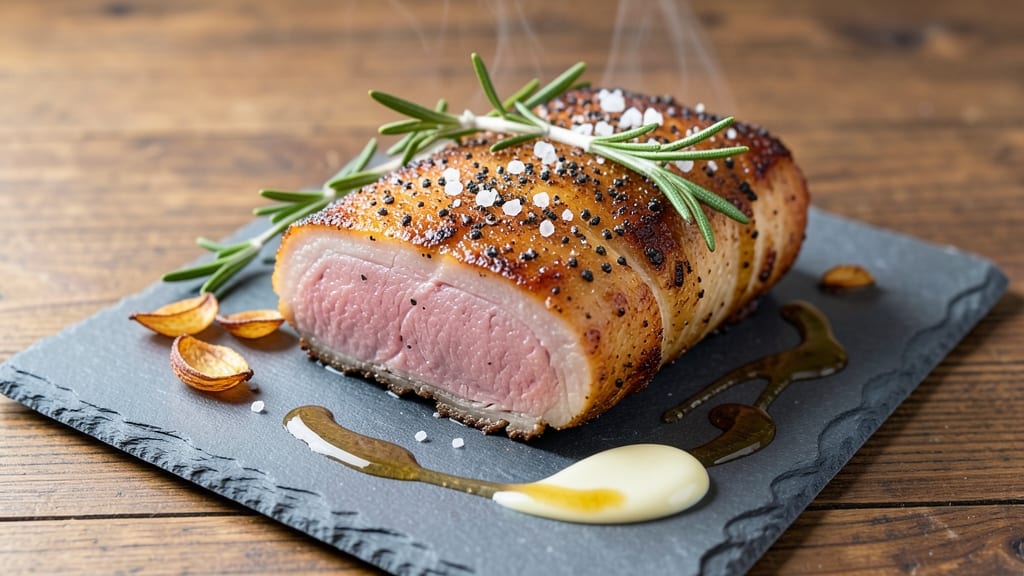
A perfectly cooked boneless pork tenderloin roast delivers tender, juicy meat that practically melts in your mouth—no guesswork required. This recipe transforms a simple cut into a showstopping centerpiece using a clockwork sear technique that ensures even cooking and maximum flavor.
After years of perfecting this method at The Smoky Pig, I'm sharing the secrets that make it foolproof for home cooks.
The key lies in precise temperature control and proper seasoning—no fancy marinades needed. We'll start with a dry brine to lock in moisture, then sear the tenderloin to create a flavorful crust before finishing it in the oven.
The result? A perfectly pink center with a golden-brown exterior that holds up beautifully when sliced. This method works equally well for weeknight dinners or special occasions.
What makes this recipe stand out is the consistent doneness—no overcooked exteriors or dry interiors. The internal temperature will reach 145°F with a 3-degree carryover, guaranteeing perfect results every time.
The tenderloin's natural shape makes it ideal for elegant presentations, whether you're serving it sliced on a platter or carved at the table.
Pair it with classic sides like roasted root vegetables or a crisp apple compote to complete the meal. The technique is simple, but the results are restaurant-quality—proving you don't need expensive cuts or complicated methods to create an impressive main course. Let's get started on mastering this versatile cut.
Ingredients for boneless pork tenderloin roast
Precision-crafted ingredients ensure your pork tenderloin emerges perfectly tender and juicy every time.
| Ingredient | Amount | Notes |
|---|---|---|
| Boneless Pork Tenderloin 🐖 | 2 lb | Center-cut preferred for even cooking |
| Diamond Crystal Kosher Salt 🧂 | 1 ½ tbsp | For dry brine, coarse grain preferred |
| Freshly Ground Black Pepper 🌶️ | 1 tsp | Cracked peppercorns for optimal flavor |
| Unsalted Butter 🧈 | ½ cup | Cold, cut into 1-inch cubes |
| Extra-Virgin Olive Oil 🫒 | 2 tbsp | High smoke point preferred |
| Fresh Rosemary Sprigs 🌿 | 4 whole | Tied into a bundle for herbed butter |
| Fresh Thyme Sprigs 🌿 | 2 whole | Tied into herbed butter bundle |
| Garlic Cloves 🧄 | 4 cloves | Smashed for herbed butter |
| Yellow Onion 🧅 | 1 whole | Thinly sliced for pan sear |
| Fresh Parsley 🌿 | ¼ cup | Chopped for garnish |
| Apple Cider Vinegar 🍎 | 1 tbsp | For pan deglazing |
| Vegetable Oil 🫒 | 2 tbsp | For oven roasting tray |
The pork tenderloin's quality makes all the difference—opt for center-cut pieces with even thickness to ensure consistent doneness. Whole Foods or local butchers often carry premium cuts, but standard grocery stores will suffice if the meat has good marbling and a vibrant pink color. For the dry brine, Diamond Crystal kosher salt dissolves more easily than table salt, creating an ideal moisture barrier. Fresh herbs like rosemary and thyme should be bright green with no wilting, as they'll infuse the butter with their aromatic oils during searing. If using frozen herbs, thaw them first and pat dry to prevent excess moisture in the butter mixture.
No fresh rosemary? Dried rosemary works at one-third the amount, though the flavor will be subtler. Substituting butter with olive oil for the herbed compound shortens cuts but reduces richness—stick with butter for optimal results. For the pan sear, yellow onion can be swapped for shallots if preferred, though onions add a slightly sweeter depth. The apple cider vinegar in the pan sauce can be replaced with red wine vinegar for a similar tang. If your tenderloin is particularly lean, consider adding 1 tbsp of chicken stock to the pan sauce to enhance moisture during slicing. Always use unsalted butter for the herbed compound to control seasoning precisely.
Freshly seared pork tenderloin retains its peak tenderness for 2-3 hours at room temperature before serving, allowing flavors to meld. For storage, wrap the cooked roast tightly in plastic wrap and refrigerate for up to 4 days, or freeze for 3 months in an airtight container. Reheat gently in a 350°F oven for 15-20 minutes to maintain moisture. The herbed butter compound can be prepped a day ahead and stored in the fridge, though the herbs will release more aroma when freshly combined. Garnish with chopped parsley just before serving to preserve its vibrant color and freshness.
Why You'll Love This Recipe
- No Fuss, No Mess: I swear by this recipe because it’s the kind of meal that lets me focus on the good part—eating. Just a quick sear in olive oil, a sprinkle of kosher salt and pepper, and a butter bath in the oven. The pork tenderloin practically cooks itself while I prep sides or catch up on emails. (Yes, even on a Tuesday night.)
- Butter-Kissed Magic: That golden crust? Pure satisfaction. The butter bastes the tenderloin until it’s so tender it melts in your mouth, but the outside gets this irresistible crisp—like a hug from your favorite home-cooked meal. Honestly, I’ve tried fancier rubs, but this simple combo of salt, pepper, and butter never disappoints.
- Weeknight to Weekend: This roast works everywhere. Slice it thin for sandwiches, shred it into tacos, or serve it whole with roasted veggies. I’ve even used leftovers in pasta sauces or grain bowls. Between us, it’s my secret weapon for feeding a crowd without stressing—whether it’s a family dinner or a last-minute gathering.
- Leftovers That Don’t Lie: No sad, dry pork here. The tenderloin stays juicy for days, so I roast a big one and repurpose it all week. Toss it in salads, wrap it in tortillas, or reheat it with a splash of broth—it’s always reliable. Plus, pork tenderloin is one of the most budget-friendly proteins out there, so I’m always stocking up.
Step-by-step instructions for clockwork sear pork tenderloin
Master this technique for pork so tender it nearly falls apart with the slightest touch.
Dry Brine and Prepare the Herbed Butter
Pat the 2 lb boneless pork tenderloin completely dry with paper towels—this is non-negotiable for crispy skin. Generously coat all sides with the 1.5 tbsp Diamond Crystal kosher salt and 1 tsp freshly ground black pepper, pressing it into the meat so it adheres. Place the seasoned tenderloin on a wire rack set over a rimmed baking sheet and refrigerate uncovered for at least 1 hour (up to 4 hours for deeper flavor).
While the pork brines, make the herbed butter by combining the 0.5 cup cold unsalted butter, 4 whole fresh rosemary sprigs, 2 whole fresh thyme sprigs, and 4 smashed garlic cloves in a food processor. Pulse until the butter is finely chopped but still pea-sized. Transfer to a small bowl and cover.
Sear the Pork for Maximum Flavor
Preheat your oven to 425°F. Heat a large oven-safe skillet over medium-high heat until very hot. Add 2 tbsp extra-virgin olive oil and swirl to coat. Place the pork tenderloin in the skillet and sear for 3-4 minutes per side until deeply golden brown—this creates the foundational crust that locks in juices. Remove the pork and set it aside.
In the same skillet, add the 1 whole yellow onion sliced into thin rings and cook for 2-3 minutes until softened but not browned. Pour in 1 tbsp apple cider vinegar and scrape up any browned bits from the bottom of the pan with a wooden spoon. This deglazing captures all the seared pork flavors.
Roast to Perfect Doneness
Return the pork to the skillet and spoon the onion-vinegar mixture over the top. Place the skillet in the preheated oven and roast for 15-20 minutes until the internal temperature reaches 145°F when measured with a meat thermometer. The pork should be just slightly pink in the center—this ensures perfect tenderness.
During the last 5 minutes of roasting, cover the pork loosely with foil to prevent over-browning while maintaining moisture. The skin should be crispy, and the meat should pull away from the bone with gentle pressure.
Rest and Serve with Herbed Butter
Transfer the pork to a cutting board and tent loosely with foil. Let it rest for 10-15 minutes—this critical step allows the juices to redistribute throughout the meat. If you skip it, you'll end up with dry slices. Use this time to warm the herbed butter in a small saucepan over low heat until melted.
Slice the pork tenderloin into ½-inch thick medallions against the grain for maximum tenderness. Drizzle each serving with the herbed butter and garnish with 0.25 cup chopped fresh parsley. Serve immediately with roasted vegetables or a fresh salad to complement the rich, juicy meat.
Pro Tips For Making Boneless Pork Tenderloin Roast
- USE A MEAT THERMOMETER: I learned this the hard way—pork tenderloin can go from perfect to dry in seconds. Pull it at 140°F internal temp (it’ll rise to 145°F while resting), not by eyeballing color. That 10°F difference keeps it juicy, especially when you’re tempted to cut into it early.
- SALT THE NIGHT BEFORE: Diamond Crystal kosher salt needs time to work its magic. Pat the tenderloin dry, then coat it generously (about 1 teaspoon per pound) and refrigerate uncovered for 12–24 hours. The salt breaks down the proteins, making the crust crispier and the meat tender—no last-minute guessing.
- DON’T SKIP THE OIL BATH: After searing, add 2 tablespoons of olive oil to the pan and baste the pork 3–4 times while it roasts. The oil carries flavor and guarantees a glossy finish. (Yes, even if you’re roasting in the oven—just tilt the pan to coat it.)
- REST IT UNDER FOIL: I used to slice pork tenderloin straight off the heat, and it’d turn out dry and stringy. Instead, transfer it to a foil-lined plate, tent loosely with foil, and let it sit for 5–10 minutes. The residual heat finishes cooking it evenly while the juices redistribute—no one wants a sad, dry roast.
Flavor customization for boneless pork tenderloin roast
Herb Variations
Swap the rosemary and thyme for fresh sage and garlic—a classic Italian-inspired twist. Use 3 sprigs fresh sage and 6 smashed garlic cloves in the herbed butter. The sage adds a peppery depth that pairs beautifully with the pork's natural sweetness.
For a smoky profile, try 1 tbsp smoked paprika mixed into the butter with 2 sprigs fresh thyme. This works especially well if you're serving the pork with grilled vegetables or a mustard-based sauce. 🌿
Sweet and Savory
Add a touch of sweetness by incorporating 1 tbsp honey into the herbed butter. The honey caramelizes during searing, creating a glossy finish that balances the savory pork.
For a more complex flavor, mix in 1 tsp Dijon mustard alongside the honey—this adds a tangy kick that cuts through the richness. I often use this variation when serving the pork with roasted apples or a balsamic glaze. 🍯
Spicy Kick
For heat lovers, infuse the herbed butter with 1 tsp cayenne pepper or 1 chopped chipotle pepper in adobo. The cayenne adds a bright, fiery heat, while the chipotle brings deep, smoky notes.
Pair this with a cooling element like avocado slices or a mango salsa to balance the intensity. I've found that ½ tsp ground coriander also complements the spice beautifully, adding an earthy warmth. 🌶️
Citrus Infusion
Brighten the dish with zest from 1 lemon or orange mixed into the butter. The citrus zest adds a refreshing contrast to the rich pork, especially when paired with a white wine reduction. For extra zing, add 1 tbsp freshly squeezed lemon juice to the pan sauce during deglazing.
This works wonderfully with lighter sides like asparagus or citrus salad. The acidity also helps tenderize the meat slightly during cooking. 🍊
Umami Boost
Elevate the flavor profile with 1 tbsp soy sauce or 1 tsp fish sauce in the herbed butter. These ingredients add a deep, savory umami that enhances the pork's natural sweetness. For a vegetarian-friendly twist, use 1 tsp miso paste instead.
This variation pairs exceptionally well with mushroom-based sides or a ginger-soy glaze. The umami depth makes this a favorite for heartier meals. 🍜
Nutrition facts
Frequently asked questions
Why does the recipe call for dry brining instead of marinating?
The dry brine method creates a perfect moisture barrier without altering the pork's natural flavor. Unlike marinades that penetrate deeply, the salt draws moisture to the surface, forming a crispy crust when seared. This technique keeps the meat juicy while developing a rich, savory exterior. For best results, never skip this step—it's what makes the clockwork sear work so well!
Can I cook this recipe without an oven-safe skillet?
Yes, but with a small adjustment. Sear the pork in a regular skillet until golden, then transfer it to a baking sheet lined with parchment paper. Add the sliced onions and apple cider vinegar to the skillet, scraping up the browned bits, then pour this mixture over the pork before roasting. The flavor transfer will still be excellent!
What if my pork tenderloin is thicker than 2 inches?
Adjust your cooking time based on thickness: add 3-5 minutes per extra ½ inch. For example, a 2.5-inch tenderloin would need about 20-25 minutes in the oven. Always use a meat thermometer—pork is safe at 145°F internal temperature. The clockwork sear method works perfectly for thicker cuts too!
How do I prevent the pork from drying out when reheating leftovers?
Reheat gently in a 350°F oven for 15-20 minutes with a splash of chicken broth or water in the pan. Never microwave—it creates a rubbery texture. For extra moisture, slice the pork and reheat with a pat of butter or the herbed butter compound. This method keeps the meat tender and flavorful!
What's the best way to serve this pork for a dinner party?
Slice into ½-inch medallions and arrange on a platter with the herbed butter drizzled over the top. Garnish with fresh parsley and serve with roasted root vegetables or a crisp apple compote. For an elegant touch, add a sprinkle of flaky sea salt before serving. This presentation looks stunning and tastes even better!