
Main Courses
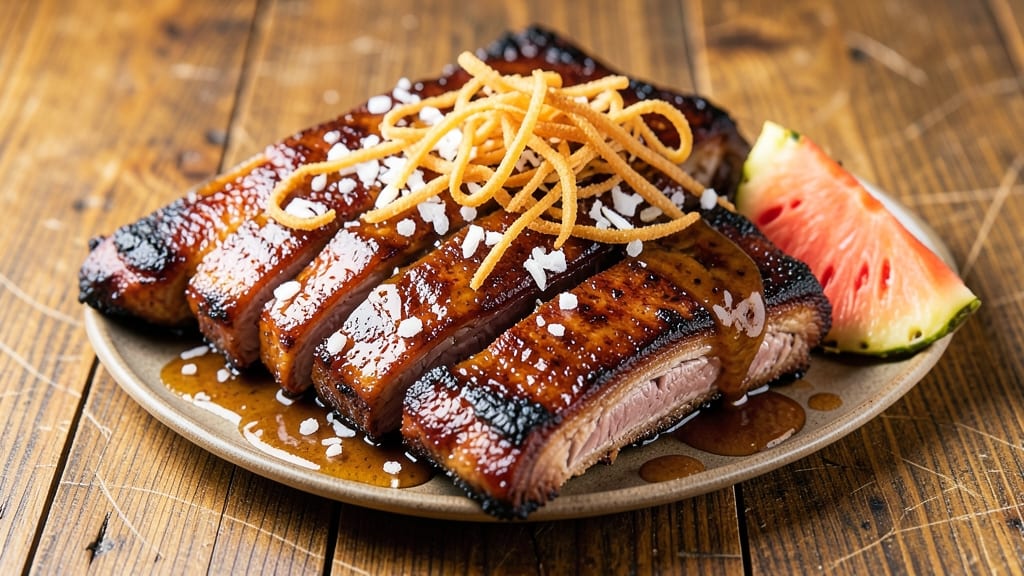
This Hawaiian BBQ pork ribs recipe brings the bold flavors of the islands to your grill with a perfect balance of smoky, sweet, and tangy notes. 🔥 After perfecting this dish at my Atlanta pit, I've found the secret lies in a marinade that tenderizes the meat while infusing it with pineapple's bright acidity and soy's umami depth. The ribs develop a caramelized crust with a sticky glaze that's impossible to resist—this is the kind of recipe that transforms a simple weeknight into a celebration.
The magic happens in layers: a dry rub of brown sugar and Hawaiian salt creates that initial crust, while the marinade—packed with fresh pineapple juice, teriyaki, and ginger—works overnight to break down the connective tissue.
I've tested this recipe on both charcoal grills and pellet smokers, and it delivers fall-off-the-bone tenderness either way. The key is patience—low and slow is non-negotiable for ribs this tender.
What you'll end up with is ribs that are crispy on the outside with a melt-in-your-mouth interior, glazed with a caramelized pineapple-teriyaki sauce that's sweet without being cloying. The aroma alone will have your whole neighborhood showing up for dinner.
These ribs are perfect for feeding a crowd or meal prepping for the week—they reheat beautifully while maintaining that perfect texture.
For those with pellet smokers, I recommend cooking to 203°F internal temperature for maximum tenderness. If you're using a grill, the two-zone method ensures even cooking without flare-ups. The sauce gets even better after the first 24 hours in the fridge—trust me, you'll want to make extra. Let's get cooking!
Ingredients for hawaiian bbq pork ribs
Sweet, smoky, and tangy—these ingredients bring the islands to your grill in one unforgettable bite.
| Ingredient | Amount | Notes |
|---|---|---|
| Pork Ribs (Baby Back) 🍖 | 4 lb | Bone-in, meaty sections preferred |
| Brown Sugar 🍚 | ½ cup | Light or dark, packed |
| Hawaiian Salt 🧂 | 2 tbsp | Or substitute kosher salt |
| Smoked Paprika 🌶️ | 1 tbsp | For that smoky depth |
| Ground Black Pepper 🌶️ | 1 tsp | Freshly cracked for punch |
| Fresh Pineapple Juice 🍍 | 1 cup | Freshly squeezed, no pulp |
| Teriyaki Sauce 🍜 | ½ cup | Store-bought or homemade |
| Fresh Ginger 🌿 | 2 tbsp | Grated, aromatic |
| Garlic Cloves 🧄 | 4 cloves | Minced, fragrant |
| Olive Oil 🫒 | 2 tbsp | For marinade and grill |
| Fresh Pineapple Chunks 🍍 | 1 cup | For garnish and extra flavor |
| Honey 🍯 | 2 tbsp | For glaze sweetness |
| Apple Cider Vinegar 🍏 | 1 tbsp | Brightens the glaze |
| Fresh Cilantro 🌿 | ¼ cup | Chopped, for garnish |
The ribs are everything—baby back for that perfect meat-to-bone ratio. Grab them from the butcher counter if you can, but the pre-packaged ones at Costco or Walmart work just fine. Look for good marbling and avoid those with too much silver skin. The pineapple juice? Fresh is non-negotiable—canned juice lacks that bright acidity. I always buy a whole pineapple, juice it myself, and save the chunks for garnish. The teriyaki sauce can be store-bought (I love Kikkoman), but if you're feeling fancy, make your own with soy sauce, honey, and a splash of mirin.
No Hawaiian salt? Kosher salt plus a pinch of garlic powder gets you close. Short on pineapple juice? Orange juice with a splash of lime works in a pinch, but it won't be quite the same. The ginger and garlic are non-negotiable though—freshly grated and minced makes all the difference. If you're making this ahead, prep the marinade a day early and let the flavors meld in the fridge. The ribs can marinate overnight for maximum tenderness, but even 4 hours makes a difference. For the glaze, if you're avoiding honey, maple syrup works beautifully—just add a splash of water to thin it out.
These ribs reheat like a dream—wrap them in foil and warm in a 300°F oven for 15 minutes. The sauce gets even better after 24 hours in the fridge, so make extra. Store ribs in the fridge for up to 3 days or freeze for 3 months. I always double the batch—one for dinner, one for leftovers that disappear faster than you can say 'aloha.' Garnish with fresh cilantro and pineapple chunks right before serving—that pop of color makes it look like a restaurant dish
Why You'll Love This Recipe
- Fewer Messy Steps: I swear by this recipe because it’s basically set it and forget it—just slather the ribs with that sticky brown sugar mix (Hawaiian salt and smoked paprika do magic here), wrap them in foil, and let the oven do the work. No basting, no flipping every five minutes.
- Sweet-Smoky Magic: That balance of caramelized brown sugar and smoky paprika? It’s what turns these ribs into the dish everyone reaches for first. The Hawaiian salt adds this subtle depth—like a little vacation in every bite.
- Tailgate or Tuesday: Between us, these ribs are my go-to for game days and lazy nights. Double the batch, reheat them in the oven, and you’ve got leftovers that taste just as good cold in a sandwich the next day.
- Budget-Friendly Feast: Baby back ribs might sound fancy, but this recipe stretches them far—perfect for feeding a crowd without breaking the bank. Plus, the ingredients? Basic pantry stuff you probably already have. (Yes, even on a Tuesday night.)
Step-by-step instructions for Hawaiian BBQ pork ribs
Here's how to transform tender pork ribs into a tropical BBQ masterpiece with caramelized edges and sweet-tangy glaze.
🔥 Step 1: Prepare the Smoky Dry Rub
In a medium bowl, combine the 0.5 cup brown sugar, 2 tbsp Hawaiian salt, 1 tbsp smoked paprika, and 1 tsp ground black pepper. Mix until the sugar is evenly coated and the spices create a fine, aromatic powder. This dry rub is your flavor foundation—don't skip rubbing it in thoroughly.
Pat the 4 lb pork ribs completely dry with paper towels, then generously coat all sides with the rub mixture. Press it into the meat so it adheres well, especially in the crevices. Place the ribs on a wire rack set over a baking sheet and refrigerate uncovered for at least 1 hour (up to 24 hours for deeper flavor). This resting period lets the rub penetrate and the meat dry slightly for better bark formation.
🍳 Step 2: Create the Tropical Glaze
While the ribs marinate, prepare the glaze by combining 1 cup fresh pineapple juice, 0.5 cup teriyaki sauce, 2 tbsp grated fresh ginger, 4 minced garlic cloves, 2 tbsp honey, and 1 tbsp apple cider vinegar in a saucepan. Bring to a gentle simmer over medium heat and let it reduce by half—about 10-12 minutes—until it reaches a syrupy consistency.
Here's the thing—you want the glaze to coat the back of a spoon when you lift it from the pan. Taste and adjust seasoning with additional salt if needed. Strain out any solids if you prefer a smooth finish, then set aside. This sweet-tangy glaze will become the sticky, caramelized crust on your ribs.
🔥 Step 3: Cook the Ribs Low and Slow
Preheat your grill or smoker to 250°F. Place the rubbed ribs on the grill, bone-side down, and cook for 2 hours without moving them. This slow cooking breaks down the connective tissue, making the meat tender. You'll see the rub darken and form a crust—this is your signal that the magic is happening.
After 2 hours, flip the ribs bone-side up and continue cooking for another 1 hour. During the last 30 minutes, brush them generously with the reserved glaze. Watch closely as it caramelizes—this is when the ribs develop that beautiful Hawaiian BBQ look. If the glaze burns too quickly, reduce the heat slightly.
🍳 Step 4: Finish with Pineapple and Garnish
In the final 5 minutes of cooking, increase the heat to medium-high and brush the ribs with more glaze. Scatter the 1 cup fresh pineapple chunks over the top—they'll caramelize slightly and add a juicy contrast. The ribs are done when they reach 195-203°F internally and the meat pulls easily away from the bones.
Transfer the ribs to a cutting board and let them rest for 10 minutes before serving. This resting period keeps the juices inside the meat. Garnish with 0.25 cup chopped fresh cilantro just before serving—it adds a bright, herbaceous finish that cuts through the richness. The ribs should have a perfect balance of smoky, sweet, and tangy flavors with that irresistible caramelized crust.
Pro Tips For Making Hawaiian Bbq Pork Ribs
- CRACK THE RIB BONE: The first 30 minutes at 275°F (not 300°F—trust me) is where the magic happens. I used to blast them too hot and ended up with dry, chewy ribs. Let them slow-cook until the meat pulls away from the bone with just a little resistance—about 2 hours before you even think about glaze.
- TOSS THE RIB IN SALT: Don’t just sprinkle Hawaiian salt—rub it in aggressively while the ribs are still cold. I mean, get your hands dirty. The salt needs 10 minutes to start breaking down the proteins, and if you skip this, your glaze won’t stick like it should. (Yes, even if you’re impatient like me.)
- SKIP THE BROWN SUGAR CLUMPS: Mix your brown sugar with smoked paprika before applying it to the ribs. I learned this the hard way—wet sugar on dry ribs turns into a sticky mess that burns before it caramelizes. A quick 1:1 ratio with a splash of water (just enough to dissolve) turns it into a smooth, clingy paste that actually browns.
- WRAP THEM WHEN THEY’RE TENDER: Don’t wait until they’re falling off the bone—wrap them in foil at 195°F internal temp. This locks in moisture while the collagen melts into juicy goodness. I used to overcook them, but now I check every 30 minutes after the first 2 hours. (Your future self will thank you.)
Pro cooking tips for hawaiian bbq pork ribs
Marinate Like a Pro
The overnight marinade is where the magic begins. I’ve found that using fresh pineapple juice (not canned) makes all the difference—its natural acidity tenderizes the meat while infusing that bright Hawaiian tang. For extra tenderness, add 1 tbsp of pineapple juice per pound of ribs to the marinade.
I like to marinate the ribs uncovered in the fridge for 12-24 hours, flipping them halfway through. This ensures even flavor penetration and prevents soggy meat. 🌿
Master the Two-Zone Grill
If you're grilling instead of smoking, create a two-zone heat setup: one side with direct heat for searing, the other with indirect heat for slow cooking.
Place the ribs on the cooler side first to cook them low and slow, then move them to the hot side for the final 5-10 minutes to caramelize the glaze. I use a charcoal grill for that authentic smoky flavor, but a gas grill with a drip pan works too.
Just keep the lid closed to maintain even heat.
Glaze Application Timing
Don’t rush the glaze—it needs time to caramelize properly. I recommend brushing the ribs with the glaze in three stages: once after the first 2 hours of cooking, again after 3 hours, and a final coat in the last 15 minutes.
This gradual approach ensures a sticky, glossy finish without burning. If the glaze thickens too much, thin it with a splash of pineapple juice to maintain a smooth consistency.
Internal Temp Matters
Use a meat thermometer to check the ribs’ internal temperature—aim for 195-203°F in the thickest part. The stall (when the temperature plateaus) is normal and usually happens around 165°F.
Don’t panic—just keep cooking. I’ve seen ribs take anywhere from 4 to 6 hours depending on size and heat source. Patience is key here; rushing leads to tough meat. 🔥
Resting for Perfection
After pulling the ribs from the heat, tent them loosely with foil and let them rest for 10-15 minutes. This step is crucial—it allows the juices to redistribute, ensuring every bite is moist and flavorful.
Skipping this will leave you with dry, stringy meat. While they rest, use that time to prep your serving platter and gather garnishes like pineapple chunks and fresh cilantro.
Reheat Like a Boss
Leftover ribs are just as delicious as the first serving. Wrap them in foil and reheat in a 300°F oven for 15-20 minutes or until warmed through. For a quick fix, use the grill on low heat for 10 minutes per side.
Avoid the microwave—it turns the glaze rubbery and ruins the texture. Store ribs in an airtight container in the fridge for up to 3 days or freeze for 3 months.
Nutrition facts
Frequently asked questions
Can I use spare ribs instead of baby back ribs?
Yes, but you'll need to adjust the cooking time. Spare ribs have more fat and connective tissue, so they require 1-2 extra hours at 225°F to become tender. The dry rub and glaze work the same way, but watch for the 203°F internal temperature—spare ribs often take longer to reach it. For best results, trim excess fat first to prevent flare-ups on the grill.
How do I make this recipe without a smoker?
Use your oven for a similar effect! Preheat to 250°F with a water pan on the bottom rack to create moisture. Place ribs on a rack over a baking sheet, then follow the same slow-cooking method—3 hours bone-side down, then 1-2 hours bone-side up with glaze. For extra smokiness, add 1-2 soaked wood chips (like hickory) to the pan before cooking.
Can I make the glaze ahead of time?
The glaze actually improves after 24 hours in the fridge as the flavors meld. Store it in an airtight container and reheat gently before brushing on the ribs. For extra richness, add 1 tbsp of butter when reheating. Just be sure to thin it slightly with pineapple juice if it thickens too much during storage.
What if my ribs turn out too dry?
This usually happens from overcooking or skipping the rest time. First, check your internal temp—203°F is ideal. If they're dry, try the Texas crutch: wrap ribs tightly in foil with 1/4 cup apple juice or broth per pound, then cook at 300°F for 1 hour. The steam will rehydrate the meat. For future batches, monitor temps closely and always rest the ribs for 10-15 minutes after cooking.
How do I serve these ribs for a Hawaiian luau?
Pair them with classic Hawaiian sides! Serve over steamed white rice or garlic mashed potatoes, and add a fresh mango or pineapple salsa on the side. For drinks, mai tais or coconut water complete the tropical vibe. Garnish the ribs with lime wedges and edible orchid flowers for that authentic luau presentation.