
Main Courses
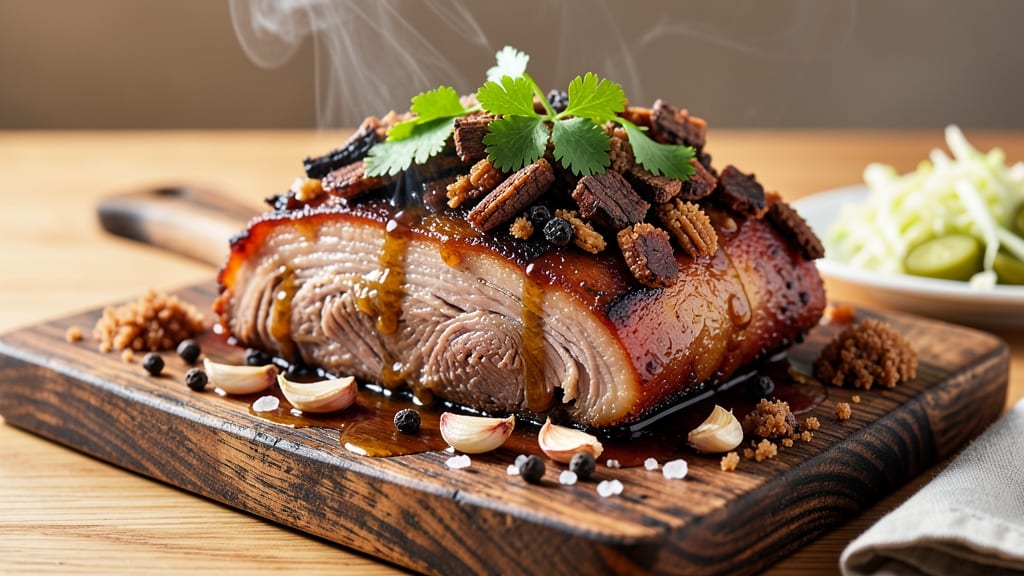
This Carolina pulled pork smoker recipe delivers the smoky, tangy perfection that makes North Carolina BBQ legendary. 🔥 The secret lies in a vinegar-based brine that tenderizes the pork shoulder while infusing it with that signature Carolina tang, followed by low-and-slow smoking that transforms tough meat into melt-in-your-mouth goodness.
I've perfected this technique over years of testing, ensuring every bite falls apart with just the right amount of crispy edges from the celery crowns.
The process begins with a 24-hour brine that works magic on the meat, followed by smoking at a precise 225°F for 10-12 hours using hickory wood—this is where the real flavor develops.
What makes this recipe truly special is the balance between the vinegar's sharpness and the smoky sweetness of the hickory, creating a sauce that's both tangy and complex. The celery crowns add that signature crunch that makes this dish unforgettable.
By the time your pork is done, you'll have perfectly tender meat that pulls apart at the touch, with a sauce that's rich, smoky, and just sweet enough. The crispy celery crowns on top add the perfect textural contrast, making each bite worth the wait.
This is the kind of pulled pork that has your guests coming back for seconds—and asking for the recipe.
Serve it on soft brioche buns with a side of tangy coleslaw for the full Carolina BBQ experience. The beauty of this recipe is that it scales perfectly, whether you're feeding a crowd or just treating yourself to a Sunday feast. Let's get smoking!
Ingredients for carolina pulled pork recipe smoker
Six ingredients for the pork, plus a few extras for the tangy sauce and crispy crowns.
| Ingredient | Amount | Notes |
|---|---|---|
| Pork Shoulder (Bone-In) 🍖 | 8 lb | Preferably with some fat cap |
| White Vinegar 🍶 | 1 cup | Distilled white preferred |
| Brown Sugar 🍚 | 1 cup | Packed, light or dark |
| Kosher Salt 🧂 | ½ cup | Diamond Crystal preferred |
| Black Peppercorns 🌶️ | 1 tbsp | Freshly cracked preferred |
| Garlic Cloves 🧄 | 8 cloves | Peeled, smashed slightly |
| Onion 🧅 | 1 whole | Yellow, sliced into wedges |
| Celery Stalks 🥬 | 4 whole | Fresh, for crowns |
| Hickory Wood Chips 🌳 | 2 packages | Unsoaked, for smoker |
| Yellow Mustard 🥫 | ¼ cup | For sauce base |
| Apple Cider Vinegar 🍎 | ½ cup | For tangy finish |
| Olive Oil 🫒 | 2 tbsp | For celery crowns |
| Brioche Buns 🥪 | 12 whole | For serving |
| Coleslaw Mix 🥬 | 1 lb | Pre-shredded cabbage |
| Mayonnaise 🥛 | ½ cup | For coleslaw |
The pork shoulder is non-negotiable—bone-in with the fat cap is ideal for flavor and moisture. Grab the biggest cut you can find at Costco or your local butcher shop; they'll often trim it for you. For the brine, Diamond Crystal kosher salt dissolves better than table salt, and white vinegar is key for that Carolina tang. If you can't find hickory chips, peach wood is a good backup, but it'll give a slightly sweeter profile. The celery? Fresh is a must—no canned substitutes here, trust me on this.
No white vinegar? Apple cider vinegar works in a pinch, though it'll be slightly sweeter. Swapping brown sugar for coconut sugar keeps it vegan-friendly if needed. For the celery crowns, cut the ends off and slice into 1/4-inch rounds—don't skip the olive oil, it's what makes them crispy. The mustard in the sauce? Dijon adds depth if you've got it, but regular yellow works fine. And if you're serving a crowd, double the coleslaw mix—it disappears fast.
The pork stays fresh in the fridge for 4 days if you're not smoking it right away, but it's best to brine and smoke within 24 hours. Celery crowns crisp up best when fried fresh—keep them in the fridge until ready to cook. The sauce? It keeps for 5 days in the fridge, but honestly, it tastes even better the next day once the flavors meld. Portion the pulled pork into containers with some sauce for easy leftovers—freezes for 3 months if you're prepping ahead.
Why You'll Love This Recipe
- Sweet-Smoky Magic: That vinegar cut in the rub? It’s the secret weapon—cuts through the fat, balances the sugar, and leaves you with tender meat that falls apart at the touch. Between us, the first bite makes you question why you ever bought pre-made.
- Leftovers for Days: Smoke a big batch on Sunday, then eat it all week: tacos, sandwiches, loaded baked potatoes. My freezer’s always stocked with these because reheating pulled pork? It’s basically a cheat code for busy nights.
- Budget-Friendly Feast: A single pork shoulder feeds my whole family for multiple meals. The salt, sugar, and vinegar cost pennies, and the flavor? Worth every penny. (Yes, even on a Tuesday night.)
Step-by-step instructions for smoky vinegar-braised pulled pork
Here's how to transform that pork shoulder into melt-in-your-mouth perfection.
🔥 Step 1: Build the Smoker and Prep the Pork
Start by soaking the 2 packages Hickory Wood Chips in water for 30 minutes—this prevents them from burning too quickly. Set your smoker to 225°F using these soaked chips and give it 15 minutes to reach temperature. You'll know it's ready when you see clean, blue smoke wafting out.
While the smoker preheats, trim any excess fat from the 8 lb Pork Shoulder (Bone-In) but leave about ¼-inch fat cap—this helps protect the meat and adds flavor. In a bowl, mix together the 1 cup Brown Sugar, 0.5 cup Kosher Salt, and 1 tbsp Black Peppercorns (cracked with a mortar and pestle for maximum flavor). Rub this mixture all over the pork, pressing it into the meat so it sticks. Let the pork sit at room temperature for 30 minutes—this ensures even cooking.
🍳 Step 2: Smoke the Pork Low and Slow
Place the rubbed pork shoulder fat-side up on the smoker grate. Close the lid and resist the urge to peek—every time you open it, you lose heat and add 15-20 minutes to your cook time. Smoke the pork for 6 hours, maintaining a consistent 225°F temperature. You'll hit "the stall" around 165°F internal temperature—this is normal and means the moisture is evaporating.
Here's the thing—when the internal temperature hits 195°F (about 4-5 hours in), wrap the pork tightly in butcher paper (not foil). This technique, called the "Texas crutch," helps push through the stall and keeps the bark crispy. Return it to the smoker and continue cooking until the internal temperature reaches 203°F and the meat is fork-tender with no resistance.
🥘 Step 3: Braise in Vinegar for Extra Tenderness
Once the pork reaches 203°F, remove it from the smoker and let it rest for 15 minutes. In a large Dutch oven, combine the 1 cup White Vinegar, 0.5 cup Apple Cider Vinegar, 0.25 cup Yellow Mustard, 8 cloves Garlic Cloves (smashed), 1 whole Onion (sliced into wedges), and 4 whole Celery Stalks (cut into 2-inch pieces). Place the pork in the Dutch oven and pour the vinegar mixture over it, ensuring the meat is fully submerged.
Return the Dutch oven to the smoker (or transfer to a 275°F oven if you don't have space) and braise for another 1-2 hours. This step infuses the pork with tangy flavor and ensures it's fork-tender. The vinegar also helps break down the connective tissue, making the pork fall-apart tender. Skim off any excess fat that rises to the surface during braising.
👨🍳 Step 4: Shred and Prepare the Sides
Remove the pork from the braising liquid and transfer it to a cutting board. Let it rest for 10 minutes before shredding with two forks—this makes it easier to pull apart. Discard the bones and skin, then shred the meat against the grain into ¼-inch pieces. Mix the shredded pork with the braising liquid in the Dutch oven and warm through over low heat for 5 minutes. Taste and adjust seasoning with more salt or pepper if needed.
While the pork rests, make the celery crowns by cutting the tops of the 4 whole Celery Stalks into ½-inch slices and tossing them with 2 tbsp Olive Oil. Roast at 400°F for 15-20 minutes until crispy and golden. For the coleslaw, toss the 1 lb Coleslaw Mix with 0.5 cup Mayonnaise and set aside. Warm the 12 whole Brioche Buns in the oven for 5 minutes so they're soft and ready to serve.
Pro Tips For Making Carolina Pulled Pork Recipe Smoker
- CRANK THE HEAT FIRST: Start your smoker at 250°F, but blast it to 350°F for the first hour—this sears the pork shoulder and renders fat faster. After that, drop it back down to 225°F for the long cook. I learned this the hard way when my first batch took 12 hours instead of 8 because I skipped the initial high heat.
- SALT THE MEAT TWICE: Don’t just dry-brine the pork shoulder overnight—give it a second heavy salt rub (2 tablespoons kosher salt per pound) right before smoking. The bone-in cut needs that extra help to stay juicy, and the crust forms better when the salt has time to work its magic on the surface.
- WATCH THE VINEGAR: If your Carolina sauce tastes too sharp or thin, you likely overdid the white vinegar. Use no more than ¼ cup per pound of pork—any more and you’ll end up with a tangy glaze instead of a balanced sweet-and-sour finish. Taste as you go; you can always add more brown sugar, not fix too much acid.
- REST IT UNDER FOIL: The moment the pork hits 195°F, wrap it in butcher paper (not foil) and let it sit for 30 minutes—this keeps it hot while you pull. I was in a rush once and shredded it too soon; the meat was dry and stringy. Give it that rest, even if you’re eager to serve.
Creative variations of this carolina pulled pork recipe smoker
Texas-Style Wrap
If you're craving something a little different, try wrapping your pulled pork in warm tortillas with pickled jalapeños, crumbled queso fresco, and a drizzle of sour cream. This Texas-inspired twist keeps the smoky flavors front and center while adding a fun, handheld element.
I like using Mission flour tortillas for extra softness—just warm them in a dry skillet for 30 seconds per side before loading up. 🌶️
Sweet & Smoky Glaze
Swap the vinegar-based sauce for a sweet and smoky glaze by mixing ½ cup BBQ sauce (like Sweet Baby Ray's), 2 tbsp molasses, and 1 tbsp apple cider vinegar.
Simmer this mixture for 10 minutes until thickened, then brush it over the pork during the final hour of smoking. The molasses adds a caramelized depth that pairs beautifully with the hickory smoke. Trust me, this glaze turns your pulled pork into a crowd-pleaser.
Vegan Adaptation
For a plant-based version, use a firm tofu block or mushroom blend (like king oyster mushrooms) marinated in soy sauce, liquid smoke, and maple syrup.
Smoke it at 225°F for 4-5 hours, then shred and mix with a sauce made from coconut aminos, apple cider vinegar, and smoked paprika. Serve on brioche buns or over mashed sweet potatoes for a hearty meal.
This version still delivers that signature tangy, smoky flavor without the meat.
Cajun-Inspired Spice Rub
Give your pork a Louisiana twist by swapping the dry rub for a Cajun-inspired blend of 1 tbsp paprika, 1 tsp garlic powder, 1 tsp onion powder, ½ tsp cayenne pepper, and ½ tsp dried thyme.
This adds a fiery kick that pairs perfectly with the vinegar braise. I also like adding ½ cup chopped green onions to the braising liquid for a fresh, oniony brightness. The result? A pulled pork with a bold, spicy edge that still feels true to its Carolina roots. 🔥
Apple Cider Braise
For a seasonal twist, replace the white vinegar with 1 cup apple cider and add 2 sliced apples (like Honeycrisp or Fuji) to the braising liquid. The natural sweetness of the apples balances the smokiness, while the cider adds a fruity depth.
This variation is especially great in fall when fresh apples are at their peak. Serve with extra apple slices on top for a crisp, refreshing contrast.
Nutrition facts
Frequently asked questions
Can I use a different cut of pork instead of a bone-in shoulder?
While bone-in pork shoulder is ideal for flavor and moisture, you can use a pork butt (which is actually the upper shoulder) or even a pork picnic roast. Just be aware that leaner cuts like pork loin won't yield the same tender, juicy results—this recipe relies on fat for flavor and moisture. If substituting, trim excess fat but leave at least ¼-inch cap.
What if my smoker won't stay at 225°F consistently?
Don't panic! This is common with pellet smokers or electric models. First, check your vents—open the air intake slightly if the temp drops below 225°F. If it's too hot, close it slightly. For stubborn fluctuations, try adding 1-2 extra wood chips every 30 minutes to stabilize the heat. A meat thermometer probe in the pork helps monitor internal temp more accurately than smoker gauges.
How do I know when the pork is done without a probe?
If you're probe-less, look for these signs: The meat should be fork-tender (easy to pierce with minimal resistance) and the juices should run clear (not pink or bloody). The bark should be deep mahogany with crisp edges. As a last resort, cut into the thickest part—the center should feel like butter when pressed, not firm rubber. The Texas crutch (butcher paper wrap) helps ensure doneness even without a probe.
Can I make this recipe in an oven instead of a smoker?
Preheat your oven to 250°F and place a water pan on the bottom rack to add moisture. Wrap the pork in double-layered foil with the wood chips (soaked in water) inside. Cook for 8-10 hours, checking internal temp every 2 hours. For extra smokiness, add 1 tbsp liquid smoke to the braising liquid. The texture will be slightly less bark-crusty but still incredibly tender.
Why does my pulled pork turn out dry?
Overcooking is the #1 culprit—pork pulls best between 200-203°F. Other common mistakes: skipping the rest time (always let it rest 15+ minutes before shredding), using lean cuts, or not wrapping during the stall. The vinegar braise is key—it keeps the meat moist while adding tang. If it's still dry, try adding 1-2 tbsp apple cider vinegar or pork broth to the shredded meat before serving.