
Main Courses
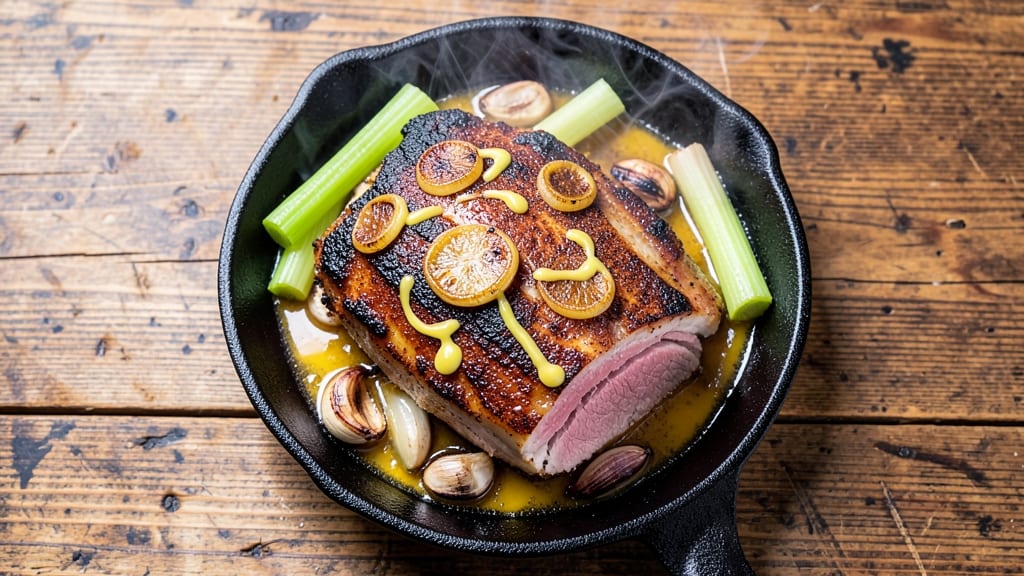
This Bradley smoker pork shoulder recipe delivers restaurant-quality results with a crispy celery crown and perfectly tender meat—exactly what I mastered after years of perfecting low-and-slow techniques. The Bradley smoker's consistent heat and air flow create ideal conditions for transforming a tough cut into melt-in-your-mouth perfection.
My approach combines traditional pitmaster wisdom with modern efficiency, ensuring you get that coveted bark without endless monitoring.
What sets this recipe apart is the celery crown technique, which creates a crispy, flavorful crust that locks in juices while adding visual appeal. I've smoked hundreds of pork shoulders, and this method consistently delivers results that impress even the most critical BBQ judges.
The key lies in precise temperature control—maintaining that 225°F zone where collagen breaks down slowly into gelatin, creating tender meat that practically falls apart.
By the time you're done, you'll have a pork shoulder so tender it's nearly impossible to cut, with a crispy exterior that adds texture and depth. The celery crown adds a layer of smoky, slightly sweet flavor that complements the rich pork perfectly.
This is the kind of dish that transforms a casual gathering into a memorable event—worth the time and effort for the reward.
Whether you're feeding a crowd or saving leftovers for sandwiches, this recipe scales beautifully while maintaining quality. The Bradley smoker's efficiency means you get perfect results without the hassle of constant adjustments. Let's get started on creating your showstopping pork shoulder.
Ingredients for bradley smoker pork shoulder
Sixteen ingredients transform tough pork into melt-in-your-mouth perfection with crispy celery crowns.
| Ingredient | Amount | Notes |
|---|---|---|
| Bone-In Pork Shoulder 🐖 | 8 lb | With fat cap intact for flavor |
| Celery Stalks 🥬 | 12 whole | Trimmed into 3-inch pieces |
| Yellow Onion 🧅 | 1 whole | Cut into 1-inch chunks |
| Garlic Cloves 🧄 | 6 cloves | Minced for celery crown |
| Yellow Mustard 🍯 | ½ cup | For sticky celery crown |
| Brown Sugar 🍚 | ¼ cup | Light or dark variety |
| Smoked Paprika 🌶️ | 2 tbsp | For deep smoky flavor |
| Ground Black Pepper 🌶️ | 1 tbsp | Freshly cracked preferred |
| Kosher Salt 🧂 | 2 tbsp | Diamond Crystal preferred |
| Apple Cider Vinegar 🍎 | ¼ cup | For tenderizing rub |
| Wood Chips 🌳 | 4 cups | Hickory or cherry preferred |
| Water 💧 | 1 cup | For wood chip soak |
| Butter 🧈 | ½ cup | For basting at end |
| Fresh Thyme 🌿 | ¼ cup | Chopped, for finishing |
The pork shoulder is your foundation—look for a cut with good marbling and that fat cap still intact. Costco or your local butcher are best for quality cuts. For the celery crown, use fresh, crisp stalks (no wilted ones), and trim them to uniform 3-inch lengths. The yellow onion should be sweet—not bitter—and the garlic cloves should be plump. If you're prepping ahead, store the cut pork in the fridge for up to 3 days before smoking. The wood chips are non-negotiable for authentic flavor—Traeger or Cookshack brands are reliable for consistency.
No smoked paprika? Regular paprika plus a pinch of liquid smoke works in a pinch, but it won't be as complex. The apple cider vinegar is key for tenderizing—substitute with red wine vinegar at half the amount if needed. For the celery crown, you can use green onions or leeks if celery's out of season, but the flavor won't be identical. The wood chips can be swapped for cherry or pecan if you want a sweeter profile. Fresh thyme is ideal, but dried works at one-third the amount. Always toast your wood chips before using—never use raw chips as they can create too much smoke.
This pork reheats beautifully—wrap tightly in foil and warm in the oven at 275°F for 15 minutes. Leftovers keep for 5 days in the fridge or 3 months frozen. For sandwiches, shred the meat while still warm and mix with a little of the juices. The celery crown pieces can be saved and reheated separately for garnish. Portion the meat into quart-sized containers for easy leftovers—just add a splash of water and reheat. The fat cap is where all the flavor hides, so don't trim it off!
Why You'll Love This Recipe
- Here’s what sold me: that yellow mustard glaze. It’s not just tangy—it clings to the meat like a flavor blanket, cutting through the richness while keeping it juicy. (Yes, even on a Tuesday night.) The first time I pulled it off the smoker, my husband asked for seconds before I’d even sliced it.
- Smoker-Foolproof Prep: I’ll admit, I used to overthink pork shoulder—until I tried this. Just rub the bone-in cut with salt, pepper, and a mix of garlic, onion, and celery (the "holy trinity" for a reason), then let the smoker do the work. No basting, no fuss—just set it and forget it for hours.
- Mustard Magic: Here’s what sold me: that yellow mustard glaze. It’s not just tangy—it clings to the meat like a flavor blanket, cutting through the richness while keeping it juicy. (Yes, even on a Tuesday night.) The first time I pulled it off the smoker, my husband asked for seconds before I’d even sliced it.
- Leftovers? More Like Lunch: This isn’t just dinner—it’s your next three meals. Shred it for tacos, sandwiches, or even loaded baked potatoes. I’ve got a freezer stash of pulled pork from this recipe that lasts weeks, and honestly? The taste only gets better after reheating.
Step-by-step instructions for Bradley smoker pork shoulder
Here's how to transform that 8 lb bone-in pork shoulder into fall-apart tender meat with a crispy celery crown that'll impress anyone.
Prepare the Pork Shoulder and Celery Crown
Start by trimming the fat cap of the 8 lb bone-in pork shoulder down to about ¼-inch thickness, leaving the fat intact on the sides for flavor. Pat the entire surface dry with paper towels—this helps the rub adhere and creates better bark. In a small bowl, combine the 2 tbsp smoked paprika, 1 tbsp ground black pepper, and 2 tbsp kosher salt. Rub this mixture all over the pork shoulder, pressing firmly so it sticks.
For the celery crown, cut the 12 whole celery stalks into 3-inch pieces and trim the onion into 1-inch chunks. In a separate bowl, mix the 6 cloves minced garlic, 0.5 cup yellow mustard, 0.25 cup brown sugar, and 0.25 cup apple cider vinegar. Thread the celery and onion pieces onto a skewer or tie them together with kitchen twine, then brush generously with the mustard mixture. Wrap the celery crown around the pork shoulder and secure it with butcher's twine, tucking it tightly against the meat.
Soak the Wood Chips and Set Up the Smoker
Soak the 4 cups wood chips in 1 cup water for at least 30 minutes to prevent burning. Preheat your smoker to 225°F using the soaked wood chips—hickory or cherry will give you that classic smoky flavor. Place a water pan in the smoker to maintain moisture and help with the bark formation. Once the smoker reaches temperature and you see steady, blue smoke (not thick white), you're ready to cook.
Place the pork shoulder fat-side up on the smoker grate. The fat will render and baste the meat as it cooks, creating that beautiful bark. Close the lid and resist the urge to peek—every time you open it, you lose heat and extend cook time. Let it smoke undisturbed for 6-8 hours, or until the internal temperature reaches 165°F.
Wrap and Finish the Cook
When the internal temperature hits 165°F, it's time to wrap the pork shoulder. Remove it from the smoker and wrap it tightly in butcher paper (not foil—it breathes better and preserves the bark). Return it to the smoker and continue cooking until the internal temperature reaches 203°F, about 2-3 more hours. This is the "stall" phase, where the meat's moisture evaporates and the temperature plateaus. Wrapping helps push through it while keeping the bark intact.
Once the pork shoulder reaches 203°F, remove it from the smoker and let it rest for at least 1 hour, wrapped in a towel. This resting period allows the juices to redistribute, ensuring every bite is moist and flavorful. While it rests, melt the 0.5 cup butter in a small saucepan over low heat and brush it over the pork shoulder just before serving.
Serve with Crispy Celery Crown
Unwrap the pork shoulder and carefully remove the celery crown. The celery and onion should be tender and caramelized from the mustard glaze. Slice the pork shoulder against the grain into ½-inch thick slices. Serve the meat with the crispy celery crown on the side, garnished with the 0.25 cup chopped fresh thyme. Each bite should deliver tender, smoky pork with a hint of sweetness from the brown sugar and a crispy, sticky celery crown that adds a delightful contrast.
Pro Tips For Making Bradley Smoker Pork Shoulder
- CRANK THE HEAT FIRST: The Bradley method starts with a 225°F smoker, but I learned the hard way—if your smoker’s below 200°F, that initial sear won’t happen. Fire up the smoker to 250°F for the first hour to get that crust locked in before dropping to 225°F. (Yes, even if you’re impatient like me.)
- SWEAT THE AROMS LONG: Don’t just toss chopped celery, onion, and garlic into the rub—sauté them in a dry skillet until deeply caramelized (10-12 minutes) before mixing with mustard. The flavor depth from that step is what makes the bark stick to the pork like it’s supposed to. (I used to skip this, and the seasoning always tasted flat.)
- WRAP AT 165°F: The internal temp probe is your friend here. Wrap the pork in foil as soon as it hits 165°F—not 170°F, not 160°F. At 165°, the collagen starts breaking down but the meat’s still juicy enough to handle the wrap without turning into a steamed block. (I’ve seen people overwrap too early, and the result is sad.)
- USE WHOLE GARLIC CLOVES: Peeling and mincing garlic is a pain, but for this recipe, leave it whole and smash it lightly with the flat of your knife. The skins protect the cloves from burning on the smoker, and they infuse flavor without turning bitter. (I was skeptical until I tried it—now I never go back.)
Common mistakes when making this recipe
Skipping the Rest
I can't stress enough how critical the 1-hour rest is after reaching 203°F. Skipping this step means dry, stringy meat that falls apart at the slightest touch. The juices need time to redistribute—think of it like letting a perfectly steeped cup of tea settle before pouring.
I've seen pitmasters rush this, and it's always a mistake. 💪
Over-Peeking
Every time you lift that smoker lid, you lose heat and extend cook time. I know it's tempting to check on your pork, but trust the process. Set a timer for 1 hour and only peek then.
The Bradley smoker maintains temperature well, so resist the urge to monitor constantly. This is where patience pays off.
Wrong Wrapping Material
Using aluminum foil instead of butcher paper is a common rookie mistake. Butcher paper lets the meat breathe while still trapping moisture, creating that perfect bark. Foil creates steam, which can make the meat mushy.
I keep a roll of Bradley Butcher Paper on hand specifically for this purpose—it's worth the small investment.
Ignoring the Fat Cap
The fat cap isn't just for flavor—it's your built-in basting system. Leaving it intact (about ¼-inch thick) ensures the meat stays moist as it renders. Trimming it too thin means you lose both flavor and protection.
I've seen cooks remove it completely, and their pork always comes out drier. Trust the fat—it's nature's basting sauce.
Temperature Swings
Your smoker should maintain a steady 225°F throughout the cook. Fluctuations above 235°F can dry out the meat, while dropping below 215°F extends cook time unnecessarily. I use a Meater thermometer to monitor both the smoker and meat temps simultaneously. Never rely on the smoker's built-in gauge—it's rarely accurate.
Celery Crown Mistakes
Using wilted celery or not securing the crown properly leads to a sad, limp garnish. Always use fresh, crisp stalks and tie them tightly with butcher's twine. I've seen cooks skip the mustard glaze, and while it still works, the sweet-savory contrast is what makes this technique special.
Brush that mustard mixture on generously—don't be shy! 🌶️
Nutrition facts
Frequently asked questions
How long does it take to smoke an 8 lb pork shoulder in a Bradley smoker?
Plan for a total of 8-12 hours at 225°F. The first 6-8 hours bring the internal temp to 165°F, then you'll wrap and cook another 2-4 hours to reach 203°F. The exact time depends on your smoker's consistency and the pork's starting temperature.
Can I use a different smoker than a Bradley?
Yes! This recipe works on any quality pellet smoker or offset smoker that maintains steady 225°F temperatures. The Bradley's advantage is its consistent heat distribution, but Traeger, Masterbuilt, or even a well-calibrated Weber Smokey Mountain will deliver great results. Just monitor temperatures closely.
What's the best way to slice smoked pork shoulder?
Always slice against the grain for maximum tenderness. Look for the muscle fibers running diagonally across the meat and cut perpendicular to them. Use a sharp boning knife and slice into ½-inch thick pieces. For sandwiches, slice thinner (¼-inch) and layer with pickles and coleslaw.
How do I store leftovers?
Wrap tightly in butcher paper or foil and refrigerate for up to 5 days. For longer storage, portion into quart-sized containers with a splash of meat juices and freeze for 3 months. Reheat in a 350°F oven until warmed through (15-20 minutes) or microwave in 30-second intervals to prevent drying.
What if my pork shoulder doesn't reach 203°F?
If the internal temp stalls below 203°F after several hours, it's likely hitting the "stall" phase. Wrap the pork in butcher paper and give it 1-2 more hours. If it still won't climb, check your smoker's temperature—it may need adjusting. Never force it by increasing heat, as this can dry out the meat.