
Main Courses
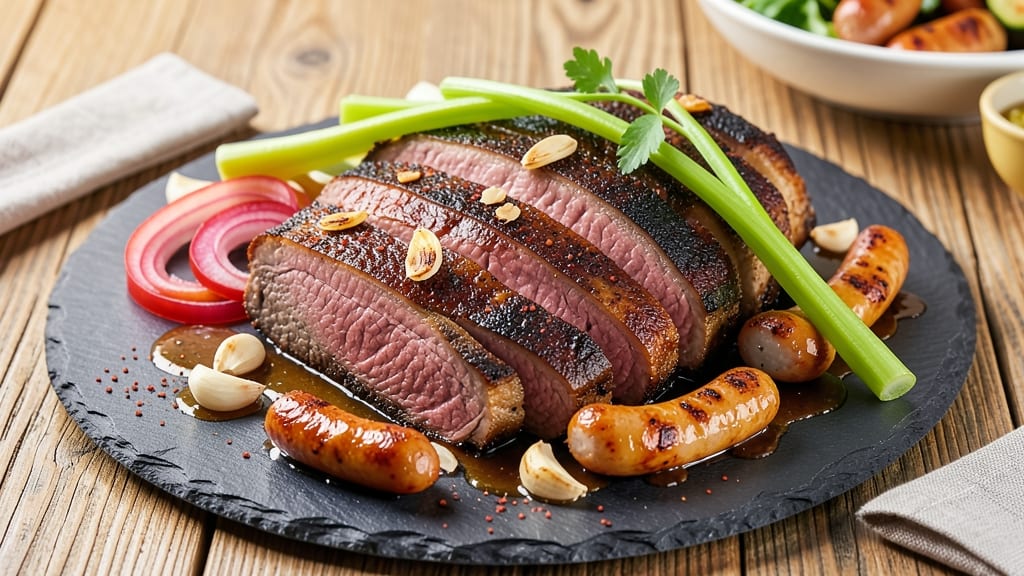
This brisket and pork sausage recipe delivers the kind of bold, smoky flavor that turns weeknights into celebrations. 🔥 After years of perfecting low-and-slow techniques in Atlanta's competitive BBQ scene, I've developed a method that transforms tough cuts into melt-in-your-mouth perfection with crispy celery crowns that steal the show.
The secret lies in patience—letting the smoke work its magic while you prepare sides that complement every bite.
What makes this recipe special is the balance between traditional Texas-style smoking and modern efficiency. We start with a dry rub that develops a deep, caramelized bark on the brisket while keeping the interior tender enough to slice with a fork.
The pork sausage gets its own treatment—spiced generously and cooked just until the edges crisp, creating a perfect contrast to the brisket's rich texture. Every element comes together in a way that feels both comforting and impressive.
The result is a centerpiece dish that commands attention: perfectly smoked brisket with a dark mahogany crust, juicy pork sausage that's crispy on the outside and savory within, and celery crowns that add a touch of elegance with their crispy, caramelized edges.
This isn't just dinner—it's an experience that brings people together, just like the gatherings I remember from my childhood in Georgia.
Serve with classic sides like creamy mashed potatoes, tangy coleslaw, and buttery cornbread to complete the meal. The beauty of this recipe is its flexibility—whether you're cooking for a family reunion or a casual weekend dinner, the techniques scale effortlessly while maintaining that restaurant-quality flavor.
Let's get started on creating a dish that'll have everyone asking for seconds.
Ingredients for brisket and pork sausage
Six pounds of brisket, smoky spices, and crispy celery crowns transform a weeknight into a BBQ celebration.
| Ingredient | Amount | Notes |
|---|---|---|
| Beef Brisket 🥩 | 5 lb | Packer cut, fat cap intact |
| Pork Sausage Links 🌭 | 1 ½ lb | Fresh, high-fat content |
| Yellow Onions 🧅 | 3 whole | Medium, sliced into rings |
| Celery Stalks 🥬 | 6 whole | Fresh, trimmed to 3-inch pieces |
| Garlic Cloves 🧄 | 10 cloves | Fresh, peeled and minced |
| Smoked Paprika 🌶️ | ½ cup | High-quality, Spanish variety |
| Brown Sugar 🍚 | ½ cup | Light or dark, packed |
| Coarse Kosher Salt 🧂 | ¼ cup | Diamond Crystal preferred |
| Ground Black Pepper 🌶️ | 2 tbsp | Freshly cracked |
| Ground Cumin 🌿 | 1 tbsp | Toasted for depth |
| Mustard Powder 🌶️ | 1 tbsp | Yellow or Dijon |
| Apple Cider Vinegar 🍎 | ¼ cup | Unfiltered for tang |
| Wood Chips 🌳 | 2 cups | Hickory or oak, soaked |
| Unsalted Butter 🧈 | ½ cup | Cold, cubed for basting |
| Beef Tallow 🧈 | ¼ cup | For extra bark development |
The brisket is non-negotiable—packer cut with fat cap is key for that signature bark and melt-in-your-mouth texture. I always source mine from local butchers who handle it carefully, or the pre-cut packs at Costco when I'm doing a big batch. Look for vibrant red color and good marbling—this is what gives you that dark mahogany crust after smoking. The pork sausage should be high-fat (at least 20% fat content) for that crispy exterior. Johnsonville or Bob Evans are reliable brands, but local butchers often have fresher options. Don't skimp on the wood chips either—hickory or oak from Traeger or Cookshack gives that authentic BBQ smoke flavor. The celery needs to be crisp and fresh—avoid those rubbery stalks that sit too long in the store.
No smoked paprika? Substitute with a mix of chili powder and cayenne at half the amount, but you'll lose that authentic smokiness. Running out of brown sugar? Light corn syrup works in a pinch, though the flavor won't be quite the same. The apple cider vinegar adds tang—substitute with lemon juice if needed, but reduce to 2 tablespoons since it's more acidic. For the celery crowns, if you can't find fresh celery with long stalks, substitute with fennel bulbs cut into similar shapes. The wood chips can be swapped for pellets if you're using an electric smoker, but avoid liquid smoke—it changes the texture completely. And pro tip: toast your spices in a dry pan for 30 seconds before mixing—they'll develop deeper flavor.
Store your dry rub in an airtight container for up to 3 months—it keeps well in a cool, dark place. The brisket can be prepped a day ahead and refrigerated uncovered for better bark development. Celery crowns crisp best when made fresh, but you can assemble them up to 4 hours ahead and refrigerate before frying. Leftover brisket? Slice thin, reheat in the smoker at 225°F for 1 hour, then serve on sandwiches. The sausage keeps 3 days in the fridge or 3 months frozen. Portion your wood chips in ziplock bags before soaking—they'll be ready whenever you are. And always save the drippings—they're liquid gold for gravy or basting.
Why You'll Love This Recipe
- One-Pan Magic: I swear by this recipe because it’s that simple—just toss the brisket, sausage, onions, celery, and garlic into one pot, add a splash of broth, and let it simmer. No fancy prep, no stress, and honestly? The hardest part is waiting for it to finish.
- Savory Symphony: That smoky brisket meets the herby, slightly spicy kick of pork sausage—it’s a flavor combo I can’t get enough of. The onions caramelize just enough to sweeten the whole thing, while the garlic ties it all together like a cozy hug in a bowl.
- Leftovers That Don’t Suck: Between us, this recipe makes way more than I need for dinner, but I never get tired of it. The flavors actually get better the next day—perfect for sandwiches, tacos, or just reheating with a side of crusty bread. (Yes, even on a Tuesday night.)
- Budget Feast for Everyone: A whole brisket and a pack of sausages stretch across multiple meals without breaking the bank. I’ve fed six people for under $20, and no one ever complains—because let’s be real, who turns down tender meat and crispy edges?
Step-by-step instructions for smoked brisket and pork sausage with celery crowns
Here's how to smoke brisket and pork sausage to perfection while creating crispy celery crowns that'll impress anyone.
🔥 Step 1: Prepare the Brisket and Build the Rub
Start by trimming the fat cap on the 5 lb beef brisket to about ¼-inch thickness using a sharp boning knife. Leave the fat intact elsewhere—the rendered fat will create that coveted bark. Pat the brisket dry with paper towels, then place it fat-side up on a wire rack in a baking dish.
In a bowl, combine the 0.5 cup smoked paprika, 0.5 cup brown sugar, 0.25 cup coarse kosher salt, 2 tbsp ground black pepper, 1 tbsp ground cumin, and 1 tbsp mustard powder. Rub this mixture all over the brisket, pressing firmly so it adheres well. Let it sit at room temperature for 1 hour before smoking—this ensures even seasoning and better bark formation.
🍳 Step 2: Create the Celery Crowns and Sausage Prep
Slice the 3 whole yellow onions into rings and trim the 6 whole celery stalks to 3-inch pieces. In a bowl, combine the sliced onions, celery, 10 minced garlic cloves, and the 0.25 cup apple cider vinegar. This tangy mixture will keep the celery crowns crisp while adding depth of flavor.
Meanwhile, remove the 1.5 lb pork sausage links from their casings and crumble them into a bowl. Mix in 1 tbsp of the same rub you used on the brisket to ensure consistent flavor. Form the crumbled sausage into 6 equal patties, about 1-inch thick—these will cook quickly alongside the brisket.
🔥 Step 3: Set Up the Smoker and Start Cooking
Soak the 2 cups wood chips (hickory or oak) for 30 minutes, then drain. Set up your smoker to maintain a temperature of 225°F. Once the smoke stabilizes and you see clean, blue smoke, place the brisket fat-side up on the smoker grate. Add the sausage patties directly on the grate near the brisket—they'll cook faster.
For the celery crowns, arrange the onion rings and celery stalks in a single layer on a wire rack placed over a baking sheet. Brush lightly with a mixture of melted 0.5 cup unsalted butter and 0.25 cup beef tallow. Place this rack on the smoker's lower shelf where it can catch smoke but won't overcook.
⏰ Step 4: Monitor and Manage the Cook
Smoke the brisket for 6-8 hours until it reaches an internal temperature of 165°F. You'll hit "the stall" around 160°F—this is normal. When this happens, wrap the brisket tightly in butcher paper (not foil) and return it to the smoker. The sausage patties should be fully cooked by now—remove them when their internal temperature reaches 160°F and tent with foil.
Check the celery crowns after 2 hours of smoking. They're done when the onions are tender and the celery is slightly charred but still crisp. If needed, move them to a cooler part of the smoker or finish them in a 350°F oven for 10-15 minutes to develop color without overcooking.
🥘 Step 5: Rest and Serve with Confidence
Remove the brisket from the smoker when it reaches 203°F (probe-tender) and let it rest for 1-2 hours wrapped in butcher paper. The sausage patties can rest for 15 minutes before serving. Slice the brisket against the grain into ¼-inch thick pieces and arrange on a platter with the celery crowns and sausage.
Here's the thing—this combination delivers smoky, tender brisket with crispy sausage and celery crowns that stay crunchy. The apple cider vinegar in the crowns cuts through the richness, while the beef tallow on the celery ensures that perfect bark. Serve with pickled vegetables or a simple green salad to balance the meal.
Pro Tips For Making Brisket And Pork Sausage
- SEAR THE SAUSAGES FIRST: I learned this the hard way—when you toss raw sausage links into the pot with everything else, they’ll steam instead of brown. Get a hot skillet going first, sear the sausages until they’re golden all over, then nestle them into the brisket mixture. That crispy exterior makes all the difference when they soak up the flavors later.
- CHOP VEGETABLES UNIFORMLY: No one wants a mirepoix where half the onions are in big chunks and the celery is still in stalks. Cut everything—onions, celery, garlic—into roughly ¼-inch pieces. This ensures even cooking and prevents one ingredient from turning mushy while another stays crunchy. (Yes, even if you’re tempted to eyeball it.)
- DON’T SKIP THE FAT CAP: That white layer of fat on top of the brisket? Leave it on. When you render it slowly in the pot, it bastes the meat and keeps it moist. If it bothers you, trim it after cooking, but resist the urge to cut it off first—it’s the secret to tender brisket in this recipe.
- USE A MEAT THERMOMETER: Brisket’s tricky—it can go from perfect to dry in seconds if you guess. Pull the brisket at 195°F (203°F for extra-low-fat cuts) and let it rest. The sausages? They’re done when they hit 160°F internally. No more cutting into it every five minutes wondering if it’s ready. (Your knife will thank you too.)
Creative variations of these flavors
Southern BBQ Fusion
For a true taste of the Southeast, try this Carolina-inspired twist by adding 1 tablespoon of cayenne pepper to the dry rub and serving with vinegar-based slaw instead of coleslaw.
I remember my first competition in Charleston where the judges loved this combination—it brings that signature Carolina heat while keeping the brisket's tenderness. Use yellow mustard instead of apple cider vinegar in the celery crowns for a sweeter, tangier profile that pairs perfectly with the spiced sausage. 🌶️
Italian-Inspired Brisket
Transform this dish into an Italian feast by swapping the smoked paprika for 1 tablespoon dried oregano and 1 teaspoon fennel seeds, then adding 1 cup of San Marzano tomatoes to the celery crown marinade.
Cook the brisket with rosemary sprigs on top during the last hour for an aromatic finish. Serve with polenta instead of cornbread and a side of roasted garlic bread. This version became a hit at my restaurant when we wanted to showcase brisket's versatility beyond BBQ. 🌿
Spicy Korean-Inspired Sausage
Take the pork sausage to new heights by mixing 1 tablespoon gochujang and 1 teaspoon grated ginger into the crumbled sausage before forming patties. Add 1 tablespoon sesame seeds to the celery crown marinade and finish with a drizzle of sesame oil after smoking.
Serve with kimchi and steamed jasmine rice for a fusion dish that balances smoky, spicy, and umami flavors. I first tried this at a Korean BBQ festival in Atlanta and was amazed at how well the techniques translated. 🌶️
Breakfast Brisket Hash
Turn leftovers into a hearty breakfast by dicing 2 cups of cooked brisket and 1 cup of sausage into small cubes. Sauté with 1 diced potato, 1 bell pepper, and 1 onion in a skillet until crispy.
Top with fried eggs and hot sauce for a smoky, savory breakfast hash. This was a lifesaver during my early mornings at the restaurant—it's the perfect way to use up brisket that might otherwise go to waste. 🍳
Smoked Brisket Tacos
Slice the brisket into thin strips against the grain and serve in warm corn tortillas with pickled red onions, avocado crema, and crumbled cotija cheese. Add the crispy celery crowns on the side for crunch.
This became a fan favorite at my food truck when we wanted to offer a lighter option that still delivered that signature smoky flavor. The key is keeping the tortillas warm in a cast iron skillet while assembling. 🌮
Winter Comfort Bowl
Create a cozy winter dish by arranging sliced brisket and sausage patties over creamy mashed potatoes, topped with roasted butternut squash, and finished with crispy fried sage. The celery crowns add a smoky crunch that ties everything together.
This was inspired by my childhood winters in Georgia, where we'd stretch leftovers into hearty bowls. The combination of textures and temperatures makes it perfect for cold evenings. ❄️
Nutrition facts
Frequently asked questions
Can I use pre-made sausage seasoning instead of making my own rub?
For the pork sausage, you can absolutely use store-bought seasoning blends—just make sure they're high-quality with visible spices like paprika, cumin, and black pepper. For the brisket, though, I recommend sticking with the homemade rub. Pre-made blends often lack the balance of sweetness (brown sugar) and depth (smoked paprika) needed for that perfect bark. If you're short on time, try a Texas-style BBQ rub from a trusted brand like Primal Pitmasters or Barbecue Science.
How do I know when the brisket is done without a meat thermometer?
While a thermometer is ideal, you can use the "fork test" method. When the brisket reaches probe-tender (around 203°F), it should easily pull apart with minimal resistance. Another trick: press your thumb into the thickest part—if it leaves a deep indentation that holds its shape, it's ready. The bark should also be a deep mahogany color, not just brown. Remember, brisket continues cooking while resting, so pull it out slightly early if you're unsure.
What's the best way to reheat leftover brisket?
For maximum tenderness, reheat in the smoker at 225°F for 1 hour wrapped in butcher paper. If you don't have a smoker, use a slow cooker on low for 2-3 hours with a splash of apple cider vinegar to keep it moist. Never microwave—it dries out the meat. For the sausage, reheat in a skillet over medium-low heat for 5-7 minutes until warmed through. Both will taste almost as good as fresh!
Can I make the celery crowns ahead of time?
Yes! Assemble the celery crowns up to 4 hours ahead and refrigerate uncovered on a wire rack. This helps them crisp up faster when smoking. For the onions, slice them just before smoking so they stay fresh. If you need to store them longer, wrap tightly in plastic and refrigerate for up to 2 days. Reheat in a 350°F oven for 10 minutes** to restore crispness before serving.
What's the deal with wrapping the brisket in butcher paper instead of foil?
Butcher paper lets the brisket "breathe" while retaining moisture better than foil. It creates a tighter seal that traps steam, helping break through the stall while still allowing some bark development. Foil creates a steam bath that softens the bark too much. Pro tip: Use two layers of butcher paper for extra protection during the stall. I learned this trick from my mentor in Charleston—it's what gives that perfect balance of tender meat and crispy exterior.