
Main Courses
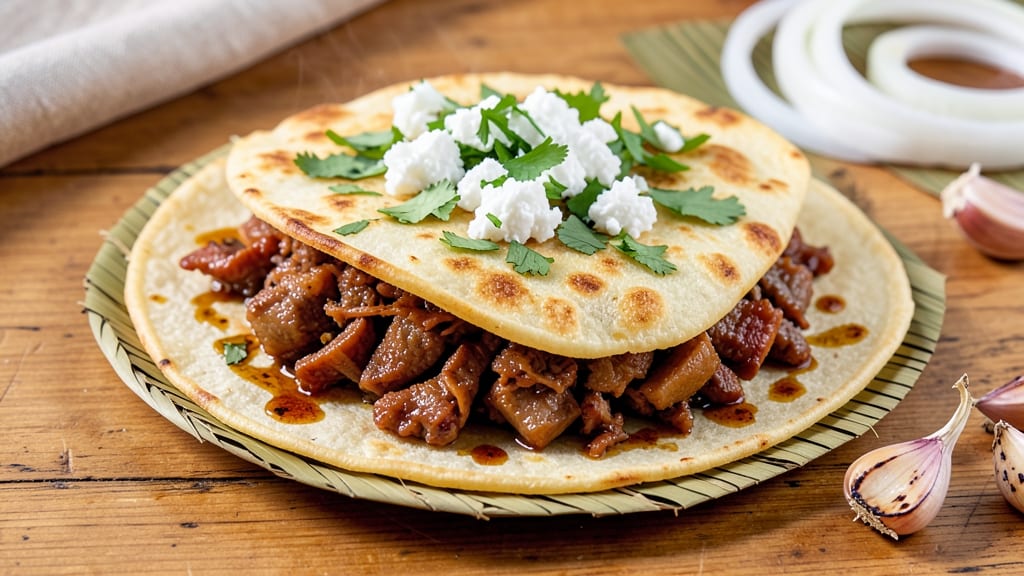
This authentic pork pupusa recipe brings the heart of El Salvador to your kitchen with every chewy, smoky bite. 🔥 I've spent years perfecting the balance between tender masa dough and flavorful pork filling—just like my abuela taught me in Georgia's humid summers.
The secret lies in the achiote-spiced pork and the perfect hand-shaped dough that crisps just enough when fried.
What sets these pupusas apart is the traditional technique: corn masa dough pressed by hand into thick, round patties, then filled with seasoned pork and queso fresco.
The dough stays chewy inside while developing a golden crust, while the pork filling infuses with cumin, cilantro, and achiote for that unmistakable Salvadoran flavor. This isn't just a recipe—it's an experience that transports you to Central America with every bite.
By the time you're done, you'll have restaurant-quality pupusas with perfectly balanced textures—tender masa, flavorful filling, and that signature crispy exterior. The aroma alone will have everyone gathering around your table, and the taste? Pure comfort food at its finest. Serve with salsa roja or curtido for the full experience.
The best part? This recipe scales beautifully—whether you're feeding a family or hosting a gathering. Let's get cooking with this authentic Salvadoran classic that's become a staple in my kitchen and will be yours too.
Ingredients for authentic pork pupusa
Twelve ingredients, one unforgettable Salvadoran experience—just like my abuela's kitchen.
| Ingredient | Amount | Notes |
|---|---|---|
| Fresh Pork Shoulder 🍖 | 1 ½ lb | Cut into 1-inch cubes |
| Dried Achiote Seeds 🌶️ | 1 tsp | Ground into powder |
| Ground Cumin 🌿 | 1 tsp | Toasted for depth |
| Fresh Cilantro 🌿 | ¼ cup | Stems removed, chopped |
| White Onion 🧅 | 1 whole | Finely chopped |
| Garlic Cloves 🧄 | 4 cloves | Minced finely |
| Masa Harina 🌽 | 3 cups | Maseca brand preferred |
| Warm Water 💧 | 1 ½ cups | 100°F for ideal dough |
| Queso Fresco 🧀 | 1 cup | Crumbled, not pre-shredded |
| Vegetable Oil 🫒 | 3 cups | For frying |
| Salt 🧂 | 1 ½ tsp | Diamond Crystal preferred |
| Lime 🍋 | 1 whole | Juiced for serving |
| Salsa Roja 🍅 | 1 ½ cups | For serving |
The pork shoulder is key—look for well-marbled cuts at H-E-B or your local Latin market. Maseca masa harina is non-negotiable for authentic texture (the stuff in blue bags), but Bob's Red Mill corn masa works in a pinch. Achiote seeds? Penzeys carries them, or find them in the Latin foods aisle. Toast the cumin seeds in a dry pan for 30 seconds first—trust me, it makes all the difference. The queso fresco should be crumbly, not melted—La Preferida brand is my go-to, but any good Mexican market will have it.
No achiote? Ancho chili powder at half the amount works in a bind, though it won't be exactly the same. Swap cilantro for parsley if you're not a fan, but reduce to 0.125 cup. The masa dough needs to be just right—too wet and it sticks, too dry and it cracks. Use a stand mixer with a dough hook for 2 minutes if you're nervous about hand-kneading. For the pork, brown it first in batches so you don't steam the spices. And yes, you can make the filling ahead—it actually tastes better after sitting overnight as the flavors meld.
Pupusas keep for 3 days in the fridge, but they're best fresh off the griddle. Reheat in a dry pan for 2 minutes per side. The dough freezes beautifully—wrap portions in plastic and freeze for up to 3 months. I always make double batches because they disappear faster than you can say '¡Buen provecho!' Serve with lime wedges and extra salsa roja—this isn't just a recipe, it's a celebration.
Why You'll Love This Recipe
- No-Fuss Filling: I swear by this pork shoulder—it’s tender when cooked right, and the achiote seeds give it that signature golden hue without extra fuss. Just brown the meat, pulse it with onions and cilantro, and you’ve got a filling that’s actually worth the effort.
- Deep, Earthy Heat: That cumin and achiote combo? It’s what makes these pupusas sing. The pork soaks up the spices perfectly, and the fresh cilantro brightens every bite—like a warm hug in your mouth.
- Lunchbox Hero: Between us, these freeze like a dream. I make a big batch on Sundays, reheat them in a skillet, and they’re still crispy enough to hold their shape. Pack them for work or school—no sad, soggy sandwiches here.
- Pocketbook Performer: Fresh pork shoulder is cheaper than ground meat, and a single batch stretches to feed four or more. Honestly, it’s my go-to when I need to impress guests without breaking the bank—plus, leftovers taste just as good the next day.
Step-by-step instructions for authentic pork pupusas
Here's how to make these chewy, smoky pupusas with a perfect queso fresco heart—just like in El Salvador.
🔥 Step 1: Cook the Smoky Pork Filling
In a heavy skillet over medium heat, add the 1.5 lb fresh pork shoulder cut into 1-inch cubes. Cook undisturbed for 5 minutes until the meat browns slightly. This creates that deep, savory flavor we want.
Add the 1 tsp ground cumin and 1 tsp dried achiote seeds (ground into powder) to the pork. Stir well and cook for another 5 minutes until the pork begins to release its juices. Then add the 1 whole white onion (finely chopped) and 4 cloves garlic (minced finely). Cook for 8-10 minutes until the pork is tender and the onion is translucent.
Here's the thing—don't drain the juices. Those flavorful liquids are what make the filling so delicious. Instead, transfer the pork mixture to a bowl and let it cool slightly. Once cool enough to handle, shred the pork using two forks. Mix in the 0.25 cup fresh cilantro (stems removed, chopped) and 1.5 tsp salt. This filling should be moist but not soupy—adjust with a splash of water if needed.
👨🍳 Step 2: Make the Perfect Masa Dough
In a large bowl, combine the 3 cups masa harina and 1.5 tsp salt. Make a well in the center and pour in the 1.5 cups warm water (about 100°F). Using your hands, mix gently until the dough comes together into a soft, slightly sticky ball. I like to use my fingers to work the dough—it's more tactile and helps you feel when it's just right.
Knead the dough for about 2 minutes until it's smooth and elastic. It should feel like playdough but not too sticky—if it's too dry, add a teaspoon of water; if too sticky, add a bit more masa harina. The dough should be pliable enough to roll out thin but not so soft it sticks to your hands.
Cover the dough with a damp towel and let it rest for 20 minutes. This resting period relaxes the gluten, making it easier to roll out thin pupusas. Don't skip this step—it's what gives those authentic pupusas their signature chewy texture.
🥘 Step 3: Assemble and Cook the Pupusas
Heat 1 cup vegetable oil in a skillet over medium-high heat until it reaches 350°F. Divide the rested dough into 12 equal balls (about 1.5 oz each). Roll each ball into a ¼-inch thick circle on a floured surface. I use a rolling pin, but you can also use your hands—just press gently and roll in all directions.
Take one dough circle and place 1 tablespoon of the pork filling in the center. Top with 1 tablespoon of crumbled queso fresco. Fold the dough over the filling, pressing the edges gently to seal. Roll the pupusa between your palms to create a smooth, round shape with a thick center where the filling is. Repeat with the remaining dough and filling.
Carefully place the pupusas into the hot oil, being careful not to splash. Cook for 3-4 minutes per side until they're golden brown and crispy. You'll know they're ready when you hear a soft sizzle and see those beautiful brown spots. Transfer to a paper towel-lined plate to drain excess oil.
🍽️ Step 4: Serve with Authentic Sides
While the pupusas are still warm, cut each one in half and serve immediately. The filling should be hot and gooey, with that perfect balance of smoky pork and creamy queso fresco. Squeeze fresh lime juice from the 1 whole lime over the top and serve with 1.5 cups salsa roja on the side.
These pupusas are best enjoyed fresh out of the oil—hot, crispy, and full of flavor. The salsa roja adds a bright, tangy contrast that cuts through the richness of the pork and cheese. Don't forget to make extra—these disappear fast when you're serving a crowd!
Pro Tips For Making Authentic Pork Pupusa
- Toast the Achiote: Dry-toast the achiote seeds in a dry skillet for 30 seconds until fragrant—this unlocks their color and depth. I used to grind them raw, and the filling tasted flat; now it’s bright and complex.
- Shred Pork Twice: Pull the pork shoulder at 195°F (90°C), then return it to the pot with a splash of broth and let it rest for 10 minutes. After shredding, run it under cold water to stop cooking—this keeps it tender and prevents a gummy filling.
- Pulse Onions Finely: Use a food processor for the onion—pulse it until it’s almost a paste, not just chopped. I learned this after seeing my first batch of pupusas turn watery; this ensures even distribution and moisture control.
- Press Pupusas Thin: Roll the dough into ¼-inch-thick circles, then press them firmly with your palm before cooking. Thin, even pressure = crispy edges and gooey centers. (Yes, even if you’re impatient like me.)
Make-ahead tips for this recipe
Dough Prep Ahead
Make the masa dough up to 2 days in advance and store it wrapped in plastic in the fridge. The gluten relaxes further, making rolling easier. I always prep mine the night before—it's one less thing to worry about on cooking day.
Just let it sit at room temperature for 30 minutes before using. 💫
Filling Make-Ahead
The pork filling actually tastes better when made ahead! Cook and shred it as directed, then refrigerate for up to 3 days or freeze for 3 months.
The flavors meld beautifully overnight, and you'll notice deeper achiote and cumin notes. I double the batch and freeze half—I always have it ready for quick pupusa nights.
Frozen Pupusa Shortcut
For the ultimate time-saver, shape and partially cook pupusas, then freeze them. Cook the dough balls and filling as usual, then fry the pupusas for just 2 minutes per side until lightly golden.
Cool completely, wrap in plastic, and freeze. When ready to serve, reheat in a dry skillet over medium heat for 3-4 minutes per side until crispy again. 🔥
Batch Cooking Tips
Double the recipe and freeze half the dough balls. Label them clearly with the date—trust me, you'll thank yourself later. I keep a running inventory in my freezer: pupusa dough, filling, and even pre-made salsa roja.
This way, I can whip up a full serving in 20 minutes when unexpected guests arrive.
Oil Management
Reuse your frying oil up to 3 times for pupusas, but keep it at 350°F consistently. Use a deep-fat thermometer—I swear by the Thermoworks model. When you're done, strain the oil through a fine-mesh sieve into an airtight container.
It keeps for 1 month in the fridge for future pupusa sessions.
Serving Prep
Set out all your serving components ahead of time: lime wedges, salsa roja, and extra queso fresco. I like to arrange everything on a large platter so guests can assemble their own pupusas.
Pre-warm your serving plates in the oven for 10 minutes at 200°F—this keeps the pupusas hot and crispy longer. 💛
Nutrition facts
Frequently asked questions
Can I substitute regular flour for the masa harina?
I wouldn't recommend it for authentic pupusas—the masa harina gives that signature chewy texture and flavor. If you absolutely must, try a 50/50 mix of all-purpose flour and cornstarch, but expect a slightly denser result. For true authenticity, track down Maseca brand at any Latin market—it's worth the trip!
What's the best way to make the dough less sticky?
Work the dough just until combined—over-kneading makes it tough. If it's too sticky, add 1 teaspoon masa harina at a time while kneading. Keep your work surface lightly floured, but don't overdo it or the pupusas will be dry. The dough should be soft but manageable, like playdough.
Can I use ground pork instead of pork shoulder?
Ground pork works in a pinch, but it won't have the same texture or depth of flavor. For authentic results, use pork shoulder—it stays juicy and develops that wonderful smoky quality when cooked. If you must use ground pork, brown it first to develop flavor, then proceed with the recipe as written.
How do I prevent the filling from leaking out?
Seal the edges tightly when folding the dough, pressing firmly around the filling. Use your fingers to create a smooth, round shape with a slightly thicker center. If you notice leaks during frying, the dough may be too thin—roll it slightly thicker next time. A well-sealed pupusa should hold together beautifully!
What's the deal with achiote? Where can I find it?
Achiote is the secret ingredient that gives pupusas their signature color and earthy flavor. You'll find it in the Latin foods aisle at most grocery stores (look for achiote paste or seeds) or at specialty markets. If unavailable, use ½ teaspoon ancho chili powder as a substitute, though the color won't be as vibrant.