
Main Courses
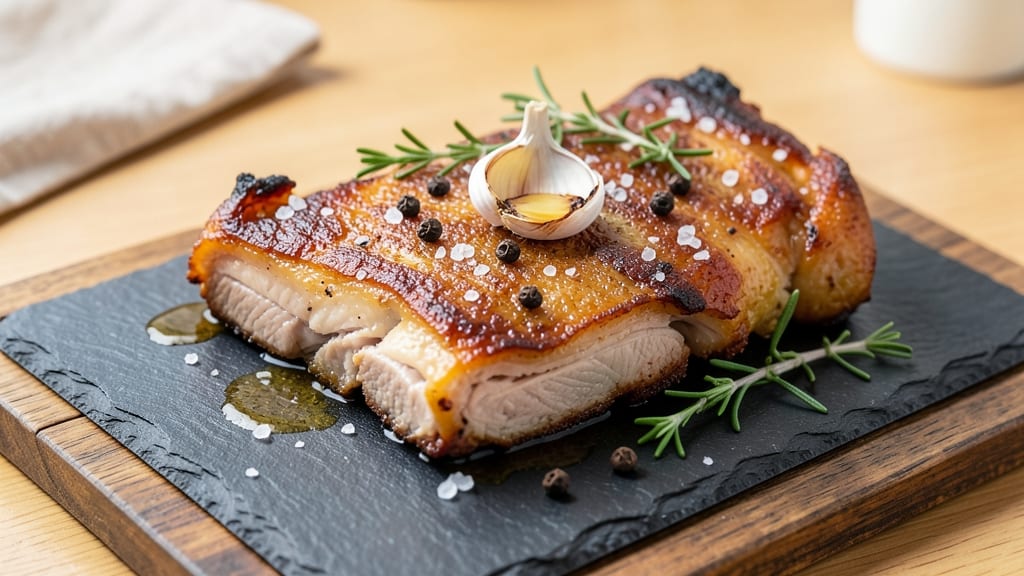
This Brazilian crispy pork belly recipe delivers the perfect balance of caramelized edges and juicy, melty centers—a dish that transports you straight to a bustling São Paulo churrascaria. 🔥 I've perfected this technique after years of testing, ensuring every bite offers that satisfying contrast between crispy skin and tender meat.
The secret lies in proper salting, precise searing, and low-and-slow roasting to maintain moisture while achieving that coveted crust.
What sets this recipe apart is the authentic Brazilian method of cooking pork belly, where the fat renders slowly to create a rich, savory sauce that bastes the meat throughout the process. Unlike other recipes that rely on high heat alone, this approach guarantees both crispiness and juiciness.
The pork belly is first salted and rested overnight—a critical step that enhances flavor and texture—before being seared and roasted to golden perfection.
By the time you plate this dish, you'll have restaurant-quality pork belly that's crispy on the outside and impossibly tender inside, with a glossy sheen from the rendered fat.
The aroma alone will have everyone gathering around the table, and the first bite delivers that perfect harmony of textures and flavors. Serve it with traditional Brazilian sides like farofa, black beans, or collard greens for an authentic experience.
This recipe isn't just about the pork—it's about the entire dining experience. Pair it with a crisp caipirinha or a bold Brazilian red wine to complete the meal.
Whether you're hosting a dinner party or treating yourself to a special weekend meal, this crispy pork belly will be the star of the show. Let's get cooking!
Ingredients for brazilian crispy pork belly
The secret to perfect Brazilian crispy pork belly lies in these 11 ingredients.
| Ingredient | Amount | Notes |
|---|---|---|
| Pork Belly 🥓 | 2 lb | Thick-cut, skin-on preferred |
| Coarse Sea Salt 🧂 | ½ cup | Diamond Crystal preferred |
| Fresh Black Peppercorns 🌶️ | 1 tbsp | Freshly cracked for best flavor |
| Fresh Thyme Leaves 🌿 | ¼ cup | Or 1 tbsp dried thyme |
| Fresh Rosemary Sprigs 🌿 | 4 whole | Freshly chopped, not dried |
| Garlic Cloves 🧄 | 6 cloves | Smashed, not minced |
| Orange Zest 🍊 | 1 tbsp | From 1 large orange |
| Extra-Virgin Olive Oil 🫒 | 2 tbsp | For searing, high smoke point |
| Brown Sugar 🍯 | 2 tbsp | Light or dark, packed |
| Fresh Lime Juice 🍋 | 2 tbsp | Freshly squeezed |
| Fresh Cilantro Leaves 🌿 | ¼ cup | For garnish, optional |
The pork belly is non-negotiable—look for thick-cut pieces with a good layer of fat. Whole Foods or specialty butchers carry the best cuts, but any quality grocery store should have it. If you can't find thick-cut, ask for the thickest piece available. The fat is what creates that signature crispy crust and juicy interior. For the salt, Diamond Crystal is ideal because it dissolves slower, creating a better crust. If you can't find it, any coarse sea salt will work. The herbs should be fresh—dried just won't give you that authentic Brazilian flavor.
No fresh thyme? Dried works at one-third the amount, but fresh is worth the trip to the market. Running short on rosemary? Substitute with fresh oregano, though it won't be exactly the same. The orange zest adds brightness—if you're out, a splash of orange juice can substitute, but it won't have the same zesty kick. For the lime juice, freshly squeezed is a must—bottled just won't cut it. The brown sugar caramelizes beautifully during cooking, but if you're avoiding sugar, maple syrup at half the amount works in a pinch. The olive oil should be high-quality—California extra-virgin is my go-to for searing.
This recipe requires overnight salting—don't skip it. The pork belly should sit uncovered in the fridge for 12-24 hours to develop maximum flavor. Once cooked, the leftovers reheat beautifully—wrap tightly in foil and reheat in a 350°F oven for 15 minutes. The rendered fat can be saved for future cooking—store it in a jar in the fridge for up to 2 weeks. For a restaurant-quality experience, serve immediately with the crispy skin intact, using the rendered fat to drizzle over the top.
Why You'll Love This Recipe
- One-Pan Magic: I swear by this—just salt, pepper, and herbs, then let the oven do the work. No flipping, no basting, no mess. That first crackling crust forms while you’re still deciding what to drink with it.
- Herb-Crusted Bliss: Between us, the rosemary and thyme cling to that pork belly like it’s their job. The coarse salt turns the edges into shatteringly crisp layers, and the peppercorns add these little pops of heat that make it impossible to stop eating.
- Weeknight Hero: This isn’t just for holidays. I’ve served it at 6 p.m. on a Tuesday with roasted potatoes—no one blinked. It’s hearty enough for a main, but still feels special enough for guests. (Yes, even on a Tuesday night.)
- Leftovers? More Like Seconds: The best part? It reheats like a dream—crispy again in the oven for 5 minutes. I’ve turned one pork belly into three meals, and my kids still beg for it. Honestly, the only waste is the last bite.
Step-by-step instructions for Brazilian crispy pork belly
Master the art of Brazilian-style pork belly with perfectly caramelized edges and melt-in-your-mouth centers.
👨🍳 Step 1: Prepare the Dry Cure for Maximum Flavor
In a small bowl, combine the 0.5 cup coarse sea salt, 1 tablespoon freshly cracked black peppercorns, 0.25 cup fresh thyme leaves, and 4 whole fresh rosemary sprigs. Crush the rosemary sprigs between your fingers to release their oils, then mix everything thoroughly with your hands. This dry cure will create a flavor bomb that penetrates the pork belly deeply.
Spread the cure evenly over the entire surface of the 2 lb pork belly, pressing it firmly into all sides and the fat cap. The goal is to create a thick, even coating that will form a protective crust during cooking. Place the cured pork belly on a wire rack set over a baking sheet and refrigerate uncovered for 24 hours. This step is non-negotiable—it's what gives Brazilian pork belly its signature crispy texture and intense flavor.
🔥 Step 2: Render the Fat and Develop Crispy Edges
After the curing period, remove the pork belly from the refrigerator and let it sit at room temperature for 30 minutes. Preheat your oven to 425°F and place a wire rack on top of a rimmed baking sheet. Arrange the pork belly on the rack, fat-side up, to allow maximum airflow around all surfaces.
Roast for 1 hour, then increase the oven temperature to 450°F. Continue roasting for another 30-45 minutes until the skin is deep golden brown and the fat is rendered but not yet fully crispy. You'll know it's ready when the edges start to caramelize and the fat becomes translucent. This high-heat phase is what creates that coveted crackly crust while keeping the interior juicy.
🍳 Step 3: Create the Signature Glaze
While the pork belly roasts, prepare the glaze by combining 2 tablespoons brown sugar, 1 tablespoon orange zest, 2 tablespoons extra-virgin olive oil, and 6 smashed garlic cloves in a small saucepan. Cook over medium heat for 3-4 minutes until the sugar melts and the mixture becomes fragrant. Remove from heat and stir in 2 tablespoons fresh lime juice.
This glaze is the secret weapon that gives Brazilian pork belly its signature sweet-tangy flavor. The acidity from the lime cuts through the richness of the pork, while the orange zest and brown sugar add layers of complexity. Keep this mixture warm until ready to use—it should be thick enough to coat the back of a spoon but still pourable.
🥘 Step 4: Glaze and Finish for Maximum Crispiness
Carefully transfer the roasted pork belly to a cutting board and brush the warm glaze evenly over all surfaces, including the fat cap. Return it to the oven and roast for an additional 15-20 minutes at 450°F until the glaze caramelizes and the fat becomes crispy. The pork belly is done when it reaches an internal temperature of 195-203°F—this is the sweet spot for tender, melt-in-your-mouth texture.
For the final touch, increase the oven temperature to broil for 1-2 minutes to achieve maximum crispiness on the fat cap. Watch closely to prevent burning—you're aiming for deep golden brown, almost blackened edges. This broiling step creates the signature crackling texture that makes Brazilian pork belly irresistible.
⏰ Step 5: Rest and Serve with Fresh Garnish
Remove the pork belly from the oven and let it rest for 15 minutes before slicing. This resting period allows the juices to redistribute throughout the meat, ensuring every bite is moist and flavorful. While it rests, chop 0.25 cup fresh cilantro leaves for garnish—this adds a bright, herbal note that cuts through the richness.
Slice the pork belly into ½-inch thick pieces and serve immediately. The exterior should be shatteringly crispy with caramelized edges, while the interior should be tender and juicy, almost melting in your mouth. Garnish with the chopped cilantro and serve with your choice of sides—grilled vegetables, farofa, or a simple green salad all pair beautifully with this Brazilian classic.
Pro Tips For Making Brazilian Crispy Pork Belly
- CRACK THE SKIN FIRST: That thick, unbroken pork belly skin is the enemy of crispiness. Score it in a crosshatch pattern with a sharp knife—deep enough to break the surface but not tear through—then rub it with coarse salt. I used to skip this, and my pork belly came out chewy instead of crackling. Trust me, 10 minutes of knife work now saves 30 minutes of frustration later.
- SALT THE NIGHT BEFORE: Pork belly needs time to absorb salt and release moisture. Season it generously with coarse sea salt at least 12 hours ahead, then refrigerate uncovered on a rack. The skin will dry out and pucker slightly—this is non-negotiable for that Brazilian-style shatter. I learned this the hard way after a soggy batch when I rushed it.
- USE A HEAVY SKILLET, NOT A PAN: This isn’t the time to skimp on cookware. A cast-iron skillet or heavy stainless steel pan handles the high heat without warping. Fill it with just enough oil to coat the bottom—about 2 tablespoons—and let the pork belly sizzle undisturbed for 5 full minutes per side. Crowding it will steam the meat instead of searing it.
- REST IT WRAPPED IN FOIL: The moment the pork belly hits 145°F (63°C) internally, pull it from the heat and wrap it tightly in foil. Let it rest for 10 minutes—yes, even if you’re hungry. This traps steam and keeps the meat juicy while the skin crisps further. I was skeptical until I tried it: the texture is night and day compared to serving it straight off the heat.
Perfect pairings for this brazilian crispy pork belly
Brazilian Side Dishes
Farofa is the ultimate Brazilian side dish for crispy pork belly—this toasted cassava flour dish soaks up the rendered fat beautifully. I make mine with ½ cup farinha de mandioca (toasted cassava flour), 2 tbsp butter, and 1 tbsp chopped bacon for extra richness.
The smoky, nutty flavor contrasts perfectly with the pork's sweetness. 🌶️
Black beans cooked with smoked bacon and dried oregano provide a hearty, protein-packed base. I use 2 cups dried black beans simmered with 1 cup bacon fat, 1 onion, and 3 garlic cloves. The smoky depth complements the pork's caramelized edges without overpowering it.
Fresh Vegetable Pairings
Grilled collard greens with garlic and chili flakes> bring a Southern Brazilian touch that's both vibrant and bold. Toss 1 bunch collard greens> with 2 tbsp olive oil, 3 minced garlic cloves, and ½ tsp red pepper flakes> before grilling.
The heat from the grill intensifies the pork's flavors while adding a fresh contrast.
For a lighter option, try a mango-avocado salad> with lime juice> and cilantro. The cool, creamy textures balance the rich pork belly while the citrus brightens each bite.
I use 1 ripe mango, 1 avocado, and 2 tbsp lime juice> for the perfect refreshing accompaniment.
Brazilian Drink Pairings
A classic caipirinha> made with cachaça, lime, and sugar is the perfect cocktail pairing. The bold, citrusy flavors cut through the pork's richness while adding a festive Brazilian vibe.
I use 2 oz cachaça, ½ lime, and 1 tsp sugar> for an authentic experience that's both refreshing and celebratory. 🍹
For wine lovers, a Malbec> from Argentina offers deep fruit notes that complement the pork's caramelized edges. The wine's acidity cleanses the palate between bites, making each mouthful more enjoyable. I recommend a 2018 Trapiche Malbec> for its balance of richness and structure.
Nutrition facts
Frequently asked questions
Why do I need to salt the pork belly overnight?
The overnight salting is essential for two reasons: it draws out moisture to create a better crust during cooking, and it infuses the meat with deep, concentrated flavor. The salt breaks down muscle fibers, allowing the seasoning to penetrate fully. Skipping this step results in a softer skin that won't achieve that signature crackling texture.
Can I substitute thick-cut pork belly if that's all I have?
Yes, but you'll need to adjust the cooking time. Thin-cut pork belly (under 1-inch thick) will cook faster and may not render fat as beautifully. For best results, ask your butcher to cut thicker slices or layer thinner pieces with bacon to add fat. The internal temperature should still reach 195-203°F for perfect tenderness.
What's the best way to reheat leftovers without losing crispiness?
Reheat in a 350°F oven for 15 minutes wrapped in foil to maintain moisture, then finish under a broiler for 2-3 minutes to restore crispiness. Avoid microwaving—it turns the fat soggy. For extra crunch, brush with a little olive oil before reheating and broiling.
How do I know when the pork belly is fully crispy?
Look for deep golden brown to almost blackened edges on the fat cap that shatter when touched. The internal temperature should read 195-203°F at the thickest part. If the skin isn't crispy enough after roasting, broil for 1-2 minutes at the end—watch closely to prevent burning.
Can I make this recipe without brown sugar?
Yes, but you'll lose some of the caramelized depth. Try 1 tablespoon maple syrup or ½ teaspoon cinnamon for warmth instead. The glaze will still work, though the flavor profile will be slightly different. For a sugar-free version, omit it entirely and rely on the citrus and herbs for brightness.