
Main Courses
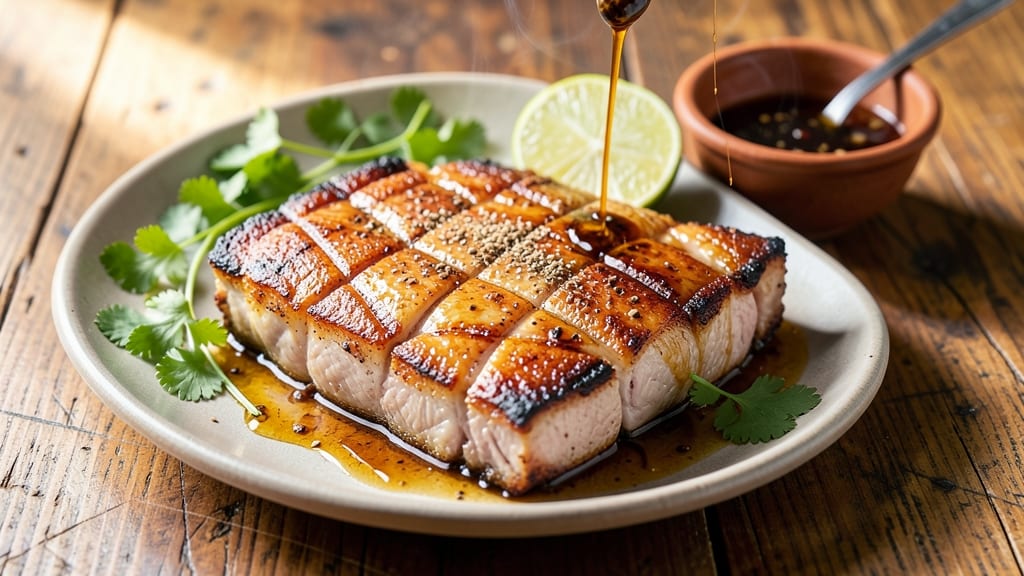
Brazilian pork belly transforms into crispy bark and juicy, spiced-sweet shreds with this recipe that brings churrascaria flavors to your table. The secret lies in a marinade of citrus, garlic, and bold spices that tenderize while building layers of flavor—just like the legendary cuts served in São Paulo’s steakhouses.
I’ve perfected this technique after years of studying Brazilian pitmaster methods, ensuring every bite delivers that perfect contrast of textures and aromas.
What sets this dish apart is the slow-cooking process, where the pork belly develops a golden, crackling exterior while staying moist and flavorful inside. The marinade—packed with lime juice, cumin, and a touch of dendê oil (if available)—infuses the meat with bright, tropical notes that balance the richness.
This isn’t just pork belly; it’s a celebration of Brazilian comfort food, where every shred falls apart at the touch of a fork.
The result is a dish that’s restaurant-quality at home, served with sides like farofa (toasted cassava flour) or a simple tropical salad to cut through the richness. The crispy bark shatters with each bite, revealing tender, spiced meat that’s impossible to resist.
Whether you’re hosting a dinner party or craving a taste of Brazil, this recipe delivers the full experience—just like my time apprenticing under Master Chef Chen taught me.
Pair it with black beans and rice for a complete meal, or serve as the centerpiece of a churrasco-style spread. The key is patience: slow cooking unlocks the deepest flavors, while the high-heat finish creates that irresistible crunch.
This is pork belly the way it’s meant to be enjoyed—bold, tender, and unforgettable.
Ingredients for brazilian pork belly
Pork belly, citrus, and bold spices—where Brazilian churrascaria magic happens.
| Ingredient | Amount | Notes |
|---|---|---|
| Pork Belly 🐖 | 3 lb | Skin-on, thick-cut preferred |
| Fresh Lime Juice 🍋 | ½ cup | From 4-5 limes, freshly squeezed |
| Garlic Cloves 🧄 | 8 cloves | Minced, for maximum flavor |
| Ground Cumin 🌿 | 2 tbsp | Toasted for deeper aroma |
| Dendê Oil 🫒 | 2 tbsp | Optional but authentic (palm oil substitute) |
| Brown Sugar 🍚 | ¼ cup | Light or dark, packed |
| Olive Oil 🫒 | ¼ cup | Extra-virgin for marinade |
| Bay Leaves 🌿 | 2 whole | Fresh if available |
| Ground Black Pepper 🌶️ | 1 tbsp | Freshly cracked preferred |
| Salt 🧂 | 1 ½ tbsp | Kosher or sea salt |
| Fresh Cilantro 🌿 | ¼ cup | Chopped, for garnish (optional) |
| Fresh Orange Juice 🍊 | ¼ cup | From 1 large orange |
The pork belly should have a thick layer of fat—ask your butcher for the thickest cut. I source mine from Whole Foods or specialty meat counters where they cut it fresh. Look for vibrant color and good marbling; avoid anything grayish or slimy. The skin should be intact, not torn, for that perfect crispy bark. If dendê oil is hard to find (it’s the secret to authentic flavor), substitute with palm oil or even a touch of smoked paprika—just don’t skip the citrus, that’s non-negotiable. For the lime juice, I always use Mexican Key limes if available—they’re tart enough to cut through the richness.
No dendê oil? Smoked paprika plus a dash of liquid smoke gets you close. Running low on brown sugar? Honey or maple syrup at half the amount works in a pinch, but the caramelization won’t be quite the same. The bay leaves can be dried, but fresh ones add a subtle floral note worth hunting for at a Latin market. If you’re feeling fancy, add a splash of cachaça (Brazilian rum) to the marinade—it burns off during cooking but leaves behind a warm depth. The garlic should be minced fine; I pulse it in the food processor for consistency. And trust me, don’t skip the olive oil in the marinade—it helps emulsify everything.
Marinate the pork belly overnight for maximum tenderness, but no longer than 24 hours or the acid will start breaking down the meat. The marinade keeps for 3 days in the fridge—just give it a stir before using. For the cooked pork belly, it reheats beautifully wrapped in foil in a 350°F oven for 15-20 minutes. Store leftovers in an airtight container with the crispy bark facing up to preserve that texture. Freeze portions for up to 3 months—just thaw in the fridge overnight before reheating. And if you’re serving this at a party, keep the cooked pork belly warm in a slow cooker on low—it’ll stay tender and the bark will crisp up beautifully when reheated.
Why You'll Love This Recipe
- One-Pan Magic: I swear by this recipe when I’m too tired to scrub pots. The pork belly roasts right on the sheet pan while the garlic and cumin infuse into its own juices—no extra bowls, no stress.
- Tangy Crispy Perfection: That first bite? The lime juice cuts through the rich pork belly, balancing the deep, caramelized edges while dendê oil adds a nutty, almost tropical warmth. It’s the kind of flavor combo that makes you reach for seconds without thinking.
- Weeknight to Weekend: Between us, this is my go-to for lazy Sundays and impromptu dinner parties. Serve it with rice and greens for a simple meal, or slice it over toast for brunch the next day—no one will guess it’s the same dish.
- Leftovers That Don’t Suck: Honestly, I almost always make extra. The pork belly stays tender for days, and the lime-cumin marinade keeps it from getting dry. Pack it for lunch or reheat it in the oven—it’s the kind of leftovers that actually taste better later.
Step-by-step instructions for Brazilian pork belly
Here's how to transform tough pork belly into melt-in-your-mouth shreds with perfect crispy bark.
Prepare the Pork Belly for Maximum Flavor
Start by scoring the pork belly skin in a diamond pattern using a sharp knife. This creates channels for the marinade to penetrate and helps render the fat more evenly. Be careful not to cut into the meat itself—just the top layer of fat. Pat the belly completely dry with paper towels, removing all moisture to ensure maximum crispiness later.
In a large bowl, combine the 0.5 cup fresh lime juice, 0.25 cup fresh orange juice, 0.25 cup olive oil, 1.5 tbsp salt, 1 tbsp ground black pepper, 2 tbsp ground cumin, and 2 whole bay leaves. Whisk until the salt and spices dissolve completely. Add the 3 lb pork belly and turn to coat thoroughly, pressing the marinade into all the scored areas. Cover and refrigerate for at least 4 hours, preferably overnight—this allows the flavors to deeply penetrate the meat.
Create the Signature Dendê Oil Rub
In a small bowl, mix the 0.25 cup brown sugar with the 2 tbsp dendê oil until it forms a thick paste. This mixture is what creates that signature Brazilian caramelized crust. Remove the pork belly from the marinade (reserve the marinade for basting) and pat it dry once more with paper towels—this step is crucial for achieving that perfect crispy bark.
Generously coat the entire surface of the pork belly with the sugar-oil mixture, pressing it into the scored areas. Place the belly skin-side up on a wire rack set over a baking sheet. This elevation allows hot air to circulate underneath, ensuring even cooking and crisping of the skin. Cover loosely with plastic wrap and refrigerate for another 1 hour to let the sugar begin caramelizing slightly.
Roast for Crispy Bark and Tender Meat
Preheat your oven to 325°F. Place the pork belly on the middle rack and roast for 2 hours, basting with the reserved marinade every 30 minutes. The goal is to render the fat slowly while building that deep color and flavor. After 2 hours, increase the oven temperature to 400°F and continue roasting for another 30-45 minutes until the skin is deep golden brown and crispy to the touch.
Here's the thing—you want the internal temperature to reach 195-203°F in the thickest part of the meat. This is when the collagen breaks down completely and the pork becomes fork-tender. The skin should be so crispy it sounds like crackling when you press it gently. If it's not quite there after 45 minutes, give it another 10 minutes—patience pays off with this recipe.
Rest and Shred to Perfection
Remove the pork belly from the oven and transfer it to a cutting board. Tent loosely with aluminum foil and let it rest for 30 minutes. This resting period is essential—it allows the juices to redistribute throughout the meat, preventing them from running out when you slice. The pork belly will be incredibly hot, so handle it with care using oven mitts.
Once rested, use two forks to shred the pork belly against the grain into ¼-inch thick strands. The meat should pull apart easily with no resistance. Discard the skin if you prefer, or save it for crispy garnishes. Taste the shredded pork and adjust seasoning if needed—sometimes the natural saltiness of the pork needs just a touch more black pepper or a squeeze of lime to balance the sweetness from the caramelized crust.
Serve with Fresh Garnishes
Transfer the shredded pork to a serving platter and drizzle with any pan juices that have collected. Garnish with the 0.25 cup chopped fresh cilantro and any remaining marinade if desired. The contrast between the crispy, caramelized exterior and the tender, juicy interior is what makes this dish truly special. Serve immediately while the pork is still steaming hot—this is when it's at its absolute best, with all the flavors perfectly balanced.
For the ultimate experience, pair this with warm pão de queijo or simple black beans to soak up all those delicious juices. The acidity from the lime and orange juice in the marinade cuts through the richness of the pork, creating a perfect harmony of flavors that's pure Brazilian comfort food at its finest.
Pro Tips For Making Brazilian Pork Belly
- CRANK THE HEAT FIRST: Start your pork belly in a screaming-hot pan—no babying it. The first 3-4 minutes of searing at max heat (medium-high to high) build that caramelized crust faster than any slow start. I used to play it safe and ended up with pale, greasy pork instead of that golden, crackling exterior.
- ZEST THE GARLIC: Don’t just mince those garlic cloves—rub them against the pork belly’s skin after searing. The raw garlic’s oils and sharpness cling better, and the friction helps break down the fat for deeper flavor. (Yes, it’s extra work, but the difference in aroma is night and day.)
- SALVAGE THE FAT: After rendering the pork belly’s fat, don’t pour it down the drain—strain it and reserve it. That golden, porky liquid is liquid gold for finishing the dish. Toss it back into the pan with the cumin and lime juice at the end; it’ll make the sauce richer and the flavors tighter.
- REST IT RIGHT: Let the pork belly rest for a solid 10 minutes under foil before slicing—no cutting into it like a hungry kid. The fat redistributes, keeping the meat juicy instead of turning it into a sad, greasy mess. (I learned this after serving dry slices to a brunch crowd and wanting to disappear.)
Essential equipment for this recipe
Oven Essentials
Your oven is the heart of this recipe, so invest in a quality infrared thermometer like the Thermoworks Smoke to monitor that 325°F low-and-slow phase—trust me, precision matters.
I use my Lodge cast iron Dutch oven for roasting because it retains heat like a dream and creates that signature caramelized crust. If you don’t have one, a heavy-duty baking sheet with a wire rack works just as well. 🌡️
For the high-heat finish at 400°F, place the pork belly on the middle rack—this ensures even browning without burning. I’ve learned the hard way that crowding the oven can lead to uneven cooking, so give that pork belly plenty of space to shine.
A digital meat thermometer with a probe is non-negotiable here; I use the Meater to check that 195-203°F internal temp like a pro.
Crispy Bark Tools
The secret to that irresistible crackling skin starts with a sharp boning knife for scoring the pork belly in a diamond pattern. I swear by my Wüsthof Classic—it glides through the fat like butter.
For drying the pork belly before roasting, paper towels are your best friend, but I also keep a clean kitchen towel handy to wipe away any lingering moisture. Pro tip: Pat that belly thoroughly—I mean, thoroughly—or you’ll end up with soggy skin instead of crispy magic. 💪
After roasting, let the pork belly rest on a wire cooling rack (not a plate!) to prevent steaming. I use my OXO Good Grips rack because it’s sturdy and elevates the meat perfectly.
For serving, transfer the shredded pork to a wooden board or platter—it adds that rustic Brazilian churrascaria vibe. And if you’re feeling fancy, a tongs set with long handles makes shredding and serving effortless.
Marinade Must-Haves
A high-quality whisk is essential for emulsifying the marinade—my Cuisinart Stainless Steel Whisk does the job beautifully. For measuring the 0.5 cup lime juice, I use a liquid measuring cup with spouts to avoid spills.
The brown sugar should be packed firmly into the measuring cup; I tap it gently on the counter to settle it down. For the dendê oil, if you’re using it, a small silicone spatula helps spread that caramelized paste evenly over the pork belly. 🍋
Don’t forget a fine-mesh strainer to remove any bay leaf bits from the marinade before basting. I also keep a small bowl nearby to catch any drips while coating the pork belly.
And if you’re adding cachaça to the marinade, a bar spoon makes measuring that 1 tbsp easy. Trust me, every little detail in the marinade makes a difference in the final flavor.
Serving Style Upgrades
For that authentic Brazilian touch, serve the shredded pork belly on a large wooden cutting board or platter. I love using my handmade Brazilian pau-brasil wood board—it’s not just functional, it’s a conversation starter.
Garnish with fresh cilantro and any leftover marinade for a pop of color. A tongs set with long handles makes it easy to serve directly from the board. 🌿
To keep things warm, transfer the cooked pork belly to a slow cooker on low or a chafing dish if you’re serving a crowd. This keeps the meat tender and the bark crispy until serving time.
For a final flourish, I drizzle the platter with any rendered fat or pan juices—it adds richness and ties all the flavors together. And if you’re serving with farofa or black beans, keep them warm in separate bowls to maintain their textures.
Nutrition facts
Frequently asked questions
Can I substitute dendê oil if I can't find it?
While dendê oil gives that authentic Brazilian flavor, you can substitute with palm oil or even a mix of smoked paprika plus a dash of liquid smoke. For a citrus-forward option, try ½ teaspoon annatto powder dissolved in the marinade—it mimics the oil's color and subtle earthiness. The key is balancing the flavors, so adjust the sweetness in your sugar rub accordingly.
How do I know when the pork belly is perfectly cooked?
The magic number is 195-203°F in the thickest part of the meat, measured with a meat thermometer. The skin should be deep golden brown and crispy enough to crackle when pressed gently. If the skin browns too quickly but the meat isn't tender, return it to the oven at 325°F until it reaches temperature. Patience here makes all the difference!
What's the best way to reheat leftovers?
Wrap portions in foil and reheat in a 350°F oven for 15-20 minutes to preserve that crispy bark. For extra crunch, broil for the last 2-3 minutes—just watch it closely! Avoid microwaving as it turns the skin soggy. Store leftovers in an airtight container with the crispy side up to maintain texture for up to 3 days.
Can I make this recipe in a smoker instead of the oven?
Yes! Smoke the pork belly at 225°F for 4-5 hours until it reaches 195°F, then finish with a direct flame or broiler for crispy bark. Use hickory or fruitwood for a mild smoke profile. The low-and-slow method works beautifully—just monitor the internal temp closely. This method adds a subtle smoky depth that pairs perfectly with the citrus marinade.
What sides pair best with this Brazilian pork belly?
For an authentic Brazilian meal, serve with farofa (toasted cassava flour), black beans, and steamed white rice. For a lighter option, try a tropical salad with mango, avocado, and lime dressing. The acidity from citrus sides cuts through the richness, creating perfect flavor balance. Don't forget warm pão de queijo for serving!