
Main Courses
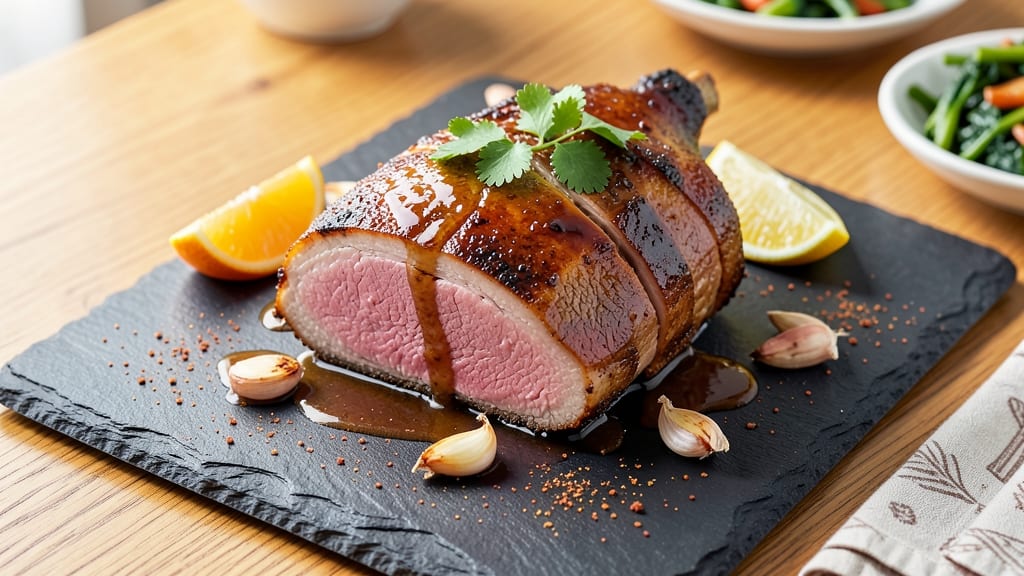
This Brazilian pork roast recipe brings smoky chipotle and bright citrus to your table in one unforgettable dish. ✨ After years of perfecting pork roasts for Southern crowds, I've adapted traditional Brazilian techniques—like slow-browning the crust and balancing heat with acid—to create a roast that's both bold and tender.
The secret lies in a marinade that caramelizes into a crackling crust while keeping the meat juicy inside.
What sets this recipe apart is the fusion of Brazilian flavors with Southern roasting methods. We start with a dry rub of smoked paprika, garlic, and citrus zest that develops into a deep, caramelized crust when roasted.
The chipotle adds smoky depth, while orange juice keeps the meat tender and bright. This isn't your average pork roast—it's a celebration of two culinary traditions coming together.
The result is a pork roast with a perfect crust that shatters at the touch, revealing juicy, flavorful meat underneath. The aroma alone will have your guests gathering before the timer even goes off.
Served with farofa, grilled vegetables, or a simple rice pilaf, this roast becomes the centerpiece of any meal. It's the kind of dish that makes you want to host dinner parties just to share it.
With just a few simple ingredients and 3 hours of hands-off cooking time, you'll have a restaurant-quality roast that tastes like it came from a Brazilian churrascaria.
The best part? Every slice delivers that perfect balance of smoky, sweet, and tangy flavors that keep people coming back for seconds. Let's get roasting!
Ingredients for brazilian pork roast
These bold Brazilian flavors transform simple pork into a showstopper crust and juicy centerpiece.
| Ingredient | Amount | Notes |
|---|---|---|
| Pork Shoulder (Bone-In) 🍖 | 4 lb | Well-marbled, 2-inch thick cut |
| Smoked Paprika 🌶️ | 2 tbsp | High-quality, not sweet variety |
| Ground Chipotle Pepper 🔥 | 1 tbsp | Adjust for heat preference |
| Garlic Cloves 🧄 | 6 cloves | Freshly minced, vibrant color |
| Orange Zest 🍊 | 1 tbsp | From 1 large orange |
| Fresh Orange Juice 💧 | ½ cup | Freshly squeezed, no pulp |
| Olive Oil 🫒 | 2 tbsp | Extra-virgin for richness |
| Brown Sugar 🍚 | 1 tbsp | Light or dark preferred |
| Salt 🧂 | 1 ½ tsp | Kosher or sea salt |
| Ground Black Pepper 🌶️ | 1 tsp | Freshly ground preferred |
| Fresh Thyme Leaves 🌿 | ¼ cup | Chopped, stems removed |
| Fresh Cilantro Leaves 🌿 | ¼ cup | Chopped, for garnish |
| Lime Juice 🍋 | 2 tbsp | Freshly squeezed |
The pork shoulder is your secret weapon—look for a cut with good marbling, like what you'd find at Whole Foods or your local butcher. Costco often has great deals on bone-in pork shoulders too. That bone-in piece adds flavor and helps keep the meat moist during roasting. If you can't find bone-in, bone-out works, but trim any excess fat to about 1/4-inch thickness—it'll render down into flavorful drippings. The chipotle is non-negotiable for that smoky depth, but grab the ground version (not powdered) for best results. Penzeys carries excellent quality if you want to splurge, but the regular grocery store stuff works fine.
No smoked paprika? Regular paprika plus a pinch of liquid smoke gets you close. Fresh thyme is ideal, but dried works at one-third the amount. The orange juice can be bottled in a pinch, but fresh is absolutely essential—it keeps the meat tender and bright. Want to cut costs? Use half the orange juice and add 1 tbsp apple cider vinegar for acidity. The lime juice at the end is what ties everything together—don't skip it! For the zest, use a microplane (those little handheld zesters work too) to get fine, fragrant strips. If you happen to have a Citrus Zester, that's perfect.
This roast gets better the next day—trust me, make extra. Store leftovers in the fridge for up to 5 days, or freeze for 3 months wrapped tightly in foil. The crust will soften when reheated, but a quick broil for 2-3 minutes brings back that crispy texture. I like to portion mine into 1/2 lb servings for easy reheating. For serving, let the roast rest for 15 minutes before slicing—this lets the juices redistribute. Garnish with fresh cilantro right before serving, because it wilts fast under heat.
Why You'll Love This Recipe
- One-Pan Magic: I swear by this recipe when I’m too tired to scrub pots—just rub the pork with smoked paprika, chipotle, and garlic, then let the oven do the work. The bone-in shoulder stays juicy without babying it, and the orange zest adds a bright kick that cuts through the richness.
- Smoky-Sweet Obsession: That combo of chipotle and orange zest? It’s like a hug for your taste buds—smoky, slightly spicy, but balanced with citrusy freshness. The pork practically falls apart, and the crust? Crispy enough to make you forget it’s "just" roasted meat.
- Leftover Hero: Between us, this is my go-to for meal prep. Shred the pork on day one, and you’ve got tacos, sandwiches, or rice bowls ready to go. Honestly, I’ve reheated it three times and it’s still better than takeout.
- Budget Feast: A bone-in pork shoulder costs less than half the price of pre-cut steaks, and it feeds six without breaking the bank. Plus, the leftovers stretch into lunches or freezer meals—no guilt, just flavor. (Yes, even on a Tuesday night.)
Step-by-step instructions for Brazilian pork roast recipe
Transform a simple pork shoulder into a showstopper with this bold, citrus-kissed crust.
👨🍳 Step 1: Build the Smoky Citrus Rub
In a medium bowl, combine the 2 tbsp smoked paprika, 1 tbsp ground chipotle pepper, 1 tbsp brown sugar, 1.5 tsp salt, and 1 tsp ground black pepper. Mix until completely blended—this is your flavor foundation. Then add the 1 tbsp orange zest, 6 cloves minced garlic, and 0.25 cup chopped fresh thyme leaves. Rub everything between your palms to break up any clumps and release the aromatics.
Here's the thing—this rub needs to stick. Pat the 4 lb pork shoulder dry with paper towels (seriously, get it bone dry), then press the spice mixture all over, including inside the cavity. Let it sit at room temperature for 30 minutes while you preheat the oven. This resting time lets the flavors penetrate and the meat come to temperature, ensuring even cooking.
🔥 Step 2: Sear for Maximum Flavor
Preheat your oven to 325°F. Heat a large Dutch oven or heavy pot over medium-high heat until it's smoking hot. Add the 2 tbsp olive oil and swirl to coat the bottom. Place the pork shoulder fat-side down in the pot and sear undisturbed for 8-10 minutes until the fat renders and the skin develops a deep golden crust. Flip and sear the other sides for another 5-6 minutes—this step locks in juices and builds that caramelized crust.
Don't walk away. If the oil starts to smoke excessively, reduce heat slightly. You're aiming for a rich, nutty aroma from the rendered fat—that's your signal the sear is working. Transfer the pork to a plate and tent loosely with foil while you prepare the citrus glaze.
🍳 Step 3: Create the Citrus Glaze
In the same pot (no need to clean it—those browned bits are flavor gold), reduce heat to medium. Add the 0.5 cup fresh orange juice and scrape up all those delicious fond deposits from the bottom. Let it simmer for 3-4 minutes until reduced by half. Then stir in the 2 tbsp lime juice and 1 tbsp brown sugar, bringing it to a gentle boil. Let it cook until it thickens to a syrupy consistency—about 2-3 minutes. You want it to coat the back of a spoon.
Here's where it gets fun: return the pork to the pot, fat-side up. Brush the glaze generously over the top and sides. The acidity from the citrus will tenderize the meat while the sugar caramelizes into a glossy crust. Cover the pot and transfer it to the preheated oven.
⏰ Step 4: Slow-Roast to Perfection
Roast the pork for 3 hours, then check the internal temperature with a meat thermometer. You're aiming for 195-200°F—this is the "pull" temperature where the collagen breaks down and the meat becomes fork-tender. If it's not quite there, tent with foil and continue cooking in 15-minute increments. The reason we wait until this high temperature is that pork shoulder needs that long, slow cook to transform tough muscle into melt-in-your-mouth texture.
During the last 30 minutes, uncover the pot and let the glaze caramelize further. You'll see it darken and thicken—this is your signal to start checking for doneness. The pork should have a deep mahogany color and that glossy, sticky glaze clinging to it. If the glaze gets too thick, add 1-2 tablespoons water to keep it balanced.
🥘 Step 5: Rest and Garnish
Remove the pork from the oven and transfer it to a cutting board. Tent loosely with foil and let it rest for 30 minutes—this is non-negotiable. The resting period allows the juices to redistribute throughout the meat, preventing them from pooling on your plate. While it rests, skim any excess fat from the cooking juices in the pot and keep it warm.
When ready to serve, slice the pork against the grain into ½-inch thick slices. Garnish each serving with 0.25 cup chopped fresh cilantro leaves and drizzle with any remaining glaze from the pot. The contrast of bright herbs against that deep, smoky pork is what makes this dish truly special. Serve with the reduced citrus pan sauce spooned over the top—it's the perfect balance of sweet, tangy, and smoky flavors.
Pro Tips For Making Brazilian Pork Roast
- CRANK THE HEAT FIRST: Use a screaming-hot oven (475°F/245°C) for the initial 30 minutes—this sears the pork’s exterior and locks in those smoky paprika flavors before you drop the temp to 275°F (135°C). I learned this the hard way after a batch that tasted bland because I went low-and-slow from the start.
- ZEST THE ORANGE FRESH: Skip the jarred zest—it’s dull and often bitter. Use a microplane to get fine, fragrant strips from the peel, then rub them directly onto the pork before roasting. The oils release better this way, and you’ll taste the bright citrus cut through the richness.
- DON’T SKIP THE CHIPOTLE SOAK: If your ground chipotle is too fiery, toss it in ¼ cup warm water for 10 minutes before mixing into the rub. This mellows the heat while keeping the smoky depth—trust me, your mouth will thank you later when the pork isn’t overpowered.
- REST IT RIGHT: Transfer the pork to a cutting board, tent loosely with foil, and let it sit for a full 20 minutes. I used to rush this, and the juices would pool on the plate instead of staying in the meat—now I wait, and every slice stays juicy. (Yes, even if you’re impatient like me.)
Troubleshooting your brazilian pork roast
Crust Too Pale?
If your pork roast emerges with a pale, almost translucent crust instead of the deep mahogany color you want, it’s likely due to insufficient caramelization. The solution? Increase oven temperature by 25°F for the final 30 minutes of cooking to help the sugars in the rub and glaze darken properly.
Also, make sure you’re using smoked paprika (not regular paprika) and that your Dutch oven is hot enough before searing—it should be smoking slightly when you add the oil. 🔥
Meat Too Dry?
Pork shoulder can easily dry out if overcooked or if the internal temperature exceeds 203°F. To prevent this, never exceed 325°F in your oven, and always use a meat thermometer to monitor the internal temperature.
If your pork reaches 195°F but feels dry when sliced, try adding 2-3 tablespoons of the citrus glaze during the last 15 minutes of cooking to keep it moist. Resting for 30 minutes is crucial—this redistributes juices and prevents dryness.
Glaze Too Thin?
A runny glaze is usually a sign of too much liquid or insufficient reduction. To fix this, simmer the glaze longer—reduce the orange juice down to ⅓ of its original volume before adding lime juice and sugar.
If it’s still too thin after cooking, stir in 1 teaspoon of cornstarch mixed with 1 tablespoon water and simmer for 2-3 minutes until it thickens. For next time, use slightly less orange juice (try ¼ cup instead of ½ cup) to avoid over-dilution.
Uneven Cooking?
If your pork roast has cold spots or overcooked edges, it’s likely due to uneven heat distribution. To prevent this, rotate the pot halfway through cooking (after 1.5 hours) for even exposure.
Also, ensure your oven rack is in the middle position—this prevents the top from overcooking while the bottom stays underdone. For extra insurance, use an oven thermometer to confirm your oven’s actual temperature (many ovens run 25°F hotter or colder than set).
Rub Not Sticking?
A dry rub that won’t adhere to the pork will result in bland, uneven flavor. To fix this, pat the pork shoulder completely dry with paper towels before applying the rub—moisture is the enemy of adhesion.
For extra grip, mix 1 teaspoon of cornstarch into your rub before applying it. Also, press the rub firmly into the meat, especially in crevices and around the bone, to ensure full coverage.
Let it sit at room temperature for 30 minutes before cooking to help the spices bind better. 💡
Fat Rendering Too Fast?
If the fat renders out too quickly, leaving your pork dry, it’s likely because the cut had too much external fat or the oven temperature was too high. To control this, trim excess fat to about ¼-inch thickness before seasoning.
For cooking, start at 300°F instead of 325°F to slow fat rendering, then increase to 325°F after 1 hour to finish cooking. Save the rendered fat—it’s perfect for basting or making pork cracklings!
Nutrition facts
Frequently asked questions
Can I use bone-in or bone-out pork shoulder?
Both work, but bone-in is preferred for deeper flavor and moisture retention. The bone adds natural fat that renders slowly, keeping the meat juicy. If using bone-out, trim excess fat to about ¼-inch to prevent over-rendering. For a 4 lb bone-out cut, expect slightly faster cooking—check internal temp at 190°F instead of 195°F.
How do I substitute smoked paprika?
Use regular paprika plus ½ teaspoon liquid smoke per 2 tbsp smoked paprika. For extra depth, add ¼ teaspoon cayenne pepper. Avoid sweet paprika—it lacks the smoky complexity. If you can't find smoked paprika, chipotle powder works too (reduce to 1 tbsp and add ½ teaspoon of regular paprika).
Can I make this in a slow cooker?
Yes! Sear the pork first in a skillet, then transfer to your slow cooker with the citrus glaze. Cook on low for 8 hours or high for 5 hours until internal temp reaches 195°F. The crust won't be as crispy, but the meat will be incredibly tender. For best results, finish with a quick broil for 5-7 minutes to caramelize the glaze.
What's the best way to reheat leftovers?
Slice leftovers and reheat in a skillet over medium-low heat with 1 tbsp orange juice and 1 tsp brown sugar for 3-4 minutes per side. For oven reheating, wrap slices in foil with 1 tsp glaze and bake at 300°F for 15 minutes. Microwaving works but makes the crust soggy—avoid it if possible.
How does this compare to traditional Brazilian pork dishes?
This recipe blends Brazilian techniques with Southern flavors—think of it as a fusion approach. Traditional Brazilian pork roasts often use azeite de dendê (palm oil) and farofa (toasted cassava flour), while this version incorporates chipotle and citrus for a smoky-sweet profile. For authenticity, serve with farofa and black beans, but the core roasting method remains true to Brazilian slow-cooked pork traditions.