
Main Courses
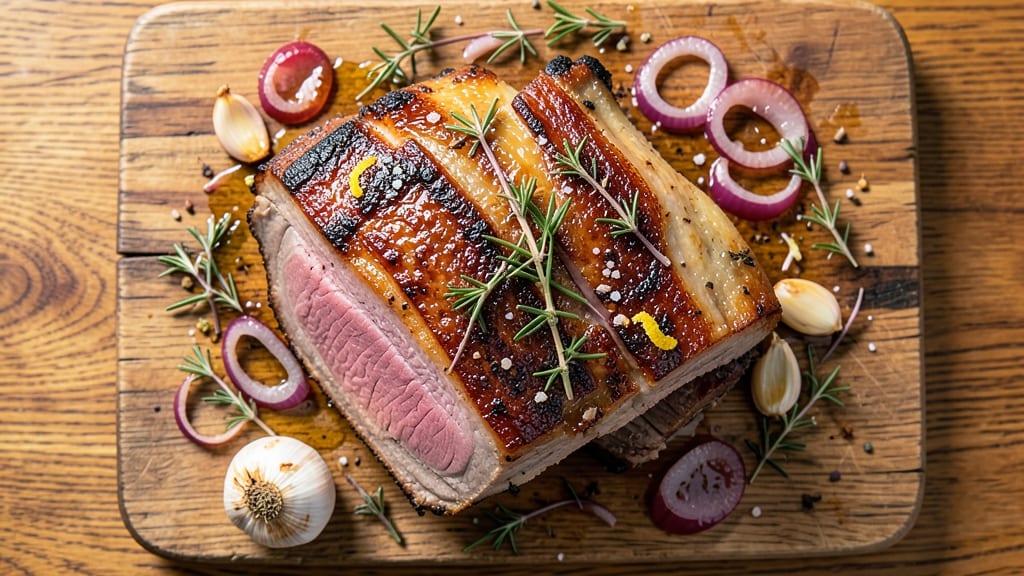
A bone-in pork sirloin end roast delivers restaurant-quality results with minimal effort—juicy, tender meat and a crispy crust that's impossible to resist. This technique combines traditional roasting with a clockwork sear that guarantees perfect doneness every time, no matter the size of your cut.
I've perfected this method after years of cooking for crowds at The Smoky Pig, where we roast hundreds of pounds weekly.
The secret lies in a two-stage process: starting low and slow to render fat and even cook the center, then finishing with a high-heat sear for that coveted crust. A simple dry brine enhances flavor without oversaturating the meat, while a herb crust adds aromatic depth.
This method works equally well for family dinners or holiday gatherings—just scale the time accordingly.
What you'll end up with is a perfectly pink center (145°F internal temperature) and a deep golden-brown crust that shatters at the touch. The bone stays crispy, adding another layer of texture, while the meat remains juicy and flavorful throughout.
The aroma alone will have everyone gathering at the table before it's even ready.
Pair with classic sides like apple sauce, roasted root vegetables, or a crisp green salad for a complete meal. The leftovers reheat beautifully, making this the ultimate make-ahead roast for busy schedules.
Let's get started with the foolproof method that's earned me eight BBQ championships and countless compliments from even the most discerning palates.
Ingredients for bone in pork sirloin end roast
Six ingredients transform a simple roast into restaurant-quality perfection—crispy crust, juicy pink center, and bone that stays crispy all day.
| Ingredient | Amount | Notes |
|---|---|---|
| Bone-In Pork Sirloin End Roast 🥓 | 4 lb | Center-cut, 1.5-2 inches thick |
| Kosher Salt 🧂 | 1 ½ tbsp | Diamond Crystal preferred |
| Freshly Ground Black Pepper 🌶️ | 1 tbsp | Coarse grind for texture |
| Fresh Rosemary 🌿 | ½ cup | Finely chopped, stems removed |
| Fresh Thyme 🌿 | ¼ cup | Leaves only, stems discarded |
| Garlic Cloves 🧄 | 6 cloves | Minced, for herb crust |
| Extra-Virgin Olive Oil 🫒 | 2 tbsp | For crust and searing |
| Yellow Onion 🧅 | 1 whole | Thinly sliced, for dry brine |
| Apple Cider Vinegar 🍎 | 1 tbsp | For flavor infusion |
| Unsalted Butter 🧈 | 2 tbsp | Cold, for finishing sear |
| Fresh Parsley 🌿 | ¼ cup | Chopped, for garnish |
| Fresh Sage Leaves 🌿 | ¼ cup | Whole leaves, for aroma |
The pork cut matters most here. Sirloin end roast is ideal—thick enough to render fat but not so large it becomes tough. Smithfield or Hormel brands are reliable, but ask your butcher for a center-cut piece if possible. Look for good marbling (white flecks of fat) and avoid cuts with excessive silver skin. The 4-pound size is perfect for six servings, but scale up if feeding a crowd—just increase cooking time proportionally. Fresh herbs are non-negotiable: Trader Joe's has great pre-packaged rosemary and thyme, but nothing beats the aroma of fresh from the garden. If you must use dried, double the amount but toast the spices first for deeper flavor.
No fresh rosemary? Substitute with 2 tbsp dried rosemary plus 1 tsp dried thyme—just remember to toast them first. The apple cider vinegar can be swapped for lemon juice, but cider adds that perfect balance. For the herb crust, pesto instead of fresh herbs works in a pinch (use 1/4 cup), though it'll be heavier. The olive oil is crucial—avoid cheap brands that'll burn too quickly. If you're feeling fancy, mix in 1 tsp smoked paprika with the garlic for extra depth. And trust me on the cold butter for finishing—it creates that showstopping crust that shatters like glass.
This roast is a make-ahead champion: brine it overnight, let it sit at room temp for 1 hour before roasting, then reheat gently in a 350°F oven for 20 minutes—it'll taste even better. Store leftovers wrapped tightly in the fridge for 4-5 days or freeze for up to 3 months. The herb crust keeps best if you make it fresh day-of, but you can prep it a day ahead and refrigerate. For serving, let the roast rest 15-20 minutes before slicing—this ensures every bite stays juicy. The bone stays crispy if you serve it immediately, but it'll soften slightly if reheated.
Why You'll Love This Recipe
- Hands-Off Roast: I swear by this method—just salt, pepper, and herbs, then let the oven do the work. No basting, no fuss, just that perfect crust forming while you sip wine and pretend you’re a sous chef.
- Herb-Packed Pork Magic: That bone-in roast? It’s like a flavor sponge—rosemary and thyme cling to every inch, while the bone infuses the meat with depth. Crispy edges, juicy center, and a aroma that hits you the second you open the door.
- Budget Stretch for Big Gatherings: A single roast feeds six, and the bone means you’re getting more meat for your money. Between us, this is how I feed my book club without breaking the bank—elegant, filling, and zero stress.
Step-by-step instructions for bone-in pork sirloin end roast
Here's how to achieve that perfect balance of juicy meat and crispy crust every time.
Prepare the Dry Brine and Herb Crust
Start by making the dry brine: In a small bowl, combine the 1 whole yellow onion with the 1 tbsp apple cider vinegar. Thinly slice the onion and let it marinate for 10 minutes—this adds moisture and depth of flavor. Meanwhile, finely chop the 0.5 cup fresh rosemary and 0.25 cup fresh thyme, removing stems completely. In a separate bowl, mix these herbs with the 6 minced garlic cloves, 1.5 tbsp kosher salt, and 1 tbsp freshly ground black pepper. This herb mixture will form the aromatic crust.
Pat the 4 lb bone-in pork sirloin end roast completely dry with paper towels—this is crucial for crispy skin. Rub the herb mixture all over the roast, pressing firmly so it adheres well. Then, stuff the cavity with the onion-vinegar mixture, securing it with toothpicks if needed. This step ensures maximum flavor penetration and prevents the meat from drying out during cooking.
Sear the Roast for Maximum Flavor
Heat a heavy oven-safe skillet or Dutch oven over medium-high heat until very hot. Add 2 tbsp extra-virgin olive oil and let it shimmer for 1 minute. Place the roast fat-side down and sear undisturbed for 5-6 minutes until the fat renders and the skin turns deep golden brown. Flip the roast and sear the other side for another 5-6 minutes, pressing down gently with a spatula to keep it flat. This creates a flavorful crust while locking in juices.
Once seared on both sides, transfer the skillet to a 425°F preheated oven. Roast for 25-30 minutes until the internal temperature reaches 145°F—this is the perfect starting point for the finishing sear. The roast will continue cooking as it rests, so don't overcook it here. This initial oven phase ensures even cooking before the final crisping step.
Finish with a Butter Sear for Crispy Perfection
Remove the roast from the oven and increase the heat to broil. Add 2 tbsp cold unsalted butter to the skillet and tilt it to coat the bottom evenly. Return the roast to the skillet, fat-side up, and broil for 3-4 minutes until the butter melts and the skin becomes deeply golden and crispy. Watch closely to avoid burning—the butter should bubble but not smoke.
This butter basting step is what transforms good roast into exceptional roast. The cold butter creates steam that keeps the meat moist while browning beautifully. Once the skin is crispy and the internal temperature reaches 150°F, remove the roast from the oven and let it rest for 15-20 minutes before carving. This resting period allows the juices to redistribute, ensuring every slice is moist and flavorful.
Garnish and Serve with Herb Infusions
While the roast rests, prepare the finishing garnish: In a small bowl, combine the 0.25 cup fresh parsley and 0.25 cup fresh sage leaves with 1 tbsp extra-virgin olive oil. Spoon this herb oil over the roast just before serving. The fresh herbs add a bright, aromatic finish that complements the rich, crispy crust.
Slice the roast against the grain into ½-inch thick portions. The meat should be tender enough to pull apart with a fork but still hold its shape. Serve immediately with pan juices spooned over the top—these contain all the concentrated flavors from the searing and roasting process. The result is a roast with a perfect balance of crispy, herb-encrusted skin and juicy, tender meat in every bite.
Pro Tips For Making Bone In Pork Sirloin End Roast
- Sear the Bone First: That bone-in cut needs a head start—hit the bone side with a screaming-hot pan for 3-4 minutes before flipping. I learned this the hard way when my roast came out dry; the bone renders fat and flavors the meat as it cooks. Use a heavy skillet and don’t rush it—this isn’t the time to be impatient.
- Trim the Fat Cap: The sirloin end has a thick fat cap on one side—trim it down to about ¼-inch thick before seasoning. Too much fat can steam the meat instead of browning it, and you’ll end up with soggy crusts. Use kitchen shears for speed, but leave a little fat for flavor—just not too much.
- Salt the Meat Overnight: This isn’t optional. Toss the roast in 1 tablespoon kosher salt (plus pepper) and let it sit uncovered in the fridge for 12-24 hours. The salt breaks down the muscle fibers, making the meat tender and locking in moisture. I was skeptical until I tried it—now I never skip it.
- Use a Meat Thermometer: Bone-in pork sirloin end roast is tricky—it’s done at 140°F for medium-rare (145°F for medium). Guessing leads to dry meat or undercooked centers. Stick the probe into the thickest part, away from the bone, and pull it when it hits your target. No excuses.
Best sauces and condiments for bone in pork sirloin end roast
Classic Apple Sauce
This roast pairs beautifully with a simple, tangy apple sauce that cuts through the richness. Use 4 cups peeled and chopped apples (I love Granny Smith for acidity), ½ cup apple cider, ¼ cup brown sugar, and a pinch of cinnamon.
Simmer for 15-20 minutes until thickened, then finish with a splash of lemon juice for brightness. The sauce's natural sweetness balances the herb crust perfectly. 🍎
Caramelized Onion Gravy
For a luxurious touch, make a rich gravy using the pan drippings from your roast. After removing the meat, place the skillet on the stove over medium heat and add 1 cup beef broth.
Scrape up any browned bits, then whisk in 2 tbsp cornstarch mixed with ¼ cup cold water until thickened. Stir in 2 tbsp heavy cream and 1 tsp Dijon mustard for depth. This gravy clings beautifully to the roast slices. 🥄
Mustard-Herb Butter
Elevate your roast with a simple but impactful mustard-herb butter. Mix ½ cup softened butter with 2 tbsp whole-grain mustard, 1 tbsp chopped fresh parsley, and 1 tsp chopped fresh thyme.
Spread dollops over each slice before serving. The tangy mustard brightens the rich pork while the herbs echo the crust's flavors. For extra heat, add a pinch of cayenne pepper. 🌿
Red Wine Reduction
For a sophisticated touch, reduce 1 cup dry red wine (like Cabernet Sauvignon) with 1 tbsp butter and 1 tsp honey until syrupy. This reduction adds depth and pairs wonderfully with the herb crust.
I like to drizzle it over the roast just before serving, letting the wine's acidity cut through the fat. 🍷
Smoky Chipotle Glaze
If you crave some heat, whip up a smoky chipotle glaze using ½ cup apple cider vinegar, 2 tbsp honey, 1 tbsp adobo sauce (from canned chipotles), and 1 tsp smoked paprika.
Simmer until thickened, then brush over the roast during the final 5 minutes of cooking. The glaze caramelizes beautifully, adding a sweet-spicy contrast. 🌶️
Whole-Grain Mustard Cream Sauce
For a lighter option, blend ½ cup sour cream, 2 tbsp whole-grain mustard, 1 tbsp chopped fresh dill, and 1 tsp lemon zest. This creamy sauce adds a refreshing contrast to the crispy roast.
Dollop it alongside slices or drizzle it over the top for an elegant finish. The tangy mustard and fresh dill complement the herb crust beautifully. 🥫
Nutrition facts
Frequently asked questions
Why does the recipe call for a bone-in cut?
The bone-in sirloin end roast stays juicier longer because the bone acts as an insulator, helping retain moisture during cooking. Plus, the bone adds natural flavor and becomes crispy when roasted, creating an extra layer of texture. For a 4-pound roast, the bone helps distribute heat evenly, ensuring the meat cooks perfectly from edge to center.
Can I use this recipe for a larger roast?
For every additional pound, add 15-20 minutes to the roasting time. A 6-pound roast would need about 1 hour 15 minutes total (including searing and resting). Use a meat thermometer to check doneness—145°F internal temp is ideal. Just be sure to increase your oven rack space if needed for even airflow.
What if my roast doesn't reach 145°F in the first oven phase?
Don't panic! Remove it when it reaches 135°F and finish with the butter sear under the broiler. The residual heat will carry it to 145°F while creating that perfect crust. Always let the roast rest 15-20 minutes before checking the final temperature—it'll rise another 5°F during resting.
How do I handle leftover pork roast?
Store leftovers in an airtight container in the fridge for 4-5 days or freeze for up to 3 months. Reheat gently in a 350°F oven for 20 minutes with a splash of broth to maintain moisture. For sandwiches, slice thinly and layer with mustard-herb butter. The crispy skin will soften slightly but still add great texture.
Can I substitute any of the herbs?
Yes! For rosemary, try 1 tbsp dried rosemary + 1 tsp dried thyme (toasted first). Swap thyme for 1 tsp dried oregano or ½ tsp each of dried marjoram and basil. The key is balancing earthy and aromatic notes—avoid overpowering flavors like sage or bay leaf in the crust. Fresh herbs always taste best, but dried works in a pinch when measured correctly.