
Main Courses
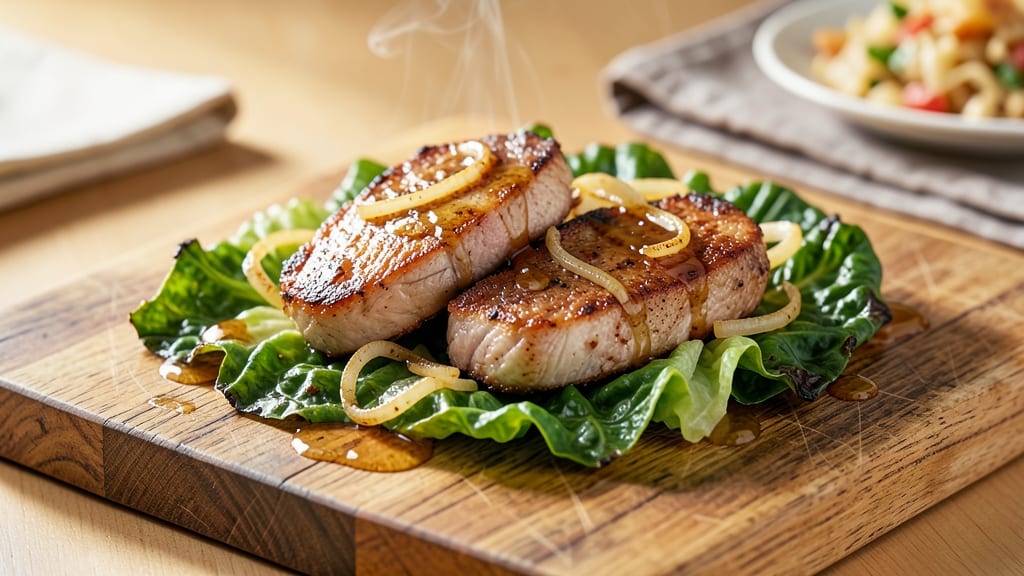
This baked pork chops and cabbage recipe delivers the perfect balance of crispy, golden edges and tender meat paired with sweet-savory cabbage that tastes like a home-cooked masterpiece. 🔥 After years of perfecting this dish in my kitchen—and later at The Smoky Pig—I’ve refined it to be restaurant-quality without requiring a smoker or hours of prep.
The secret lies in a dry brine that locks in moisture while creating that coveted crust, paired with a simple cabbage side that caramelizes into sweet, tender perfection.
What sets this recipe apart is the technique: pork chops baked at 400°F for just 15 minutes with a dry rub of salt, pepper, and smoked paprika, ensuring crispy edges without drying out the meat.
Meanwhile, the cabbage—sautéed with onions, garlic, and a splash of apple cider vinegar—develops deep, caramelized flavors that complement the rich pork. This isn’t just another pork chop recipe; it’s a foolproof, one-pan solution that transforms a weeknight into a special occasion.
The result is a dish that’s elegant enough for dinner guests but simple enough for a Tuesday night. The pork chops emerge with a golden-brown crust that shatters at the touch, revealing juicy, tender meat inside, while the cabbage offers a sweet, slightly tangy contrast.
Serve with a dollop of apple butter or a sprinkle of fresh parsley for a touch of brightness. This is the kind of meal that makes you feel like you’ve earned your dinner—without the fuss.
Whether you’re feeding a family or treating yourself to a solo meal, this recipe scales beautifully and reheats just as well. The cabbage can be made ahead and reheated, making it the ultimate make-ahead dish for busy schedules. Let’s get to the oven—your taste buds will thank you.
Ingredients for baked pork chops and cabbage
Crispy pork chops meet sweet-savory cabbage in this one-pan masterpiece.
| Ingredient | Amount | Notes |
|---|---|---|
| Bone-In Pork Chops 🥩 | 4 whole | 1-inch thick, rib or loin cut |
| Green Cabbage 🥬 | 1 small head | About 2 lbs total weight |
| Yellow Onion 🧅 | 1 whole | Medium size, sliced |
| Garlic Cloves 🧄 | 4 cloves | Fresh, minced |
| Apple Cider Vinegar 🍎 | 2 tbsp | For cabbage, not subbing |
| Smoked Paprika 🌶️ | 1 tbsp | For dry rub, not sweet |
| Kosher Salt 🧂 | 1 ½ tsp | Diamond Crystal preferred |
| Freshly Ground Black Pepper 🌶️ | ½ tsp | Cracked peppercorns |
| Olive Oil 🫒 | 2 tbsp | Extra-virgin, for searing |
| Unsalted Butter 🧈 | 2 tbsp | Cold, for finishing |
| Fresh Parsley 🌿 | ¼ cup | Chopped, for garnish |
| Apple Butter 🍏 | ¼ cup | Optional serving suggestion |
The pork chops make or break this dish—bone-in, 1-inch thick cuts from the rib or loin section are ideal. Costco or local butchers usually have the best selection, but don't stress if you grab supermarket chops. Look for good marbling and even thickness. I always pat them dry with paper towels before seasoning—that crispy crust starts with dry meat. The cabbage? Green or purple works, but green is sweeter. Remove any wilted outer leaves before chopping.
No smoked paprika? Regular paprika plus a pinch of cayenne gets you close. Fresh parsley wilting? Dried parsley at one-quarter the amount works in a pinch. The apple cider vinegar is non-negotiable for the cabbage—subbing lemon juice changes the flavor profile. For the pork rub, I toast the smoked paprika in a dry pan for 30 seconds first—deepens the smoky flavor. The butter should be cold when you add it at the end—it melts from the heat of the chops.
Pork chops cook in 15 minutes at 400°F—don't walk away. The cabbage can be made ahead and reheated—tastes even better the next day. Store leftovers in airtight containers for 4 days. I always make double portions because this reheats beautifully for lunches. The apple butter keeps for 6 months unopened, so grab a jar if you don't have any.
Why You'll Love This Recipe
- One-Pan Magic: I swear by this recipe when I’m too tired to scrub pots—just toss everything on a sheet pan, drizzle with vinegar and oil, and let the oven do the work. The cabbage softens perfectly while the pork chops crisp up, and honestly? That’s my kind of effortless dinner.
- Tangy-Sweet Crisp: The apple cider vinegar does something wild to the cabbage—it caramelizes just enough to balance the savory pork, while the garlic and onion build layers of flavor that stick with you. That crispy edge on the pork chops? Chef’s kiss, no fancy marinade needed.
- Leftovers That Don’t Suck: Between us, most baked pork chop leftovers turn into sad, dry slabs. Not this one. The vinegar keeps it juicy, and the cabbage reheats like a dream—perfect for quick lunches or even stuffed into wraps the next day. My lunchbox’s new best friend.
- Budget-Friendly Feast: Bone-in pork chops stretch further than you’d think, and cabbage is basically free at the grocery store. I feed four people for under $15, and the leftovers? Even better. It’s the kind of meal that makes you question why you ever ordered takeout.
Step-by-step instructions for baked pork chops and cabbage
Here's how to create perfectly crispy pork chops with tender cabbage—simple steps for big flavor.
🔥 Step 1: Season and Sear the Pork Chops
Pat the 4 whole bone-in pork chops completely dry with paper towels. I can't stress this enough—dry meat sears better and gets crispier. Place them in a bowl and mix together 1.5 tsp kosher salt, 0.5 tsp freshly ground black pepper, and 1 tbsp smoked paprika. Rub this mixture all over the chops, pressing firmly so the seasoning sticks.
Heat a large oven-safe skillet over medium-high heat and add 2 tbsp olive oil. Once the oil shimmers (about 2 minutes), carefully add the pork chops. Sear for 3-4 minutes per side until they develop deep golden-brown crusts. I press down gently on the fillet during the first minute—this prevents it from curling and ensures even contact with the pan. The chops are ready when they release easily from the pan and the edges are crispy.
🍳 Step 2: Prepare the Cabbage and Build the Bake
While the pork chops sear, prep the cabbage. Remove the outer leaves from the 1 small head green cabbage and cut it into 8 wedges, keeping the core intact. In the same skillet (no need to clean it—those browned bits are flavor gold), add 1 whole yellow onion sliced into ½-inch pieces and 4 cloves garlic cloves minced. Cook for 3-4 minutes until softened and fragrant.
Add the cabbage wedges, 2 tbsp apple cider vinegar, and 2 tbsp unsalted butter. Stir gently to coat everything in the butter and juices. The cabbage will start to soften immediately—this is where the magic happens. Return the seared pork chops to the skillet, placing them on top of the cabbage. Pour in ½ cup water (just enough to barely cover the bottom) and bring to a gentle simmer.
🔥 Step 3: Bake to Perfect Doneness
Transfer the skillet to a 400°F preheated oven and bake uncovered for 25-30 minutes. The pork chops are done when they reach an internal temperature of 145°F and the edges are deeply golden. I check the temperature with a meat thermometer—this ensures they're juicy without being overcooked. The cabbage should be tender enough that a fork slides in easily, but still hold its shape.
Here's the thing—don't skip the uncovered baking. The moisture will evaporate, helping create that crispy crust on the pork. If the cabbage looks dry before the pork is done, add 2-3 tablespoons of water to the pan. The last 5 minutes of baking are crucial—watch for the pork to develop that beautiful caramelized crust.
🍽️ Step 4: Rest and Finish with Fresh Parsley
Remove the skillet from the oven and let the pork chops rest for 5 minutes before serving. This resting period is non-negotiable—it lets the juices redistribute so every bite is moist and flavorful. While they rest, stir the cabbage gently and spoon some of the pan juices over the top to keep it moist.
Garnish with ¼ cup chopped fresh parsley and serve immediately with the ¼ cup apple butter on the side for dipping. The contrast of crispy pork chops with tender cabbage and sweet apple butter makes this dish unforgettable. If you're feeling fancy, drizzle a little extra pan juices over everything before serving—trust me, it takes this dish to the next level.
Pro Tips For Making Baked Pork Chops And Cabbage
- SEAR THE CHOPS FIRST: I used to skip this step and just bake the pork chops straight from the fridge, but searing them in a hot pan for 2-3 minutes per side before baking locks in flavor and gives you that crusty edge. Use a little olive oil and don’t crowd the pan—you want that golden brown, not steamed meat.
- SHRED THE CABBAGE THIN: The difference between soggy and perfect cabbage is how you prep it. Cut the wedges into ¼-inch thick slices—thinner than you think—and toss them with the vinegar and onions right away. Thick slices stay crunchy on the outside but stay tough in the middle, and nobody wants that.
- DON’T OVERBAKE THE PORK: Bone-in pork chops are forgiving, but they’re also easy to dry out if you let them sit too long. Pull them out when the internal temp hits 145°F (a meat thermometer is your friend here), then let them rest 5 minutes under foil. The residual heat will finish cooking them perfectly—no guessing.
- SAUTE THE ONIONS LOW AND SLOW: After burning three batches of onions, I finally learned to cook them on medium-low heat until they’re soft and translucent, not browned. This builds flavor without bitterness, and it’s the base for everything else. If you rush it, you’ll end up with a sharp, burnt taste that ruins the whole dish.
Storing and reheating this baked pork chops and cabbage
Pork Chops Storage
Store cooked pork chops in an airtight container in the fridge for up to 4 days. I always let them cool completely to room temperature first—never store them hot—to prevent bacterial growth.
Place them on a wire rack in the fridge for 1-2 hours to speed up cooling, then transfer to the container. For longer storage, freeze them for up to 3 months—wrap individually in plastic wrap before placing in a freezer bag. 🥩
Cabbage Reheating
Reheat cabbage in the microwave for 2-3 minutes on 70% power, stirring halfway. For best results, cover with a damp paper towel to retain moisture. Or, reheat in a skillet over medium-low heat with 1 tablespoon water or broth for 3-4 minutes, stirring occasionally.
The cabbage will taste even better reheated—those caramelized flavors deepen overnight. 🌱
Combined Reheating
For the full meal, reheat pork chops and cabbage together in the oven at 350°F for 10-15 minutes covered with foil. This method keeps the pork moist and the cabbage tender.
I add 1 tablespoon butter to the skillet before reheating—it adds richness and helps redistribute flavors. The pork should reach 165°F internally when reheated. ✨
Freezer Tips
Freeze pork chops separately from the cabbage for best results. Thaw overnight in the fridge—never microwave-thaw—as it can make the meat tough. For the cabbage, portion it into single-serving containers before freezing.
When reheating from frozen, add 5-10 extra minutes to ensure everything is heated through. I always check the internal temperature of the pork with a thermometer. ❄️
Leftovers Strategy
Double the cabbage recipe and freeze half—it reheats perfectly for quick weeknight meals. Store leftovers in glass containers for better flavor retention. The pork chops can be repurposed into sandwiches or salads the next day.
I often dice them for pork chop pot pie or chop them up for pork fried rice—zero waste, maximum flavor. 💡
Serving Reminders
Before serving reheated pork chops, pat them dry with paper towels to crisp up the edges. Garnish with fresh parsley and a drizzle of pan juices for that restaurant-quality finish.
The cabbage can be served as a side or spooned over mashed potatoes. Remember, the apple butter pairs perfectly with both—just keep it chilled until serving. 🍽️
Nutrition facts
Frequently asked questions
Can I use boneless pork chops instead of bone-in?
Yes, but the cooking time will differ slightly. Boneless chops cook faster—about 10-12 minutes at 400°F instead of 15 minutes. They're also more prone to drying out, so I recommend slightly thinner cuts (½-inch thick) and covering with foil for the last 5 minutes of baking to retain moisture.
What if I don't have apple cider vinegar for the cabbage?
Use 1 tbsp lemon juice as a substitute, but expect a slightly different flavor profile—the tang will be more citrus-forward. For a closer match, try 1 tsp balsamic vinegar instead. The vinegar helps tenderize the cabbage and balances its natural sweetness as it caramelizes.
How do I know when the pork chops are fully cooked?
Use a meat thermometer to check for an internal temperature of 145°F—this is the USDA recommended safe minimum. The edges should be deeply golden and crispy, while the center should still be slightly pink (bone-in chops often stay pink longer). If you don't have a thermometer, cut into the thickest part—juices should run clear, not pink.
Can I make this recipe in a slow cooker instead?
Sear the pork chops first, then add them to the slow cooker with the cabbage, onions, garlic, vinegar, and ½ cup water. Cook on low for 6-7 hours or high for 3-4 hours. The pork will be more tender but less crispy. For extra flavor, add 1 tsp brown sugar to the cabbage mixture.
What's the best way to crisp up the pork chops after reheating?
Pat the chops dry with paper towels and sear them in a hot skillet with 1 tbsp butter for 1-2 minutes per side until golden. This restores that crispy texture! For extra flavor, add a pinch of smoked paprika to the butter. The cabbage reheats best in the microwave with a splash of water to revive its moisture.