
Soups & Stews
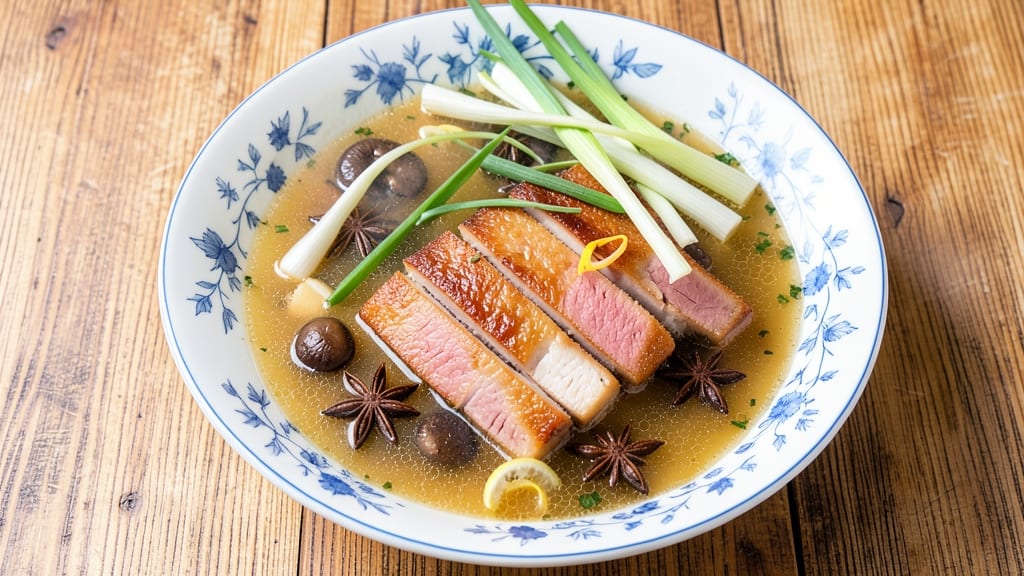
This Chinese pork soup recipe transforms simple ingredients into a fragrant, comforting bowl of silky broth and tender pork. 💛 The secret lies in balancing ginger, lemongrass, and star anise to create a broth so aromatic it'll have everyone asking for seconds.
I developed this version after years of studying regional Chinese techniques—it's the kind of soup that feels both nostalgic and fresh, perfect for weeknight dinners or special occasions.
The recipe begins with braising pork shoulder until fork-tender, then simmering it in a ginger-scallion broth infused with lemongrass and aromatic spices. Unlike many quick soups, this one builds flavor gradually, rewarding patience with a depth that can't be rushed.
The result is a harmonious balance of savory, herbal, and slightly sweet notes that make every spoonful satisfying.
What makes this recipe truly special is its versatility—it works for both Cantonese-inspired clear broths and richer Sichuan-style versions with a touch of chili oil. The silky pork shreds melt in your mouth, while the broth remains clear and fragrant.
Serve it with steamed rice and quick-pickled vegetables for a complete meal that feels restaurant-quality at home.
Whether you're cooking for family or treating yourself to a comforting solo meal, this soup delivers warmth and satisfaction. The technique is straightforward, but the flavors are anything but basic. Let's get started on a bowl that'll become your new favorite.
Ingredients for chinese pork soup
Fifteen ingredients for a soup that balances aromatic spices with tender pork perfection.
| Ingredient | Amount | Notes |
|---|---|---|
| Pork Shoulder 🥩 | 1 ½ lb | Bone-in, cut into 2-inch chunks |
| Fresh Ginger 🧄 | ½ cup | Peeled, sliced into thick coins |
| Lemongrass Stalks 🌿 | 3 whole | Bruised, cut into 2-inch pieces |
| Star Anise Pods 🌶️ | 2 whole | Lightly crushed |
| Dried Shiitake Mushrooms 🍄 | 4 whole | Rehydrated in hot water |
| Green Onions 🧅 | ½ cup | White and green parts, chopped |
| Garlic Cloves 🧄 | 6 cloves | Smashed, not minced |
| Dried Bay Leaves 🌿 | 2 whole | Standard size |
| Soy Sauce 🍶 | ¼ cup | Light or all-purpose |
| Shaoxing Wine 🍷 | ¼ cup | Or dry sherry as substitute |
| Chicken Stock 💧 | 4 cups | Homemade or high-quality |
| Sesame Oil 🫒 | 1 tbsp | For finishing, not cooking |
| Salt 🧂 | 1 tsp | Kosher or sea salt |
| White Peppercorns 🌶️ | ½ tsp | Freshly cracked |
| Cilantro Leaves 🌿 | ¼ cup | Chopped, for garnish |
The pork shoulder is non-negotiable—bone-in gives richer flavor, and 2-inch chunks ensure even cooking. Costco or your local butcher usually carry it pre-cut, but if not, ask for a pork butt roast. Fresh ginger and lemongrass are the soul of this soup; Asian markets often sell lemongrass in larger stalks, which is perfect for this recipe. For shiitake mushrooms, opt for dried—they add depth and rehydrate beautifully. Star anise and bay leaves are easy to find in the spice aisle, but if your grocery store doesn't carry them, Penzeys or Trader Joe's have great selections.
No Shaoxing wine? Dry sherry or mirin work in a pinch, though Shaoxing adds that authentic umami. Fresh ginger and lemongrass can be swapped for paste if needed, but fresh is always better. For chicken stock, homemade is ideal, but Pacific Foods or Kitchen Basics brands are solid store-bought options. The soy sauce should be light—Kikkoman is reliable, but any all-purpose will do. If you're feeling adventurous, add a dash of chili oil at the end for a Sichuan twist, but keep it optional for Cantonese purists.
This soup tastes even better the next day as flavors meld. Store in the fridge for 3-4 days or freeze for up to 3 months—just thaw in the fridge overnight. The broth thickens as it cools, so add a splash of water or stock when reheating. For meal prep, double the recipe and freeze portions; the pork shreds beautifully when reheated. Garnish with cilantro and sesame oil just before serving to keep it vibrant.
Why You'll Love This Recipe
- Pantry Magic: I swear by this recipe—no special trips to the market. The star anise and shiitake mushrooms sit in my cupboard for months, and that pork shoulder? It’s the cheapest cut for a reason. Honestly, I’ve made this soup with whatever I had, and it still tastes like I planned it.
- Umami Bomb: That first sip of broth—ginger and lemongrass hitting your tongue before the pork melts—it’s like a flavor time machine. The shiitake mushrooms soak up the broth and turn it into liquid gold, while the star anise adds this deep, earthy warmth that lingers. (Yes, even on a Tuesday night.)
- Leftovers That Don’t Suck: This soup tastes better the next day. I make a double batch on Sundays, and by Wednesday, it’s my secret weapon for lazy evenings. The pork gets even more tender, and the broth reduces to a richer, deeper base. My kids beg for seconds—no complaints here.
- Weeknight Workhorse: Simmer it while you prep dinner, or let it cook low and slow while you’re at work. Between us, I’ve had this soup save me after a long day—just toss in some rice, and boom, you’ve got a meal. The best part? It’s not fancy, but it feels like a hug in a bowl.
Step-by-step instructions for fragrant ginger-lemongrass pork soup
Transform humble pork shoulder into silky, aromatic shreds with this precise technique.
🔥 Step 1: Sear the Pork for Deep Flavor
Heat a large Dutch oven over medium-high heat until smoking. Add the 1.5 lb pork shoulder in single layers, working in batches if needed. Sear for 3-4 minutes per side until deeply browned and crispy in spots. This Maillard reaction creates the rich foundation for your broth.
Real talk: Don't rush this step. You'll know it's ready when the pork releases easily from the pan. Transfer the seared pork to a plate and set aside. Here's the thing—those browned bits sticking to the bottom? That's pure flavor we're about to dissolve into our soup.
🍳 Step 2: Build the Aromatic Base
In the same Dutch oven, add 1 tbsp sesame oil and swirl to coat. Add the 6 smashed garlic cloves, 0.5 cup sliced fresh ginger, and 3 bruised lemongrass stalks. Stir constantly for 1-2 minutes until the garlic turns golden and fragrant—this prevents burning while extracting maximum flavor.
Add the 2 lightly crushed star anise pods, 2 dried bay leaves, and the 4 rehydrated dried shiitake mushrooms (squeeze out excess water). Pour in the 0.25 cup Shaoxing wine and scrape up any browned bits from the bottom. Let it simmer for 30 seconds until the alcohol aroma dissipates.
🥘 Step 3: Develop the Fragrant Broth
Pour in the 4 cups chicken stock and bring to a gentle boil. Reduce heat to medium-low and add the seared pork back to the pot. Partially cover and simmer for 1 hour, skimming any foam that rises to the surface. The broth should reduce slightly and develop a rich, golden color.
After 1 hour, check the pork tenderness by inserting a fork—it should pierce easily but still have some resistance. If it's not quite tender, continue cooking for another 20-30 minutes. This is where patience pays off; the longer it cooks, the more flavorful the broth becomes.
🔪 Step 4: Finish with Umami and Texture
Strain the broth through a fine-mesh sieve into a clean pot, pressing on the solids to extract maximum flavor. Return the broth to medium heat and add the 0.25 cup soy sauce, 1 tsp salt, and 0.5 tsp cracked white peppercorns. Stir well and bring to a gentle simmer.
Shred the pork directly in the broth using two forks, working against the grain for tender, silky strands. The pork should be completely submerged in the fragrant liquid. Taste and adjust seasoning—you might need a touch more salt or soy sauce to balance flavors. Keep warm on low heat.
🍽️ Step 5: Serve with Fresh Garnishes
Ladle the soup into bowls, dividing the shredded pork evenly. Garnish each serving with 0.5 cup chopped green onions and 0.25 cup chopped cilantro leaves. Drizzle with an extra touch of sesame oil if desired—this adds a final nutty aroma and visual appeal.
Serve immediately with steamed rice on the side. The contrast of the fragrant broth against the mild rice enhances every flavor. Each spoonful should deliver tender pork, aromatic broth, and a perfect balance of salty, sweet, and umami notes—this is comfort food at its finest.
Pro Tips For Making Chinese Pork Soup
- Simmer Slow and Steady: Start with a rolling boil, but once the pork shoulder hits the pot, drop the heat to a gentle simmer—think small bubbles breaking occasionally, not a vigorous dance. I used to rush this, and the broth turned cloudy. Patience here means fork-tender meat and a clear, flavorful stock.
- Split the Lemongrass Properly: Don’t just chop the stalks—split them lengthwise and then slice into 1-inch pieces. This releases the aromatic oils without making the soup taste like you’re chewing on a stalk. (Yes, I’ve done that. Twice.)
- Toast the Star Anise First: Dry-toast the star anise pods in a pan for 30 seconds until fragrant before adding them to the soup. This deepens their flavor and prevents them from floating like forgotten spices. I learned this the hard way when my soup smelled like a spice drawer.
- Rehydrate Shiitakes Right: Soak dried shiitakes in hot water for 20 minutes, then squeeze out the excess liquid before adding them to the pot. This keeps the broth from turning watery. I skip this step sometimes, and the soup loses its richness. (Your future self will notice.)
Regional styles of this recipe
Cantonese Clear Broth
This is the classic version you'll find in Hong Kong-style restaurants, where clarity and delicate flavors take center stage. The key difference is using a lighter touch with spices—skip the star anise and reduce the soy sauce to 2 tablespoons for a more refined broth.
I add 1-inch slices of daikon radish and 1-inch pieces of taro root to the broth during the final 30 minutes of simmering for subtle sweetness. Serve with thinly sliced chives instead of cilantro for that authentic touch. 🥕
Sichuan Spicy Twist
For a fiery kick, add 1 tbsp chili oil at the end and include 1 tbsp doubanjiang (chili bean paste) when building the aromatic base. I also toss in 2 dried red chilies with the star anise.
The pork stays tender, but the broth gets a deep, smoky complexity. Garnish with crushed Sichuan peppercorns for that signature numbing heat. Trust me, this version will have everyone reaching for seconds.
Hunan Bold & Herby
Hunan cuisine loves its herbs and bold flavors. In this version, I add 1 bunch fresh cilantro (stems included) and 1 tbsp doucai (dried tangeret peel) to the broth. The pork gets a quick stir-fry with 1 tbsp minced garlic and 1 tbsp chili paste before adding to the soup.
Finish with thinly sliced scallions and a drizzle of chili oil—this version is all about that fresh, vibrant heat. 🌶️
Taiwanese Comfort Version
Taiwanese home cooks often make this soup richer with 1 cup pork bone broth instead of chicken stock, plus 1 tbsp goji berries and 1 slice of dried lily flower for sweetness. I also add 1-inch pieces of lotus root for texture.
The result is a heartier, slightly sweet broth that feels like a hug in a bowl. Garnish with toasted sesame seeds and extra cilantro for crunch. This is the version I make when I want extra comfort.
Northern Chinese Hearty Style
In Northern China, this soup often includes 1 cup chopped napa cabbage and 1 cup shredded daikon radish cooked directly in the broth. The pork is sometimes braised with 1 tbsp hoisin sauce before adding to the soup.
I like to finish with 1 tbsp fermented black beans for umami depth. This version is perfect for cold days—it's filling, hearty, and packed with texture. 🥬
Nutrition facts
Frequently asked questions
Can I substitute pork shoulder with another cut?
Yes! For similar results, use pork belly (trimmed of fat) or pork loin, but cut into 1-inch cubes for even cooking. Pork belly adds richness but may need 10-15 minutes less simmering to avoid toughness. Avoid lean cuts like tenderloin—they dry out too quickly.
How do I make this soup vegetarian?
Replace pork with extra-firm tofu (pressed and cubed) or shiitake mushrooms (increased to 8 dried). Use vegetable stock instead of chicken stock and add 1 tbsp miso paste for umami depth. The broth will still be fragrant, though the texture will differ.
Why does my broth turn cloudy?
Cloudiness usually means the broth hasn't simmered long enough or contains too many solids. Skim foam carefully during cooking and strain through a fine-mesh sieve twice for clarity. For extra smoothness, chill the broth overnight—fat rises to the top and can be skimmed off. Patience is key!
Can I make this soup in a slow cooker? Sear the pork first, then transfer everything to the slow cooker. Cook on low for 6-8 hours or high for 3-4 hours. The slow cooker's gentle heat enhances tenderness and flavor. Just
What's the best way to reheat leftover soup?
Reheat gently on low heat until steaming, then add a splash of hot water or stock to restore broth consistency. Never microwave—it makes the broth watery. For extra richness, stir in 1 tsp sesame oil or a splash of Shaoxing wine when reheating.