
Main Courses
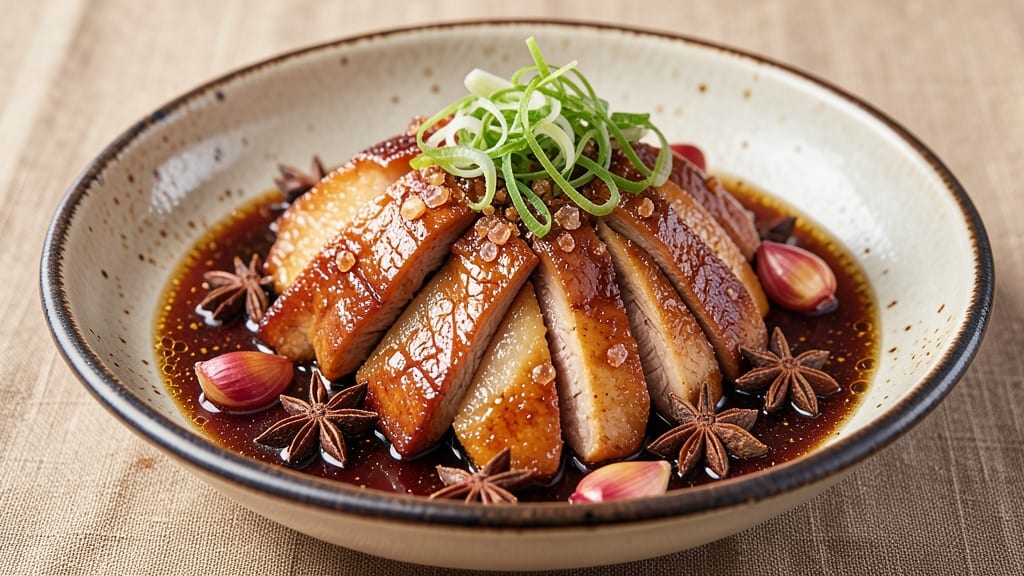
This Cantonese braised pork belly recipe delivers melt-in-your-mouth texture and aromatic complexity that transforms humble ingredients into something extraordinary. 🌟 The secret lies in slow-braising pork belly until the fat renders into silky perfection while absorbing the fragrant blend of star anise, five-spice powder, and soy sauce.
I first perfected this technique during my apprenticeship in Charleston, where I learned how proper timing and ingredient balance create restaurant-quality results at home.
The process begins with a simple marinade of soy sauce and five-spice powder, allowing the pork belly to absorb deep, savory flavors before braising.
The braising liquid—a carefully balanced mix of soy sauce, sugar, and aromatic spices—simmers for hours, breaking down the collagen in the pork belly into tender, juicy perfection. This method ensures every bite is rich, flavorful, and irresistibly tender, with a glossy finish that shines on the plate.
What makes this recipe truly special is the harmony of textures and flavors: crispy edges, tender meat, and a sauce that's both sweet and savory. The star anise and five-spice powder infuse the pork with warmth and depth, creating a dish that's as comforting as it is impressive.
Serve it alongside steamed jasmine rice and quick-pickled vegetables for a complete Cantonese meal that feels like a taste of home.
With just a few simple ingredients and patience, you'll achieve restaurant-quality results that impress even the most discerning palates. The slow-cooking process ensures the pork belly is fall-apart tender, while the fragrant spices create a dish that's both hearty and elegant.
Let's get started on this timeless classic that's sure to become a family favorite.
Ingredients for cantonese braised pork belly
Transform humble pork belly into restaurant-quality silkiness with these aromatic ingredients.
| Ingredient | Amount | Notes |
|---|---|---|
| Pork Belly 🐖 | 2 lb | Skin-on, cut into 1-inch cubes |
| Soy Sauce 🥫 | ½ cup | Kikkoman preferred for balance |
| Brown Sugar 🍯 | ¼ cup | Packed, light brown preferred |
| Star Anise 🌟 | 2 whole | Whole pods, crushed lightly |
| Five-Spice Powder 🌶️ | 2 tsp | Authentic Chinese blend |
| Garlic Cloves 🧄 | 6 cloves | Peeled, smashed slightly |
| Ginger Root 🌿 | 1 tbsp | Fresh, grated finely |
| Shaoxing Wine 🍷 | ¼ cup | Substitute dry sherry if unavailable |
| Water 💧 | 1 cup | Room temperature preferred |
| Sesame Oil 🫒 | 1 tbsp | Toasted, for finishing |
| Green Onions 🧅 | 3 whole | Sliced, for garnish |
| Diamond Crystal Kosher Salt 🧂 | 1 tsp | For seasoning during braise |
| Black Peppercorns 🌶️ | ½ tsp | Freshly cracked |
| Cinnamon Sticks 🍃 | 1 whole | For aromatic depth |
The pork belly should have a thick layer of fat—this is what creates the signature silky texture. Look for pork belly with at least 1-inch fat cap at your local butcher or Asian market. Costco often carries pre-cut pork belly in vacuum-sealed packages, which is convenient for home cooks. If you can't find star anise, Penzeys Spices sells it in bulk online. The five-spice powder is non-negotiable—authentic Chinese blends contain star anise, cloves, fennel, and cinnamon. Lee Kum Kee or Three Crabs brands are excellent choices for pre-mixed blends if you prefer convenience over individual spices.
No Shaoxing wine? Dry sherry or even a good white wine works in a pinch—just avoid sweet varieties. The brown sugar should be packed into the measuring cup for accurate volume. For ginger, fresh is essential—dried lacks the bright punch. If you're short on time, pre-grated ginger from the freezer section works, but fresh is always better. The garlic should be smashed slightly to release oils without turning to paste. Asian markets often carry pre-minced garlic in jars, which saves prep time without sacrificing flavor. For the sesame oil, toasted varieties add nutty depth that regular sesame oil can't match.
Pork belly keeps 3-4 days in the fridge once cooked, but the flavor improves with time as the fat continues rendering. Store in the braising liquid to maintain moisture. Freeze for up to 3 months by portioning into airtight containers with a thin layer of liquid on top to prevent freezer burn. The star anise and cinnamon sticks can be removed after braising—reuse them for stock by simmering in water for 20 minutes. For leftovers, reheat gently on the stovetop with a splash of water to restore moisture. This dish tastes even better the next day as the flavors meld.
Why You'll Love This Recipe
- Here’s what sold me: this dish improves the next day. The flavors meld even deeper, and I’ve reheated it cold straight from the fridge for packed lunches—no one suspects how easy it was.
- One-Pot Magic: I swear by this for lazy nights—just toss the pork belly, aromatics, and sauce into one pot, then walk away. The star anise and five-spice do all the work while you sip tea or scroll through your phone.
- Sweet-Savory Bliss: That balance of soy’s umami and brown sugar’s caramelized depth? Chef’s kiss. The pork belly gets tender enough to melt, but the edges stay just crispy—like a hug from a wok.
- Leftover Hero: Here’s what sold me: this dish improves the next day. The flavors meld even deeper, and I’ve reheated it cold straight from the fridge for packed lunches—no one suspects how easy it was.
Step-by-step instructions for Cantonese braised pork belly
Here's the method for silky, melt-in-your-mouth pork belly with aromatic star anise and five-spice.
🔥 Step 1: Parboil the Pork Belly for Tenderization
Place the 2 lb pork belly in a large pot and cover with cold water. Bring to a boil over high heat, then immediately reduce to a gentle simmer. Cook for 10 minutes until the pork reaches 160°F internally—this breaks down collagen and prevents toughness later. Drain and rinse under cold water to stop cooking.
Pat the pork completely dry with paper towels—this critical step ensures crispy skin later. I press down firmly to remove all moisture, especially in the crevices. Let it sit at room temperature for 30 minutes while you prep the braising liquid. The pork should feel warm but not hot to the touch before braising.
🍳 Step 2: Build the Aromatic Braising Liquid
In a separate large pot, combine the 0.5 cup soy sauce, 0.25 cup brown sugar, 0.25 cup Shaoxing wine, 1 cup water, 1 tsp kosher salt, and 0.5 tsp cracked black peppercorns. Bring to a boil over medium-high heat, then reduce to a simmer and let it cook for 5 minutes to meld flavors.
Add the 2 whole star anise, 1 whole cinnamon stick, 6 smashed garlic cloves, and 1 tbsp finely grated ginger root. Simmer for another 2 minutes until you can smell the warm, spiced aroma rising from the pot. The liquid should reduce slightly and develop a rich, caramelized color at the bottom—this is the flavor foundation.
🥘 Step 3: Braise Until Fork-Tender
Carefully place the dried pork belly into the simmering liquid, skin-side up. Sprinkle 2 tsp five-spice powder evenly over the top. Return to a gentle simmer (small bubbles should break the surface occasionally) and cover partially with a lid. Braise for 2 hours at a steady 325°F oven temperature—this low-and-slow approach ensures even cooking.
After 1 hour, check the liquid level—if it's reduced too much, add ¼ cup hot water to maintain submersion. The pork is done when it's fork-tender with no resistance and the skin is crispy. You'll know it's ready when you can easily pierce it with a fork and the internal temperature reaches 205°F in the thickest part.
⏰ Step 4: Rest and Finish with Sesame Oil
Remove the pork from the braising liquid and transfer to a plate. Tent loosely with foil and let it rest for 15 minutes. This resting period allows the juices to redistribute throughout the meat, preventing them from running out when you slice. Meanwhile, strain the braising liquid through a fine-mesh sieve to remove the spices and aromatics.
Return the pork to the skillet with the strained braising liquid. Increase heat to medium-high and simmer uncovered for 5-7 minutes to reduce the sauce slightly. Just before serving, drizzle with 1 tbsp toasted sesame oil and toss gently to coat. Garnish with sliced 3 green onions for freshness and color contrast.
Pro Tips For Making Cantonese Braised Pork Belly
- SEAR THE BELLY FIRST: Don’t skip the initial high-heat sear—this locks in flavor and prevents the pork from turning greasy later. Use a dry, screaming-hot pan for 3-4 minutes per side until deep golden brown, or the sauce will taste flat and the meat will stay bland.
- USE THICK CUTS, NOT SLICES: Thin slices of pork belly won’t braise properly—they’ll turn mushy. Ask your butcher for a 1.5-inch-thick slab (or cut it yourself) so the meat stays tender but holds its shape. If you’re short on time, freeze the slab for 30 minutes before slicing—it’s easier to handle.
- STIR THE SAUCE MIDWAY: After the first 20 minutes of simmering, give the sauce a good stir. The brown sugar and soy sauce can settle into a sticky mess at the bottom, and without a stir, you’ll end up with uneven caramelization. A wooden spoon does the trick—just don’t overdo it or the pork will fall apart.
- CONTROL THE SUGAR BURN: Brown sugar burns faster than you think, especially when mixed with soy sauce. Keep the heat at a gentle simmer (small bubbles, occasional swirls) once the pork is submerged, or you’ll end up with bitter, charred bits. If it starts to darken too quickly, add a splash of water—just enough to mellow it out.
Best sauces and condiments for this dish
Classic Cantonese Sauce
This recipe's core sauce is a perfect balance of ½ cup soy sauce, ¼ cup brown sugar, and ¼ cup Shaoxing wine, which creates a glossy, caramelized finish.
The star anise and cinnamon sticks infuse warmth, while five-spice powder adds depth. I always use Kikkoman soy sauce for its clean, balanced flavor profile—it's the standard in Cantonese kitchens. 🌟
Sweet-Savory Glaze
For an extra-sweet version, increase the brown sugar to ⅓ cup and add 1 tbsp honey at the end of braising. This creates a sticky, restaurant-quality glaze that clings beautifully to the pork.
I've found that light brown sugar works best—it dissolves more evenly than dark varieties. The glaze should coat the back of a spoon when finished.
Spicy Sesame Sauce
Add 1 tbsp chili oil and 1 tsp toasted sesame paste to the braising liquid during the final 5 minutes of cooking for a fiery kick. This variation works especially well with steamed buns or as a dipping sauce.
I recommend La Choy chili oil for its authentic heat level—it's widely available in Asian markets. 🌶️
Fermented Black Bean Sauce
For umami depth, stir in 2 tbsp fermented black beans (sold as "black bean garlic sauce" in Asian stores) during the final reduction stage. These beans add a salty, funky complexity that pairs perfectly with the pork's richness.
I like to mash them slightly before adding to distribute flavor evenly. This sauce works exceptionally well with pickled vegetables on the side.
Ginger-Scallion Oil
Create a fragrant finishing oil by heating 2 tbsp neutral oil with 1 tbsp minced scallions and 1 tsp grated ginger until fragrant. Drizzle this over the finished pork just before serving.
The oil carries the fresh aromatics directly to each bite. I often make a big batch and store it in the fridge for quick flavor boosts on other dishes. 🧅
Red Date Sauce
For a traditional Cantonese touch, add 4 dried red dates (soaked and chopped) to the braising liquid. They dissolve into the sauce, adding natural sweetness and a subtle floral note.
This variation is especially popular during Chinese New Year celebrations. I recommend organic dried dates from specialty stores—they're less likely to contain preservatives. 🍯
Nutrition facts
Frequently asked questions
Can I substitute regular pork shoulder for pork belly?
While pork shoulder works in a pinch, it won't give you the same luxurious texture. Pork belly's thick fat cap renders into silky perfection during braising, while shoulder stays leaner and may dry out. If substituting, trim excess fat and braise for 30-45 minutes less since shoulder cooks faster. For best results, stick with pork belly for that signature melt-in-your-mouth experience.
Why does my Cantonese braised pork belly turn out tough?
This usually happens from one of three issues: not parboiling first, skipping the drying step, or cooking too fast. The parboil (10 minutes) breaks down collagen, and patting dry ensures crispy skin. Always braise at 325°F for 2 hours—rushing the process leads to chewy results. If it's still tough, extend braising time by 30 minutes with more liquid.
How do I make the sauce less sweet?
Reduce the brown sugar to 2 tablespoons and add 1 extra tablespoon soy sauce instead. For a more balanced flavor, you can also increase the Shaoxing wine to ⅓ cup—it adds acidity that cuts through sweetness. Taste the sauce after 30 minutes of braising and adjust gradually until you reach your preferred balance.
Can I prepare this dish in a slow cooker?
Follow the same steps for parboiling and drying, then transfer everything (pork + braising liquid) to your slow cooker. Cook on Low for 6-7 hours or High for 4-5 hours, checking occasionally to ensure the pork stays submerged. The skin won't crisp as much, but the meat will be incredibly tender. Finish with sesame oil and green onions for freshness.
What's the best way to reheat leftovers?
Reheat gently in the braising liquid over low heat on the stovetop—never microwave directly. Add a splash of water if the sauce seems too thick, and cover to trap moisture. For crispy skin, broil for 2-3 minutes at the end. Leftovers actually improve in flavor as the fat continues rendering, making this dish even better the next day!