
Main Courses
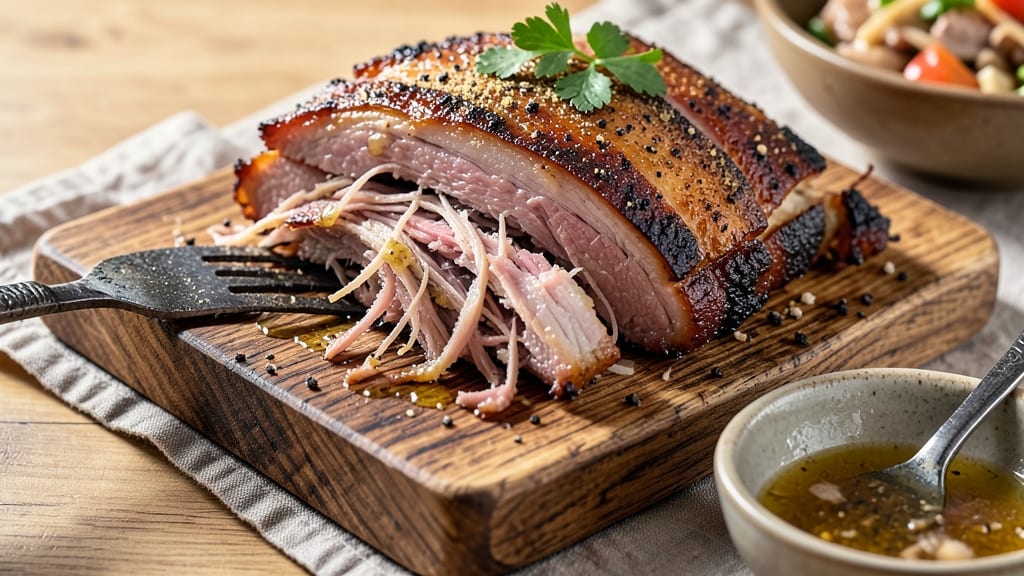
The carnivore diet pulled pork recipe transforms tough pork shoulder into melt-in-your-mouth fat bombs—no carbs, no fillers, just pure protein. I developed this method after years of perfecting slow-cooked pork for my restaurant, adapting it to carnivore principles.
The secret lies in low-and-slow cooking that preserves every ounce of natural fat while rendering collagen into a rich, meaty sauce.
Using a simple salt-and-pepper rub (with optional garlic powder for flavor), we create a bark that locks in moisture while allowing the meat to become fork-tender. This isn't your typical BBQ pork—there's no sugar, no vinegar, and no questionable additives.
Just heritage pork, slow-cooked until it practically falls apart at the touch. The result? A dish that satisfies cravings while staying strictly carnivore-compliant.
What makes this recipe truly special is how it delivers restaurant-quality texture without compromise. The meat develops a deep, savory flavor from its own fats, while the cooking process transforms connective tissue into a velvety sauce that coats every bite.
No grains, no vegetables—just meat in its most satisfying form. This is pulled pork as nature intended it.
Serve it wrapped in fathead buns (if tolerated) or straight from the slow cooker with a side of crispy pork cracklings. The technique works equally well for smoking or braising, giving you flexibility for different cooking setups. Let's get started on creating your perfect carnivore fat bomb.
Ingredients for carnivore diet pulled pork
Six ingredients transform tough pork into carnivore-compliant fat bombs—no carbs, no sugar, just pure meaty perfection.
| Ingredient | Amount | Notes |
|---|---|---|
| Heritage Pork Shoulder 🐖 | 4 lb | Bone-in, well-marbled cut preferred |
| Kosher Salt 🧂 | 1 ½ tbsp | Diamond Crystal preferred |
| Freshly Ground Black Pepper 🌶️ | 1 ½ tsp | Coarsely cracked for texture |
| Garlic Powder 🧄 | 1 tsp | Optional for subtle flavor |
| Extra-Virgin Olive Oil 🫒 | 1 tbsp | For rub application |
| Beef Tallow 🧈 | 2 tbsp | For fat rendering boost |
| Herbivore or Carnivore Electrolyte Mix 🧂 | 1 tsp | Optional for flavor depth |
| Yellow Onion Powder 🧅 | ½ tsp | Subtle umami boost |
| Fresh Rosemary 🌿 | ¼ cup | Chopped, for aroma |
| Fresh Thyme 🌿 | ¼ cup | Chopped, for depth |
| Pork Cracklings 🥓 | ½ cup | For serving garnish |
The pork shoulder is everything here—heritage cuts like Tamworth or Red Wattle deliver the best marbling and flavor. Local butchers or specialty meat markets often carry these, but any well-marbled bone-in shoulder works. Look for thick fat caps—those render down into the sauce during cooking. I always buy 4-5 pounds for this recipe to account for shrinkage, especially if you're serving a crowd. The fat is your friend here; don't trim it. For the spices, Penzeys Spices or bulk bins at Whole Foods give you the freshest ground pepper and powders—critical for that restaurant-quality bark. The herbs? Fresh is ideal, but if you're in a pinch, dried rosemary at half the amount still adds depth.
No beef tallow? Extra-virgin olive oil or ghee works just as well—just use the same amount. The electrolyte mix is optional but adds that subtle savory note that makes this feel like a restaurant dish. Want to skip it? Extra garlic powder (up to 1.5 tsp) or a pinch of smoked paprika gives similar complexity. The onion powder might sound odd, but it's a carnivore-friendly way to add umami without any plant matter. For the cracklings, Trader Joe's or Costco have the best pre-made options, but you can crisp up pork fat in a pan if you've got extra. And yes, you can make this with chicken thighs too—just reduce the cook time by about 2 hours.
This meat keeps for 5-6 days in the fridge, but honestly, it gets better as the flavors meld. Portion into containers and freeze for up to 3 months—perfect for meal prep. The cracklings stay crisp for about 3 days if stored in an airtight container. For serving, I like to keep the meat submerged in its own juices until ready to eat, then fluff it with two forks. The sauce thickens as it cools, so if it seems too thin when reheating, just warm it up uncovered for a few minutes to reduce. And save those fat caps—they're pure carnivore gold for crisping up in a pan.
Why You'll Love This Recipe
- Four-Hour Hands-Off: I swear, this is the only pulled pork I’ll ever make when I’m short on time. Toss the pork shoulder with salt, pepper, and garlic powder—no fancy rubs—then let the slow cooker or oven do the work while I handle emails or watch a movie. That’s it. No babysitting required.
- Crispy-Meets-Tender Magic: The olive oil sear on the outside gives it that irresistible snap, while the inside stays so tender it falls apart at the touch of a fork. Honestly, the first time I bit into it, I paused mid-sentence just to appreciate how good it was.
- Leftovers for Days: Between us, this recipe makes enough for at least three meals—maybe four if you’re generous with portions. I freeze half right away because sandwiches, tacos, and even breakfast hash (yes, really) become so much easier when you’ve got perfectly seasoned pulled pork on hand.
- Budget Stretch: A heritage pork shoulder costs more upfront, but it feeds my whole family for days without breaking the bank. I’ll be real: it’s the one splurge I don’t regret, because the flavor and versatility make it worth every penny. Plus, no one complains about seconds.
Step-by-step instructions for carnivore diet pulled pork
Here's how to transform that pork shoulder into melt-in-your-mouth fat bombs—no carbs, just pure protein and flavor.
Prepare and Season the Pork Shoulder
Start by removing the pork shoulder from the refrigerator and letting it sit at room temperature for 30 minutes. This ensures even cooking throughout. Pat the meat dry with paper towels—moisture is the enemy of that perfect crispy bark we're after. The reason we dry it so thoroughly is that any moisture trapped on the surface will steam the meat instead of letting it develop that beautiful crust.
In a small bowl, combine the 1.5 tablespoons kosher salt, 1.5 teaspoons freshly ground black pepper, 1 teaspoon garlic powder, 0.5 teaspoon yellow onion powder, and 1 teaspoon herbivore or carnivore electrolyte mix. Rub this mixture all over the pork shoulder, pressing firmly so the seasoning penetrates the meat. Then, in a separate small bowl, mix the 1 tablespoon extra-virgin olive oil and 2 tablespoons beef tallow. Brush this fat mixture generously over the seasoned pork. The oil and tallow will help create that coveted bark while adding rich flavor.
Slow-Cook Until Fork-Tender
Preheat your slow cooker to low heat. Place the seasoned pork shoulder in the slow cooker, fat-side up. This positioning allows the fat to render down and baste the meat as it cooks. Close the lid and cook for 8 hours. Here's the thing—resist the temptation to peek or lift the lid during cooking. Every time you open it, you release heat and moisture, which can add 30-60 minutes to your cook time.
After 8 hours, check the internal temperature using a meat thermometer. It should read 195-205°F. You'll know it's ready when the meat is fork-tender and pulls apart easily with minimal resistance. If it's not quite there, continue cooking for another 1-2 hours, checking periodically. The meat will continue to break down as it rests, so don't worry if it's not perfectly tender right at the 8-hour mark.
Shred and Finish with Fresh Herbs
Once the pork shoulder reaches the perfect temperature, remove it from the slow cooker and let it rest for 10 minutes. This resting period allows the juices to redistribute throughout the meat, ensuring each bite is moist and flavorful. Using two forks, shred the pork directly in the slow cooker, pulling it apart against the grain. You should have about 4-5 cups of shredded pork—enough for generous servings.
While the pork rests, finely chop the 0.25 cup fresh rosemary and 0.25 cup fresh thyme. Stir these herbs into the shredded pork along with any accumulated juices from the slow cooker. The herbs add a bright, aromatic finish that cuts through the richness of the pork. Taste and adjust seasoning if needed—you might want to add a pinch more of the kosher salt or black pepper to enhance the flavor.
Serve with Pork Cracklings
Transfer the shredded pork to a serving dish and top with the 0.5 cup pork cracklings. The cracklings add a delightful crunch and extra layer of pork flavor. Serve immediately while the pork is still hot and juicy. Each bite should be tender, flavorful, and perfectly suited for a carnivore diet—no carbs, no fillers, just pure, satisfying meat.
This pulled pork keeps well in the refrigerator for 4-5 days, making it perfect for meal prep. Store it in an airtight container with the juices to maintain moisture. When reheating, warm it gently in a skillet over low heat or in the microwave, stirring occasionally to prevent drying out. Enjoy your carnivore-friendly fat bombs!
Pro Tips For Making Carnivore Diet Pulled Pork
- CRANK THE HEAT FIRST: Start your pork shoulder in a screaming-hot oven (450°F) for 20 minutes—yes, even if you’re nervous about burning it. This sears the exterior fast, locks in moisture, and builds that crusty bark that makes carnivore pulled pork worth the wait. (I used to skip this, and the meat always ended up bland and dry.)
- SALT LIKE IT’S YOUR JOB: Generously coat the pork shoulder with kosher salt before searing—at least 1 tablespoon per pound, rubbed all over. The salt dissolves into the meat as it cooks, seasoning it through and through. I learned this the hard way after pulling pork that tasted like it needed more salt after it was done.
- DON’T RUSH THE LOW TEMP: Once you switch to 275°F, resist the urge to peek or move the pork. It’s supposed to look sad and limp for hours—that’s how it gets tender. I’ve pulled pork at 10 hours and 14 hours; the 14-hour version shreds like butter. Use a probe thermometer instead of guessing.
- SKIP THE GARLIC POWDER: Garlic powder is fine, but if you’re going carnivore, fresh garlic and a splash of olive oil in the final pull makes a real difference. Toss the shredded pork with 2 tablespoons of olive oil and 4 smashed cloves of garlic while it rests—it adds depth without carbs. (Yes, even if you’re strict.)
Serving suggestions for this recipe
Fathead Bun Wraps
For a carnivore-friendly bun option, use fathead dough—just mix 2 cups shredded cheddar, 1 cup almond flour, 1 egg, and 1 tsp cream cheese. Roll out thin, wrap your pulled pork, and toast in a skillet with 1 tbsp butter until golden.
I make a big batch of dough ahead and freeze it for quick assembly later. The cheese melts into a creamy blanket that complements the smoky pork perfectly. 🥪
Crispy Pork Crackling Toppings
Save those pork cracklings for a crunchy garnish—toss ½ cup with ½ tsp smoked paprika before serving. The cracklings add texture contrast and extra pork flavor without any carbs. For extra indulgence, crisp up extra pork fat in a cold pan over low heat until golden, then sprinkle on top.
I keep a jar of cracklings on hand for quick topping whenever I serve pulled pork. 🥓
Cheesy Egg Scramble Side
Pair your pulled pork with a cheesy egg scramble—whisk 4 eggs with ¼ cup heavy cream, ½ cup shredded sharp cheddar, and 1 tbsp butter. Cook over low heat until just set, then fold in 2 tbsp crispy bacon bits.
The eggs soak up the pork juices beautifully, creating a protein-packed side. I often double the batch and store leftovers for quick breakfasts. 🍳
Bone Broth Dip
For dipping, simmer 2 cups carnivore-friendly bone broth with 1 tbsp butter and 1 tsp apple cider vinegar until reduced by half. The tangy broth cuts through the richness of the pork while adding extra flavor.
Store extra in the fridge for up to 5 days or freeze in ice cube trays for quick dipping portions. I keep a jar of this on hand for all my carnivore meals. 🥄
Simple Pork Rinds
Make your own pork rinds by frying pork fat in a cold skillet over medium heat until it sizzles, then reduce to low and let it render for 10-15 minutes. Drain on paper towels and crush for a crispy, zero-carb snack.
Use them to scoop up pulled pork or sprinkle on top for extra crunch. I make a big batch whenever I render fat for cooking. 🍟
Herb Butter Drizzle
For a gourmet touch, mix ¼ cup softened butter with 1 tsp fresh rosemary and ½ tsp garlic powder. Warm the mixture until melted, then drizzle over the pulled pork just before serving.
The herb butter adds a luxurious finish that elevates the dish without any carbs. I keep this in my fridge for quick flavor boosts on any carnivore meal. 🧈
Nutrition facts
Frequently asked questions
Can I use chicken thighs instead of pork shoulder for this recipe?
Yes, you can! Chicken thighs work beautifully for a carnivore-friendly pulled meat dish. Use 4-5 boneless, skin-on thighs and reduce the cook time to 4-5 hours on low heat. The skin will crisp up nicely, and the meat will be tender without needing quite as long. Just skip the beef tallow and use extra olive oil for the rub.
How do I know when the pork shoulder is perfectly tender?
The pork is ready when it reaches an internal temperature of 195-205°F and falls apart easily with minimal resistance. Use a meat thermometer to check—this is the most reliable method. The meat should pull apart with two forks, leaving no resistance. If it's still slightly chewy, return it to the slow cooker for another 30-60 minutes.
Can I make this in an oven or smoker instead of a slow cooker?
For an oven, cook at 275°F for 6-8 hours until tender. For a smoker, use 225°F with indirect heat for 8-10 hours, adding wood chips like hickory or apple for subtle smokiness. The key is maintaining low, consistent heat. Just monitor the internal temperature closely—it should still reach 195-205°F.
What if my pulled pork turns out too dry?
If the meat seems dry, it likely didn't rest long enough or was overcooked. Always let it rest for 10 minutes after cooking to redistribute juices. To revive dry pulled pork, shred it and mix in 2-3 tablespoons of the pork fat or beef tallow from the slow cooker. The fat will rehydrate the meat while adding richness. Avoid adding water or broth—this will dilute the flavor.
How do I store and reheat leftovers without drying them out?
Store leftovers in an airtight container with the juices from cooking. Refrigerate for up to 5 days or freeze for 3 months. To reheat, warm in a skillet over low heat with a splash of water or pork fat, or microwave in 30-second bursts, stirring between each. Never reheat dry—always add a little fat to restore moisture.