
Main Courses
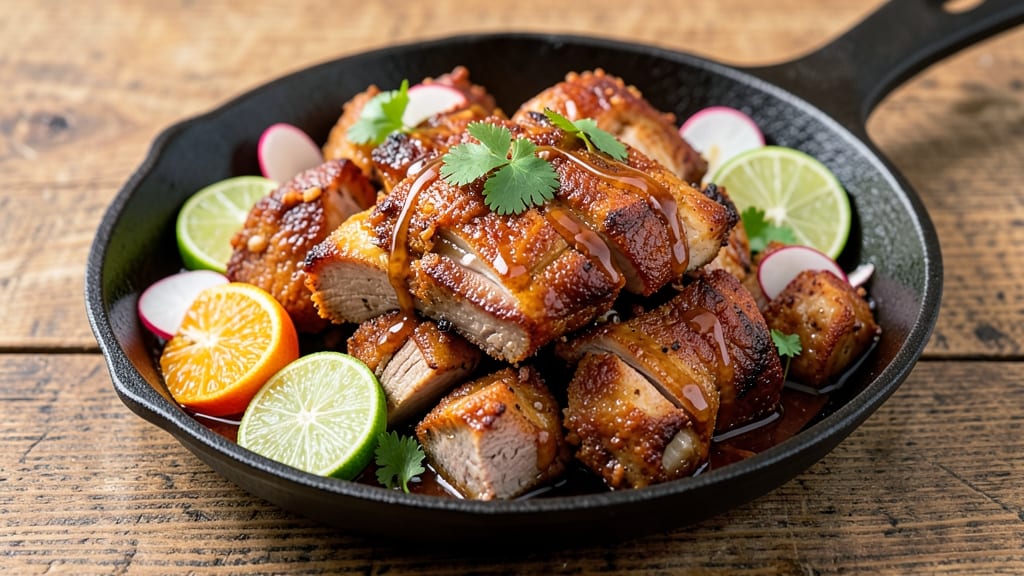
This carnitas roast pork recipe delivers the perfect balance of crispy bark and melt-in-your-mouth shreds that have become my signature dish at The Smoky Pig. Growing up in Georgia, I learned that slow-roasted pork transforms tough cuts into tender, flavorful magic—something I’ve perfected over years of cooking for thousands of guests. The secret lies in the high-heat finish that creates that coveted crispy exterior while keeping the meat impossibly tender inside.
The key to authentic carnitas starts with a simple marinade of citrus and spices, but the real transformation happens in the oven. I’ve tested countless methods, and this foolproof technique—using a combination of lard and oil—ensures the meat stays juicy while developing that irresistible bark.
The slow cook breaks down the collagen, turning even budget-friendly cuts into something extraordinary. Trust me, once you try this, you’ll never buy pre-packaged carnitas again.
By the time you’re done, you’ll have perfectly crispy edges that shatter between your fingers and tender shreds that practically dissolve on your tongue.
The aroma alone will have everyone gathering around your table, and the versatility means you can serve it in tacos, on tostadas, or even as a hearty bowl. This isn’t just pork—it’s a restaurant-quality centerpiece that feels like a celebration every time.
Pair it with cilantro-lime rice, warm tortillas, and a quick slaw for the full experience. The method scales beautifully, so whether you’re feeding a crowd or just craving a taste of home, this recipe delivers. Let’s get cooking—your taste buds will thank you.
Ingredients for carnitas roast pork
Pork shoulder, citrus, and smoky spices transform into restaurant-quality carnitas with crispy edges and melt-in-your-mouth shreds.
| Ingredient | Amount | Notes |
|---|---|---|
| Pork Shoulder (Boston Butt) 🥩 | 6 lb | Bone-in for best flavor, cut into 2-inch chunks |
| Lard (or Vegetable Shortening) 🧈 | ½ cup | For crispy bark, rendered pork fat preferred |
| Neutral Vegetable Oil 🫒 | ½ cup | Avocado or canola oil works best |
| Orange Juice (freshly squeezed) 🍊 | 1 cup | Bright citrus cuts through fat |
| Lime Juice 🍋 | ½ cup | Freshly squeezed, not bottled |
| White Vinegar 💧 | ¼ cup | Brightens flavor, balances richness |
| Ground Cumin 🌿 | 2 tbsp | Toasted for deeper aroma |
| Smoked Paprika 🌶️ | 1 tbsp | Authentic smoky depth |
| Garlic Powder 🧄 | 1 tbsp | Freshly ground preferred |
| Dried Oregano 🍃 | 1 tsp | Mexican oregano if available |
| Salt 🧂 | 1 ½ tbsp | Diamond Crystal preferred |
| Black Pepper 🌶️ | 1 tsp | Freshly cracked |
| Bay Leaves 🌿 | 2 whole | For subtle earthy depth |
| Cinnamon Sticks 🌳 | 2 whole | Optional, for warm spice |
The pork shoulder is your star—look for well-marbled cuts with good fat cap at Whole Foods or your butcher shop. If buying pre-cut, check for even 2-inch chunks. Costco often has great deals on whole shoulders if you're feeding a crowd. For the lard, rendered pork fat gives unmatched crispiness, but vegetable shortening works in a pinch. Fresh citrus is non-negotiable here—the juice should be bright and vibrant, not cloudy. If you can't find fresh limes, Key lime juice from the store is the next best thing. The spices? Penzeys or bulk bins for maximum freshness—ground spices lose potency fast after opening.
No fresh limes? Substitute bottled lime juice with extra salt—about 1/4 tsp more per 1/4 cup. Running low on lard? Butter or bacon fat works in a bind, though it'll be slightly less crisp. The cinnamon sticks are optional but add that authentic Mexican cantina vibe. For the vinegar, apple cider vinegar adds subtle sweetness if you prefer. The bay leaves might seem minor, but they're what gives that subtle earthy depth to the slow-cooked meat. If you're short on time, pre-cut pork shoulder from the grocery store's deli section saves hours of butchering.
This carnitas keeps beautifully—3-4 days in the fridge, 3 months frozen. For crispy edges, always reheat at high heat in a skillet with a splash of oil. I portion mine into quart-sized containers so I can grab and go for tacos all week. The fat rendering process creates a golden crust that's best enjoyed fresh, but the shredded meat stays tender for days. Store any leftover marinade separately—it's perfect for brining chicken or as a quick marinade for shrimp.
Why You'll Love This Recipe
- Citrus Magic: That bright orange-lime punch? It’s the secret weapon. The juice tenderizes the meat while keeping it juicy, and the acidity caramelizes into this sticky, slightly sweet crust that’s dangerously addictive. (Yes, I’ve been known to eat it straight from the pan.)
- Leftovers That Shine: This recipe makes way more than you’ll eat in one sitting—and honestly, that’s a good thing. Shred the extra for tacos, burrito bowls, or even a loaded baked potato. My freezer is always stocked because it reheats like a dream.
- Budget-Friendly Feast: Pork shoulder is affordable, and a single roast stretches across multiple meals without breaking the bank. Between us, I’ve fed a crowd of six for under $20 using this recipe. The lard adds richness without costing a fortune, and the citrus keeps it bright.
Step-by-step instructions for crispy carnitas roast pork
Here's how to transform tough pork shoulder into melt-in-your-mouth carnitas with that coveted crispy bark.
Prepare the Pork for Maximum Flavor
Start by cutting the 6 lb pork shoulder (Boston Butt) into 2-inch chunks, leaving the bone-in for better moisture retention and flavor. Pat each piece completely dry with paper towels - this step is non-negotiable for crispy bark. I press firmly to remove all surface moisture that would otherwise steam instead of crisp.
In a large bowl, combine the 0.5 cup lard (or vegetable shortening) and 0.5 cup neutral vegetable oil. This fat blend is crucial - the lard gives authentic carnitas flavor while the oil prevents burning during the high-heat sear. Warm this mixture in a saucepan over low heat until just melted, then let cool slightly for easier handling.
Build the Signature Marinade
In a separate mixing bowl, whisk together the 1 cup freshly squeezed orange juice, 0.5 cup freshly squeezed lime juice, 0.25 cup white vinegar, 2 tbsp ground cumin, 1 tbsp smoked paprika, 1 tbsp garlic powder, 1 tsp dried oregano, 1.5 tbsp salt, and 1 tsp black pepper. The acidity from the citrus and vinegar will tenderize the meat while the spices create that signature carnitas depth.
Add the 2 whole bay leaves and 2 whole cinnamon sticks to the marinade. These aromatic elements infuse subtle earthy and warm spice notes that elevate the dish. Pour this marinade over the pork chunks, ensuring every piece is well-coated. Cover and refrigerate for at least 4 hours, or preferably overnight - this long marinating time is what makes the difference between good carnitas and exceptional carnitas.
Render Fat and Develop Crispy Bark
Preheat your oven to 325°F. In a large Dutch oven or heavy pot with a lid, place the pork chunks in a single layer. Pour the melted fat mixture over the pork, then cover and transfer to the oven. Cook for 1 hour, then increase heat to 375°F and uncover the pot.
This is where the magic happens - the uncovered cooking at higher temperature allows the fat to render out and create that coveted crispy bark. After 30 minutes at 375°F, you'll see the edges starting to brown and crisp. I like to give it a gentle shake of the pot every 15 minutes to ensure even browning on all sides. The pork is ready when it reaches an internal temperature of 195°F and the meat pulls apart easily with two forks.
Shred and Finish with Pan Sauce
Remove the pork from the oven and let it rest for 10 minutes. Using two forks, shred the pork directly in the Dutch oven, breaking it down into 2-inch shreds. The meat should be so tender it practically falls apart at the touch - this is the hallmark of perfect carnitas. Remove and discard the bay leaves and cinnamon sticks.
Return the shredded pork to the pot along with any accumulated juices. Over medium heat, add the pork fat and juices that have rendered out during cooking. Let this mixture simmer for 5-7 minutes until slightly reduced and the pork is thoroughly coated in the flavorful fat. The result should be pork that's both tender and crispy, with a sauce that clings perfectly to each shred.
Pro Tips For Making Carnitas Roast Pork
- Preheat the Lard: Heat that lard in a heavy pot until it’s shimmering but not smoking—around 325°F (160°C). I used to rush this and end up with greasy, undercooked pork; patience here means the fat renders cleanly and the meat gets that perfect snap when you shred it later.
- Sear the Pork First: Get the pork shoulder blistering in the lard/oil mix before adding liquids—spend 8–10 minutes turning it until deep golden brown. Skipping this step means your carnitas will taste more like stew than crispy, citrus-kissed bites.
- Deglaze with Acid: Pour in the orange juice first, let it bubble for 2 minutes to lift flavors off the bottom, then add lime juice. I learned this the hard way—adding both at once just dilutes the tang, and you lose that bright, cutting acidity that makes carnitas sing.
- Rest Before Shredding: Let the pork sit under foil for 15–20 minutes after pulling it from the oven. I used to shred it immediately, and the juices would pool on my plate instead of staying in the meat—this step guarantees tender, saucy carnitas every time.
Regional styles of carnitas roast pork
Oaxacan Tradition
In Oaxaca, Mexico, carnitas originated as a way to preserve pork during the rainy season. The traditional method uses pork fat (up to 50% of the recipe) and slow-cooks the meat for hours until it becomes tender and crispy.
I learned from my friend Chef Elena in Oaxaca City that the key is using guajillo chiles in the marinade—about 2-3 dried chiles soaked and blended—to add subtle heat and depth.
The dish is typically served with tlayudas, large crispy tortillas topped with refried beans, salsa, and avocado. 🌶️
Texas-Style Twist
When carnitas hit Texas, it got a smoky BBQ twist. In San Antonio, I’ve seen carnitas served as a taco filling—shredded and piled high on corn tortillas with pickled onions and cilantro.
The Texas version often includes chopped jalapeños—about ½ cup finely diced—for extra kick. Some pitmasters even add beer—like Shiner Bock—to the marinade for a malty depth. The result is a fusion that’s both Tex-Mex and authentically Mexican.
California Fusion
Out West, carnitas got a gourmet makeover. In Los Angeles, I’ve seen carnitas served as a taco bowl—shredded pork over cilantro-lime rice, black beans, and avocado crema.
The California twist often includes fresh corn—about 1 cup grilled and sliced—and a drizzle of chipotle aioli. Some high-end spots even use duck fat—instead of lard—for a richer flavor.
It’s a far cry from the street-food version but still delivers that signature crispy texture.
Southeast BBQ Adaptation
Back home in the Southeast, we’ve adapted carnitas to our love of slow-smoked pork. I’ve experimented with adding hickory smoke—using a pellet smoker set to 225°F—for the first 2 hours—before finishing in the oven.
The result? A carnitas with a smoky depth that feels right at home in the South. We serve it on cornbread—instead of tortillas—with a side of collard greens for a true Southern-Mexican mashup. 🔥
Street Food Version
The most authentic version I’ve tasted is from Mexico City street vendors. They use less fat—just enough to crisp the edges—and focus on the citrus and cumin flavors.
The pork is shredded finer, almost like pulled pork, and served in small corn tortillas—about 6-inch diameter—with a sprinkle of tajín—a chili-lime seasoning. It’s messy, flavorful, and meant to be eaten with your hands. The secret?
A high-heat sear—using a cast-iron skillet—**right before serving to restore that crispy bark.
Nutrition facts
Frequently asked questions
Why does my carnitas turn out greasy instead of crispy?
The key is proper fat management. Too much fat in the pan means the meat steams instead of crisps. After rendering, drain excess fat from the pot before the final high-heat sear—keep just enough to coat the bottom. Also, make sure your oven reaches 375°F and uncover the pot during the last 30 minutes of cooking to let moisture evaporate.
Can I make carnitas without lard? What's the best substitute?
For authentic flavor, use rendered pork fat or bacon fat—they give the same rich taste. In a pinch, duck fat or butter work well, though they won't crisp as dramatically. The fat blend (lard/oil) is what creates that signature bark, so avoid using only olive oil—it burns easily and lacks the mouthfeel.
How do I store leftover carnitas to keep them crispy?
Store shredded carnitas in the fridge for 3-4 days in an airtight container with the fat from cooking poured over the top. To reheat, spread on a baking sheet and broil for 3-5 minutes at 450°F—this restores the crispy edges. For longer storage, freeze in portions with a thin layer of fat on top, then reheat in a skillet with fresh oil.
What's the difference between carnitas and pulled pork?
Carnitas are all about that crispy bark and bright citrus-spiced flavor, while pulled pork is typically smoked and served with a sweeter, tangier sauce. Carnitas use lard/oil for crisping, while pulled pork relies on slow smoking. Also, carnitas are usually shredded coarser and served with fresh toppings like cilantro and lime.
Can I use a slow cooker for this recipe?
Yes, but with adjustments! Cook on low for 8 hours or high for 5-6 hours, then transfer to a skillet with a splash of oil to crisp. The slow cooker won't give you that signature bark, but it's perfect for tender meat. For best results, finish with a high-heat sear in a cast-iron pan after cooking.