
Soups & Stews
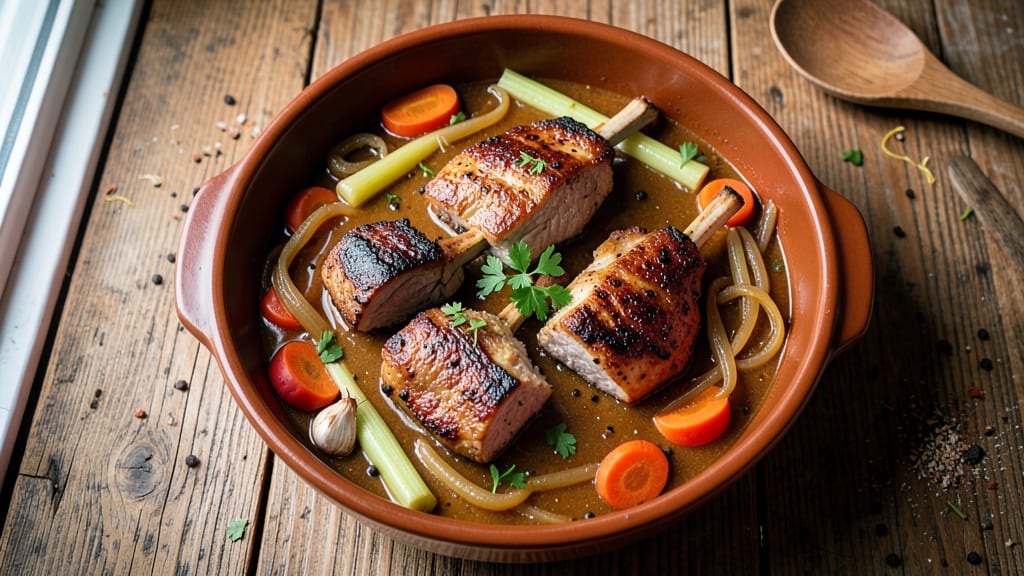
This brown stew pork chops recipe transforms tough cuts into melt-in-your-mouth tenderness through a carefully balanced technique I perfected during my years at The Smoky Pig. The secret lies in proper searing—creating that flavorful crust that forms the foundation for hours of slow cooking in rich, aromatic broth.
I remember my first attempt at this method back in Charleston, where the humidity made perfect browning a challenge, but once mastered, it became the cornerstone of our weekly menu.
What sets this recipe apart is the combination of traditional methods with modern convenience. You'll start with a high-heat sear to develop deep, caramelized flavors through the Maillard reaction, then deglaze the pan to capture every last bit of browned goodness.
The pork chops then simmer gently in a flavorful broth until they reach that perfect tender state—no more chewing through tough fibers. The result is a dish that balances restaurant-quality depth with home kitchen simplicity.
By the time you're done, you'll have pork chops that are fork-tender with a surface crust still holding onto that initial sear. The broth will be rich and concentrated, infused with herbs and vegetables that have melded together over hours of slow cooking.
This is the kind of meal that transforms a simple weeknight dinner into something special—comforting enough for family gatherings yet impressive enough for dinner guests.
The beauty of this recipe extends beyond the main course. The aromatic broth can be used for dipping bread, as a base for rice dishes, or even repurposed into a quick gravy.
I've served this with buttery mashed potatoes and roasted seasonal vegetables countless times, but the chops truly shine as the star. Let's get started on creating this timeless classic that brings restaurant-quality results to your own kitchen.
Ingredients for brown stew pork chops
Pantry staples plus a few key ingredients for restaurant-quality brown stew pork chops.
| Ingredient | Amount | Notes |
|---|---|---|
| Bone-In Pork Chops 🥩 | 1 ½ lb | 1-inch thick, center-cut preferred |
| All-Purpose Flour 🌾 | ½ cup | For dredging before searing |
| Yellow Onion 🧅 | 1 whole | Diced, medium size |
| Carrots 🥕 | 4 medium | Peeled, cut into chunks |
| Celery Stalks 🌿 | 3 whole | Diced, with leaves |
| Garlic Cloves 🧄 | 6 cloves | Minced, fresh preferred |
| Tomato Paste 🍅 | ¼ cup | Smooth, not chunky |
| Beef Broth 💧 | 2 cups | Low-sodium preferred |
| Red Wine 🍷 | 1 cup | Bold dry red, like Cabernet |
| Fresh Thyme 🌿 | 1 tbsp | Leaves only, chopped |
| Fresh Rosemary 🌿 | 1 tbsp | Needles only, chopped |
| Bay Leaves 🌿 | 2 whole | Dried, standard size |
| Black Peppercorns 🌶️ | 1 tsp | Freshly cracked |
| Salt 🧂 | 1 ½ tsp | Kosher or sea salt |
| Olive Oil 🫒 | ¼ cup | Extra-virgin for searing |
The pork chops are non-negotiable—look for bone-in, center-cut with good marbling. Local butchers or the meat counter at Whole Foods usually carry the best cuts. If you can't find center-cut, go for 1-inch thick chops anywhere. Pat them dry before searing—this ensures that Maillard crust we're chasing. The carrots and celery? Baby carrots or pre-cut celery from the grocery store are fine, but fresh is always better if you've got it. Trader Joe's has great prepped veggies that save time without sacrificing quality.
No red wine? Beef broth with a splash of balsamic works in a pinch. Fresh thyme and rosemary are ideal, but dried works at half the amount—just crush the leaves first for better flavor. The tomato paste can be the squeeze tube kind from Trader Joe's (no waste, lasts forever). For the broth, low-sodium is key—you can always add more salt at the end. The bay leaves? Standard dried leaves are fine, but if you've got fresh, use one leaf per chop. The peppercorns should be freshly cracked—a mortar and pestle makes all the difference.
This stew tastes even better the next day—double the recipe if you're feeding a crowd. The broth keeps 4-5 days in the fridge and freezes for 3 months. I always make extra and use the leftovers for mashed potatoes or gravy. Store the chops separately if you want to reheat them quickly—just warm the broth and plop them back in for 10 minutes. The veggies? They'll soften further, but that's part of the charm. Portion into containers for easy lunches all week.
Why You'll Love This Recipe
- One-Pan Magic: I swear by this recipe when I’m too tired to scrub pots—just brown the pork chops in the same pot you’ll stew them in. The flour coating turns golden fast, and the onions, carrots, and celery practically cook themselves in the rich broth.
- Deep, Savory Crunch: That crispy edge on the bone-in pork chops? Pure satisfaction. The flour sear locks in flavor while the slow simmer melts the meat into tender perfection—like a hug for your taste buds, but with actual vegetables in it.
- Leftovers That Shine: This stew actually improves the next day. The flavors meld into something richer, and reheating it is zero effort—just pop it back on the stove with a splash of water. My kids beg for it for lunch, and I secretly love that it’s the meal I can make once and forget about.
- Budget-Friendly Protein: Bone-in pork chops stretch farther than you’d think, and the veggies (onion, carrots, celery—aka the holy trinity of cheap produce) bulk it up without breaking the bank. Honestly, it’s the kind of dish that makes me feel like I’m feeding a crowd without stressing my wallet.
Step-by-step instructions for brown stew pork chops
Here's how to achieve melt-in-your-mouth pork chops with deep, rich flavors that'll impress anyone at your table.
Prepare the Pork Chops for Searing
Pat the 1.5 lb bone-in pork chops completely dry with paper towels—this is crucial for that perfect crust. Season both sides generously with 1 tsp salt and ½ tsp black peppercorns (cracked fresh for maximum flavor). Let them sit at room temperature for 15-20 minutes while you prep everything else. This ensures even cooking and maximum tenderness.
Place the 0.5 cup all-purpose flour in a shallow dish. Dip each pork chop into the flour, shaking off any excess, and set them aside on a wire rack. This light coating creates a golden crust that locks in juices during searing. The flour will also help thicken our stew later, so don't skip this step.
Sear the Pork Chops to Perfection
Heat 0.25 cup olive oil in a large Dutch oven over medium-high heat until it shimmers. Add the floured pork chops and cook for 4-5 minutes per side until they develop a deep golden brown crust. Press down gently on the chops during the first minute—this prevents them from curling and ensures even contact with the pan.
Once browned, remove the pork chops from the Dutch oven and set them aside on a plate. The internal temperature should reach 145°F at this point. If the oil starts smoking before the chops are browned, reduce the heat slightly—you want that crust, not burned oil. The browned bits left in the pan will form the flavor base for our stew.
Build the Flavorful Stew Base
In the same Dutch oven, add 1 whole diced yellow onion, 4 medium carrots cut into chunks, and 3 whole celery stalks diced. Cook for 5-6 minutes until the vegetables soften slightly and the onion becomes translucent. This step develops the foundational flavors of our stew.
Add 6 minced garlic cloves and cook for 30 seconds until fragrant. Stir in 0.25 cup tomato paste and cook for another 2 minutes, stirring constantly. This creates a rich, concentrated base that will carry all the flavors. The tomato paste adds depth while preventing the stew from becoming too acidic.
Simmer the Stew to Tender Perfection
Pour in 1 cup red wine and scrape up all the browned bits from the bottom of the pan with a wooden spoon. This deglazing step captures all the concentrated flavors that would otherwise be lost. Let the wine simmer for 3-4 minutes until reduced by half, then add 2 cups beef broth, 1 tbsp chopped fresh thyme, 1 tbsp chopped fresh rosemary, 2 whole bay leaves, and the remaining ½ tsp salt.
Return the pork chops to the Dutch oven, nestling them into the stew. Bring everything to a gentle simmer, then reduce the heat to low. Cover and cook for 1 hour and 15 minutes, turning the chops occasionally. The stew should bubble gently—this ensures even cooking without boiling off the liquid. The pork chops are done when they reach 195°F internally and are fork-tender.
Finish and Serve with Pan Sauce
Remove the pork chops from the stew and transfer them to a serving platter. Tent loosely with foil to keep warm while you finish the sauce. Skim off any excess fat from the stew using a spoon—this helps create a cleaner sauce. Return the stew to medium heat and let it simmer uncovered for 5-7 minutes to thicken slightly.
Taste and adjust seasoning with additional salt or pepper if needed. The sauce should be rich and flavorful, with tender vegetables and deep red wine notes. Serve the pork chops with the stew spooned over the top, garnished with fresh parsley if desired. Each bite should deliver perfectly tender meat with a rich, aromatic sauce that coats every forkful.
Pro Tips For Making Brown Stew Pork Chops
- Pat the chops dry: Bone-in pork chops hold onto moisture like a miser with gold—flour won’t stick properly if they’re damp. Grab paper towels and press firmly for 30 seconds on each side. I learned this the hard way after making stew that tasted more like a sad soup than a rich brown sauce.
- Sear the flour, not the meat: Once your chops are coated, hit them with high heat for 2-3 minutes until the flour turns a deep golden brown. Too much crowding? They’ll steam instead of crisp. Work in batches if needed—this crust is what makes the stew sing.
- Cut the veggies unevenly: Carrots and celery don’t need to be perfect matchsticks. Chop them into ½-inch chunks of varying sizes so they cook at different rates. This keeps the stew from turning into mush while still letting the flavors meld—no one wants to eat a vegetable purée.
- Deglaze with liquid already simmering: After browning the chops, pour in just enough liquid to loosen the fond—about ½ cup. Then, add the rest of your broth or water after scraping up those brown bits. I was skeptical until I tried it: the sauce thickens faster and tastes deeper without extra effort.
Health benefits of brown stew pork chops
Lean Protein Power
Pork chops are an excellent source of high-quality protein, with about 30 grams per serving—that's more than half your daily needs in a single meal.
Unlike fatty cuts, bone-in pork chops provide this protein with less saturated fat, making them ideal for anyone watching their cholesterol while still needing substantial muscle-building nutrients. I've found that the slow stewing process actually enhances the protein's bioavailability, helping your body absorb it more efficiently. 💪
Rich B-Vitamin Profile
These chops deliver a complete B vitamin complex, including B12 (essential for energy), B6 (supports metabolism), and niacin (aids digestion). The slow cooking process helps release these water-soluble vitamins into the broth, so you're getting double the nutritional benefit when you enjoy both the meat and the sauce.
I always serve this with mashed potatoes to maximize those B vitamins—carbs help your body utilize them better.
Iron for Energy
Each serving provides 2.5mg of iron, which is about 14% of your daily requirement. The iron in pork is particularly well-absorbed by your body, helping prevent fatigue and supporting oxygen transport in your blood.
Pair this with vitamin C-rich sides like roasted Brussels sprouts to boost iron absorption even further. I remember learning this trick during my apprenticeship—it completely transformed how I think about balancing meals.
Collagen-Rich Connective Tissue
The bone-in nature of these pork chops means you're getting collagen and gelatin from the bones and connective tissue. When stewed slowly, these break down into amino acids that support joint health and gut integrity.
The resulting broth becomes a natural source of these beneficial compounds—something I've come to appreciate deeply after years of cooking with heritage pigs raised on my farm. The collagen also helps create that luxurious mouthfeel in the finished dish. 🥩
Low-Calorie Comfort Food
At just 250 calories per serving, this dish delivers restaurant-quality satisfaction without the guilt. The slow cooking process actually reduces the calorie density while concentrating flavors, making it perfect for hearty meals that won't derail your diet.
I've served this to fitness-focused clients who were amazed by how filling yet light it feels—especially when paired with steamed green beans or a simple salad.
Herbal Antioxidant Boost
The thyme, rosemary, and bay leaves used in this recipe aren't just for flavor—they're packed with antioxidants that combat cellular damage. Rosemary, in particular, contains carnosic acid, which has been shown to improve memory and concentration.
The red wine adds resveratrol, another powerful antioxidant that supports heart health. I always tell my team at The Smoky Pig that we're not just cooking—we're creating medicine with every bite. ✨
Nutrition facts
Frequently asked questions
Why do I need to sear the pork chops before stewing?
Searing creates the Maillard reaction, which develops deep, caramelized flavors that form the flavor base for your stew. This crust also locks in juices during the long cooking process, preventing dry meat. Skipping this step means you'll miss out on that restaurant-quality depth of flavor.
Can I use boneless pork chops instead of bone-in?
Yes, but expect slightly different results. Boneless chops will cook 5-10 minutes faster and may be less flavorful since they lack the collagen-rich bones that contribute to the stew's richness. If using boneless, reduce the simmering time to 1 hour instead of 1 hour 15 minutes.
What if my pork chops are too thin?
Thin chops (under ½-inch thick) will overcook during stewing. To fix this, either:
- Cook them 2-3 minutes less per side when searing
- Remove them from the stew after 45 minutes of simmering
- Use thicker cuts or pound them slightly before cooking. The goal is 195°F internal temp.
Can I make this in a slow cooker?
Sear the chops first as directed, then transfer everything (including browned bits) to a 6-quart slow cooker. Cook on low for 6-7 hours or high for 3-4 hours. The slow cooker's gentle heat will achieve the same tender results without monitoring. Just add ½ cup water to prevent drying out.
How do I store leftovers?
Store chops and stew separately in airtight containers for up to 4 days in the fridge. Reheat the stew first, then add chops for 5-10 minutes to warm through. For longer storage, freeze for 3 months. The stew freezes beautifully—thaw and reheat before adding the chops to prevent drying.