
Main Courses
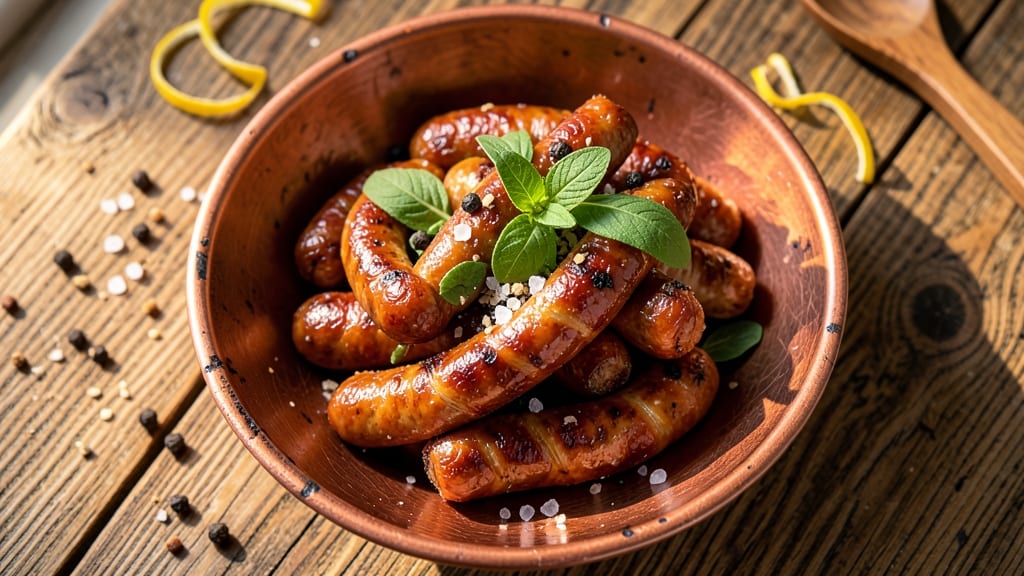
British pork sausage recipe delivers that unmistakable taste of home—crispy pan-crusted sausages with herbed gravy that tastes like Sunday dinner. I spent years perfecting this technique, balancing traditional British flavors with foolproof execution. The secret lies in the meat blend: equal parts pork shoulder and pork fat, seasoned just right with sage, black pepper, and a whisper of nutmeg.
What sets these sausages apart is the crispy crust achieved through proper casing preparation and pan-frying. Whether you choose natural hog casings or synthetic, the stuffing technique matters—too tight, and they won’t brown; too loose, and they’ll burst.
I’ve tested both methods, and I’ll show you the foolproof approach that guarantees restaurant-quality results every time.
By the end, you’ll have sausages with golden, crackling crusts and tender, juicy interiors, paired with a rich herbed gravy that ties everything together. The aroma alone will have everyone gathering at the table, and the flavor?
Pure comfort food perfection. This is the kind of recipe that becomes a family tradition.
Serve with classic sides like mashed potatoes, apple sauce, or buttery cabbage—just like my grandmother used to make. The instructions are straightforward, but the results are anything but ordinary. Let’s get started on creating sausages that taste like home.
Ingredients for british pork sausage
Equal parts pork shoulder and fatback, plus fresh herbs and classic spices for that unmistakable British sausage flavor.
| Ingredient | Amount | Notes |
|---|---|---|
| Pork Shoulder 🥓 | 1 ½ lb | Coarse-ground, fat content 30%+ |
| Pork Fatback 🥓 | 1 ½ lb | Leaf fat, not cured bacon |
| Fresh Sage Leaves 🌿 | ½ cup | Finely chopped, stems removed |
| Fresh Black Peppercorns 🌶️ | 1 ½ tbsp | Coarsely cracked, not powdered |
| Ground Nutmeg 🌿 | ½ tsp | Freshly grated preferred |
| Diamond Crystal Kosher Salt 🧂 | 1 ½ tsp | Fine grain for even seasoning |
| Natural Hog Casings 🥩 | 1 package | 28-32mm diameter, soaked |
| Ice Water 💧 | 1 cup | For chilling meat blend |
| Vegetable Shortening 🧈 | 2 tbsp | For casing lubrication |
| Unsalted Butter 🧈 | ½ cup | Cold, cubed for gravy |
| All-Purpose Flour 🌾 | ¼ cup | For gravy thickening |
| Beef Stock 🍲 | 1 ½ cups | Homemade or high-quality |
| Dry Sherry 🍷 | ½ cup | Or substitute apple cider vinegar |
The meat blend is everything. Pork shoulder needs to be coarse-ground with visible fat flecks—30%+ fat content is ideal for juiciness. I source mine from local butchers who grind it fresh, or use the pre-ground pork shoulder mix from Costco if you're short on time. The fatback? Look for leaf fat (the thick, white layers), not cured bacon. It's what gives those sausages their melt-in-your-mouth texture. If your butcher doesn't carry it, check the freezer section of Whole Foods or Trader Joe's—they stock it year-round. Fresh sage is a must here; dried just won't cut it for that authentic British flavor. Buy it in small bunches and keep it in the fridge wrapped in damp paper towels for up to 5 days.
No natural hog casings? Synthetic casings work perfectly fine for beginners—they're easier to handle and less likely to leak. The key is chilling your meat blend before stuffing—ice water in the bowl keeps everything firm. For the gravy, dry sherry adds depth, but apple cider vinegar or white wine works in a pinch. The butter should be cold and cubed when you brown it—this creates those beautiful, crispy bits that make the gravy sing. If you're making a big batch, double the gravy ingredients and freeze half in ice cube trays for later. The beef stock? Homemade is best, but even the high-end store-bought stuff (like Pacific Foods) will do in a bind.
Stuffed sausages keep 2 days in the fridge, wrapped tightly in plastic. For longer storage, freeze them on a tray first, then transfer to a bag—this prevents them from sticking. The gravy reheats beautifully; just add a splash of water or stock to loosen it up. If you're prepping ahead, make the sausage meat mix up to 2 days early and store it in the fridge, but stuff the casings the day you plan to cook. Trust me on this—room-temperature meat stuffs better and gives you that perfect texture. And if anyone asks, yes, these sausages reheat better than most—just 5 minutes at 350°F brings them back to crispy perfection.
Why You'll Love This Recipe
- No-Fuss Grinding: I’ll be real—grinding your own sausage is intimidating, but this mix of pork shoulder and fatback is forgiving. Just pulse in a food processor, no fancy techniques, and you’re done. That fatback? It keeps everything juicy without extra work.
- Earthy & Warm: The nutmeg and sage aren’t just flavor—they’re character. Fresh sage adds that piney brightness, while the peppercorns and nutmeg give it a cozy, slightly spiced depth. It’s the kind of taste that makes you want to close your eyes and savor it.
- Weeknight & Holiday: These sausages work everywhere. Pan-fry them for breakfast, toss in pasta for dinner, or grill for a pub-style feast. I’ve even used them in a slow-cooker stew when I was too tired to think. They’re my lazy-day hero.
- Budget Stretch: Pork shoulder is cheap, and fatback turns scraps into gold. A pound of this mix feeds four, and leftovers? Freeze them for future meals. Honestly, it’s the most practical way to use up pork without breaking the bank.
Step-by-step instructions for British pork sausage with herbed gravy
Here's how to craft traditional British pork sausages with a golden crust and rich gravy.
Prepare the Meat Mixture
Coarsely grind the 1.5 lb pork shoulder and 1.5 lb pork fatback together using a meat grinder with a ½-inch plate. The fat content should remain around 30%—this creates that signature moist, flavorful texture. Transfer the ground meat to a large mixing bowl.
Add the 0.5 cup finely chopped fresh sage leaves, 1.5 tbsp coarsely cracked fresh black peppercorns, 0.5 tsp freshly grated ground nutmeg, and 1.5 tsp Diamond Crystal kosher salt. Mix gently with your hands, just until the seasonings are evenly distributed. Overmixing develops gluten and makes the sausages tough.
Place the bowl in the refrigerator and let the mixture rest for 30 minutes. This chilling step firms up the fat, making it easier to stuff into casings later. The flavors will also meld slightly during this time.
Stuff the Sausages
Soak the natural hog casings in the 1 cup ice water for 30 minutes to soften them. Drain and rinse briefly before stuffing. Thread one end of a casing onto the sausage stuffer funnel, leaving about 6 inches of empty casing at the end for tying.
Fill the sausage stuffer with the chilled meat mixture and gently press the plunger to push the meat into the casing. Maintain steady pressure—too much force can rupture the casing. When the funnel is empty, tie off the sausage with butcher's twine, leaving about ½ inch of space between each link.
Repeat until all the meat mixture is used, keeping the stuffed sausages on a tray in the refrigerator. This prevents them from drying out before cooking. For best results, use the sausages within 24 hours of stuffing.
Pan-Crust the Sausages
Heat a large skillet over medium heat and add 1 tbsp vegetable shortening. Once the shortening shimmers, add 6 sausages (about 1.5 lbs total) and cook undisturbed for 4 minutes per side. This slow, even cooking creates that classic crispy exterior while keeping the interior juicy.
Here's the thing—don't rush this step. You'll know they're ready when the sausages develop a deep golden brown crust and the internal temperature reaches 155°F when measured with a meat thermometer. If they release easily from the pan, they're ready to remove and set aside on a warm plate.
Repeat with the remaining sausages in batches, maintaining the same medium heat throughout. Keep the cooked sausages warm in a 200°F oven while you prepare the gravy.
Make the Herbed Gravy
In the same skillet (with all those flavorful browned bits), melt the 0.5 cup cold unsalted butter over medium-low heat. Once melted, whisk in the 0.25 cup all-purpose flour to form a smooth paste. Cook for 1-2 minutes, stirring constantly, until the mixture turns a nutty brown color—this is your roux.
Gradually whisk in the 1.5 cups beef stock and 0.5 cup dry sherry, ensuring no lumps form. Bring to a gentle simmer and cook for 5-7 minutes until the gravy thickens enough to coat the back of a spoon. Taste and adjust seasoning with additional kosher salt or black pepper if needed.
Return the sausages to the skillet, spooning the gravy over them to coat evenly. Let them rest for 5 minutes before serving, allowing the juices to redistribute. The result should be sausages with a crispy, crackling crust and a rich, herbed gravy that clings perfectly to each bite.
Pro Tips For Making British Pork Sausage
- CHILL THE FATBACK FIRST: Pork fatback is stubborn when cold—chop it straight from the fridge or freezer, not after sitting out. I learned this the hard way when my first batch turned into a greasy mess instead of flaky layers. A sharp knife and frozen fatback make mincing easier, and you’ll get even, fine pieces that melt into the sausage without clumps.
- GRIND PEPPERCOANS COARSELY: Skip the fine grind—crush whole black peppercorns with the flat side of your knife until they’re just cracked, not powdered. This keeps the heat bright and the texture right; too fine, and it’ll overpower the sage. My grandmother swore by this, and she was right: the flavor lingers longer.
- REST THE MEAT MIX: Let the ground pork and fatback sit in the bowl for 10 minutes after mixing before shaping. This relaxes the muscle fibers so the sausage holds together better when cooking. I used to rush this, and the sausages would split open—now they stay plump and juicy, even when grilling.
- USE WET HANDS FOR SHAPING: Dip your hands in cold water before rolling the sausage—it prevents sticking and makes smooth, even links. Wet hands also help seal the seams tighter, so the filling stays put. (Yes, even if you’re impatient like me.) Trust the process, and your sausages will look like they came from a butcher.
Creative variations of this dish
Cumberland Style
This classic Northern English variation skips sage entirely, relying instead on black pepper and nutmeg for its signature bold flavor. I add 1 tsp freshly grated horseradish to the meat mix for a sharp kick—trust me, it elevates everything.
Cumberland sausages are traditionally shorter and thicker than their Lincolnshire cousins, so I adjust the stuffing length to 3-4 inches per link and use 26-28mm casings for that perfect compact shape. Serve with a mustard cream sauce instead of gravy for the full experience. 🌶️
Lincolnshire Style
If you want a sweeter, milder sausage, Lincolnshire style is your go-to. The key difference? Add 2 tbsp finely chopped parsley and reduce the black pepper to 1 tsp. I also include ½ tsp ground mace for warmth—it’s subtle but makes a difference.
These sausages are longer and thinner (about 6 inches per link), so I use 30-32mm casings and stuff them more loosely. They’re perfect for sausage rolls or served with apple sauce—just like my grandmother used to make. 🥓
Herbed Beer Sausage
For a modern twist, I swap the sherry in the gravy for ½ cup dark beer (like Guinness or Stout) and add 1 tbsp finely chopped rosemary to the meat mix. The beer deepens the gravy’s richness while the rosemary adds an earthy note.
I also increase the nutmeg to 1 tsp for extra warmth. These sausages pair beautifully with caramelized onions and buttery mashed potatoes—a pub-style favorite. 🍺
Spicy Chipotle Twist
If you love heat, try adding 1 tbsp adobo sauce from canned chipotles to the meat mix along with the sage. I also include ½ tsp smoked paprika for depth.
The gravy gets a kick too—swap the sherry for ½ cup chipotle-infused beef stock (simmer 1 chipotle pepper in the stock for 10 minutes before straining). These sausages are fiery but balanced, perfect for those who want a smoky, spicy take on a classic. 🔥
Vegetarian Option
For a plant-based version, I use 1.5 lb mushroom-walnut blend (finely chopped cremini mushrooms and walnuts) instead of pork. The seasoning stays the same, but I add 1 tbsp soy sauce for umami and 1 tsp liquid smoke for depth.
Stuff into synthetic casings and pan-fry in vegetable oil for the same crispy crust. The gravy works just as well—just ensure your stock is vegetarian-friendly. It’s surprising how close this comes to the real thing! 🌱
Nutrition facts
Frequently asked questions
Can I substitute pork fatback with bacon?
No, bacon won't work here—it's cured and salty, which will overpower the delicate balance of flavors. The fatback's natural richness is what creates that signature melt-in-your-mouth texture. If you're in a pinch, use unsalted leaf lard instead, but reduce the salt in the seasoning by half.
How do I fix sausages that burst while cooking?
Bursting happens when the casings are stuffed too loosely or the meat isn't chilled properly. For next time, make sure your meat mixture is well-chilled (below 40°F) and stuff the casings firmly but not tightly. If it happens during cooking, don't worry—just remove the sausages from the pan, scrape out the meat, and use it for a sausage hash or stuffing.
What's the best way to reheat leftover sausages?
For best results, reheat in a skillet over medium heat with a splash of water or beef stock to keep them moist. Aim for 5-7 minutes until they reach 165°F internally. Never microwave—it turns the meat rubbery. If you're short on time, a 350°F oven for 10 minutes works too, but watch closely to avoid drying.
Can I make these sausages ahead of time?
Stuff the sausages up to 2 days ahead and store them wrapped tightly in the fridge. For longer storage, freeze them on a tray first (to prevent sticking), then transfer to a bag. The meat mixture itself can be prepped 1 day ahead, but stuff the casings the day you plan to cook for best texture.
What's the difference between Cumberland and Lincolnshire sausages?
Cumberland sausages are shorter, spicier (with horseradish and more pepper), while Lincolnshire sausages are longer and milder (with parsley and mace). The shape matters too—Cumberland uses 26-28mm casings for compact links, while Lincolnshire uses 30-32mm for thinner, longer sausages. Both are delicious, but Cumberland pairs better with mustard sauce.