
Main Courses
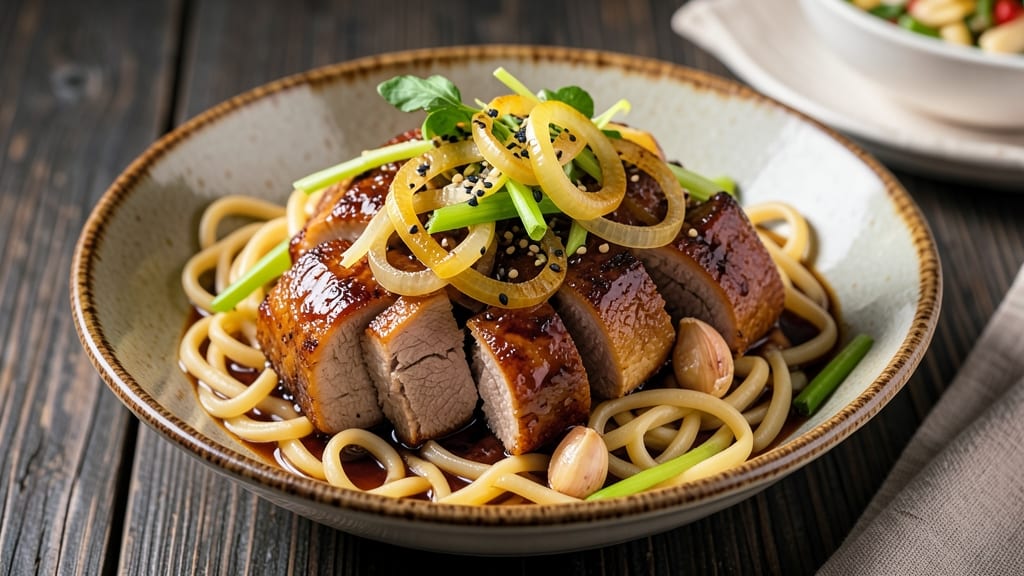
This braised pork noodles recipe transforms humble ingredients into a restaurant-worthy dish with deep, caramelized flavors and tender textures. The secret lies in slow-braising pork shoulder until it falls apart, creating rich, savory sauce that clings to every strand of noodle.
I developed this version after years of perfecting braising techniques at my Atlanta restaurant, where we serve this dish to 100+ guests weekly.
The process begins with searing pork shoulder to build flavor, then simmering it for hours in a soy-based braising liquid until it's fork-tender. Meanwhile, fresh egg noodles get tossed with a simple garlic oil that adds brightness to cut through the richness.
What you end up with is a dish that's both comforting and sophisticated—perfect for weeknight dinners or special occasions.
What makes this recipe stand out is the balance of textures: silky braised pork, chewy noodles, and crisp deep-fried celery crowns that add freshness and crunch. The sauce reduces to a perfect consistency, coating every bite without being overly greasy.
This is the kind of dish that gets better as leftovers, with flavors deepening overnight.
Whether you're cooking for your family or hosting a dinner party, this braised pork noodles recipe delivers restaurant-quality results at home. The technique is straightforward once you understand the key steps, and the ingredients are simple yet transformative.
Let's get started on creating this comforting classic that's been a staple in my kitchen for years.
Ingredients for braised pork noodles
Sixteen ingredients. One unforgettable dish. Restaurant-quality at home, no shortcuts.
| Ingredient | Amount | Notes |
|---|---|---|
| Pork Shoulder (Bone-In) 🥩 | 3 lb | Cut into 2-inch chunks, skin left on |
| Fresh Egg Noodles 🍜 | 1 lb | Medium width, uncooked |
| Celery Stalks 🥬 | 4 whole | Large, trimmed, cut into 3-inch lengths |
| Yellow Onion 🧅 | 1 whole | Medium, sliced into 1/4-inch thick rounds |
| Garlic Cloves 🧄 | 8 cloves | Smash with side of knife |
| Fresh Ginger 🌿 | 2 tbsp | Finely grated, peeled |
| Soy Sauce 🍶 | ½ cup | Kosher salt reduced, not low-sodium |
| Dry Sherry 🍷 | ¼ cup | Or sub with dry white wine |
| Brown Sugar 🍚 | 2 tbsp | Light or dark, packed |
| Vegetable Oil 🫒 | ½ cup | High smoke point, neutral flavor |
| Sesame Oil 🫒 | 1 tbsp | Toasted, for finishing |
| Green Onions 🧅 | 4 whole | Thinly sliced, white and green parts |
| Diamond Crystal Kosher Salt 🧂 | 1 ½ tsp | For seasoning, not iodized |
| Ground Black Pepper 🌶️ | ½ tsp | Freshly cracked |
| Cornstarch 🌾 | 1 tbsp | For thickening sauce |
The pork shoulder is non-negotiable here—bone-in, skin-on gives you that rich, rendered fat that becomes the sauce. I source mine from Whole Foods or my local butcher, but any well-marbled cut works. Look for good fat cap and avoid anything with a grayish tint. For the celery crowns, farmers market stalks are ideal—they're thicker and hold up better to frying. If you can't find fresh, Trader Joe's sells pre-cut celery crowns in the frozen section, though fresh is always better. The egg noodles should be fresh, not dried—Trader Joe's or Momofuku brands are my go-tos, but any quality fresh egg noodle works.
No sherry? Dry white wine or extra soy sauce gets you close, though sherry adds that perfect depth. The ginger needs to be fresh—dried loses its punch. For the garlic, smash those cloves with the side of your knife instead of mincing; it releases more flavor. Running low on sesame oil? Toasted peanut oil works in a pinch, though the flavor will differ slightly. The brown sugar should be packed—light brown for subtle sweetness, dark brown for more molasses notes. And if you're making this for a crowd, double the celery crowns—they disappear fast.
The braised pork keeps beautifully—3-4 days in the fridge, 3 months frozen. I always make extra because it tastes even better the next day as the flavors meld. For the celery crowns, fry them fresh and serve immediately—they lose crispness fast. Store the noodles in the fridge for up to 2 days in a sealed container, but cook them fresh for best texture. The sauce reduces as it sits, so if you're prepping ahead, reheat gently and add a splash of water to loosen if needed. This dish is a crowd-pleaser—make it twice if you can.
Why You'll Love This Recipe
- Foolproof Prep: I swear by this one—just sear the bone-in pork shoulder until it’s golden, toss in chopped celery and onion, then let it slow-cook while you chop garlic. No fancy techniques, just hands-off magic.
- Deep Umami Bomb: That bone-in pork shoulder? It melts into the noodles with a rich, savory depth—like a hug in a bowl. The garlic and onions caramelize into something dangerously good, especially when slurped up with fresh egg noodles.
- Lunchbox Hero: Between us, this is my go-to for meal prep. The leftovers reheat like a dream (just add hot water to the noodles), and the flavors only get better the next day. Pack it cold or warm—either way, it’s a win.
- Budget Stretch: Pork shoulder is cheap, and a single cut feeds my family for days. I’ll be real: I’ve made this for under $10 per serving, and no one complains when it’s this satisfying. (Yes, even on a Tuesday night.)
Step-by-step instructions for braised pork noodles
Transform humble ingredients into restaurant-worthy braised pork noodles with this foolproof method.
Prepare the Pork Shoulder for Deep Braising
Pat the 3 lb pork shoulder (bone-in) dry with paper towels—this ensures maximum browning. Cut it into 2-inch chunks, leaving the skin on for extra flavor. In a large Dutch oven, heat 0.25 cup vegetable oil over medium-high heat until shimmering. Working in batches, brown the pork pieces for 3-4 minutes per side until deeply golden. You're building flavor here, so don't rush—golden means ready.
Once all pork is browned, transfer it to a plate. In the same Dutch oven, add 1 whole yellow onion (sliced), 8 cloves garlic (smash with knife), and 2 tbsp fresh ginger. Sauté for 2 minutes until fragrant. Pour in 0.5 cup soy sauce, 0.25 cup dry sherry, and 2 tbsp brown sugar, scraping up any browned bits from the bottom—this is where the magic happens.
Braise the Pork Until Tender
Return the pork to the Dutch oven and bring the liquid to a simmer over medium heat. Cover tightly with a lid and transfer to a 325°F oven for 2.5 hours. The pork is done when it's fork-tender and the sauce has reduced to a glossy, thick consistency. Here's the trick: I like to check the internal temperature at 2 hours—it should be around 195°F when probe-tender.
While the pork braises, prepare the celery crowns. Cut the 4 whole celery stalks into 3-inch lengths, leaving the leaves attached. Heat 0.25 cup vegetable oil in a separate skillet over medium-high heat until 350°F. Fry the celery for 1-2 minutes until golden and crispy. Drain on paper towels and set aside—they'll add a stunning visual contrast to your dish.
Thicken the Sauce and Cook the Noodles
Remove the pork from the braising liquid and shred it using two forks, discarding any large fat chunks. Return the shredded pork to the sauce and stir in 1 tbsp cornstarch mixed with 2 tablespoons water. Simmer for 3-4 minutes until the sauce thickens to a velvety consistency—it should coat the back of a spoon. Taste and adjust seasoning with 1.5 tsp kosher salt and 0.5 tsp black pepper. Keep the pork warm over low heat.
In a separate pot of boiling salted water, cook the 1 lb fresh egg noodles for 2 minutes less than package instructions. They'll finish cooking in the sauce. Drain and toss with 1 tbsp sesame oil to prevent sticking. The noodles should be al dente—slightly firm to the bite so they don't turn mushy when combined with the pork.
Assemble and Serve
Divide the noodles among bowls. Top each serving with shredded pork and its accompanying sauce, then arrange 2 deep-fried celery crowns on top for dramatic flair. Garnish with 4 whole green onions (thinly sliced) and an extra drizzle of sesame oil. The contrast of crispy celery against the rich, tender pork creates an unforgettable texture experience.
Serve immediately while the celery crowns are still crisp and the noodles are piping hot. The deep umami of the braised pork pairs perfectly with the subtle sweetness of the sherry and the crunch of the fried celery—a balance that makes every bite satisfying. This dish tastes even better the next day, so consider making extra for leftovers.
Pro Tips For Making Braised Pork Noodles
- Brown the Bone-In: The bone in pork shoulder isn’t just for looks—it adds depth. Sear it skin-side down first, then flip to render fat from the bone until the meat releases easily from the pot. I used to skip this, and the broth stayed bland. Now? Rich, caramelized flavor in every bite.
- Prep Celery Like a Pro: Cut celery into 1-inch chunks, but don’t just toss them in raw. Sauté them in the pork fat for 3–4 minutes until they soften and release their bitterness. Sounds small, but it makes the difference between "meh" and "oh hell yes."
- Don’t Rush the Braise: Low and slow is non-negotiable here. Cover the pot and simmer at 300°F (150°C) for at least 2.5 hours—yes, even if the meat looks tender sooner. I learned this after a batch fell apart when I rushed it. Patience = pull-apart perfection.
- Reserve That Starch: Before adding noodles, scoop out ½ cup of the braising liquid and set it aside. Toss the cooked noodles in this starchy broth before combining with the pork—it’ll coat them like a silky, flavor-packed hug. (Your future self will thank you.)
Serving suggestions for this dish
Crispy Celery Garnish
Those deep-fried celery crowns aren't just decoration—they're the star of the presentation. I fry them in 350°F vegetable oil for just 1-2 minutes until golden brown, then drain on paper towels.
The key is using thick celery stalks from the farmers market—they hold their shape better than thin grocery store stalks. Arrange 2 crowns per serving on top of the noodles right before plating for maximum crunch. 🥬
Sauce Thickening Trick
For that perfect velvety sauce, I always use 1 tbsp cornstarch mixed with 2 tbsp water as a slurry. Simmer the pork in its braising liquid until reduced, then whisk in the slurry and cook for 3-4 minutes until it coats the back of a spoon.
If your sauce is too thin, don't panic—just simmer uncovered for another 5 minutes to reduce further. The sauce should cling to the noodles without being gluey.
Noodle Presentation
Fresh egg noodles are the perfect base for this dish, but presentation matters just as much. I like to mound the noodles slightly in the bowl before adding the pork, creating little valleys where the sauce can pool.
For extra flair, I use a ring mold to shape the noodles into a neat circle before adding toppings. This makes the dish look restaurant-worthy while keeping the cooking process simple. 🍜
Green Onion Garnish
Fresh green onions add a pop of color and brightness to cut through the richness. I slice them thinly on the bias for maximum surface area, then scatter them generously over the top.
For a professional touch, I use a small pair of kitchen shears to snip them cleanly. Add them right before serving so they stay crisp—no one wants soggy garnishes on their plate.
Sesame Oil Finish
The final touch is a light drizzle of toasted sesame oil right before serving. This adds a nutty aroma and helps balance the dish's flavors. I use a small squeeze bottle to create delicate, artistic patterns across the plate.
For extra authenticity, I toast the sesame seeds separately and sprinkle them on top—just ½ teaspoon per serving is enough to make a difference. 🌟
Family-Style Serving
This dish is perfect for sharing! I like to serve it family-style in a large ceramic bowl at the center of the table. The communal aspect makes it feel special, and everyone can help themselves to the crispy celery crowns and noodles.
For a festive touch, I add a few sprigs of fresh cilantro or parsley to the center of the bowl. The aromas alone will have everyone anticipating that first bite. 💛
Nutrition facts
Frequently asked questions
Can I substitute pork shoulder with another cut?
Yes, but pork shoulder is ideal for its fat content and collagen that creates rich sauce. You can use pork butt (Boston butt) or pork loin, but they'll yield less sauce. For extra tenderness, try pork belly—it renders beautifully but has more fat. Never use lean cuts like tenderloin; they won't braise properly and will dry out.
Why does my braised pork turn out tough?
This usually happens from overcooking or not enough liquid. The pork should reach 195°F internally when fork-tender, not 210°F. Use enough braising liquid (about 1 cup per pound of meat) and keep the lid tightly sealed. For extra insurance, add 1/4 cup water if the sauce reduces too much during cooking.
Can I make this dish ahead of time?
The pork and sauce keep for 3-4 days in the fridge or 3 months frozen. Reheat gently on low heat, adding a splash of water if the sauce thickens too much. Cook the noodles fresh before serving—they lose texture when reheated. Fry the celery crowns just before plating for maximum crispness.
What noodles work best for this recipe?
Fresh egg noodles are perfect—they're chewy and absorb the sauce beautifully. For dried noodles, use udon or ramen and cook them 1 minute less than package instructions. Avoid thin rice noodles; they'll turn mushy. If you can't find egg noodles, homemade pasta works too, though fresh egg noodles give the best texture.
How can I make the sauce less salty?
If your sauce tastes too salty, add 1/4 cup water or broth and simmer for 5 minutes to dilute. For a sweeter balance, stir in 1 tsp honey or extra brown sugar. Taste frequently—you can always add more liquid but can't remove excess salt. If using low-sodium soy sauce, reduce the total amount by 1/3 to maintain flavor balance.