
Main Courses
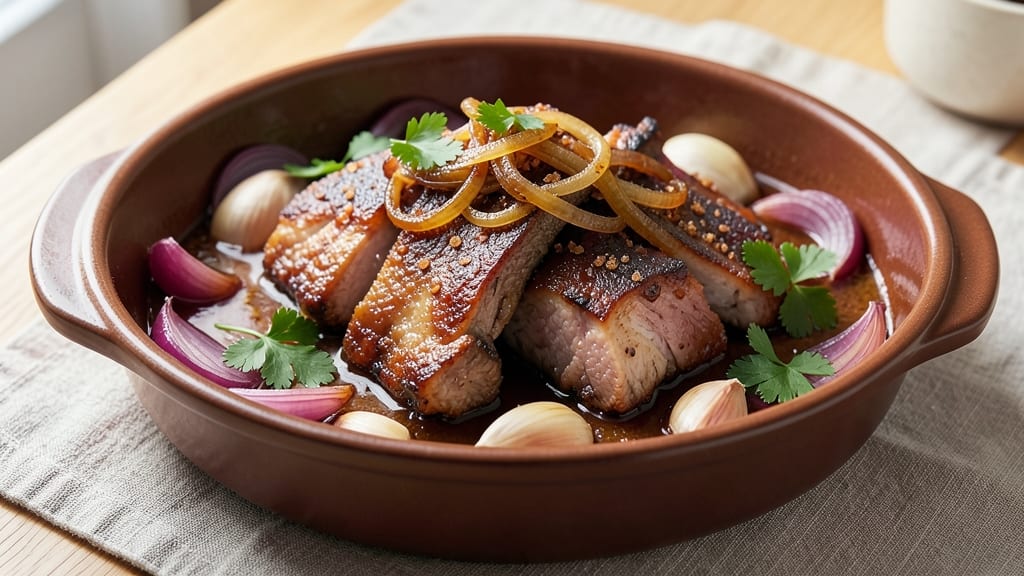
This braised pork jowl recipe delivers collagen-rich tenderness that transforms tough cuts into melt-in-your-mouth perfection—just like my grandmother used to make in Georgia. The secret lies in slow cooking, where connective tissue breaks down into velvety richness, creating a sauce so flavorful it deserves its own bowl.
I've cooked thousands of pounds of pork in my time, and this method never fails to impress. What sets this recipe apart is the balance of acidity and sweetness in the braising liquid, which tenderizes the meat while building layers of depth.
We're talking about 8 hours of gentle simmering at low heat, where the pork jowl becomes so tender it practically falls apart at the touch. The aroma alone—smoky, savory, with hints of caramelized onions—will have your whole house anticipating dinner.
By the time you're done, you'll have fork-tender pork that practically dissolves on your tongue, swimming in a sauce thick enough to coat every bite. This is the kind of dish that turns ordinary weeknights into special occasions, where every spoonful tells a story of patience and tradition.
The rich, gelatinous sauce pairs beautifully with polenta or crusty bread, making it a complete meal in one pot. Perfect for feeding a crowd or meal prepping for the week, this recipe scales effortlessly while maintaining its restaurant-quality results.
The technique is straightforward, but the reward is unmatched—melting tenderness that makes pork jowl the star of any table.
Ingredients for braised pork jowl
Six ingredients transform tough pork jowl into melt-in-your-mouth perfection.
| Ingredient | Amount | Notes |
|---|---|---|
| Pork Jowl 🐖 | 3 lb | Skin-on, cut into 1-inch pieces |
| Yellow Onions 🧅 | 2 whole | Thickly sliced, about 4 cups |
| Garlic Cloves 🧄 | 6 cloves | Smashed, not minced |
| Red Wine 🍷 | 1 cup | Bold, dry variety like Cabernet |
| Apple Cider Vinegar 🍎 | ½ cup | For acidity balance |
| Brown Sugar 🍬 | ½ cup | Light or dark, packed |
| Tomato Paste 🍅 | ¼ cup | Squeeze tube preferred |
| Fresh Thyme 🌿 | ¼ cup | Stems removed, chopped |
| Bay Leaves 🍃 | 2 whole | Fresh if available |
| Beef Broth 🥫 | 2 cups | Low-sodium preferred |
| Olive Oil 🫒 | ¼ cup | Extra-virgin for richness |
| Salt 🧂 | 1 ½ tsp | Kosher or sea salt |
| Black Peppercorns 🌶️ | 1 tsp | Freshly cracked |
| Fresh Rosemary 🌿 | ⅛ cup | Sprigs, not chopped |
The pork jowl is where all the magic happens. Look for thick, well-marbled cuts at your local butcher shop—they'll know exactly what to recommend. Costco or Whole Foods usually carry it pre-cut, but if you're buying a whole piece, ask for the thickest part with the most fat. That's where the collagen lives, and collagen is what gives you that velvety sauce. The skin should be intact—it'll crisp up beautifully during cooking. If you're nervous about the fat, don't be. It renders down into pure flavor. For the onions, yellow are traditional, but red onions add a nice color contrast. Get the big ones—they caramelize better.
No red wine? Substitute with beef broth plus 1 tbsp balsamic vinegar—it'll still give you that depth. Fresh thyme is ideal, but dried works at one-third the amount if you're in a pinch. The brown sugar can be swapped for honey if you're not strict about vegan (though this is a standard recipe). For the tomato paste, those little squeeze tubes from Trader Joe's are perfect—they're concentrated and last forever. The beef broth? Low-sodium is key—you don't want to overpower the natural flavors. And if you can't find fresh rosemary, dried at half the amount will still add that piney aroma. The garlic? Smash those cloves with the flat of your knife—it releases more flavor than mincing.
This dish tastes even better the next day, so make it ahead if you can. The pork jowl keeps 4-5 days in the fridge, and the sauce actually improves as it sits. For freezing, portion into airtight containers with some of the braising liquid—it'll keep for 3 months. I like to make a double batch because the sauce is so good it deserves its own bowl. Store it in the fridge and reheat gently on the stove. The pork jowl reheats beautifully—just warm it through with a splash of water or broth to keep it moist. And trust me, everyone will ask for seconds
Why You'll Love This Recipe
- One-Pot Magic: I swear by this recipe when I’m too tired to wash dishes. Toss everything—pork jowl, onions, garlic—into a deep skillet, add the wine and vinegar, and let it slow-cook. By the time you’re done, you’ve got a rich, melty mess with zero cleanup.
- Deep Umami Bomb: The red wine and apple cider vinegar work together like a flavor dream team. That pork jowl? It turns tender and crispy at the edges, while the onions caramelize into something dangerously addictive. Honestly, I’ve had people ask for seconds just from the smell.
- Weeknight & Holiday Hero: This dish is my go-to for lazy Mondays and when I’m hosting Thanksgiving. Serve it over mashed potatoes for a weeknight win, or pile it onto crusty bread for a crowd-pleasing centerpiece. Between us, it’s the only thing I stress less about making.
- Budget-Friendly Luxury: Pork jowl is cheaper than tenderloin but tastes like you spent hours in the kitchen. A single cut feeds four, and leftovers reheat like a dream—better the next day, if you ask me. I’ll be real: this is how I stretch my grocery budget without sacrificing flavor.
Step-by-step instructions for braised pork jowl
Here's how to transform tough pork jowl into melt-in-your-mouth perfection.
Sear the Pork Jowl Until Deeply Browned
Heat the 0.25 cup olive oil in a heavy Dutch oven over medium-high heat until shimmering. Pat the 3 lb pork jowl pieces completely dry with paper towels—this ensures a proper sear. Working in batches if needed, add the pork jowl pieces to the pot in a single layer, skin-side down. Let them sear undisturbed for 8-10 minutes until the skin becomes deep golden brown and crispy.
I like to press down gently on the pork jowl with a spatula during the first minute—this prevents it from curling and ensures even contact with the pan. Flip the pieces and sear the other side for another 6-8 minutes until deeply browned. Remove the pork jowl and set it aside on a plate. You want that rich, caramelized crust to form—the flavor foundation for your braise.
Build the Flavor Base with Onions and Aromatics
In the same Dutch oven, add the 2 whole yellow onions and cook over medium heat for 10-12 minutes, stirring occasionally, until softened and golden brown. The onions should caramelize slightly at the edges, adding sweetness to the braise. Add the 6 cloves smashed garlic and cook for 1 minute until fragrant—don't let it burn, or it'll turn bitter.
Here's where the magic starts: Stir in the 0.5 cup apple cider vinegar and let it simmer for 2 minutes until the sharp acidity mellows. Add the 0.25 cup tomato paste and cook for another 2 minutes, stirring constantly to prevent sticking. This step develops the sauce's depth and balances the richness of the pork.
Deglaze and Simmer the Braise
Pour in the 1 cup red wine and scrape up all the browned bits from the bottom of the pot with a wooden spoon. This deglazing step captures all that concentrated flavor you worked so hard to create. Let the wine simmer for 3-4 minutes until reduced by half, then add the 2 cups beef broth, 0.5 cup brown sugar, 1.5 tsp salt, and 1 tsp black peppercorns. Stir everything together and bring to a gentle simmer.
Return the pork jowl to the pot, skin-side up, along with the 0.25 cup fresh thyme, 2 whole bay leaves, and 0.125 cup fresh rosemary sprigs. The herbs will infuse the braise with aromatic depth. Cover the pot and reduce the heat to low. Here's the thing—braising is a slow process, and patience is key. Simmer for 2.5-3 hours until the pork jowl is fork-tender and the meat pulls away from the bone with minimal resistance.
Finish and Rest for Maximum Tenderness
Once the pork jowl is tender, remove it from the pot and set it aside on a plate. Strain the braising liquid through a fine-mesh sieve into a clean saucepan and skim off any excess fat that has risen to the surface. Return the strained liquid to the pot and simmer over medium heat for 5-7 minutes to thicken slightly if needed. The sauce should coat the back of a spoon but still be silky and glossy.
Return the pork jowl to the pot and let it soak in the sauce for 10 minutes off the heat. This resting step ensures the meat absorbs all that delicious flavor. Serve the braised pork jowl with its rich sauce spooned over the top, accompanied by crusty bread or roasted vegetables. Each bite should deliver melt-in-your-mouth tenderness with a perfect balance of sweet, tangy, and savory flavors.
Pro Tips For Making Braised Pork Jowl
- SCORE THE JOWL FIRST: Run a sharp knife along the fatty edges of the pork jowl to create thin slices—this lets the fat render faster and the meat tenderize more evenly. I used to skip this, and the jowl would cling together like wet cardboard instead of falling apart.
- SAUTÉ ONIANS LOW: Don’t rush the onions—cook them on medium-low heat for 15-20 minutes until deep golden, almost caramelized. High heat burns them before they sweeten, and you’ll end up with bitter bits instead of rich depth.
- DEGLAZE WITH VINEGAR LAST: Wait until the wine’s mostly reduced before adding apple cider vinegar—this prevents the acid from cooking off too soon and keeps the braising liquid balanced. I learned this after a batch tasted harsh and underdeveloped.
- COVER TIGHT AFTER 30 MINUTES: Once the jowl releases its first wave of fat and the onions are soft, seal the pot with a lid and reduce heat to low. This traps steam and melts collagen without turning the meat rubbery—my early attempts at high-and-fast braising always left it tough.
Regional styles of these flavors
Southern Soul Style
In my grandmother's Georgia kitchen, pork jowl was always braised with a splash of bourbon instead of wine—just ¼ cup added with the red wine. She'd let it simmer uncovered for the last 30 minutes to thicken the sauce into a glossy glaze.
The bourbon adds a warm, caramelized depth that's purely Southern. I still use this trick when I want to honor those family traditions. 🥃
Charleston Lowcountry Twist
Down in Charleston, they take their braised pork jowl to another level by adding she-crab sauce to the finished dish. Just mix ½ cup of the braising liquid with 1 tbsp mayonnaise, 1 tbsp hot sauce, and 1 tbsp chopped chives, then drizzle over the top.
The tangy, creamy contrast is what makes this version unforgettable. I first learned this technique from Chef Chen during my apprenticeship—it's a true Lowcountry gem. 🍤
Italian-Inspired Version
For an Italian touch, swap the red wine for dry white wine and add ½ cup crushed San Marzano tomatoes with the tomato paste. I like to finish with ½ cup fresh basil instead of rosemary, and a pinch of red pepper flakes for heat.
This version pairs beautifully with creamy polenta—just like I'd serve it at The Smoky Pig when we wanted to impress our Italian suppliers. 🇮🇹
Carolina BBQ Fusion
This is my personal favorite twist: after braising, I pull the pork jowl and toss it with ¼ cup apple cider vinegar and 1 tbsp smoked paprika, then broil for 5 minutes to crisp the skin.
Serve it with vinegar-based slaw and pickled jalapeños—it's like Carolina pulled pork meets braised jowl. I developed this version after winning the Southeast BBQ circuit, and it's become a crowd-pleaser at every competition. 🔥
French Classic Approach
For a more refined touch, I sometimes make a beurre manié (butter-flour paste) at the end by mixing 2 tbsp softened butter with 2 tbsp all-purpose flour, then whisking it into the reduced sauce.
This gives the braise that luxurious French restaurant finish. I serve it with mashed potatoes and haricots verts—perfect for a special dinner. The technique comes from my time studying at Le Cordon Bleu. 🥖
Modern Shortcut
For busy weeknights, I've perfected a pressure cooker version that cuts the time to 90 minutes. Just sear the pork jowl first, then add all the braising ingredients and cook on high pressure for 60 minutes.
The collagen still breaks down beautifully, and you get that same rich sauce without the wait. It's my go-to when I'm feeding a crowd on short notice. ⏱️
Nutrition facts
Frequently asked questions
Why does pork jowl need such a long braising time?
The 2.5-3 hour braise is essential because pork jowl contains abundant collagen in its connective tissue. When cooked slowly at low heat, this collagen breaks down into gelatin, creating that signature velvety sauce and melt-in-your-mouth tenderness. This process simply can't happen with faster cooking methods—it requires patience to transform tough cuts into luxurious bites.
Can I use pork belly instead of jowl?
Yes, but with adjustments! Pork belly has more fat and less connective tissue, so reduce the braising time to 1.5-2 hours and use 1 cup less liquid to prevent a watery sauce. The skin will crisp beautifully, but the meat will be slightly less tender. For best results, trim excess fat from the belly before cooking.
What's the best way to reheat leftovers?
Reheat gently in the same Dutch oven over low heat with 2-3 tablespoons of water or broth to prevent drying. Cover and warm through for 10-15 minutes, stirring occasionally. The sauce will thicken further, making it even more flavorful. Never microwave—it ruins the texture and sauce consistency.
How do I know when the pork jowl is perfectly tender?
Use two methods: First, insert a fork—it should slide in with minimal resistance and the meat should pull apart easily. Second, check the internal temperature: 195-205°F is ideal for maximum tenderness. The meat should feel like butter when you press it between your fingers. If it's still slightly firm, return it to the pot for another 30 minutes.
Can I make this in an Instant Pot?
Sear the pork jowl first, then add all ingredients and cook on high pressure for 60 minutes. Natural release for 15 minutes completes the collagen breakdown. The sauce will be slightly thinner but still rich. For extra richness, finish by simmering uncovered on the stove for 10 minutes to reduce.