
Main Courses
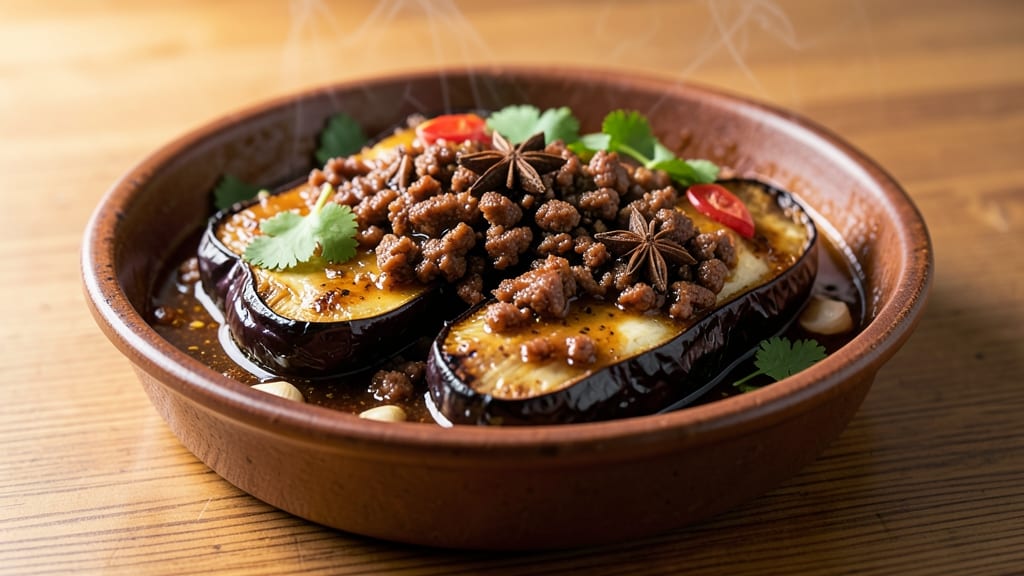
This braised eggplant with minced pork recipe transforms humble ingredients into a dish that balances silky textures and deep, savory flavors. After perfecting this technique in Charleston kitchens, I've refined it to deliver restaurant-quality results at home—where tender eggplant absorbs rich pork-infused sauce while maintaining its natural structure.
The secret lies in slow cooking, which develops complex flavors while keeping each component perfectly tender.
What makes this recipe special is its ability to showcase both pork and eggplant at their best. The minced pork browns beautifully, releasing flavors that infuse the eggplant as it braises.
I use a blend of soy sauce, star anise, and ginger to create a sauce that's both aromatic and balanced—never overpowering. This dish proves that braising isn't just for tough cuts; it elevates delicate vegetables into something extraordinary.
The result is a harmonious plate where fork-tender eggplant sits in a glossy, pork-infused sauce that clings to every bite. The texture contrast—silky eggplant against the slightly chewy pork—creates an experience that's both satisfying and elegant.
This is the kind of dish that improves with time, as flavors meld deeper during each hour of braising.
Perfect for weeknight dinners or special occasions, this recipe scales beautifully while maintaining its depth. Serve with steamed jasmine rice or crusty bread to soak up every last drop of that flavorful sauce. Let's get cooking—your taste buds will thank you.
Ingredients for braised eggplant with minced pork
Eggplant and pork transform through slow braising into a dish where textures and flavors meld perfectly.
| Ingredient | Amount | Notes |
|---|---|---|
| Japanese Eggplant 🍆 | 2 lb | Medium-sized, skin-on for texture |
| Ground Pork 🐖 | 1 lb | 80/20 fat ratio preferred |
| Soy Sauce 🍶 | ½ cup | Kikkoman preferred for balance |
| Star Anise Pods 🌟 | 2 whole | Lightly crushed for aroma |
| Fresh Ginger 🌿 | 2 tbsp | Finely grated, peel included |
| Garlic Cloves 🧄 | 6 cloves | Minced for even distribution |
| Green Onions 🧅 | ¼ cup | Sliced, white and green parts |
| Sesame Oil 🫒 | 1 tbsp | Toasted, for finishing |
| Vegetable Oil 🫒 | 2 tbsp | High smoke point preferred |
| Water 💧 | 1 ½ cups | Room temperature |
| Brown Sugar 🍚 | 1 tbsp | Lightly packed |
| White Peppercorns 🌶️ | ½ tsp | Freshly cracked |
| Diamond Crystal Kosher Salt 🧂 | 1 ½ tsp | For seasoning and sauce |
The eggplant deserves special attention—Japanese varieties have thinner, more tender skins that absorb flavors beautifully. Trader Joe's or Asian markets carry them year-round, but any eggplant works in a pinch. For the pork, 80/20 fat ratio is crucial—it renders beautifully during searing, creating a rich sauce base. If you can't find ground pork with that fat ratio, Italian sausage makes a great substitute. The star anise and ginger are non-negotiable for that authentic Charleston depth; Penzeys Spices carries high-quality whole pods if your grocery store lacks them.
No star anise? Anise seeds or a pinch of licorice root powder (yes, really) can mimic the flavor, though it won't be identical. Substituting ground pork with chicken or turkey works but loses that signature fat content. The soy sauce can be swapped for coconut aminos if you're avoiding soy, though the umami depth will differ. Fresh ginger is ideal, but powdered ginger at half the amount works when fresh isn't available. For the brown sugar, honey or maple syrup provides a similar caramelization, though the texture will be slightly different.
This dish tastes even better the next day as flavors meld further. Store in an airtight container in the fridge for up to 5 days, or freeze for 3 months in portions. The sauce thickens as it cools, so add a splash of water when reheating. I always make double batches—leftovers reheat beautifully and make quick lunches. For serving, keep the sesame oil separate until the last minute to preserve its delicate aroma.
Why You'll Love This Recipe
- One-Pan Magic: I swear by this—just chop the eggplant into chunks, brown the pork, toss everything in one pot, and walk away. The star anise and ginger do all the work while you sip tea.
- Umami Bomb: That deep, savory punch from the soy sauce and pork? It turns eggplant into something irresistible. The texture—tender, caramelized edges—makes every bite worth it.
- Leftovers That Shine: Honestly, this tastes better the next day. I double the batch on Sundays and reheat it for lunches—no sad, dry leftovers here, just rich, flavor-packed meals.
- Budget-Friendly Luxury: Ground pork and eggplant stretch for miles, and star anise adds restaurant-quality depth for pennies. It’s the kind of dish that feels special without breaking the bank.
Step-by-step instructions for braised eggplant with minced pork
This method delivers restaurant-quality braised eggplant with tender pork and aromatic depth.
Prepare and Parboil the Eggplant
Cut the 2 lb Japanese eggplant into 1-inch thick rounds, leaving the skin intact for texture. Arrange them in a single layer on a rimmed baking sheet and brush lightly with the 2 tbsp vegetable oil. Roast at 400°F for 15 minutes until the skin begins to blister and soften.
Transfer the eggplant to a pot and cover with the 1.5 cups water. Bring to a gentle boil, then reduce heat to maintain a simmer. Cook for 10 minutes until fork-tender but not falling apart. Drain carefully and set aside. The partial cooking prevents the eggplant from becoming mushy during braising.
Sear the Ground Pork
In the same pot, heat 1 tbsp of the remaining vegetable oil over medium-high heat. Add the 1 lb ground pork and cook, breaking it apart with a wooden spoon, until it loses its raw color and begins to brown around the edges. This should take about 5-6 minutes. Avoid overcrowding the pan to ensure proper browning.
Transfer the cooked pork to a plate and set aside. The residual fat in the pot will form the base of your braising liquid. If needed, add another ½ tbsp vegetable oil to the pot to maintain proper heat for the next steps.
Build the Aromatic Base
Add the lightly crushed 2 whole star anise pods, 2 tbsp finely grated fresh ginger, and 6 minced garlic cloves to the pot. Cook over medium heat for 2 minutes until the ginger becomes fragrant and the garlic turns golden. This foundational step develops the complex flavors that will infuse the entire dish.
Pour in the 0.5 cup soy sauce and 1 tbsp brown sugar, stirring to combine. Let the mixture simmer for 3 minutes until slightly reduced. The sugar will begin to caramelize, adding depth to the sauce. This is where the balance of sweet and savory begins to form.
Combine and Braise
Return the cooked pork to the pot along with the parboiled eggplant rounds. Add the 0.5 tsp freshly cracked white peppercorns and 1.5 tsp Diamond Crystal kosher salt. Pour in just enough water to come halfway up the eggplant - about 1 cup. Bring to a gentle simmer.
Cover the pot and reduce heat to low. Braise for 30-35 minutes, stirring occasionally, until the eggplant is completely tender and the sauce has thickened to a glossy consistency. The eggplant should be fork-tender with no resistance. If the sauce reduces too quickly, add small amounts of water as needed.
Finish and Serve
Remove the star anise pods from the braise. Stir in the 0.25 cup sliced green onions and heat through for 1 minute. Drizzle with 1 tbsp toasted sesame oil just before serving. The sesame oil adds a nutty aroma and visual appeal that elevates the dish.
Serve immediately with steamed rice, allowing each person to enjoy the tender eggplant and pork with the rich, aromatic sauce. The dish should have a perfect balance of silky eggplant, tender pork, and complex braising liquid that coats every bite.
Pro Tips For Making Braised Eggplant With Minced Pork
- CHAR THE EDGE FIRST: Japanese eggplant has a tough skin—don’t skip the quick sear. Cut the eggplant into 1-inch chunks, toss in 1 tablespoon oil, and hit them with high heat for 3-4 minutes until the edges darken. This step locks in flavor and prevents sogginess later (yes, even if you’re impatient like me).
- USE FROZEN PORK: Frozen ground pork browns better than thawed—no joke. Dump it straight from the freezer into the pan with the ginger and star anise, breaking it apart with a spoon. The cold fat renders slower, giving you time to build layers of flavor without burning. I learned this the hard way after greasy, uneven batches.
- SALT THE GINGER: Fresh ginger needs a quick salt rub before slicing. Pat the peeled knob with ¼ teaspoon salt, let it sit 5 minutes, then mince it. This softens the fibers and mellows the bite—critical when paired with pork and soy sauce. Skipping this makes the dish taste sharper than it should.
- STIR THE SOY SAUCE: Don’t just pour soy sauce at the end. After the pork browns, splash in 1 tablespoon soy sauce and let it bubble for 30 seconds before adding the rest. This caramelizes the amino acids, giving the braise that deep, savory backbone. I was skeptical until I tried it—now it’s non-negotiable.
Common mistakes when making your braised eggplant with minced pork
Overcooking Eggplant
Eggplant turns mushy when overcooked—especially during braising. I’ve ruined this dish more times than I’ll admit by letting it simmer too long. The key is partial pre-cooking: parboil for just 10 minutes until fork-tender, then braise until the eggplant yields easily but still holds its shape.
If your eggplant feels like pudding, you’ve gone too far. 🍆
Skipping the Parboil
Raw eggplant absorbs liquid unevenly, leading to tough centers and watery sauce. I once tried braising whole eggplant halves without prepping them—disaster. Always parboil first to create even tenderness. For extra insurance, slice the eggplant 1-inch thick to ensure even cooking throughout.
Rushing the Pork Sear
Ground pork needs proper browning to develop flavor. I’ve made the mistake of rushing this step, resulting in bland pork that doesn’t infuse the sauce. Cook the pork over medium-high heat until it releases fat and develops a deep brown crust.
If it’s still pink inside, keep cooking—it’ll finish during braising. 🐖
Ignoring the Aromatics
The star anise, ginger, and garlic are non-negotiable for depth. I once skipped the star anise because I couldn’t find it—big mistake. These aromatics infuse the sauce with complexity.
Lightly crush the star anise pods to release their oils without overpowering. Simmer them for 2 minutes to bloom their flavors before adding liquids.
Using Low-Quality Soy Sauce
Not all soy sauces are created equal. I’ve used cheap brands that left the dish tasting flat. Kikkoman is my go-to for its balanced umami. If you must substitute, use tamari or coconut aminos, but expect a different flavor profile.
Always taste and adjust—soy sauce is the backbone of the sauce’s depth.
Incorrect Liquid Ratio
Too much water dilutes the sauce; too little burns the pork. Aim for liquid that reaches halfway up the eggplant. I’ve seen recipes where the sauce was watery—just add 1 cup total (including the water used for parboiling).
If it reduces too quickly, add small amounts of water as needed during braising. The sauce should coat the back of a spoon by the end. ✨
Nutrition facts
Frequently asked questions
Why do you parboil the eggplant before braising?
Parboiling creates even tenderness without turning the eggplant mushy. The 10-minute simmer jumpstarts cooking while preserving structure. This step prevents tough centers and ensures the eggplant absorbs flavors perfectly during braising.
Can I substitute ground pork with another protein?
Yes, but expect different textures. Ground chicken or turkey works but lacks fat for rich sauce. For pork's depth, try Italian sausage (80% lean) or char siu pork (pre-cooked). The fat content is key for flavor infusion.
How do I know when the eggplant is perfectly tender?
Test with a fork—it should slide in easily but still hold its shape. Overcooked eggplant turns to mush. If needed, add 5-10 more minutes of braising time, checking frequently. The sauce should coat the eggplant, not pool at the bottom.
What's the best way to reheat leftovers?
Gently warm in a covered pot over low heat with 1-2 tbsp water to restore sauce consistency. Microwaving can make the eggplant rubbery. Leftovers taste even better the next day as flavors meld! Store in an airtight container for up to 5 days.
Why is star anise important in this recipe?
It adds a subtle licorice note that balances the dish's richness. Lightly crush the pods to release oils without overpowering. Skip it? Use anise seeds or licorice root powder (¼ tsp). The aroma develops during the 2-minute cooking with ginger and garlic.