
Main Courses
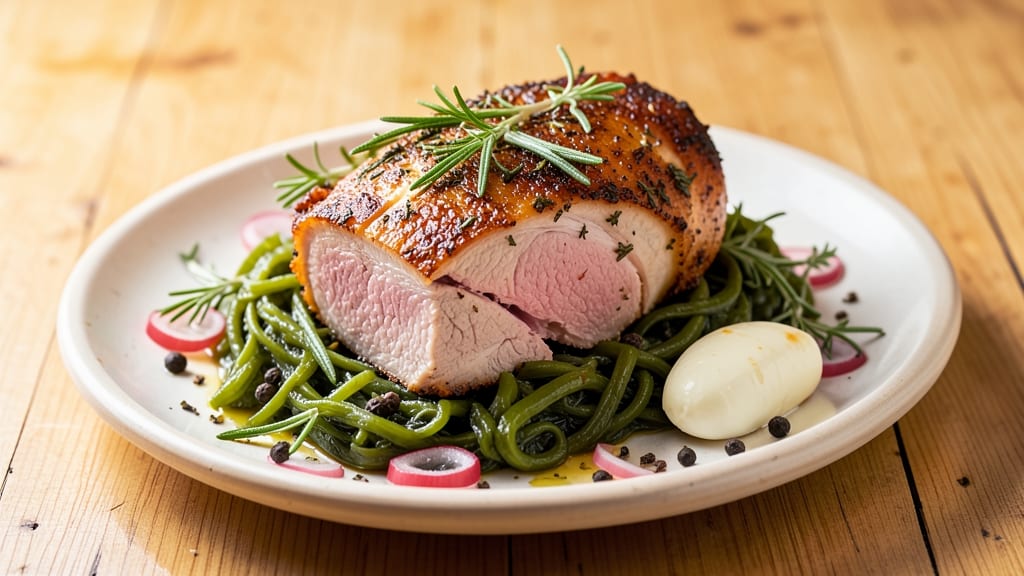
This boneless pork loin roast recipe delivers restaurant-quality tenderness paired with sauerkraut's tangy crunch—a match made in Southern comfort food heaven. 💛 After years of perfecting pork roasts in Atlanta's high-volume kitchens, I've developed a method that transforms lean pork into melt-in-your-mouth perfection with just a few simple steps and smart seasoning.
The secret lies in the low-and-slow roasting technique—starting at high heat to create a flavorful crust, then reducing to maintain moisture while the meat reaches 145°F internal temperature. Meanwhile, the sauerkraut gets warmed with apples and caraway, balancing its sharpness with natural sweetness.
This isn't just pork and kraut; it's a harmonious balance of textures and flavors that'll have your dinner guests asking for seconds.
What you'll end up with is juicy, herb-kissed pork with a golden crust, served alongside sauerkraut that's warm, aromatic, and just slightly sweet. The pork stays tender and moist thanks to the reverse sear method, while the sauerkraut adds that fermented tang that cuts through the richness.
This is the kind of meal that feels special enough for company but simple enough for weeknights.
Serve with roasted root vegetables or a crisp green salad to round out the plate. The pork slices beautifully for sandwiches the next day, and the sauerkraut keeps well in the fridge for up to a week—making this a make-ahead friendly recipe that's perfect for busy schedules. Let's get cooking!
Ingredients for boneless pork loin roast and sauerkraut
Six ingredients transform lean pork into melt-in-your-mouth perfection paired with aromatic sauerkraut.
| Ingredient | Amount | Notes |
|---|---|---|
| Boneless Pork Loin Roast 🐖 | 2 ½ lb | Center-cut for even cooking |
| Diamond Crystal Kosher Salt 🧂 | 1 ½ tsp | For crust development |
| Freshly Ground Black Pepper 🌶️ | 1 tsp | Cracked peppercorns preferred |
| Fresh Thyme Leaves 🌿 | ½ tsp | Or 0.25 tsp dried thyme |
| Fresh Rosemary Sprigs 🌿 | 2 whole | Woody stems removed |
| Unsalted Butter 🧈 | 2 tbsp | Cold for crust formation |
| Sauerkraut 🥬 | 2 cups | High-quality, tangy fermented |
| Granny Smith Apples 🍎 | 1 medium | Peeled, diced into 0.25-inch pieces |
| Ground Caraway Seeds 🌾 | 1 tsp | Freshly ground for aroma |
| Extra-Virgin Olive Oil 🫒 | 1 tbsp | For sauerkraut sautéing |
| Garlic Cloves 🧄 | 2 cloves | Minced for sauerkraut |
| Fresh Parsley 🌿 | ¼ cup | Chopped for garnish |
| Red Wine Vinegar 🍷 | 1 tbsp | For balancing acidity |
The boneless pork loin is the centerpiece, and center-cut roasts deliver the most consistent tenderness. Whole Foods or local butchers often carry premium cuts—look for even grain and good marbling. If using frozen, thaw overnight in the fridge. The apples should be firm but not hard (Granny Smith holds up best during cooking). For the sauerkraut, Rehr's or Bubbapalooza brands offer superior fermentation quality. Fresh herbs are non-negotiable here—their oils infuse the pork during roasting, creating that restaurant-quality crust.
No fresh rosemary? Dried at one-third the amount works in a pinch, though texture differs. Substituting apples? Pear or tart green apple maintains the balance. Caraway seeds unavailable? Celery seed at half the quantity mimics the earthy depth. For the pork seasoning, smoked paprika adds complexity if you prefer a deeper flavor profile. The sauerkraut mixture can be prepped hours ahead—its flavors develop beautifully when reheated alongside the pork. For extra richness, finish with a drizzle of high-quality balsamic vinegar instead of red wine vinegar.
Pork roasts reheat beautifully—slice against the grain and serve with the sauerkraut mixture warmed through. Store leftovers in airtight containers for up to 5 days or freeze for 3 months in portion-sized bags. The sauerkraut mixture keeps separately for 1 week refrigerated. For meal prep, double the sauerkraut batch—it's perfect over toast, in sandwiches, or as a tangy topping for roasted potatoes. The pork's juices make excellent gravy when deglazed with a splash of apple juice and a pat of butter.
Why You'll Love This Recipe
- One-Pan Magic: I swear by this recipe when I’m too tired to wash dishes—just sear the pork, toss in the sauerkraut, and let the oven do the work. The rosemary and thyme infuse the pork so well that even my picky husband doesn’t complain about the minimal effort.
- Herb-Crusted Perfection: That crispy, golden crust on the pork? Pure satisfaction. The kosher salt and pepper create texture while the fresh rosemary and thyme add an earthy depth that makes it taste like a restaurant dish. (Yes, even on a Tuesday night.)
- Leftovers That Shine: Between us, this recipe actually improves the next day. The pork stays tender, and the sauerkraut soaks up all the juices—perfect for sandwiches or a quick stir-fry. I’ve sent this home with coworkers, and they always ask for the recipe.
- Budget-Friendly Crowd-Pleaser: A single pork loin feeds four, and the sauerkraut stretches the meal further. Honestly, it’s my go-to for gatherings because it’s reliable, filling, and costs less than half of what takeout would. Plus, the flavors get better as it sits.
Step-by-step instructions for herb-kissed pork loin with fermented apple sauerkraut
This method delivers melt-in-your-mouth pork with a perfectly balanced sauerkraut topping that's tangy, sweet, and aromatic.
🔥 Step 1: Season and Sear the Pork Loin
Preheat your oven to 375°F. Pat the 2.5 lb boneless pork loin roast completely dry with paper towels—this is critical for developing that golden crust. In a small bowl, combine the 1.5 tsp Diamond Crystal kosher salt, 1 tsp freshly ground black pepper, 0.5 tsp fresh thyme leaves, and 2 whole fresh rosemary sprigs (woody stems removed). Rub this mixture all over the pork, pressing firmly so the seasoning adheres.
Heat a large oven-safe skillet over medium-high heat and add 2 tbsp cold unsalted butter. Once the butter foams, place the pork loin fat-side down in the pan. Let it sear undisturbed for 4-5 minutes until you develop deep golden-brown color. Flip the pork and sear the other side for another 3-4 minutes. The butter should be sizzling and turning nutty—this creates flavor depth we'll use later.
🥘 Step 2: Prepare the Sauerkraut-Apple Topping
While the pork roasts, heat 1 tbsp extra-virgin olive oil in a separate skillet over medium heat. Add the 2 cups sauerkraut and cook for 3-4 minutes until it begins to soften and release its liquid. Stir in the 2 minced garlic cloves and 1 tsp ground caraway seeds, cooking for another 1 minute until fragrant.
Add the peeled and diced Granny Smith apple and cook for 2-3 minutes until the apples soften slightly but still retain their shape. Pour in the 1 tbsp red wine vinegar and stir well. Remove from heat and set aside. The sauerkraut should now have a complex balance of tangy, sweet, and slightly bitter notes that will complement the pork beautifully.
🔥 Step 3: Roast the Pork to Perfect Doneness
Transfer the seared pork loin to a rimmed baking sheet, placing it cut-side up. Pour any accumulated pan juices from the skillet over the top of the pork—this basting will keep the meat moist. Roast in the preheated 375°F oven for 30-35 minutes for medium-rare (or until internal temperature reaches 140°F for medium).
Here's the thing—pork continues cooking after you remove it from the oven. For perfect results, use a meat thermometer to check doneness. The pork is done when it reaches 145°F internally and rests at 140°F after resting. Don't overcook; you want that juicy, tender texture we're after.
🥘 Step 4: Combine and Finish
Remove the pork from the oven and let it rest on the baking sheet for 10-15 minutes before slicing. This resting period allows the juices to redistribute throughout the meat, ensuring every slice is moist and flavorful. While it rests, return the sauerkraut mixture to the skillet over low heat and stir in the 0.25 cup chopped fresh parsley. Let it warm through for 2-3 minutes.
Slice the pork into ½-inch thick medallions against the grain. Spoon the warm sauerkraut-apple mixture over each serving and garnish with additional parsley. The contrast of tender, herb-kissed pork with the tangy, slightly sweet sauerkraut creates a harmonious balance of flavors that's both comforting and sophisticated.
Pro Tips For Making Boneless Pork Loin Roast And Sauerkraut
- Dry the Pork First: The juicier the pork, the harder it is to get a proper crust—especially with rosemary and thyme. Pat it thoroughly with paper towels, then let it sit uncovered on a rack for 30 minutes. I used to skip this, and my roast always ended up steamed instead of golden.
- Salt the Meat Early: Diamond Crystal kosher salt needs time to work its magic. Season the pork loin at least 4 hours ahead (overnight is even better) so the salt penetrates deeply. I learned this after a dry, bland roast—now my pork stays moist and packed with flavor.
- Don’t Overcrowd the Pan: If you’re searing the pork in a skillet before roasting, resist the urge to add all the sauerkraut at once. Cook the pork first until browned, then set it aside—crowding steams instead of crisps. I burned my first batch because I rushed this step.
- Use a Meat Thermometer: Pork loin hits its sweet spot at 145°F (63°C)—any hotter, and it turns rubbery. I used to guess by time and ended up with either undercooked or overcooked results. A cheap thermometer solves this forever.
Essential equipment for perfect results
Oven Essentials
Your oven is the heart of this recipe, so invest in a quality oven thermometer to ensure accuracy—ovens run hot or cold, and precision matters. I use a Thermoworks Oven Thermometer for its reliability. Preheat for at least 20 minutes before cooking to establish even heat distribution.
For even roasting, place your baking sheet on the middle rack—this prevents hot spots that can dry out the pork's exterior. 🌡️
Skillet Selection
A heavy-bottomed cast iron skillet (like my Lodge 10.25-inch) is non-negotiable for searing the pork—it retains heat evenly and develops that coveted crust. If you don’t have cast iron, a stainless steel skillet works, but monitor heat closely.
Avoid nonstick—it won’t brown the pork properly. For the sauerkraut, a medium-sized stainless steel sauté pan (like All-Clad) is ideal for even heating and easy stirring.
Meat Thermometer
Never guess doneness with pork—instant-read meat thermometers are your best friend. I swear by the ThermoWorks Smoke for its speed and accuracy. Insert the probe into the thickest part of the pork loin, avoiding fat or bone.
The meat is perfect at 145°F internal temperature—any higher, and you risk dryness. Pro tip: Rest the pork for 10-15 minutes after removing from the oven to let the juices redistribute.
Knife Skills
For slicing the pork, a sharp chef’s knife (like my Wüsthof Ikon) and a cutting board are essential. Slice against the grain into ½-inch thick medallions for tenderness.
For the sauerkraut prep, a small paring knife works for peeling apples, while a microplane is perfect for zesting if you add lemon later. Keep your knives sharp—dull blades crush meat fibers, leading to tough slices. 🔪
Resting Tools
After roasting, transfer the pork to a wire cooling rack placed on a baking sheet to allow air circulation, which helps it rest evenly. I also use a large rimmed baking sheet (like Le Creuset Stoneware) to catch any juices.
For the sauerkraut, a small stainless steel bowl keeps it warm while the pork rests. Don’t skip resting—it’s the difference between juicy perfection and dry disappointment.
Nutrition facts
Frequently asked questions
Can I substitute sauerkraut for another fermented vegetable?
While sauerkraut is the star here, you could use fermented cabbage slaw or kimchi for a similar tangy crunch. For kimchi, reduce the red wine vinegar to ½ tablespoon since it's already acidic. The flavor profile will shift but still complement the pork beautifully.
How do I prevent the pork loin from drying out?
Pat the pork completely dry before seasoning, but don't overcook it! Remove from the oven when it hits 140°F—it'll rise to 145°F while resting. Use a meat thermometer and let it rest for 10-15 minutes before slicing. The butter basting during roasting also helps lock in moisture.
What's the best way to reheat leftovers?
Slice the pork and reheat in a skillet over low heat with 1 tablespoon butter and 1 tablespoon apple juice for 3-4 minutes until warmed through. The sauerkraut can be reheated separately in a saucepan with 1 tablespoon water for 2-3 minutes. Avoid microwaving—it makes pork tough.
Can I make this recipe in a slow cooker?
Yes! Sear the pork first, then transfer to a slow cooker with 2 tablespoons broth or water. Cook on low for 4-5 hours until it reaches 145°F. For the sauerkraut, prepare it separately in a skillet as directed. The slow cooker method works well but lacks the crust you'd get from oven roasting.
What sides pair well with this dish?
Roasted root vegetables like carrots and potatoes add heartiness, while a crisp green salad with lemon vinaigrette balances the richness. For a German-inspired meal, serve with buttered egg noodles or red cabbage slaw. The apples in the sauerkraut also pair beautifully with mashed potatoes or applesauce.