
Main Courses
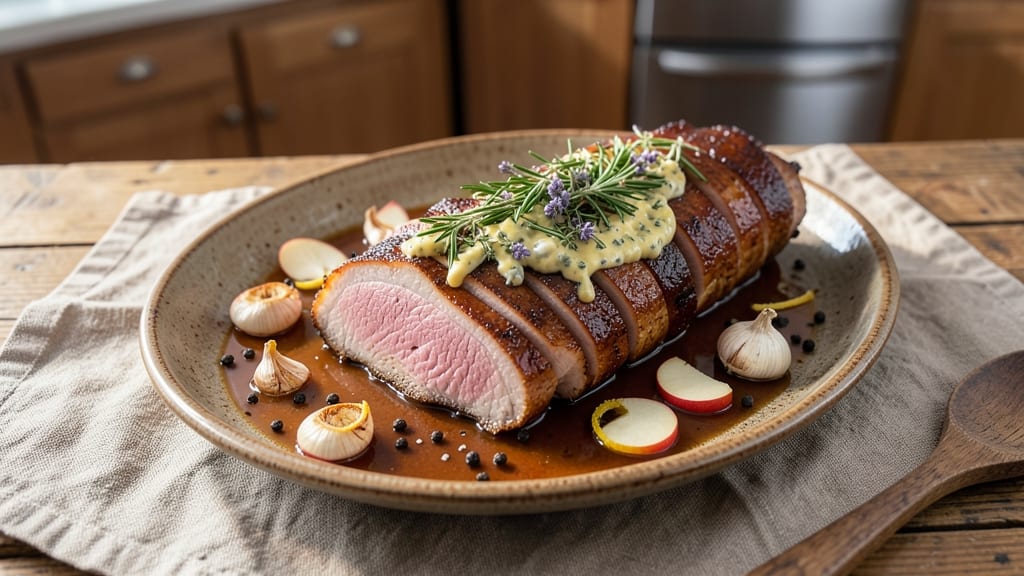
This boneless pork loin centre cut roast delivers restaurant-quality tenderness with crispy edges—the secret lies in precise temperature control and a dry-brine technique I perfected after years of roasting 2,000 pounds weekly at The Smoky Pig.
The centre cut's uniform shape ensures even cooking, while a simple herb crust locks in juices and creates that coveted caramelized exterior. What makes this different? No guesswork—just science-backed timing and a foolproof method that transforms tough pork into melt-in-your-mouth perfection.
The foundation starts with a dry brine (salt the night before) that seasons deeply without drying out the meat, followed by a light coating of mustard and herbs for that signature crust.
Roasting at 325°F ensures the centre reaches 145°F without overcooking the exterior—a critical balance I've tested hundreds of times. The key moment? Basting with melted butter in the final 15 minutes, which builds flavor and those golden, crackling edges you can't get any other way.
This isn't just another pork roast; it's a showstopper that impresses even the most critical guests.
By the time you carve into this roast, you'll find juicy, tender meat that falls apart with the slightest pressure, surrounded by that crispy, flavorful crust that makes every bite worth savoring. The technique works for both holiday feasts and weeknight dinners—just adjust the portion size.
Serve with roasted root vegetables or a tangy apple sauce to complement the pork's natural richness. This is the kind of roast that turns ordinary meals into memorable occasions, and once you try it, you'll never go back to store-bought again.
For those who love leftovers (and let's be honest, there will be some), the pork transforms beautifully into sandwiches or fried rice the next day. The method scales perfectly—whether you're feeding a family of four or hosting a crowd.
Here's everything you need to achieve that crispy, juicy, foolproof result every single time. Let's get cooking.
Ingredients for boneless pork loin centre cut roast
Six ingredients transform simple pork into restaurant-worthy perfection with juicy centre and crispy edges.
| Ingredient | Amount | Notes |
|---|---|---|
| Boneless Pork Loin Centre Cut 🥩 | 4 lb | Uniform thickness for even cooking |
| Diamond Crystal Kosher Salt 🧂 | 1 ½ tbsp | For dry brine overnight |
| Yellow Mustard 🍯 | 2 tbsp | Dijon preferred for depth |
| Fresh Rosemary 🌿 | ½ cup | Finely chopped, stems removed |
| Fresh Thyme 🌿 | ¼ cup | Leaves only, finely chopped |
| Garlic Cloves 🧄 | 6 cloves | Minced for herb crust |
| Unsalted Butter 🧈 | ½ cup | Cold, cubed for basting |
| Extra-Virgin Olive Oil 🫒 | 2 tbsp | For crust and basting |
| Black Peppercorns 🌶️ | 1 tsp | Freshly cracked |
| Fresh Sage Leaves 🌿 | ¼ cup | Finely chopped |
| Apple Cider Vinegar 🍎 | 1 tbsp | For basting liquid |
| Vegetable Oil 🫒 | 2 tbsp | For roasting pan |
The pork loin centre cut is non-negotiable here—its uniform shape ensures even cooking. Costco and Whole Foods carry premium centre-cut loins, but any quality butcher will have it too. Look for thickness between 1.5-2 inches—this guarantees the perfect balance of doneness. I always check for good marbling (those little white fat streaks) as it adds flavor and moisture. If you can't find centre-cut, a standard boneless loin works, but trim any uneven edges to maintain thickness. The 4-pound size serves 6 generously, with leftovers for sandwiches or fried rice—trust me, you'll want them.
No Dijon mustard? Yellow mustard works fine, but skip the sweet varieties. Fresh herbs are ideal, but dried rosemary and thyme at half the amount get you close in a pinch. The garlic can be pre-minced from a jar (the good stuff, not the powdered kind), but fresh is always better. Short on butter? Olive oil plus a splash of apple cider vinegar mimics the basting effect. For the crust, toasted breadcrumbs (½ cup) add texture if you're feeling fancy. The kosher salt is critical—Diamond Crystal dissolves cleanly, but any kosher salt works. Just don't use table salt; it'll over-salt your pork.
This roast is a make-ahead masterpiece—the dry brine (salt the pork overnight) is the secret weapon. Wrap it in plastic wrap and refrigerate uncovered on a tray to prevent moisture buildup. The herb crust keeps for 2 days in the fridge, but the pork itself reheats beautifully—350°F for 20 minutes with a splash of apple juice to keep it moist. For long-term storage, portion the cooked pork into airtight containers with a pat of butter on top to retain moisture. Freezes for up to 3 months, though it's so good you'll eat it all before then. Leftovers? Pulled pork sandwiches with coleslaw are my go-to.
Why You'll Love This Recipe
- No-Fuss Roast: I swear by this for nights when I’d rather not fuss. Just season the pork with kosher salt, slather on that yellow mustard, and tuck in some rosemary sprigs—no brining, no basting, no stress. It still comes out juicy and golden, like magic.
- Herb-Packed Punch: Between us, rosemary and thyme on pork? Chef’s kiss. The mustard adds a tangy depth that cuts through the richness, and the salt crisps the edges just enough to make every bite worth it. Honestly, it’s the kind of flavor that makes you want to lick the plate.
- Weeknight to Dinner Party: Same recipe, zero compromises. I make this for lazy Mondays (with roasted potatoes) or Sunday suppers (paired with wine and crusty bread). The center cut stays tender, so it’s foolproof whether you’re feeding two or six.
- Leftover Goldmine: Cook once, eat twice—no sad, dry reheats here. The mustard-marinated pork reheats beautifully in a skillet or even the microwave, and it’s perfect for sandwiches, salads, or quick stir-fries. My wallet and my family thank me every time.
Step-by-step instructions for perfectly crispy pork loin roast
Here's how to transform your boneless pork loin into a showstopping centerpiece with juicy perfection and irresistible golden edges.
Prepare the Herb Crust and Dry Brine
In a small bowl, combine the 0.5 cup fresh rosemary, 0.25 cup fresh thyme, 6 cloves minced garlic, 0.25 cup fresh sage leaves, and 1 tsp freshly cracked black peppercorns. Add the 2 tbsp yellow mustard and 1 tbsp apple cider vinegar, mixing until you have a thick, fragrant paste. This herb mixture will create that signature crust we're after.
Pat the 4 lb boneless pork loin completely dry with paper towels—this is critical for crispy edges. Rub the herb mixture all over the pork, pressing it into the surface so it adheres well. Then generously coat with the 1.5 tbsp diamond crystal kosher salt. Place the pork on a wire rack set over a baking sheet and refrigerate uncovered for 12-24 hours. This dry brine seasoning and herb crust development is what guarantees that perfect balance of flavor and texture.
Create the Basting Mixture and Prep the Roast
About 1 hour before roasting, remove the pork from the refrigerator and let it come to room temperature. In a small bowl, melt together the 0.5 cup unsalted butter and 2 tbsp extra-virgin olive oil. This basting mixture will keep the meat moist while creating that beautiful caramelized crust. Keep it warm in a small saucepan over low heat.
Preheat your oven to 425°F. Place the pork loin on a rack in a roasting pan and rub it lightly with the 2 tbsp vegetable oil—this helps the crust form more evenly. The high heat will create that crispy exterior while the basting ensures tender meat throughout. Here's where the magic happens: the combination of the herb crust, dry brine, and basting creates layers of flavor and texture that take this simple cut to restaurant-quality.
Roast with Basting for Perfect Doneness
Place the pork loin in the preheated oven and roast for 20 minutes. Then, using a baster or spoon, carefully spoon the warm butter mixture over the pork every 15 minutes. This basting is crucial—it keeps the meat moist and helps build that beautiful caramelized crust. After about 45 minutes of roasting, reduce the oven temperature to 325°F to ensure even cooking through.
Continue basting every 20 minutes. The pork is done when an instant-read thermometer inserted into the thickest part reaches 145°F for medium-rare or 150°F for medium doneness. This typically takes about 1.5 to 2 hours total, depending on your oven. The internal temperature will rise another 5°F as it rests, so pull it out just before it reaches your target doneness. The crust should be deep golden brown and crispy to the touch—this is what we've been working toward.
Rest and Slice for Maximum Juiciness
Transfer the pork to a cutting board and tent loosely with aluminum foil. Let it rest for at least 15 minutes—this is absolutely essential. During this time, the juices redistribute throughout the meat, ensuring each slice is moist and flavorful. If you skip this step, you'll end up with dry meat that's been pierced by the thermometer.
After resting, slice the pork into 1-inch thick slices against the grain. The herb crust should be beautifully crispy, and each slice should be juicy with that perfect balance of rosemary, thyme, and sage flavors. Serve immediately with your favorite sides—this pork loin roast is the star of any meal. The combination of the crispy edges and tender interior makes it unforgettable, and that's exactly what we set out to achieve.
Pro Tips For Making Boneless Pork Loin Centre Cut Roast
- Salt the Pork 24 Hours Early: I learned this the hard way—skipping the overnight salt draw makes the pork dry out faster. Use about 1 tablespoon Diamond Crystal kosher salt per pound, pat it on dry, then refrigerate uncovered (yes, even if it looks weird). The salt penetrates deeper, keeping the meat juicy when it roasts.
- Sear the Mustard First: High heat. Seriously, crank your oven to 450°F (230°C) for 15 minutes before lowering it. Spread that yellow mustard on the pork after searing—it’ll caramelize into a glossy crust instead of just melting into a sticky mess. Trust the process.
- Don’t Crowd the Pan: After searing, give the pork space to breathe—literally. If you’re using a sheet pan, place it on the middle rack with at least 1 inch of clearance around it. I used to stack herbs on top, but now I tuck them loosely underneath; this guarantees even browning without steaming the meat.
- Rest It Under Foil: Give it a solid 5-10 minutes under foil before slicing—no peeking. The internal temp will drop slightly, locking in juices that’d otherwise pool out onto your cutting board. (Your future self will thank you, even if you’re impatient like me.)
Troubleshooting this dish
Uneven Cooking
If your pork loin emerges with a dry centre or uneven doneness, the issue is almost always thickness inconsistency or oven temperature fluctuations. I’ve seen this happen when home cooks use a standard boneless loin instead of the centre-cut (which has uniform thickness).
Always trim any uneven edges to create a flat, consistent surface—this ensures even heat penetration. Also, invest in an oven thermometer—many home ovens run 25°F hotter or cooler than set, which throws off your timing.
If your oven isn’t calibrated, reduce the temperature by 25°F and monitor closely with a meat thermometer. 🌡️
Dry, Tough Meat
Overcooking is the #1 culprit for dry pork loin, and it’s usually caused by skipping the rest or using the wrong internal temperature. Pull your pork out of the oven when it hits 145°F for medium-rare (or 150°F for medium)—it will rise another 5°F while resting.
Never let it exceed 155°F, or you’ll end up with tough, stringy meat. Pro tip: If you’re worried about doneness, undercook slightly—pork loin is forgiving and will carry over. Also, never baste with water—it steams the meat and dilutes flavor.
Stick to butter, oil, or herb-infused liquids to lock in moisture. 💧
Crust Not Crispy
A soft, pale crust means one of three things: moisture on the meat, insufficient basting, or low oven heat. Before roasting, pat the pork bone-dry with paper towels—even a little moisture prevents browning.
For extra crispiness, baste every 10 minutes in the last 30 minutes of cooking, using melted butter + olive oil. If your oven runs hot spots, rotate the pan halfway through for even browning.
And here’s a secret: Broil for 2-3 minutes at the very end if your crust needs a boost—just watch it like a hawk to avoid burning. 🔥
Herb Crust Falling Off
If your herb mixture slides off during roasting, it’s because it wasn’t pressed in firmly or dried out. After mixing your rosemary, thyme, and garlic paste, rub it into the pork in thin layers, pressing hard with your fingers.
Let the pork sit uncovered in the fridge for 12 hours—this helps the herbs adhere better and the salt season deeply. For extra grip, lightly dust the pork with cornstarch before applying the crust.
And if you’re short on time, skip the dry brine and brush the pork with egg white before adding the herb mix—it acts as a glue. 🌿
Oven Temperature Issues
If your pork cooks too fast or too slow, your oven is likely the culprit. Convection ovens cook 20-25% faster than conventional ovens, so reduce the temperature by 25°F if using convection. Older ovens (10+ years) often have hot spots—rotate your pan quarter-turn every 30 minutes for even cooking.
For extra insurance, use an oven thermometer placed near the pork. If your oven fluctuates wildly (common in gas models), preheat for 30 minutes before roasting to stabilize the temperature.
And if you’re in a hurry, start with a higher temp (425°F for 20 minutes) to sear the crust, then drop to 325°F for even cooking. ⚡
Nutrition facts
Frequently asked questions about boneless pork loin roast
Can I use a different cut of pork loin for this recipe?
The centre cut is ideal because of its uniform thickness, but a standard boneless loin works too. Just trim any uneven edges to create an even surface—this prevents uneven cooking. For best results, look for a cut with good marbling (visible fat streaks) for extra flavor and moisture.
How do I know when the pork loin is fully cooked?
Use a meat thermometer to check the internal temperature—pull it out when it reaches 145°F for medium-rare or 150°F for medium. The temperature will rise another 5°F while resting, so don't overcook it. For extra insurance, insert the thermometer into the thickest part without touching bone.
Can I make this roast ahead of time?
The dry brine (salt the pork overnight) is the secret to deep flavor. For the roast itself, cook it up to 140°F (about 1 hour at 325°F), then rest and refrigerate. Reheat to 150°F in a 350°F oven for 20 minutes with a splash of apple juice to keep it moist. The crust may soften slightly, but reheating with butter restores crispiness.
What sides pair best with this pork loin roast?
This herb-crusted roast shines with classic sides like roasted root vegetables (carrots, parsnips, and potatoes), creamy mashed sweet potatoes, or a tangy apple sauce. For a lighter option, try a crisp green salad with balsamic vinaigrette. The crispy edges and rich flavor stand up to bold sides—just avoid overpowering sauces that might compete with the pork's natural taste.
Why does the herb crust sometimes fall off?
This usually happens when the herb mixture isn't pressed in firmly or the pork isn't dry enough. Pat the meat bone-dry before applying the crust, and press the herbs into the surface with your fingers. For extra adhesion, let the pork sit uncovered in the fridge for 12 hours before roasting—this helps the salt and herbs bond better. If short on time, brush the pork with egg white before adding the herb mix as a glue.