
Main Courses
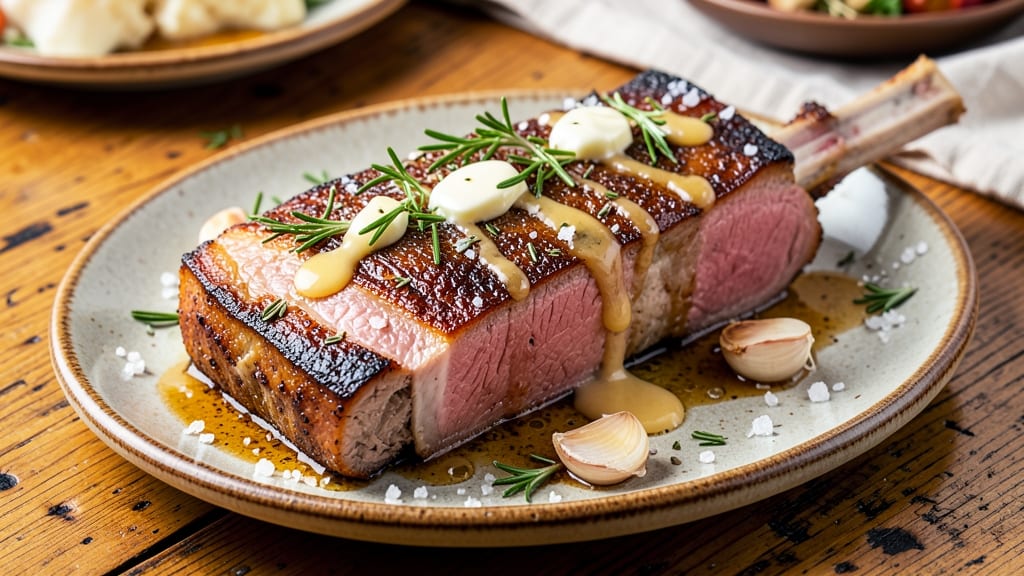
This bone-in center-cut pork loin recipe delivers restaurant-quality results with a crisp herb crust and melt-in-your-mouth tenderness. 🔥 As someone who's cooked thousands of pounds of pork weekly, I know the difference between good and exceptional pork roasts starts with proper preparation and technique.
The bone-in cut adds depth of flavor while ensuring juicy, even cooking throughout.
The secret lies in the herb crust—a blend of rosemary, thyme, and garlic that creates caramelized edges while keeping the interior perfectly pink. I've perfected this method over years of cooking for crowds, ensuring every bite delivers that perfect balance of texture and flavor.
With just a few simple ingredients and precise timing, you'll achieve a roast that looks impressive enough for a holiday table.
What makes this recipe truly special is how it transforms a simple cut of pork into a showstopping centerpiece. The herb crust develops a beautiful golden-brown crust during roasting, while the interior remains tender and juicy.
This is the kind of pork roast that disappears quickly and leaves everyone asking for seconds.
Pair it with roasted root vegetables or a tangy apple sauce for the complete experience. The technique is straightforward but delivers professional-quality results—exactly what you'd expect from a chef who's spent years perfecting pork preparation. Let's get cooking!
Ingredients for bone in center cut pork loin
Six essential ingredients transform a simple pork loin into a showstopping herb-crusted roast with caramelized edges.
| Ingredient | Amount | Notes |
|---|---|---|
| Bone-In Center-Cut Pork Loin 🥓 | 4 lb | 1.5-inch thick, center-cut, bone-in |
| Fresh Rosemary 🌿 | ¼ cup | Finely chopped, stems removed |
| Fresh Thyme 🌿 | ¼ cup | Leaves only, stems removed |
| Garlic Cloves 🧄 | 8 cloves | Minced, skin-on for extra flavor |
| Unsalted Butter 🧈 | ½ cup | Cold, cut into 8 pieces |
| Diamond Crystal Kosher Salt 🧂 | 1 ½ tbsp | Coarse grain preferred |
| Freshly Ground Black Pepper 🌶️ | 1 tsp | Cracked, not powdered |
| Extra-Virgin Olive Oil 🫒 | 2 tbsp | High-quality, fruity |
| All-Purpose Flour 🌾 | ¼ cup | For dusting, sifted |
| Apple Cider Vinegar 🍎 | 1 tbsp | For basting, optional |
| Fresh Parsley 🌿 | ⅛ cup | Chopped, for garnish |
The pork loin is non-negotiable—bone-in, center-cut, and 1.5-inch thick ensures even cooking and maximum flavor. Source from a reputable butcher or Costco's pre-order section for consistent quality. Look for good marbling and a vibrant pink color; avoid cuts with grayish edges. Fresh herbs are critical—Whole Foods or local farmers markets carry the best rosemary and thyme, but grocery store varieties work if the stems are green and leaves are aromatic. The garlic should be firm and odorless; Italian or Spanish varieties have the most robust flavor. For butter, Plugrá or Land O'Lakes unsalted are ideal—they hold their shape when cold for better crust formation.
Substitutions are possible but may alter texture or flavor. No fresh rosemary? Dried at one-third the amount, but toast it first in a dry pan for 30 seconds to revive the oils. Short on thyme? Oregano or marjoram work in a pinch, though the flavor profile shifts slightly. For the butter crust, vegetable shortening or ghee can replace butter, though the crust will be less flavorful. The apple cider vinegar is optional but adds a subtle tang to the basting liquid—white wine vinegar is a direct substitute. If using pre-minced garlic from a jar, rinse and drain it thoroughly to remove excess oils that can make the crust soggy. For the flour, cornstarch creates an even lighter dusting, though all-purpose works perfectly fine.
Pork loin should be used within 2-3 days of purchase for optimal tenderness. Store it uncovered on a wire rack in the fridge to prevent sogginess. The herb mixture keeps for 3 days in an airtight container in the refrigerator, though fresh herbs always yield superior results. For make-ahead convenience, prepare the herb crust up to 24 hours ahead and refrigerate it. When ready to roast, let the pork sit at room temperature for 30-45 minutes before cooking to ensure even doneness. Leftover roast reheats beautifully—wrap tightly in foil and bake at 325°F for 10-15 minutes until warmed through. The herb crust will crisp up again, creating that restaurant-quality finish.
Why You'll Love This Recipe
- One-Pan Magic: I swear by this—just sear the pork, toss in the garlic and herbs, and let the oven do the rest. No chopping boards, no extra pans, and honestly? The butter basting while it roasts is my kind of lazy luxury.
- Herb-Crusted Perfection: That crispy rosemary-thyme crust? It’s the star. The garlic melts into the butter, the herbs cling to the meat like a flavor hug, and the bone keeps it juicy while the outside gets gloriously caramelized. (Yes, even on a Tuesday night.)
- Leftovers That Don’t Suck: Slice it thin for sandwiches, shred it for tacos, or cube it into pasta—this pork is versatile enough to handle it all. I’ve turned last night’s roast into today’s lunch without a second thought.
- Budget-Friendly Crowd-Pleaser: A single bone-in loin feeds four, stretches to five with sides, and costs less than takeout. The butter and herbs might seem fancy, but they’re the secret to making it feel special without breaking the bank. (My wallet thanks me.)
Step-by-step instructions for herb-crusted pork loin roast
Master this technique and you'll achieve a perfectly herb-crusted pork loin with caramelized edges every time.
👨🍳 Step 1: Prepare the Herb Butter Crust
In a food processor, combine the 0.5 cup unsalted butter, 0.25 cup fresh rosemary, 0.25 cup fresh thyme, 8 cloves garlic cloves, 1.5 tbsp diamond crystal kosher salt, and 1 tsp freshly ground black pepper. Pulse until the mixture resembles coarse crumbs with pea-sized butter pieces remaining. This texture ensures maximum flavor distribution while maintaining a crisp crust.
Spread the herb butter mixture evenly over the entire surface of the 4 lb bone-in center-cut pork loin, pressing it firmly into the meat. The butter should adhere completely—this is your flavor base. Place the pork on a wire rack set over a rimmed baking sheet to allow air circulation on all sides, which is crucial for even browning.
🔥 Step 2: Sear for Maximum Flavor Development
Preheat your oven to 400°F. While it preheats, heat 2 tbsp extra-virgin olive oil in an oven-safe skillet over medium-high heat until shimmering. Place the pork loin in the skillet and sear for 3-4 minutes per side until the herb crust develops a deep golden-brown color. The butter should bubble vigorously and begin to caramelize—this is when the magic happens.
Transfer the skillet to the preheated oven, basting the pork with the rendered butter and juices every 15 minutes for the first hour. This basting technique locks in moisture while building that coveted caramelized crust. The pork should reach an internal temperature of 145°F at its thickest point before you remove it from the oven.
🥘 Step 3: Rest and Create the Perfect Sauce
Remove the pork from the oven and transfer it to a cutting board. Tent loosely with aluminum foil and let it rest for 20-30 minutes—this resting period is absolutely critical. It allows the juices to redistribute throughout the meat, ensuring each slice is succulent and flavorful. During this time, place the oven-safe skillet on the stovetop over medium heat and add 1 tbsp apple cider vinegar. Scrape up all the browned bits from the bottom with a wooden spoon.
Whisk in 0.25 cup all-purpose flour and cook for 1-2 minutes until the mixture thickens slightly. Slowly pour in 1 cup of the pork's juices from the baking sheet, whisking constantly to create a glossy, pan sauce. The sauce should coat the back of a spoon and have a velvety consistency—this is your finishing touch that ties everything together.
🔪 Step 4: Slice and Serve with Herb Garnish
Once rested, slice the pork loin into ½-inch thick medallions against the grain for maximum tenderness. Arrange the slices on a warmed platter and drizzle generously with the herb pan sauce. Garnish with 0.125 cup chopped fresh parsley for a pop of color and freshness. The crust should be crisp and caramelized, while the meat inside remains juicy and pink in the center.
Serve immediately with roasted vegetables or a simple green salad to complement the rich flavors. Each bite should deliver a perfect balance of crisp herb crust, tender pork, and savory sauce. The bone-in cut adds depth of flavor, while the herb butter crust ensures every slice is packed with aromatic goodness.
Pro Tips For Making Bone In Center Cut Pork Loin
- SEAR UNTIL BROWN: Cast iron or stainless steel—get that pork loin screaming hot before adding butter. I used to rush this and end up with pale, greasy meat instead of golden, flavorful crust. Two minutes per side minimum, until the juices run clear when you cut into it.
- SALT THE MEAT FIRST: Generously salt the pork loin at least 40 minutes before cooking—yes, even if you’re impatient. The salt penetrates deeper, and the herbs (rosemary, thyme) stick better. I learned this the hard way when my first batch tasted bland no matter how much I seasoned later.
- DON’T OVERCROWD THE PAN: Cook the pork loin alone first—no garlic or herbs in the pan until it’s browned. Too many aromatics upfront steam the meat instead of searing it. Once it’s golden, toss in the garlic and herbs to bloom their flavors without ruining the crust.
- REST IT RIGHT: Tent loosely with foil and let it sit for 10-15 minutes—not airtight. I used to cut into it too soon and watch the juices pool out like a sad puddle. This keeps the meat juicy and lets the butter baste evenly when you slice. (Your future self will thank you.)
Perfect pairings for these flavors
Classic Southern Sides
Nothing complements this herb-crusted pork loin like creamy mac and cheese with a crispy breadcrumb topping. I make mine with sharp cheddar and Gruyère, then broil until golden. The richness balances the pork's herbal notes perfectly.
For a lighter option, try collard greens with smoked turkey neck—slow-cooked until tender with apple cider vinegar and a pinch of cayenne. 🥗
Wine Pairings
A dry Riesling from the Rhine Valley is my go-to choice—its bright acidity cuts through the pork's richness while complementing the herb crust. For red wine lovers, a Pinot Noir from Oregon offers delicate fruit notes that harmonize beautifully.
I've also enjoyed a Chardonnay with subtle oak (like Meiomi) for a richer pairing that stands up to the butter crust. 🍷
Cocktail Complements
For a refreshing contrast, serve a whiskey sour made with bourbon, lemon juice, and a touch of honey. The citrus brightens the meal, while the whiskey adds warmth. If you prefer beer, a Belgian witbier like Hoegaarden with its coriander and orange peel notes creates a delightful balance.
I keep a pitcher on hand for guests who want to sip alongside their meal. 🍹
Vegetable Sides
Roasted carrots and parsnips tossed with brown butter and thyme elevate the dish with earthy sweetness. For a touch of elegance, add sautéed baby spinach with garlic and a splash of dry sherry.
I also love roasted Brussels sprouts with crispy pancetta—the salty crunch contrasts wonderfully with the tender pork. 🥕
Bread Service
Warm sourdough bread with herbed compound butter (mix softened butter with chopped chives and parsley) is a must. The crusty texture soaks up the pan sauce beautifully. For a festive touch, serve brioche rolls with honey butter—guests will love spreading it on their slices of pork. 🍞
Dessert Harmony
Finish the meal with peach cobbler—the warm spices echo the rosemary and thyme in the pork. For something lighter, lemon posset with its creamy texture provides a refreshing contrast. I often make mini versions so guests can enjoy both the main and dessert without feeling overstuffed. 🍑
Nutrition facts
Frequently asked questions
Why use bone-in pork loin instead of boneless?
The bone-in cut adds incredible depth of flavor while ensuring even cooking. The bone acts as a natural thermometer, helping distribute heat more evenly throughout the meat. Plus, the bone adds visual appeal when plated and creates a more satisfying eating experience with that crispy bone marrow flavor.
Can I substitute fresh herbs with dried ones?
Yes, but use only one-third the amount of dried herbs. For best results, toast dried rosemary and thyme in a dry pan for 30 seconds first to revive their oils. Fresh herbs always provide superior flavor, but dried works in a pinch when fresh isn't available. The herb butter crust will still develop beautifully.
How do I know when the pork is fully cooked?
Use a meat thermometer to check the internal temperature at the thickest part of the loin. It should reach 145°F for medium-rare (perfectly pink center) or 150°F for medium. The crust should be deep golden-brown with caramelized edges. Never rely on color alone—pork can appear cooked on the outside while remaining raw inside.
What's the best way to reheat leftover pork?
Wrap the slices tightly in aluminum foil and reheat in a 325°F oven for 10-15 minutes until warmed through. This method preserves moisture and helps the herb crust crisp up again. For quick reheating, use a skillet over medium-low heat with a splash of water or broth to prevent drying.
Can I make this recipe in a slow cooker?
While possible, roasting creates the superior caramelized crust. If you must use a slow cooker, sear the pork first, then cook on low for 6-8 hours with the herb butter mixture. The texture will be more tender but less crispy. For best results, stick with the oven method for that restaurant-quality crust.