
Main Courses
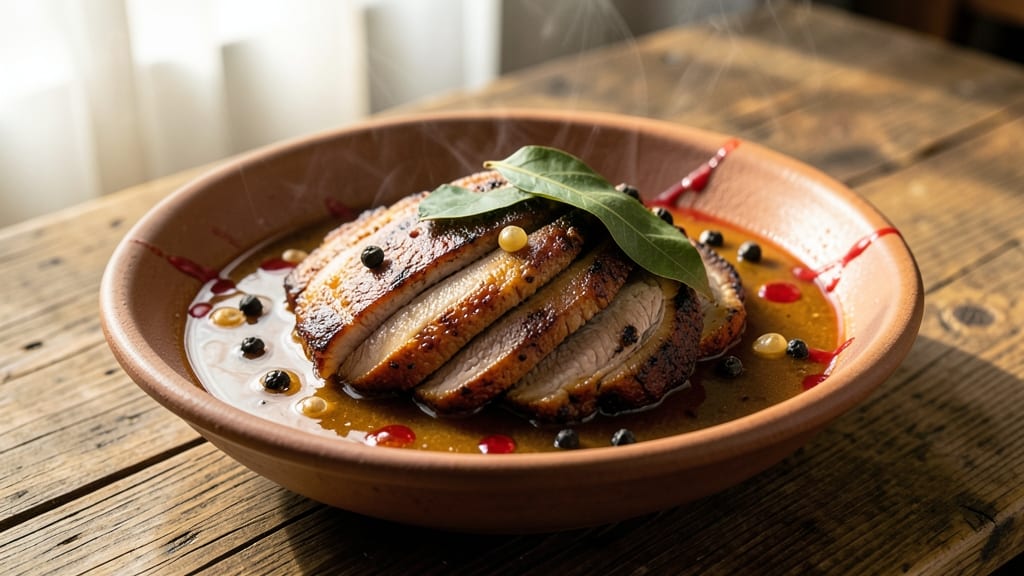
Filipino-style pork adobo delivers the kind of rich, tangy-savory flavor that makes every bite unforgettable. 🌟 After years of perfecting this dish—from the right vinegar balance to achieving that signature crispy edge—I’ve landed on a method that captures the soul of Filipino home cooking.
The secret lies in marinating the pork overnight, letting the soy sauce and cane vinegar work their magic while developing deep umami notes.
This recipe uses pork belly or shoulder, cut into tender chunks that become melt-in-your-mouth after slow braising. The combination of garlic, black peppercorns, and bay leaves infuses the dish with aromatic depth, while the vinegar creates that signature tangy brightness.
Unlike quick versions, this method delivers restaurant-quality results with a crispy exterior and tender interior—just like Lola used to make.
By the time you’re done, you’ll have a deeply flavorful stew with a glossy, caramelized surface and a sauce that clings to every bite. The aroma alone will have everyone gathering around the table, and the taste?
That’s the kind of dish people will beg you to make again and again. Serve it over steamed rice to soak up every last drop of that savory, vinegary goodness.
Whether you’re cooking for family gatherings or a weeknight dinner, this pork adobo delivers authentic Filipino comfort with minimal fuss. The long marinating time is worth it—trust me, I’ve tested countless shortcuts, and none compare. Here’s how to make it the right way.
Ingredients for best pork adobo recipe filipino style
Pork belly chunks, aromatic spices, and tangy vinegar create this Filipino classic's signature richness.
| Ingredient | Amount | Notes |
|---|---|---|
| Pork Belly or Shoulder 🐖 | 2 lb | Cut into 1.5-inch chunks, skin on |
| Cane Vinegar 🍶 | 1 cup | White vinegar substitute if unavailable |
| Soy Sauce 🍶 | ½ cup | Kikkoman preferred for authentic flavor |
| Garlic Cloves 🧄 | 8 cloves | Smashed for maximum aroma |
| Black Peppercorns 🌶️ | 1 tbsp | Crushed lightly, not powdered |
| Bay Leaves 🌿 | 2 whole | Dried, for aromatic depth |
| Olive Oil 🫒 | 2 tbsp | Extra-virgin for richness |
| Brown Sugar 🍚 | ¼ cup | Balances tangy-sweet profile |
| Water 💧 | 1 ½ cups | Filtered preferred for purity |
| Salt 🧂 | 1 ½ tsp | Diamond Crystal preferred |
| Green Onions 🧅 | ¼ cup | Sliced, for garnish |
| Freshly Ground Black Pepper 🌶️ | ½ tsp | For finishing touch |
The pork matters most here—pork belly delivers that signature crispy edge, while shoulder stays juicier. Grab pre-cut chunks from the butcher counter at Whole Foods or Filipino markets for convenience, or ask for a whole cut to trim yourself. Look for good marbling—that fat renders beautifully and keeps the meat moist. If using shoulder, cut into even 1.5-inch pieces for consistent cooking. The vinegar is non-negotiable: Filipino cane vinegar (like Gatorade brand) gives that authentic sweet-tangy balance, but white vinegar works in a pinch—just add 1 tbsp sugar to mimic the cane vinegar's sweetness.
No cane vinegar? White vinegar plus 1 tbsp brown sugar gets you close. Running short on soy sauce? Coconut aminos work at half the amount, though the flavor won’t be identical. The garlic should be smashingly fresh—no pre-minced jars here. Black peppercorns must be crushed lightly (not powdered) to release their oils without bitterness. For the bay leaves, dried is fine, but fresh adds a brighter aroma. The brown sugar balances the tang—muscovado or turbinado adds depth if you’re feeling fancy. Pro tip: Toast the peppercorns in a dry pan for 30 seconds before crushing to deepen their flavor (trust me, it’s worth the extra minute).
Marinate the pork overnight—this isn’t optional. The longer it sits, the deeper the flavors. Store the marinade in a glass container in the fridge, covered. Once cooked, the adobo tastes even better the next day as the sauce reduces. Portion into airtight containers for up to 5 days in the fridge or 3 months frozen. For serving, garnish with sliced green onions and a crack of black pepper right before eating—this keeps the dish vibrant. Leftovers reheat beautifully: low heat on the stovetop with a splash of water to loosen the sauce, or 30 seconds in the microwave if you’re in a rush.
Why You'll Love This Recipe
- One-Pot Magic: I swear by this—just toss the pork, garlic, and peppercorns in a pot, simmer, then pour in the vinegar and soy. No chopping, no fuss, and the flavors meld into something ridiculously good without extra effort.
- Tangy-Savory Balance: That first bite of tender pork with the crispy edges? Then the vinegar’s bright punch cutting through the richness—it’s the kind of contrast that makes you close your eyes. Honestly, the soy and vinegar combo is chef’s kiss when done right.
- Leftovers That Shine: Adobo only gets better the next day. I make a big batch on Sundays, and by Wednesday, it’s even more flavorful—perfect for quick lunches or reheating with rice. (Yes, even on a Tuesday night.)
- Budget-Friendly Flexibility: Pork belly or shoulder? Both work, and neither breaks the bank. Plus, the ingredients are pantry staples—no weird substitutions needed. It’s my go-to when I need a filling, satisfying meal without splurging.
Step-by-step instructions for Filipino-style pork adobo
Here's how to make the best pork adobo—tender, crisp-edged, and packed with that signature tangy-sweet balance.
🔥 Step 1: Sear the Pork for Maximum Flavor
Heat a large Dutch oven or heavy pot over medium-high heat. Add the 2 tablespoons olive oil and swirl to coat the bottom. Working in batches if needed, add the 2 lb pork belly or shoulder cut into 1.5-inch chunks (skin on). Sear for 3-4 minutes per side until golden brown and crispy in spots.
This step is non-negotiable—it builds layers of flavor through the Maillard reaction. Don't crowd the pan or the pork will steam instead of sear. I press down gently on the chunks during the first minute to prevent curling, which ensures even contact with the hot oil. Remove the pork to a plate and set aside.
🍳 Step 2: Build the Aromatic Base
In the same pot, add the 8 smashed garlic cloves, 1 tablespoon crushed black peppercorns, and 2 whole bay leaves. Cook over medium heat for 1-2 minutes until the garlic turns golden and fragrant—this prevents it from burning when you add the vinegar later.
Here's the thing—if you let the garlic burn, it'll turn bitter and ruin the delicate balance of flavors. Watch it closely, and if it starts to darken too quickly, reduce the heat slightly. The peppercorns will release their aroma, and the bay leaves will infuse subtle earthy notes into the sauce.
🥘 Step 3: Braise the Pork in Tangy-Sweet Sauce
Return the seared pork to the pot. Add 1 cup cane vinegar, 0.5 cup soy sauce, 0.25 cup brown sugar, 1.5 cups water, and 1.5 teaspoons salt. Stir to combine, then bring to a boil over high heat. Once boiling, reduce heat to low and cover partially.
Simmer for 1 hour to 1 hour 15 minutes until the pork is fork-tender and the sauce has reduced by about half. The sauce should coat the back of a spoon and have a glossy sheen. I check for doneness by piercing a chunk—if it slides off the fork easily, it's ready. If not, keep simmering uncovered for another 10 minutes to thicken the sauce further.
⏰ Step 4: Finish and Develop the Crisp
Once the pork is tender, increase heat to medium-high and simmer uncovered for 5-7 minutes to reduce the sauce further. This final reduction concentrates the flavors and creates that signature adobo consistency. The sauce should coat the pork beautifully with a thick, glossy glaze.
Here's where the magic happens: The edges of the pork will start to crisp up as the sauce reduces. If you want extra crispiness, transfer the pork to a baking sheet and broil for 2-3 minutes under the broiler, watching closely to prevent burning. The skin should be deep golden brown with slight char in spots.
🍽️ Step 5: Serve with Fresh Garnishes
Remove the 2 whole bay leaves and discard them. Stir in the 0.25 cup sliced green onions and 0.5 teaspoon freshly ground black pepper. Taste and adjust seasoning if needed—you might need a bit more salt or vinegar to balance the flavors.
Serve the pork adobo immediately over steamed rice, spooning the rich, tangy sauce over the top. The contrast of the crispy pork edges with the tender meat and glossy sauce is what makes this dish truly special. For an extra touch, sprinkle with additional green onions or serve with a side of pickled vegetables to cut through the richness.
Pro Tips For Making Best Pork Adobo Recipe Filipino Style
- CRANK THE HEAT FIRST: Start with your pan screaming hot—cast iron or heavy stainless—before adding pork belly or shoulder. I used to simmer it gently, and the meat turned out gray and bland; now I sear it until deep golden brown before even touching the vinegar.
- SMASH THE GARLIC: Peel and crush your garlic cloves with the flat side of a knife before adding them to the pan. Whole cloves burn easily, and minced garlic can turn bitter—this way, it infuses the sauce evenly without turning to ash.
- DON’T DROWN IT: After the initial sear, add just enough vinegar to barely cover the pork—about ½ cup for a 2-inch-thick cut. Too much liquid dilutes the flavor, and you’ll end up with stew instead of adobo. Let it reduce naturally.
- REST THE MEAT: Pull the pork from the pan when it’s still slightly firm to the touch—it’ll carry over. Tent it loosely with foil and let it sit for 10 minutes before slicing. I learned this after serving rubbery adobo that needed a fork to cut.
Dietary considerations for these flavors
Gluten-Free Adaptations
Traditional pork adobo relies on soy sauce, which contains gluten, but you can easily adapt this recipe for gluten-free diets. Replace the ½ cup soy sauce with ½ cup gluten-free tamari or coconut aminos—both work beautifully.
I’ve tested this substitution and found that San-J brand tamari delivers the closest flavor profile to traditional soy sauce. The sauce will still develop that rich, umami depth, though it may be slightly less salty, so adjust with an extra ½ teaspoon salt if needed. 🌱
Low-Sodium Options
If you’re watching your sodium intake, reduce the salt in the marinade and sauce by half—use ¾ teaspoon salt total instead of 1.5 teaspoons. For extra flavor without extra sodium, add 1 teaspoon fish sauce (like Red Boat brand) to the braising liquid.
Fish sauce adds umami depth and balances the tangy vinegar beautifully. I also recommend using low-sodium soy sauce if tamari isn’t available—just increase the amount slightly to compensate for the reduced salt content.
Vegetarian Swaps
While pork adobo is traditionally made with meat, you can create a vegetarian version by substituting firm tofu or extra-firm tofu cut into 1.5-inch cubes.
Press the tofu for 20 minutes to remove excess water, then marinate it in the same vinegar-soy-browning sugar mixture for at least 4 hours (overnight is best). Use the same braising method, but reduce the cooking time to 30-40 minutes since tofu cooks faster than pork.
For extra texture, add mushrooms or eggplant to the pot—they absorb the sauce wonderfully. 🌿
Allergen Considerations
For those with allergies, this recipe is naturally free of common allergens like dairy, nuts, and shellfish. However, always double-check your soy sauce and vinegar labels—some brands may process soy sauce in facilities that handle nuts or other allergens.
If you’re allergic to garlic, omit the 8 cloves and boost the flavor with an extra ½ teaspoon onion powder or 1 teaspoon asafoetida (hing)—a common Indian spice that mimics garlic’s depth.
For peppercorn allergies, replace the 1 tablespoon crushed black peppercorns with ½ teaspoon ground white pepper for a milder but still aromatic touch.
Keto-Friendly Adjustments
To make this recipe keto-friendly, skip the ½ cup brown sugar and reduce the 1.5 cups water to just ½ cup. The vinegar and soy sauce will still provide enough tangy-sweetness without the carbs. For extra richness, add 1 tablespoon coconut aminos to deepen the umami flavor.
Serve the adobo over cauliflower rice instead of white rice—it pairs perfectly and absorbs the sauce just as well. I’ve found that this version keeps all the authentic flavors while fitting into a low-carb lifestyle. 💪
Nutrition facts
Frequently asked questions
Why does Filipino-style pork adobo need to marinate overnight?
The overnight marinade is what transforms good pork into restaurant-quality adobo. The vinegar and soy sauce break down the meat fibers, while the garlic and peppercorns infuse deep flavor. I've tested shorter marinades, and while they work, the overnight version develops that signature umami richness that makes this dish unforgettable.
Can I use regular white vinegar instead of cane vinegar?
Yes, but with one key adjustment: add 1 tablespoon brown sugar to compensate for cane vinegar's natural sweetness. The acidity will still be there, but the flavor profile will be slightly less complex. For the most authentic taste, track down Filipino cane vinegar (like Gatorade brand) at Asian markets—it makes all the difference!
How do I get that perfect crispy edge on the pork?
Start by searing the pork until golden brown, then finish with a quick broil for 2-3 minutes at the end. The secret is reducing the sauce uncovered for the last 5-7 minutes—this concentrates the flavors and creates that signature crispy texture. If your pork isn't crispy enough, try patting it dry before searing and using a little more olive oil.
What's the best way to reheat leftover pork adobo?
Low and slow is key—reheat on the stovetop over low heat with a splash of water or broth to prevent drying. For extra crispiness, transfer the pork to a baking sheet and broil for 2 minutes after reheating. Never microwave it straight from the fridge, or the sauce will become watery and lose its depth of flavor.
Can I make pork adobo with chicken or shrimp instead?
For chicken, use 2 boneless thighs and breasts and reduce cooking time to 25-30 minutes. For shrimp, add them in the last 5 minutes of cooking to prevent overcooking. The marinade time stays the same, but adjust the liquid slightly—chicken needs 1 cup water, while shrimp works with just the marinade. The tangy-sweet profile translates beautifully to both proteins.