
Main Courses
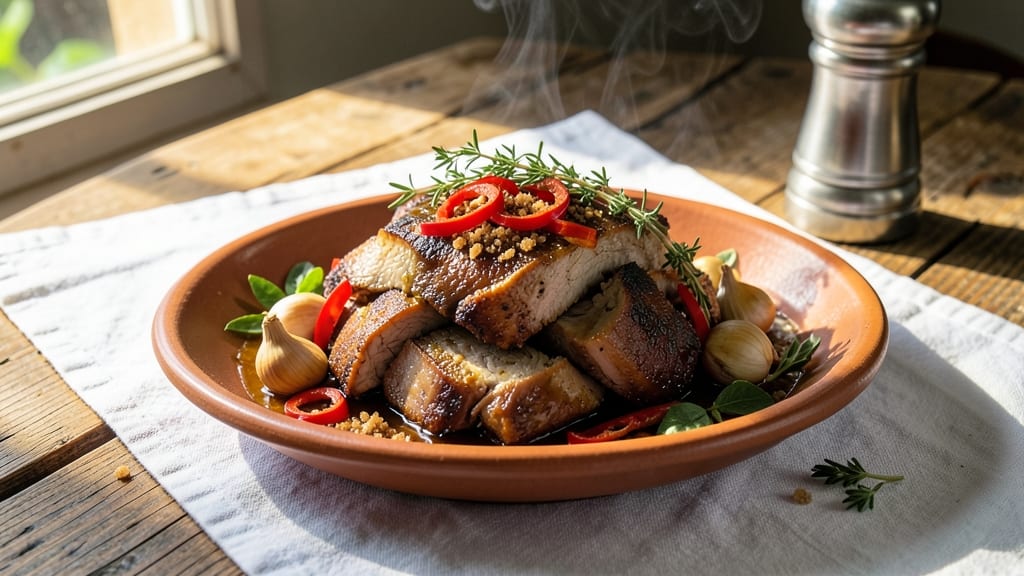
This Bajan pork souse recipe delivers the signature crunch and tangy depth that makes it a Caribbean staple—where tender pork meets vinegar-braised perfection. 🔥 As someone who's spent years perfecting pork preservation techniques, I've adapted this traditional dish to balance authenticity with modern convenience, ensuring every bite delivers that signature celery crown crunch without sacrificing flavor.
The process begins with a careful curing method using salt and spices that penetrate deeply into the pork, followed by a slow vinegar braise that transforms tough cuts into melt-in-your-mouth tenderness.
What sets this recipe apart is the celery crown technique—a crispy, vinegar-marinated celery topping that adds both texture and visual appeal, making it as impressive as it is delicious.
By the time you're done, you'll have a dish that's rich, tangy, and perfectly balanced—where the pork remains juicy and the celery crowns stay delightfully crunchy. The aroma alone will transport you to a Bajan rum shop, but the taste proves you don't need to travel to experience it.
Serve with warm bread to soak up the flavorful juices or alongside pickled vegetables for a complete Caribbean-style meal. Let's get started on this flavorful journey!
Ingredients for bajan pork souse
Six core ingredients transform tough pork into melt-in-your-mouth souse with signature celery crown crunch.
| Ingredient | Amount | Notes |
|---|---|---|
| Pork Shoulder 🍖 | 3 lb | Bone-in, cut into 1.5-inch cubes |
| White Vinegar 🍶 | 2 cups | Distilled white vinegar preferred |
| Brown Sugar 🍚 | ½ cup | Dark brown preferred for depth |
| Garlic Cloves 🧄 | 6 cloves | Crushed, not minced |
| Scotch Bonnet Peppers 🌶️ | 2 whole | Seeds removed, chopped (or habanero) |
| Fresh Thyme 🌿 | ¼ cup | Stems removed, chopped |
| Celery Stalks 🧅 | 6 whole | Trimmed, cut into 1-inch pieces |
| Onions 🧅 | 2 whole | Yellow, quartered |
| Bay Leaves 🌿 | 2 whole | Dried, standard size |
| Black Peppercorns 🌶️ | 1 tsp | Crushed, not ground |
| Salt 🧂 | ½ cup | Diamond Crystal preferred |
| Allspice Berries 🌶️ | 1 tsp | Crushed, whole berries optional |
| Olive Oil 🫒 | ¼ cup | For celery crown crisping |
| Fresh Celery Leaves 🌿 | 1 cup | For garnish |
The pork shoulder is non-negotiable here—bone-in gives the best flavor, and the fat renders beautifully during the long braise. Look for cuts with good marbling at Whole Foods or your local butcher shop; they'll often cut it to size for you. Scotch bonnet peppers are essential for that signature Bajan heat, but if you can't find them, habanero or jalapeno will work in a pinch. The celery and onions? Fresh is a must—no substitutes here. I always grab extra because they double as garnish and flavor base. For the vinegar, distilled white ensures consistent flavor without overpowering the dish.
No brown sugar? White sugar plus 1 tsp molasses mimics the depth. Short on allspice? Cinnamon and nutmeg at half the amount gets you close. The celery crowns are where the magic happens—trim the stalks clean and cut them at a slight angle for maximum crispiness. For the celery leaves, use the greenest, freshest ones you can find—they add a bright pop of color and freshness. If you're making this ahead, prep the celery crowns last so they stay crisp. The pork can cure overnight, but the celery needs to be fresh when you crisp it.
This dish tastes even better the next day—4-5 days in the fridge, covered. For longer storage, freeze for up to 3 months in airtight containers. The celery crowns? Keep them separate and crisp them fresh before serving. I always make a double batch of the celery crowns because they disappear fast. If you've got leftovers, re-crisp them in a dry pan for 30 seconds to restore that satisfying crunch.
Why You'll Love This Recipe
- One-Pot Magic: I swear by this—just dump everything in a pot, simmer, and walk away. No chopping, no fuss, no stress. That brown sugar and vinegar combo does all the work while you handle the rest of dinner.
- Spice & Sweet Balance: The scotch bonnet peppers hit just right—enough fire to wake up your taste buds, but the brown sugar and garlic mellow it into something addictive. Honestly, my kids beg for seconds, and they’re not spice lovers.
- Meal Prep Hero: This keeps for days in the fridge, so I make a big batch on Sundays. Slice it for sandwiches, toss it in rice and peas, or just grab a piece straight from the pot—it’s always a win.
- Budget-Friendly Feast: Pork shoulder stretches forever, and the ingredients won’t break the bank. Between us, I’ve fed six people for under $15 with this—leftovers included, because let’s be real, it disappears fast.
Step-by-step instructions for Bajan pork souse
Here's how to create that signature Bahamian crunch with tender pork and crispy celery crowns.
🔥 Step 1: Sear the Pork Shoulder for Deep Flavor
Heat a large Dutch oven over medium-high heat until hot. Add the 3 lb pork shoulder cut into 1.5-inch cubes in a single layer, leaving space between pieces. Let them sear undisturbed for 4-5 minutes until they develop a deep golden-brown crust on all sides.
This initial searing locks in juices and builds the foundation for that rich, caramelized flavor. I like to work in batches if needed—just make sure each piece gets that perfect crust. Once all sides are browned, remove the pork and set it aside in a bowl.
🍳 Step 2: Build the Spiced Vinegar Braising Liquid
In the same Dutch oven, add the 0.25 cup olive oil and let it heat for 1 minute. Add the 6 whole celery stalks cut into 1-inch pieces, 2 whole onions quartered, and 6 cloves crushed garlic. Sauté for 5 minutes until the vegetables soften and release their aromatics.
Stir in the 2 whole Scotch bonnet peppers (seeds removed and chopped), 0.25 cup chopped fresh thyme, 2 whole bay leaves, 1 tsp crushed black peppercorns, and 1 tsp crushed allspice berries. Cook for another 2 minutes until fragrant—this is where all the magic happens.
Pour in the 2 cups white vinegar and 0.5 cup brown sugar, scraping up any browned bits from the bottom of the pot. Bring to a gentle simmer, then return the seared pork to the pot, making sure it's mostly submerged in the liquid.
⏰ Step 3: Braise Until Tender and Glossy
Cover the Dutch oven and transfer to a preheated 325°F oven. Braise for 2.5-3 hours until the pork is fork-tender and the braising liquid has reduced to a thick, glossy sauce. I check for doneness by piercing a piece with a fork—it should slide in easily with no resistance.
Here's the thing—don't peek during the first hour. Every time you lift the lid, you lose heat and moisture. After that, you can check occasionally, but try to resist opening it more than necessary. The pork will continue cooking even after you remove it from the oven, so it's better to slightly undercook it than to dry it out.
🥘 Step 4: Crisp the Celery Crowns
While the pork braises, prepare the celery crowns for their signature crunch. Carefully separate the leafy tops from the 6 whole celery stalks you used earlier (or use fresh ones if preferred). Trim away any tough strings and cut the leaves into 1-inch pieces—these will become the crispy garnish.
Heat the 0.25 cup olive oil in a separate skillet over medium-high heat. Add the celery leaves in a single layer and fry for 2-3 minutes until they turn a beautiful golden brown and crisp up. Remove with a slotted spoon and drain on paper towels. These crispy leaves are what make Bajan pork souse so special—they add texture and freshness to every bite.
🍽️ Step 5: Finish and Serve with Style
Once the pork is tender, carefully remove it from the braising liquid and transfer to a serving platter. Strain the braising sauce through a fine-mesh sieve to remove any solids, then skim off any excess fat. Taste and adjust seasoning with additional salt if needed—the sauce should be tangy, sweet, and perfectly balanced.
Slice the pork into ½-inch thick pieces and arrange on a platter. Spoon the reduced braising sauce over the top, then scatter the crispy celery leaves on each serving. Garnish with the remaining 1 cup fresh celery leaves for a pop of color and freshness. Serve immediately with warm bread or rice to soak up that delicious sauce.
Pro Tips For Making Bajan Pork Souse
- Parboil the Pork First: Skip the raw vinegar shock—parboil the pork shoulder for 15 minutes before braising. I learned this the hard way after my first batch turned out rubbery; the vinegar needs time to tenderize properly, and starting with a hot bath guarantees even penetration.
- Toast the Garlic: Dry-toast the garlic cloves in oil until they’re golden and smell like a spice shop, then smash them into a paste. Sounds weird, but it works: the depth of flavor jumps from "good" to "this is why people make souse." (Yes, even if you’re impatient like me.)
- Don’t Crowd the Pot: If you’re using a Dutch oven, leave space between the pork chunks—packing them tight steams the meat instead of browning it. I was skeptical until I tried it: the crust on the edges is what makes this dish sing, and you can’t get that if everything’s stuck together.
- Reserve the Vinegar: Strain the cooking liquid through a fine-mesh sieve to remove Scotch bonnet seeds and garlic bits, then reduce it by half before adding it back. This isn’t the prettiest method, but it’s the tastiest—no one wants a mouthful of pepper heat or gritty texture in their final dish.
Perfect pairings for bajan pork souse
Bread Pairings
Nothing beats warm, crusty Bajan rum bread with this souse—its sweet molasses notes complement the vinegar tang beautifully. I always bake a batch from scratch using 2 cups dark molasses and 1 cup brown sugar in the dough.
For a shortcut, grab a loaf from your local Caribbean market or a well-stocked bakery like Whole Foods. The bread's chewy texture soaks up the sauce perfectly while balancing the dish's acidity. 🥖
If you prefer something lighter, try freshly baked focaccia brushed with olive oil and sprinkled with coarse salt. The crispy crust contrasts nicely with the tender pork, and you can even add a pinch of allspice to the dough for a subtle Caribbean touch.
For a heartier option, serve with cornbread—its slight sweetness pairs wonderfully with the souse's tangy-sweet profile.
Pickled Vegetables
Bajan souse is traditionally served with pickled vegetables that cut through the richness. I love pickled carrots and onions—toss 2 cups sliced carrots and 1 large onion in a mix of 1 cup vinegar, ½ cup water, 2 tbsp sugar, and 1 tsp mustard seeds.
Let them pickle for at least 4 hours before serving. The bright acidity balances the dish's depth, and the crunch adds another textural layer.
For a quicker option, use store-bought pickles like Heinz sweet gherkins or Baja brand pickled jalapeños. Their tangy flavor bridges the gap between the pork and bread, making every bite more dynamic.
If you're feeling adventurous, try pickled watermelon rind—its sweetness and crunch are a signature Bajan touch that elevates the meal to new heights. 🥒
Side Dish Contrasts
For a complete meal, add white rice seasoned with 1 tbsp butter, ½ tsp turmeric, and a pinch of salt. The mild, creamy rice acts as a neutral base that lets the souse shine.
I often serve it in a shallow bowl so guests can scoop up both pork and sauce. For a more substantial side, mashed sweet potatoes with a touch of cinnamon add natural sweetness that harmonizes with the vinegar braise.
If you're serving this at a gathering, Bajan peas and rice (made with pigeon peas, coconut milk, and thyme) is a must. The earthy peas and coconut milk create a rich, creamy contrast to the tangy pork.
For a lighter option, a simple mixed green salad with lime vinaigrette (made with 2 tbsp lime juice, 3 tbsp olive oil, and 1 tsp honey) adds freshness and balances the meal's richness. 🥗
Beverage Pairings
No Bajan meal is complete without a rum punch—mix 1 cup dark rum (like Appleton Estate), ½ cup lime juice, ½ cup orange juice, and 2 tbsp grenadine for a sweet-tart sipper. Serve over ice with a pineapple wedge for garnish.
The rum's warmth complements the dish's spicy and tangy notes perfectly. For a non-alcoholic option, ginger beer (like Baja brand) adds a fizzy, spicy kick that cleanses the palate between bites.
If you prefer wine, a dry Riesling from Germany or a Sauvignon Blanc from New Zealand offers crisp acidity that stands up to the vinegar braise. The wine's citrus notes echo the dish's bright flavors without overpowering them.
For beer lovers, a light lager (like Corona or Heineken) keeps the meal refreshing and easy to enjoy. Avoid heavy, malty beers—they can clash with the souse's tangy profile. 🍷
Nutrition facts
Frequently asked questions
What makes Bajan pork souse different from other pork dishes?
Bajan pork souse stands out for its unique combination of tangy vinegar braise and signature crispy celery crowns. Unlike traditional pulled pork or roasted pork, this dish uses a spiced vinegar marinade that tenderizes the meat while adding bright acidity. The celery crowns—crispy fried celery leaves—provide a textural contrast that's essential to the dish. It's also traditionally served cold or at room temperature, making it perfect for picnics or potlucks.
Can I make Bajan pork souse ahead of time?
This dish actually tastes better after 24-48 hours as the flavors meld together. Store the cooked pork and braising liquid separately in airtight containers in the fridge for up to 5 days. Reheat the pork gently in the oven at 300°F for 20 minutes before serving. The celery crowns should be made fresh before serving to maintain their crispiness. For longer storage, freeze the pork and sauce for up to 3 months.
What's the best cut of pork for this recipe?
For authentic Bajan pork souse, use a bone-in pork shoulder—it's the traditional cut that gives the best flavor and texture. The bone adds depth to the broth, and the fat renders beautifully during the long braise. If you can't find bone-in, a pork butt (also called Boston butt) works well too. Avoid lean cuts like pork tenderloin—they won't develop the same rich, juicy texture. For 3 pounds, ask your butcher to cut it into 1.5-inch cubes to ensure even cooking.
Can I substitute Scotch bonnet peppers?
Yes, but you'll need to adjust the heat level. If you can't find Scotch bonnet peppers, use habanero (same heat level) or jalapeño (milder). For each Scotch bonnet, use 1 habanero or 2 jalapeños. Remove seeds and membranes for milder heat. If you prefer no heat, omit them entirely—they're not essential for flavor, just for that signature Bajan kick. For extra flavor without heat, add 1 tsp smoked paprika to the braising liquid.
Why does my celery crown not crisp up?
Celery crowns fail to crisp when they're overcrowded in the pan or cooked at too low heat. For best results, fry in a single layer over medium-high heat with enough oil to coat the bottom of the pan. Use fresh celery leaves—older leaves won't crisp properly. If they start to wilt, they're done; remove them immediately. For extra crispiness, pat them completely dry before frying. If you're concerned about oil splatter, work in small batches. The key is high heat and quick cooking—2-3 minutes maximum.