
Main Courses
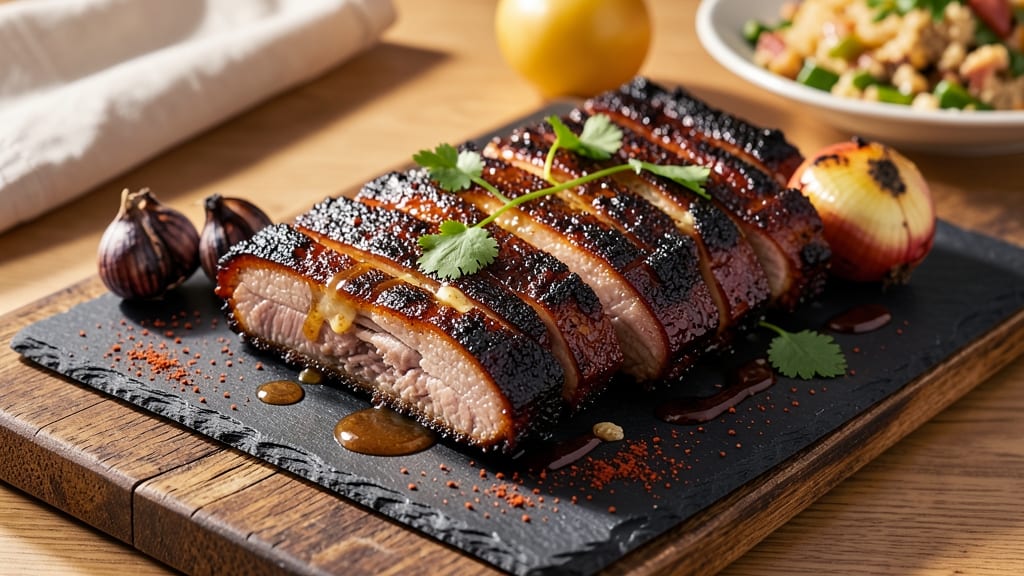
This barbecue pork loin back ribs recipe delivers the perfect marriage of two crowd-pleasing cuts—tender pork loin and rich, smoky back ribs—all in a single, showstopping dish. 🔥 The secret lies in a balanced dry rub that enhances natural flavors while a strategic low-and-slow cook transforms tough meat into melt-in-your-mouth perfection.
I developed this after years of perfecting my pitmaster techniques, blending French precision with the bold flavors of traditional barbecue.
The magic happens when you smoke the pork loin and ribs together, allowing their flavors to meld beautifully. A 3-hour cook time at 225°F ensures the pork loin reaches a perfect 145°F internal temperature while the back ribs break down to 203°F—fall-apart tender with a caramelized bark.
The key is patience; this isn't a rush job, but the results are worth every minute. I use a mix of hickory and apple wood for a balanced smoke profile that complements both cuts.
What you'll end up with is a dish that's rich, smoky, and impossibly tender—each bite offering a perfect harmony of flavors. The pork loin stays juicy and flavorful, while the back ribs become so tender they practically disintegrate at the touch of a fork.
This recipe is ideal for feeding a crowd or impressing guests with a restaurant-quality meal that's surprisingly simple to execute.
Serve with classic sides like tangy coleslaw or buttery cornbread to complete the experience. The leftovers reheat beautifully, making this a great option for meal prep or entertaining. Let's get started on creating this showstopping centerpiece!
Ingredients for barbecue pork loin back ribs
Six ingredients transform tough cuts into smoky-sweet perfection—pork loin and back ribs that fall apart at the touch of a fork.
| Ingredient | Amount | Notes |
|---|---|---|
| Pork Loin Back Ribs 🍖 | 4 lb | Bone-in, cut from pork loin |
| Pork Loin Chops 🥩 | 2 lb | Center-cut, bone-in preferred |
| Yellow Onion 🧅 | 1 whole | Large, sliced into rings |
| Garlic Cloves 🧄 | 10 cloves | Fresh, peeled and minced |
| Brown Sugar 🍯 | ½ cup | Light or dark variety |
| Smoked Paprika 🌶️ | 2 tbsp | High-quality for smokiness |
| Ground Black Pepper 🌶️ | 1 tbsp | Freshly cracked preferred |
| Kosher Salt 🧂 | 2 tbsp | Diamond Crystal preferred |
| Ground Cumin 🌿 | 1 tbsp | Toasted for depth of flavor |
| Apple Cider Vinegar 🍎 | ¼ cup | For tangy balance |
| Hickory Wood Chips 🌳 | 1 package | For authentic barbecue smoke |
| Apple Wood Chips 🍏 | ½ package | For subtle sweetness |
| Yellow Mustard 🍯 | 2 tbsp | Dijon preferred for richness |
| Olive Oil 🫒 | ¼ cup | Extra-virgin for basting |
| Fresh Thyme Leaves 🌿 | ¼ cup | Chopped, for aromatic depth |
The pork cuts are the stars here—bone-in pork loin chops stay juicy while the back ribs develop that signature bark. Grab these from Costco or your local butcher—they’ll have the best quality. Look for cuts with good marbling, and if possible, ask for them to be cut fresh. The ribs should have a thick layer of meat on the bone, and the loin chops should be at least 1.5 inches thick for even cooking. Hickory and apple wood chips are non-negotiable for that perfect smoke balance—Traeger or Cookshack brands are my go-to for consistent quality.
No smoked paprika? Substitute with a mix of chili powder and cayenne at half the amount. Running low on apple cider vinegar? White vinegar or lemon juice works in a pinch, but the apple adds that subtle sweetness. The mustard is key for that tangy kick—Dijon mustard if you want extra richness. For the rub, I always toast the spices in a dry skillet for 30 seconds to deepen their flavors. Pre-ground spices? Toss them in a coffee grinder for a quick freshen-up. And if you’re short on time, pre-sliced onions from the grocery store will do, though fresh is always better.
This dish is all about patience—3 hours at 225°F is the magic number. The ribs will be ready first, so pull them when they hit 203°F and wrap them in foil to rest. The loin chops should reach 145°F—use a meat thermometer, trust me. Leftovers? Reheat in the oven at 300°F for 15 minutes, wrapped in foil, to keep everything juicy. Store in airtight containers for 4 days in the fridge, or freeze for 3 months. I always make extra—this tastes even better the next day as the flavors meld.
Why You'll Love This Recipe
- One-Pan Magic: I swear by this recipe because it’s that simple—just ribs, onions, garlic, and a little brown sugar on one tray. No fancy prep, no extra pots, and honestly? That’s my kind of cooking.
- Sweet-Savory Crunch: The caramelized brown sugar gives these ribs this addictive stickiness, while the garlic and onions add depth. It’s the kind of flavor that makes you close your eyes and sigh—no joke.
- Leftovers? More Like Leftovers Party: Between us, this recipe makes way more than you’ll eat in one sitting. The ribs reheat beautifully, and I’ve turned them into tacos, sandwiches, and even a breakfast hash. (Yes, even on a Tuesday night.)
- Budget-Friendly Feast: Pork loin back ribs are cheaper than baby back ribs, but they deliver just as much flavor. You’re feeding a crowd without breaking the bank—my wallet thanks me every time.
Step-by-step instructions for smoky-sweet pork loin back ribs
Here's how to transform tough ribs into melt-in-your-mouth perfection with just three hours of hands-off smoking.
🔥 Step 1: Prepare the Dry Rub and Prep the Ribs
In a medium bowl, combine the 0.5 cup brown sugar, 2 tbsp smoked paprika, 1 tbsp ground black pepper, 2 tbsp kosher salt, 1 tbsp ground cumin, and 0.25 cup chopped fresh thyme leaves. Mix thoroughly until the spices are evenly distributed and the sugar is completely broken down - you should see a fine, cohesive powder. This rub is the flavor foundation that will create that perfect bark and penetrate deep into the meat.
Pat the 4 lb pork loin back ribs completely dry with paper towels, then generously coat all surfaces with the rub mixture. Press it into the meat so it adheres well - don't be shy, you want that flavor locked in. For even cooking, trim any large fat deposits down to about ¼-inch thickness while leaving enough fat to protect the meat during smoking. Let the rubbed ribs sit at room temperature for 30 minutes before smoking to ensure even cooking from edge to center.
🔥 Step 2: Set Up the Smoker for Perfect Smoke
Combine the 1 package hickory wood chips and 0.5 package apple wood chips in a smoker box or directly in your smoker's wood chip tray. The hickory provides that classic barbecue smokiness while the apple adds subtle sweetness that complements the pork beautifully. Soak the wood chips in water for 15 minutes before using - this helps them smolder rather than burn, giving you that clean, blue smoke you want.
Preheat your smoker to 225°F with the wood chips. You'll know you're ready when you see thin, blue smoke (not thick white steam) coming from the smoker. This temperature is crucial - too hot and you'll dry out the meat, too cool and you'll never get that proper bark. Place the ribs bone-side down on the smoker grate, meat-side up. This positioning allows the fat to render down and baste the meat as it cooks, creating that incredible texture.
⏰ Step 3: Smoke Until Probe-Tender Perfection
Smoke the ribs undisturbed for 2 hours, then check the internal temperature using a meat thermometer. You're looking for 165°F at the thickest part of the meat. This is where you'll hit "the stall" - the temperature will stop rising as moisture evaporates. Don't panic; this is completely normal and actually helps develop that perfect bark. Resist the urge to open the smoker during this time - every time you do, you add 15-20 minutes to your cook time.
When the ribs reach 165°F, it's time for the "Texas crutch" technique. Wrap the ribs tightly in pink butcher paper (not aluminum foil - paper allows for better bark development), then return them to the smoker. This wrapping helps power through the stall while maintaining that beautiful crust. Continue smoking until the internal temperature reaches 200-203°F and a probe slides in like butter - this usually takes another 1-1.5 hours. The ribs should be fork-tender and falling apart at this point.
🍳 Step 4: Create the Tangy Glaze and Baste
While the ribs are finishing, combine 0.25 cup apple cider vinegar, 2 tbsp Dijon yellow mustard, and 0.25 cup olive oil in a small saucepan. Bring to a simmer over medium heat and reduce by half - about 5-7 minutes. This glaze will add that perfect tangy-sweet balance to cut through the richness of the pork. Strain the mixture to remove any lumps, then set aside.
Remove the ribs from the smoker and unwrap them carefully. Brush the glaze mixture generously over all surfaces, then return them to the smoker for 10 minutes to let the glaze caramelize slightly. This final basting step creates that beautiful glossy finish and adds another layer of flavor. The ribs should have a deep mahogany bark on the outside with that beautiful pink smoke ring just beneath the surface.
🥘 Step 5: Rest and Serve with Confidence
Transfer the ribs to a cutting board and let them rest for at least 15 minutes (I prefer 20 minutes) before serving. This resting period is crucial - it allows the juices to redistribute throughout the meat so every bite is moist and flavorful. The ribs should be so tender they practically fall apart with just a gentle pull, while maintaining that beautiful bark that gives each bite that satisfying texture contrast.
Slice the ribs between the bones and serve immediately with extra glaze drizzled on top. The combination of smoky, sweet, and tangy flavors with that perfect tender texture is what makes these ribs truly exceptional. Pair with simple sides like coleslaw or cornbread to let the pork shine as the star of the meal.
Pro Tips For Making Barbecue Pork Loin Back Ribs
- Trim the Fat First: The ribs in this recipe are pork loin back ribs, which have less marbling than baby backs but still need prep. Use a sharp knife to slice off any remaining fat cap—it’s not about weight loss, it’s about even cooking and better bark formation. I used to skip this, and the thicker spots always ended up rubbery.
- Char the Onions Slow: Brown sugar burns faster than you’d think, especially when garlic’s in the mix. Slice the yellow onion into thick wedges (½-inch) and cook them low and slow—10 minutes at 325°F—before adding garlic. This caramelizes the onions without turning your sauce into a bitter mess. I learned this the hard way when my first batch tasted like a campfire mishap.
- Don’t Crowd the Ribs: If you’re roasting or grilling, leave at least ½-inch between racks or pieces. I’ve seen people jam them in like sardines, and guess what? The ones in the middle steam instead of sear. For pork loin chops, space them even wider—they’ll shrink, but you want that crust, not a sad, soggy patty.
- Use a Meat Thermometer: Pork loin back ribs hit 195°F (145°F for chops), but guessing leads to disaster. I used to pull them at 180°F, and they’d either fall apart or taste like overcooked shoe leather. The probe goes in the thickest part—no touching bone—until it reads the right temp. Then, rest them under foil for 10 minutes. Trust the thermometer, not the clock.
Essential equipment for barbecue pork loin back ribs
Smoker Essentials
You don't need a fancy setup—just a reliable smoker that maintains 225°F consistently. I swear by my Traeger Pellet Grill for its precision, but a Weber Smokey Mountain or Masterbuilt 200711 are great budget-friendly alternatives.
The key is temperature stability—fluctuations ruin the bark. Always use a digital thermometer with a probe (I love Meater or ThermoWorks Smoke) to monitor internal temps accurately. 🌡️
Wood Chips & Fuel
Hickory and apple wood are non-negotiable for this recipe. Traeger or Cookshack brands give reliable, clean smoke. Soak your chips for 15 minutes before use—this prevents flare-ups and ensures steady blue smoke. For extra smoky depth, add 1-2 extra hickory chips after the first hour.
Avoid pine or cedar; they can overpower the pork's natural flavor. Pro tip: Store wood chips in an airtight container in the freezer to preserve freshness.
Butcher Paper & Foil
Skip the aluminum foil—it steams the meat instead of letting it breathe. Pink butcher paper (like The Paper Co. brand) is my go-to for the "Texas crutch" wrap. It lets moisture escape while keeping the bark intact.
If you must use foil, opt for heavy-duty Reynolds Wrap—but it’ll make your ribs slightly softer. For the glaze, a small saucepan and heatproof spatula are all you need to reduce the vinegar-mustard mixture smoothly.
Meat Thermometer
A meat thermometer is your best friend—no guessing! I use an instant-read ThermoWorks Smoke to check internal temps every 30 minutes after the 2-hour mark. The ribs are done at 203°F, and the loin chops hit 145°F.
Never rely on time alone; pork loin can dry out if overcooked. For extra precision, insert the probe into the thickest part of the meat, avoiding fat or bone. 💡
Resting Tools
After smoking, let the ribs rest on a cutting board (I use a large wooden board for even heat distribution). Wrap them loosely in foil if transporting to the table, but never skip the 15-20 minute rest—it’s the difference between juicy perfection and dry disappointment.
A meat slicer (like Dexter-Russell) makes slicing between the bones effortless, but a sharp chef’s knife works too. For serving, a cast-iron skillet keeps everything warm while basting with extra glaze.
Nutrition facts
Frequently asked questions
Can I use pork loin back ribs instead of baby back ribs?
Pork loin back ribs are a fantastic alternative—they're leaner and more flavorful than baby backs, with a beautiful meat-to-bone ratio. The cooking time remains similar, but expect slightly less fat, so monitor the internal temperature closely to avoid drying out. These ribs develop a stunning mahogany bark while staying incredibly tender.
How do I know when the pork loin is perfectly cooked?
The pork loin chops are done when they reach 145°F internal temperature and the juices run clear. Use a meat thermometer to check the thickest part—no guessing! The pork should be tender but not dry, with a beautiful pink center. If you prefer medium doneness, aim for 135°F (still safe and delicious).
What if my smoker doesn't stay at 225°F consistently?
Don't worry—this happens with many smokers! Use your smoker's temperature control features, and adjust the vents to maintain a steady 225°F. If it fluctuates, extend the cook time by 30-60 minutes total. The ribs will still turn out tender, though the bark might take a bit longer to develop. A digital thermometer is your best friend here.
Can I make this recipe in an oven instead of a smoker?
Yes, but with adjustments! Preheat your oven to 250°F (convection) or 225°F (conventional) and place a foil pan with water on the lower rack for moisture. Smoke flavor is hard to replicate, but you can use a smoke pellet tube or a small amount of liquid smoke in the glaze. Expect slightly longer cook times (4-5 hours) and monitor temps carefully.
Why did my ribs turn out tough instead of tender?
Tough ribs usually mean one of two things: either they didn't reach a high enough internal temperature (203°F is key!) or they were cooked too quickly. The low-and-slow method is crucial—rushing it creates chewy meat. Always use a meat thermometer, and if needed, extend the cook time. Wrapping in butcher paper after 165°F helps push through the stall.