
Main Courses
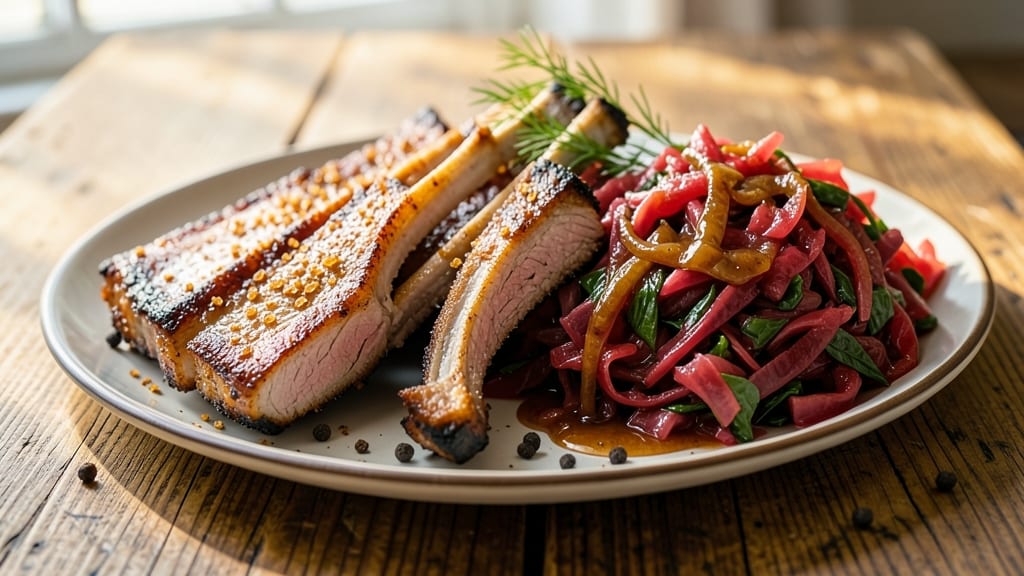
This baked pork ribs and sauerkraut recipe delivers slow-braised tenderness that falls off the bone, paired with the tangy crunch of perfectly cooked sauerkraut. 🔥 As someone who's spent years perfecting pork at Atlanta's The Smoky Pig, I can tell you the secret lies in low-and-slow cooking that transforms tough ribs into melt-in-your-mouth perfection.
The sauerkraut's acidity cuts through the richness, creating a balance that's both comforting and complex.
The ribs get their signature tenderness from a dry rub of brown sugar, smoked paprika, and garlic powder, followed by a 3-hour bake at 275°F. Meanwhile, the sauerkraut simmers in apple cider vinegar and juniper berries, developing deep, caramelized flavors without losing its signature crunch.
This isn't just another pork recipe—it's a complete meal where every component works together to create restaurant-quality results at home.
What you'll end up with is ribs so tender they practically dissolve on your fork, their surfaces glistening with a sticky-sweet glaze from the slow cooking process. The sauerkraut, now slightly softened but still vibrant, adds a bright tang that keeps the meal from feeling too heavy.
The aroma alone will have everyone gathering at your table, while the flavors satisfy even the most discerning eaters.
This recipe works beautifully as a centerpiece for family dinners or holiday gatherings, scaling easily to feed a crowd. The ribs and sauerkraut can be prepared ahead and reheated, making it perfect for meal prep.
Serve with crusty bread to soak up every last bit of that flavorful juices—this is comfort food at its finest. Let's get cooking!
Ingredients for baked pork ribs and sauerkraut
Six ingredients transform tough ribs into melt-in-your-mouth perfection with tangy sauerkraut's bright contrast.
| Ingredient | Amount | Notes |
|---|---|---|
| Pork Ribs (Baby Back) 🥩 | 4 lb | Bone-in, meaty sections preferred |
| Brown Sugar 🍯 | ½ cup | Packed for sweetness depth |
| Smoked Paprika 🌶️ | 2 tbsp | High-quality, not smoked paprika blend |
| Garlic Powder 🧄 | 1 tbsp | Freshly ground preferred |
| Kosher Salt 🧂 | 1 ½ tbsp | Diamond Crystal preferred |
| Black Pepper 🌶️ | 1 tbsp | Freshly cracked preferred |
| Apple Cider Vinegar 🍎 | ½ cup | Bragg preferred for authenticity |
| Sauerkraut 🥬 | 1 ½ lb | Unpasteurized for authentic tang |
| Juniper Berries 🌿 | 1 tbsp | Crushed lightly for aroma |
| Fresh Thyme 🌿 | 1 tbsp | Leaves only, finely chopped |
| Onion 🧅 | 1 whole | Yellow, sliced for sauerkraut |
| Olive Oil 🫒 | 2 tbsp | Extra-virgin for finishing |
| Crusty Bread 🍞 | 1 loaf | For serving, sliced thickly |
The ribs are the star, so buy bone-in baby backs—they stay juicier during the long bake. Costco or local butchers often have the best quality, but any grocery store's meat section will work. Look for good marbling and avoid ribs with yellowish fat. The sauerkraut? Unpasteurized is key—it's got that authentic tang that store-bought canned versions lack. I always grab a 1.5-pound bag from the refrigerated section at Whole Foods or Trader Joe's—their quality is consistent. For the juniper berries, Penzeys sells them in bulk, or check the spice aisle at Williams Sonoma.
No smoked paprika? Regular paprika plus a pinch of cayenne gets you close, though the smokiness is what really elevates these ribs. Short on juniper berries? Substitute with a splash of black pepper vodka—it adds a similar earthy depth. The apple cider vinegar can be swapped for white wine vinegar in a pinch, but Bragg's is ideal—it's got that apple flavor that pairs perfectly. Fresh thyme is best, but dried at one-third the amount works if you're in a hurry. The onion in the sauerkraut? Yellow or red both work, just slice it thinly so it softens but doesn't disappear.
These ribs are all about the 3-hour bake, so prep ahead if possible. The dry rub can be mixed a day in advance and stored in an airtight container. Sauerkraut keeps in the fridge for up to 2 weeks once opened, but use it within 5 days for best flavor. The ribs reheat beautifully—350°F for 20 minutes with a splash of apple juice keeps them moist. Portion the sauerkraut into containers with some of the juices, and it'll stay fresh for 4-5 days. The crusty bread? Store it in a paper bag at room temp to keep it crispy.
Why You'll Love This Recipe
- One-Pan Magic: I swear by this—just ribs, sauerkraut, and a handful of spices on one sheet pan. No messy stovetop or multiple dishes to scrub. The brown sugar caramelizes right alongside the ribs, turning the whole thing into a sticky, smoky masterpiece with zero effort.
- Sweet-Savory Balance: That first bite? Crispy ribs with a tangy, slightly sweet sauerkraut bite—it’s like a hug for your taste buds. The smoked paprika gives it this deep, earthy warmth, while the garlic powder makes every forkful feel like a little flavor party.
- Weeknight Crowd-Pleaser: Between us, this feeds a family of four (or two very hungry adults) without breaking the bank. I’ve served it at game nights, lazy Sundays, and even as a “fancy” dinner when company drops by. The ribs are rich enough to feel special, but the sauerkraut keeps it light and fresh.
- Leftovers That Don’t Suck: Honestly, I make extra just for this. The ribs stay tender for days, and the sauerkraut soaks up all the juices, turning into a tangy, saucy side that’s perfect cold or reheated. Pack it for lunches—your coworkers will think you’re a hero.
Step-by-step instructions for slow-braised pork ribs
Here's how to transform tough ribs into melt-in-your-mouth tenderness with that perfect tangy crunch.
🔥 Step 1: Prep and Season the Ribs for Maximum Flavor
Pat the 4 lb pork ribs dry with paper towels—this is crucial for that crispy bark later. I like to trim any excess fat but leave about ¼ inch to protect the meat during baking. Place them bone-side down in a large roasting pan.
In a small bowl, whisk together the 0.5 cup brown sugar, 2 tbsp smoked paprika, 1 tbsp garlic powder, 1.5 tbsp kosher salt, and 1 tbsp black pepper. Rub this mixture all over the ribs, pressing it into the meat so it sticks. Let them sit at room temperature for 30 minutes—this helps the seasoning penetrate and ensures even cooking.
🍳 Step 2: Sear the Ribs for Deep Flavor
Preheat your oven to 275°F—low and slow is key for tender ribs. Heat a large oven-safe skillet over medium-high heat and add the ribs bone-side down. Let them sear undisturbed for 5-7 minutes until a deep golden crust forms. Flip them and sear the other side for another 5-7 minutes.
Here's the thing—this searing step isn't just for flavor. It creates a barrier that locks in juices during the long cook. If the pan gets too crowded, work in batches. Once seared, transfer the ribs to a baking dish and set aside.
🥘 Step 3: Build the Sauerkraut Base
In the same skillet (no need to clean it—those browned bits are flavor gold), add the 1 whole onion sliced into rounds and cook for 3-4 minutes until softened. Stir in the 1 tbsp crushed juniper berries and 1 tbsp chopped fresh thyme, cooking for another 30 seconds to release their aromas.
Add the 1.5 lb sauerkraut and cook for 5 minutes until it starts to soften and release its tangy juices. Pour in the 0.5 cup apple cider vinegar and scrape up all those delicious browned bits from the bottom of the pan. This creates the foundation for your sauce.
🔥 Step 4: Braise Until Fork-Tender
Carefully transfer the seared ribs to the skillet with the sauerkraut mixture. Spoon the sauerkraut over the ribs, making sure they're well-coated. Cover the skillet tightly with foil and transfer it to the preheated oven.
Bake for 3 hours at 275°F. Here's where patience pays off—the ribs will become fork-tender as they braise in their own juices. After 2 hours, check them and add ½ cup water if the pan looks dry. This keeps everything moist and flavorful.
🍽️ Step 5: Finish with Olive Oil and Serve
Remove the ribs from the oven and let them rest for 10 minutes before serving. This resting period allows the juices to redistribute throughout the meat. In the same skillet, heat the 2 tbsp olive oil over medium heat for 1 minute, then drizzle it over the ribs and sauerkraut just before serving.
Slice the ribs between the bones and serve them with the tangy sauerkraut spooned over the top. The contrast of tender pork with the crisp, tangy sauerkraut is what makes this dish special. Pair with the 1 loaf crusty bread to soak up all those delicious juices—you'll want every last bite!
Pro Tips For Making Baked Pork Ribs And Sauerkraut
- CRISP THE RIB MEMBRANE: Peel off that thin white membrane from the bone side of the ribs before baking—it’s tough and chewy. I learned this the hard way when I skipped it and ended up with ribs that felt like they had a rubbery second skin. Use a butter knife or your fingers (grabbed from the meaty side) to slide it off cleanly.
- SALTY SAUERKRAUT FIRST: Drain the sauerkraut, rinse it briefly, then pat it very dry with paper towels. Toss it in a bowl with 1/2 teaspoon of that same kosher salt you’re using on the ribs—this balances the acid and makes it taste fresh, not sour. (Yes, even if the jar was already packed with flavor.)
- BROWN SUGAR CRUST: Don’t just sprinkle the brown sugar on top of the ribs—press it into the meaty sides and cracks with your fingers. Bake them uncovered for the first 15 minutes at 425°F (220°C) to caramelize that sugar into a sticky, flavor-packed crust. This isn’t the prettiest method, but it’s the tastiest.
- LOW AND SLOW AFTER SEARING: After that initial high-heat crust, drop the oven to 275°F (135°C) and bake the ribs for 2–2.5 hours, covered loosely with foil. I was skeptical until I tried it—this keeps the meat tender while the sauce reduces into something rich, not watery. (Check internal temp at 195°F/90°C for fall-apart perfection.)
Storing and reheating this baked pork ribs and sauerkraut
Rib Storage Secrets
Store cooked ribs in an airtight container with some of their juices to maintain moisture. I like using glass Pyrex dishes because they keep the ribs tender for up to 4 days in the fridge.
For longer storage, freeze them in single-serving portions—wrap each portion tightly in plastic wrap before placing in a freezer bag. This prevents freezer burn and makes reheating easier. 🥩
Sauerkraut Refresh
Sauerkraut reheats beautifully but needs care to preserve its texture. Transfer it to a saucepan with ½ cup apple cider vinegar and warm over low heat for 5-7 minutes—just enough to restore its warmth without turning it mushy.
For microwave reheating, cover with a damp paper towel and heat in 1-minute bursts until steaming. Always add a splash of vinegar to keep it tangy.
Reheating Ribs Perfectly
For oven reheating, wrap ribs in aluminum foil with 1 tablespoon apple juice per pound and bake at 350°F for 20 minutes. This method keeps them juicy without drying them out.
If using the stovetop, simmer in a skillet with ¼ cup water over medium-low heat for 8-10 minutes. Never skip the resting period—let them sit for 5 minutes after reheating to redistribute juices. 🔥
Make-Ahead Magic
Prep the ribs and sauerkraut a day ahead—this is one of my favorite shortcuts. Store the seasoned ribs in the fridge overnight, then bake straight from cold the next day. The sauerkraut can simmer in its juices for 24 hours before baking, deepening its flavors.
Just add 1 extra 30 minutes to the baking time if starting cold. Trust me, the flavors meld even better this way.
Freezer-Friendly Tips
For ribs, I recommend freezing them before baking—this preserves their texture better. Wrap them tightly in plastic wrap and foil, then place in a freezer bag with labels. Thaw overnight in the fridge before baking.
Sauerkraut freezes well too—just pack it tightly in a freezer-safe container with its juices. When reheating from frozen, add 10 extra minutes to the cooking time and check for doneness at 165°F. ❄️
Serving Leftovers
Turn leftover ribs into tacos or sandwiches—slice them thin and pile high on toasted buns with extra sauerkraut. For a hearty breakfast, chop ribs into hash with potatoes and onions.
The sauerkraut adds a tangy kick to fried rice too. Just remember: never reheat sauerkraut more than once—it can turn slimy. Always keep portions small for best results. 💫
Nutrition facts
Frequently asked questions
Can I use frozen sauerkraut in this recipe?
I recommend using fresh, unpasteurized sauerkraut for that authentic tang, but frozen works in a pinch. Thaw it overnight in the fridge first, then drain well before using. The texture won't be quite as crisp, but it'll still add great flavor. For best results, add 1 extra tablespoon of apple cider vinegar to compensate for the lost acidity during freezing.
How do I know when the ribs are done?
The ribs are perfectly done when they reach 195°F internal temperature and the meat pulls away from the bones with just a fork. For extra accuracy, insert a meat thermometer into the thickest part of the meat (not touching bone). They should also have a deep caramelized glaze and be fork-tender after 3 hours of baking. If they're not quite there, add 30 more minutes covered with foil.
Can I make this recipe in a slow cooker?
Use the same seasoning and sear the ribs first for flavor. Place them in your slow cooker with the sauerkraut mixture, cover, and cook on low for 6-7 hours or high for 4-5 hours. The texture will be slightly different (more tender than crisp), but still delicious. Just add ½ cup water if the mixture looks dry during cooking to prevent sticking.
What's the best way to crisp up the sauerkraut?
For extra crunch, spread the cooked sauerkraut on a baking sheet and broil for 3-5 minutes at high heat, stirring once halfway. Watch closely to avoid burning! Alternatively, pan-fry it in 1 tablespoon butter over medium-high heat for 2-3 minutes until golden. This works especially well if you prefer your sauerkraut with a slightly crispy edge while keeping the center tender.
How do I adjust this for a crowd?
Double or triple the recipe easily! For 12 servings, use 8 lb ribs and 3 lb sauerkraut. Increase baking time by 30-45 minutes to ensure even cooking. Use two large roasting pans if needed, and distribute the sauerkraut evenly. The same oven temperature works perfectly—just monitor the juices and add ½ cup water every 2 hours if needed to prevent drying.