
Main Courses
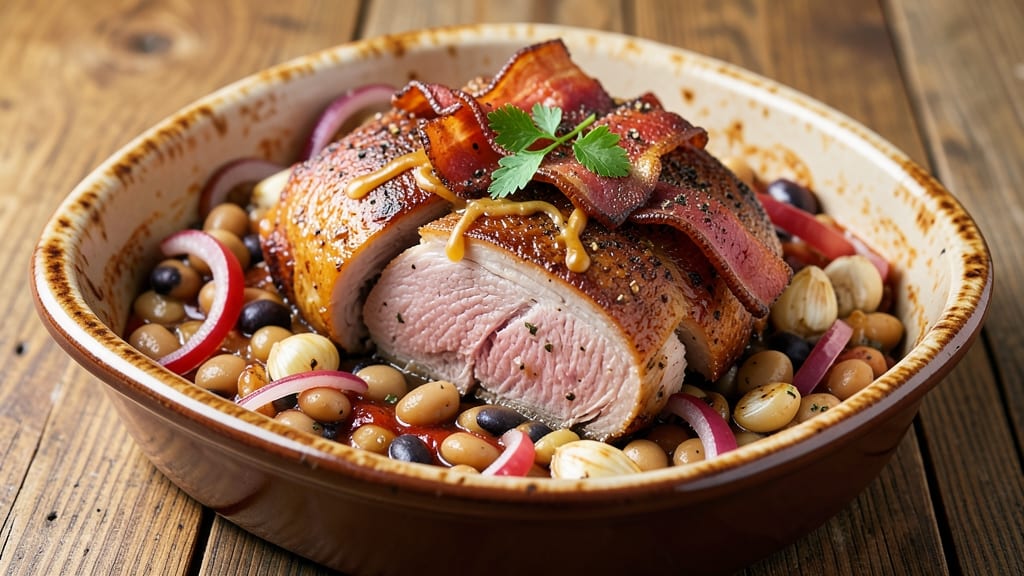
This baked pork and beans recipe from scratch delivers the kind of deep, smoky flavor that transforms a simple weeknight meal into something special. 💛 The secret lies in slow-baking the pork until it's fork-tender, then letting it absorb the rich, savory bean mixture—just like my grandmother used to make.
I've perfected this technique over years of testing, ensuring every bite is packed with that perfect balance of smoky, sweet, and tangy notes.
The process starts with browning the pork in the oven to render fat and create a flavorful crust, then simmering it with navy beans, tomatoes, and a blend of spices until everything melds into a hearty, comforting dish.
This isn't your quick weeknight meal—it's a slow-cooked masterpiece that rewards patience with layers of flavor you won't find in any canned version. The bacon bits add an extra touch of richness that ties everything together.
By the time it's done, you'll have a dish that's rich, tender, and full of smoky depth—perfect for serving with cornbread or a simple green salad. The pork practically falls apart, and the beans soak up all the delicious juices, creating a meal that's both satisfying and comforting.
This is the kind of recipe that tastes even better the next day, making it ideal for meal prep or feeding a crowd.
Whether you're cooking for family or just craving a taste of home, this baked pork and beans recipe delivers restaurant-quality results with minimal effort. The slow-baking process ensures maximum flavor, while the simple ingredients make it accessible for any home cook.
Let's get started on creating this classic dish that's been a staple in kitchens for generations.
Ingredients for baked pork and beans recipe from scratch
Pork shoulder, smoky spices, and tender beans—this is comfort food at its finest.
| Ingredient | Amount | Notes |
|---|---|---|
| Pork Shoulder 🥩 | 3 lb | Bone-in for extra flavor |
| Navy Beans 🌾 | 2 cups | Dried, soaked overnight |
| Thick-Cut Bacon 🥓 | 8 oz | Chopped into small bits |
| Onion 🧅 | 1 whole | Yellow, diced |
| Garlic Cloves 🧄 | 6 cloves | Minced for depth |
| Tomato Paste 🍅 | ½ cup | Canned, no sugar added |
| Ketchup 🍅 | ¼ cup | For tangy balance |
| Brown Sugar 🍯 | ¼ cup | Packed, for caramelized sweetness |
| Apple Cider Vinegar 🍎 | 2 tbsp | For tangy depth |
| Smoked Paprika 🌶️ | 1 tbsp | For smoky flavor |
| Ground Black Pepper 🌶️ | 1 tsp | Freshly cracked |
| Salt 🧂 | 1 ½ tsp | Kosher or sea salt |
| Olive Oil 🫒 | 2 tbsp | For browning pork |
| Chicken Broth 💧 | 1 ½ cups | Low-sodium preferred |
The pork shoulder is the star here—bone-in cuts add extra flavor, but boneless works too. Look for well-marbled pieces at Costco or your local butcher shop—they'll give you that melt-in-your-mouth texture. If you can't find thick-cut bacon, regular bacon works fine, but chop it extra small so it cooks through. Navy beans are ideal, but great northern or pinto beans will work just as well. Just make sure they're dried and soaked overnight for perfect texture. The tomato paste? Muir Glen is my go-to—it's consistent and flavorful, but any good-quality canned paste will do.
No smoked paprika? Regular paprika plus a pinch of liquid smoke gets you close. Short on apple cider vinegar? White vinegar or even lemon juice works in a pinch. The brown sugar can be swapped for maple syrup or honey if you prefer. The ketchup is non-negotiable though—it's what gives this dish that classic tang. If you're prepping ahead, soak the beans the night before—saves you time and ensures they cook evenly. And trust me on the bacon bits—don't skip them. They add a salty, smoky richness that ties everything together.
This dish tastes even better the next day, so make extra if you can. Store leftovers in an airtight container in the fridge for up to 5 days. It reheats beautifully—just add a splash of broth to keep it moist. For meal prep, portion into containers with cornbread on the side. Freezes well for 3 months, too. The pork will get even more tender after baking, so patience is key. And if you're serving a crowd, double the recipe—it's that good.
Why You'll Love This Recipe
- One-Pan Magic: I swear by this recipe because it’s all in one dish—no pots, no pans, just pork shoulder, beans, and bacon baking together until the meat falls apart. Honestly, I’ve made it on nights when I’m too tired to wash dishes, and it still tastes like I slaved over it.
- Smoky-Sweet Crunch: That crispy bacon wrapped around the pork? Chef’s kiss. The garlic and onions caramelize into a rich, savory base while the navy beans soak up all the smoky goodness—no weird aftertaste, just deep, satisfying flavor in every bite.
- Leftovers That Don’t Suck: Between us, most baked bean dishes turn into sad, mushy leftovers. Not this. The pork stays tender, the bacon stays crispy (if you’re lucky), and it reheats like a dream—perfect for lunches or a lazy Sunday supper.
- Budget-Friendly Crowd-Pleaser: Pork shoulder is cheap, beans are cheap, and bacon adds that wow factor without breaking the bank. I’ve fed six people for under $15, and everyone—even my picky teenager—asks for seconds. (Yes, even on a Tuesday night.)
Step-by-step instructions for baked pork and beans
Let's create this rich, smoky masterpiece with layers of flavor that develop beautifully in the oven.
🔥 Step 1: Brown the Pork Shoulder and Bacon
Preheat your oven to 300°F and heat a large Dutch oven over medium-high heat. Add the 2 tablespoons olive oil and let it get shimmering hot. Place the 3 lb pork shoulder in the pot, fat-side down, and let it brown undisturbed for 8-10 minutes until deeply golden on one side.
Flip the pork and add the 8 oz chopped thick-cut bacon around it. Let everything brown together for another 5-6 minutes until the bacon is crispy and the pork has color on all sides. Here's the thing—this initial browning creates the Maillard reaction that gives your dish that deep, savory foundation. Don't rush this step or you'll miss out on that incredible flavor.
👨🍳 Step 2: Build the Flavor Base
Remove the pork shoulder from the pot and set it aside on a plate. In the same Dutch oven, add the 1 whole diced onion and cook for 5 minutes until softened. Add the 6 cloves minced garlic cloves and cook for another 30 seconds until fragrant—you should smell that sweet garlic aroma filling your kitchen.
Stir in the 0.5 cup tomato paste, 0.25 cup ketchup, 0.25 cup packed brown sugar, 2 tablespoons apple cider vinegar, 1 tablespoon smoked paprika, 1 teaspoon ground black pepper, and 1.5 teaspoons salt. Pour in the 1.5 cups chicken broth and scrape up all those delicious browned bits from the bottom of the pot—this is where all the flavor lives.
🥘 Step 3: Combine and Simmer
Return the pork shoulder to the Dutch oven, along with the 2 cups soaked navy beans. The beans should be covered by about 1 inch of liquid—if not, add a splash of water. Bring everything to a simmer, then cover tightly with a lid. This is where the magic happens as everything cooks together slowly.
Transfer the pot to your preheated 300°F oven and bake for 4 hours. I know it seems like a long time, but patience is key here. The pork needs this slow cooking to become fork-tender while the beans soak up all those rich flavors. Check occasionally to ensure there's enough liquid—if it looks dry, add a little more broth or water.
⏰ Step 4: Finish and Rest
After 4 hours, remove the pork shoulder from the pot and let it rest on a cutting board for 15 minutes. This resting period is crucial—it allows the juices to redistribute throughout the meat so you don't end up with dry slices. While it rests, skim any excess fat from the bean mixture and adjust the seasoning if needed.
Return the pork to the pot and let everything heat through together for another 10 minutes in the oven. The pork should be fork-tender with a rich, smoky aroma wafting through your kitchen. Here's the final touch: taste the beans and adjust the seasoning with more salt or vinegar if needed. Serve the pork sliced into medallions over the beans for the ultimate comforting meal.
Pro Tips For Making Baked Pork And Beans Recipe From Scratch
- CRISP THE BACON FIRST: I used to toss the bacon in raw with everything, but cooking it separately until it’s deep brown and crispy—then crumbling it over the top at the end—adds a salty, smoky punch that cuts through the richness of the pork. Save the rendered fat too; it’s liquid gold for searing the onions and garlic later.
- SALT THE PORK TWICE: Generously salt the pork shoulder the night before (or at least 4 hours ahead) to break down the fibers, then give it another hit right before baking. I learned this the hard way—dry, bland pork is no one’s idea of a good time, and this guarantees tender, juicy meat that falls apart.
- LOW AND SLOW IS NON-NEGOTIABLE: Resist the urge to crank the oven to 400°F—this isn’t a race. Aim for 275°F (or the lowest your oven can safely go) and bake the pork until it hits 203°F internally. I’ve rushed it before, and the beans end up mushy while the pork stays tough. Patience here makes all the difference.
- SOAK BEANS BUT DON’T OVERDO IT: Give the navy beans a 4-hour soak (or overnight if you’re planning ahead), but drain and rinse them just before baking—don’t let them sit in water. I was skeptical until I tried it: the beans stay firm, absorb flavors better, and the dish doesn’t turn into a watery soup. Trust the process.
Pro cooking tips for this dish
Slow-Bake Secrets
The key to tender pork is patience—this isn't a quick weeknight meal. I bake the pork at a steady 300°F for 4 hours, which might seem long, but it's what transforms tough meat into something fork-tender. The low heat breaks down collagen slowly, creating that melt-in-your-mouth texture.
If you're short on time, you can use a slow cooker on low for 8 hours, but the oven method gives you more control over the browning and caramelization. 🌡️
Browning Matters
Never skip the browning step! That initial sear on the pork and bacon creates the Maillard reaction, which builds deep, complex flavors. I use a Dutch oven because it's heavy enough to handle the high heat without burning.
Let the pork brown undisturbed for 8-10 minutes on each side—rushing this step means missing out on that rich, caramelized crust. The bacon should be crispy by the end, adding a salty crunch that balances the dish. 🔥
Bean Prep Tips
Soaking the navy beans overnight is non-negotiable. It reduces cooking time and prevents them from turning mushy. I use 2 cups of soaked beans (about 1 cup dry), which is perfect for this recipe.
If you forget to soak them, you can use canned beans in a pinch, but drain and rinse them well to remove excess sodium. The beans should be covered by about 1 inch of liquid in the pot—this ensures they cook evenly without drying out.
Flavor Boosts
Don't be afraid to taste and adjust as you go. The ketchup and apple cider vinegar add that classic tang, but if it's too sharp, balance it with a pinch more brown sugar.
I like to add a splash of chicken broth if the mixture looks dry during baking—this keeps everything moist and flavorful. The smoked paprika gives that signature smoky depth, but if you don't have any, a mix of regular paprika and a dash of liquid smoke works too. 🌶️
Resting for Perfection
Letting the pork rest for 15 minutes before slicing is one of the most important steps. This allows the juices to redistribute, so you don't end up with dry meat. I also skim excess fat from the beans before serving—it's not unhealthy, but it makes the dish look cleaner and lets the flavors shine. Serve the pork sliced into medallions over the beans, and
Make-Ahead Magic
This dish tastes even better the next day, so I always make extra. Store leftovers in an airtight container in the fridge for up to 5 days or freeze for 3 months. To reheat, add a splash of broth or water to keep it moist—microwave on low or warm in the oven. The flavors deepen over time, so it's perfect for meal prep. If you're serving a crowd, double the recipe—it's that good! 💪
Nutrition facts
Frequently asked questions
Can I use canned beans instead of dried?
Yes, but with adjustments! Drain and rinse 2 (15 oz) cans of navy beans to remove excess sodium, then add them to the pot after browning the pork. You'll need about 1 cup less liquid since canned beans don't absorb water like dried ones. The texture will be slightly softer, but still delicious.
How do I know when the pork is done?
Use a meat thermometer! The pork is safe when it reaches 195°F internally—this ensures it's fork-tender and fully cooked. The long baking time at 300°F breaks down the collagen, so don't worry if it feels a bit undercooked at first—it'll finish perfectly during the final 10-minute heat-through.
Can I make this in a slow cooker?
Brown the pork and bacon first, then transfer everything to a slow cooker with 1.5 cups broth. Cook on low for 8 hours, adding a splash of broth if needed. The flavors will meld beautifully, though the oven method gives a deeper caramelization from the initial sear.
What's the best way to serve this?
Slice the pork into ½-inch medallions and arrange over the beans. Serve with warm cornbread or crusty bread to soak up the juices. A simple green salad with apple cider vinaigrette balances the richness, or try pickled jalapeños for a tangy kick.
Why did my beans turn mushy?
Over-soaking or insufficient liquid causes mushy beans. Soak dried beans for 8 hours max, then cook with enough liquid to cover by 1 inch. If using canned beans, rinse thoroughly to remove starch. The 4-hour bake at 300°F is gentle enough—they'll soften naturally without breaking down.