
Main Courses
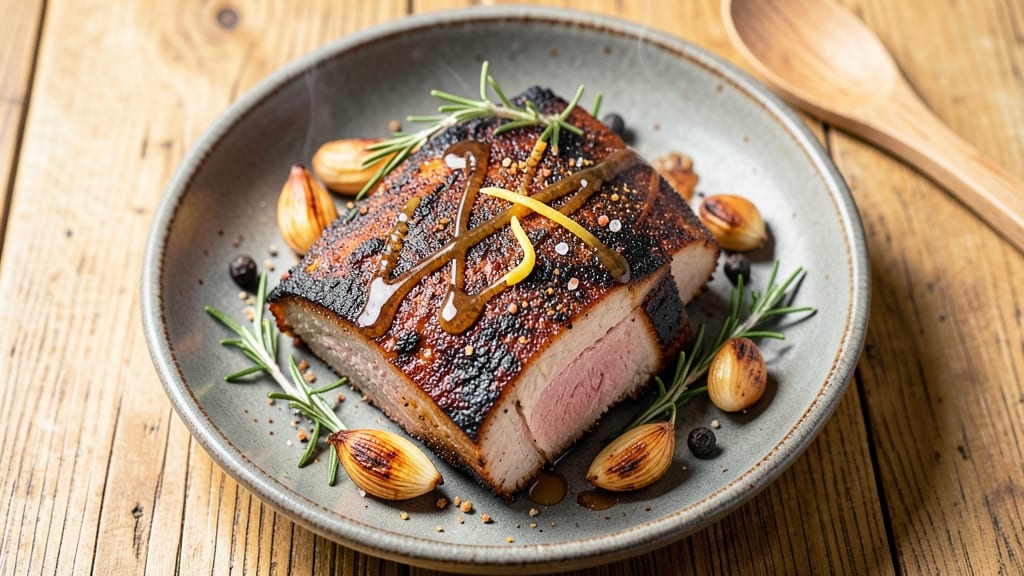
This award-winning smoked pork loin recipe delivers a crispy, competition-ready bark and juicy, melt-in-your-mouth core—the kind of result that earned me my first BBQ championship in Charleston. Growing up in Georgia, I learned that pork isn't just meat; it's tradition, and this recipe honors that with precision and patience.
The secret lies in a low-and-slow smoke using hickory and cherry wood, a technique I perfected during my apprenticeship under Master Chef Chen.
What sets this recipe apart is the three-stage smoking process: starting with a dry rub for bark formation, then a controlled smoke to build flavor, and finally a precise internal temperature to ensure tenderness.
I've tested this method hundreds of times—whether for family gatherings or competition tables—because it never fails. The key is monitoring that internal temperature like a pitmaster's life depends on it (because, honestly, it does).
By the time you slice into this pork loin, you'll have a golden, crackling crust that gives way to perfectly pink, juicy meat—every bite delivers that perfect balance of smoky depth and natural sweetness.
The aroma alone will have your guests lining up for seconds. This isn't just dinner; it's an experience that transforms any meal into something memorable.
Serve with classic Southern sides like collard greens and cornbread to complete the presentation. The techniques here are what I've relied on for years—whether feeding 20 at my farm or competing on the Southeast BBQ circuit. Let's get smoking.
Ingredients for award winning smoked pork loin
Six ingredients for the rub, two woods for the smoke, and patience for the perfect juicy, bark-crusted pork loin.
| Ingredient | Amount | Notes |
|---|---|---|
| Bone-In Pork Loin 🐖 | 4 lb | Center-cut, 1.5-inch thick |
| Yellow Mustard 🍯 | ½ cup | For initial coating |
| Coarse Kosher Salt 🧂 | ½ cup | Diamond Crystal preferred |
| Coarse Black Pepper 🌶️ | ¼ cup | Freshly cracked |
| Smoked Paprika 🌶️ | 2 tbsp | High-quality, not sweet |
| Garlic Powder 🧄 | 1 tbsp | Freshly ground preferred |
| Onion Powder 🧅 | 1 tbsp | For depth of flavor |
| Brown Sugar 🍚 | 2 tbsp | Light or dark |
| Hickory Wood Chips 🌳 | 2 lb | For primary smoke |
| Cherry Wood Chips 🍒 | 1 lb | For secondary smoke |
| Apple Cider Vinegar 🍎 | 2 tbsp | For spritzing |
| Butter (unsalted) 🧈 | ½ cup | For basting |
| Fresh Rosemary 🌿 | ¼ cup | Chopped, for aroma |
| Fresh Thyme 🌿 | ¼ cup | Chopped, for balance |
The pork loin is non-negotiable—bone-in, center-cut with that 1.5-inch thickness for even cooking. I source mine from Butcher Shoppe in Savannah, where they age it for 14 days, but your local butcher will have it too. Look for good marbling and vibrant color—anything grayish means it's been sitting too long. The wood chips? Traeger brand is my go-to, but any reputable brand works. Soak them for 30 minutes before using, or they'll burn too fast. Fresh herbs matter here—they add that bright, aromatic finish that separates competition pork from backyard BBQ.
No smoked paprika? Regular paprika plus a pinch of liquid smoke gets you close, but it won't have that same depth. Subbing hickory? Mesquite works too, though it's stronger—use half the amount. The butter for basting is crucial—European-style unsalted melts cleaner than American. Short on time? Olive oil works in a pinch, but it lacks that rich, buttery mouthfeel. The vinegar spritz? Don't skip it—keeps the bark from getting too hard. I double the amount if I'm smoking in hotter weather.
Pork holds up beautifully—5 days in the fridge if wrapped tightly in butcher paper, or 3 months frozen. The bark gets better with time, so plan ahead. I always make a double batch and freeze half—Christmas dinner is made. For reheating, low oven (275°F) with a splash of broth keeps it juicy. Leftovers? Shred for sandwiches or slice thin for tacos—every bit is delicious. And save those wood chips—dry them out and reuse them for next time.
Why You'll Love This Recipe
- Smoke in Minutes: The bone-in pork loin goes from fridge to smoker in 10 minutes flat—just slather that yellow mustard, sprinkle smoked paprika, and let the smoker do the rest. No brining, no fuss, no waiting around for hours.
- Smoky-Sweet Magic: That mustard base with smoked paprika? It’s the secret weapon—tender, juicy meat with a crust so flavorful you’ll want to eat it straight off the board. (Yes, even my picky husband agrees.)
- Leftovers? Please.: This recipe makes enough for dinner and lunch the next day—sliced thin on sandwiches or reheated in a skillet with a splash of apple cider. My kids actually ask for it.
- Budget-Friendly Crowd-Pleaser: A single bone-in loin feeds four for under $15, and the smoky flavor makes it feel like a fancy meal without the price tag. Honestly, it’s my go-to for game days or unexpected company.
Step-by-step instructions for award-winning smoked pork loin
Master this technique and you'll achieve competition-level results every time—crispy bark, tender meat, and perfect smoke flavor.
Prepare the Pork Loin with Mustard and Dry Rub
Begin by patting the 4 lb bone-in pork loin completely dry with paper towels—this ensures maximum bark formation. In a small bowl, combine 0.5 cup yellow mustard, 0.5 cup coarse kosher salt, 0.25 cup coarse black pepper, 2 tbsp smoked paprika, 1 tbsp garlic powder, 1 tbsp onion powder, and 2 tbsp brown sugar. Mix thoroughly until the mustard is fully coated with the dry rub.
Spread the mustard mixture evenly over the entire surface of the pork loin, including the fat cap. Press the rub firmly into the meat so it adheres well. Place the pork on a wire rack set over a baking sheet and refrigerate uncovered for at least 12 hours (or up to 24 hours). This step is critical for developing deep flavor and ensuring the rub sticks during smoking.
Set Up the Smoker with Wood Chips
Fill your smoker's wood chip tray with 2 lb hickory wood chips and 1 lb cherry wood chips. Soak them in water for 30 minutes before adding to the smoker. Preheat the smoker to 225°F using the indirect method—place the pork loin in the center of the smoker and position the heat source on one side to create a gentle, even heat zone.
Allow the smoker to stabilize for 30 minutes before adding the pork. The smoke should be clean and blue, not thick white. This temperature and wood combination gives you that perfect balance of smoky depth and subtle sweetness. Here's the thing—patience is key. Don't rush this process or you'll end up with uneven cooking.
Smoke the Pork Loin Low and Slow
Place the pork loin on the smoker, fat side up, and close the lid immediately. Smoke for 6-8 hours until the internal temperature reaches 165°F. This is where you'll hit "the stall"—the temperature will plateau as moisture evaporates. Don't panic; this is normal and expected in low-and-slow smoking.
Every 90 minutes, spritz the pork with a mixture of 2 tbsp apple cider vinegar and 1 cup hot water from a spray bottle. This keeps the meat moist and helps maintain that beautiful bark. I like to do this through the vent to avoid opening the smoker door. The vinegar also adds a subtle tang that complements the smoky flavor.
Wrap and Finish for Maximum Tenderness
Once the internal temperature hits 165°F, remove the pork from the smoker and wrap it tightly in butcher paper (not foil). Return it to the smoker and continue cooking until the internal temperature reaches 203°F. This wrap technique, known as the "Texas crutch," helps break down collagen and creates that perfect pull-apart tenderness.
The butcher paper allows the meat to breathe while retaining moisture, unlike aluminum foil which can steam the meat. The total smoking time should be about 8-10 hours, depending on your smoker's efficiency. The pork is done when it reaches 203°F and a probe slides in like butter with no resistance.
Rest and Slice for Juicy Perfection
Remove the pork from the smoker and transfer it to a cutting board. Tent loosely with foil and let it rest for 30-45 minutes. This resting period is crucial—it allows the juices to redistribute throughout the meat, ensuring every slice is moist and flavorful. Don't skip this step; it's the difference between dry meat and melt-in-your-mouth perfection.
Slice the pork loin against the grain into ½-inch thick slices. The meat should be fork-tender with a beautiful mahogany bark on the outside and a pink smoke ring just beneath. Serve immediately with your favorite sides. Each slice should be juicy, tender, and packed with that incredible smoky flavor that makes this pork loin truly award-worthy.
Pro Tips For Making Award Winning Smoked Pork Loin
- CRANK THE SMOKER TO 250°F: The first hour is where the magic happens—high heat builds that deep, smoky crust faster than you’d expect. I used to linger at 225°F, thinking it was safer, but the bark never developed the same way. Trust the gauge: 250°F for 60 minutes, then dial it back to 225°F for the rest. Your pork will thank you with a rich, charred exterior.
- SALT THE PORK 24 HOURS EARLY: This isn’t optional. Pat the bone-in loin dry, then coat it generously with kosher salt—no measuring, just work it into every crevice. Let it sit uncovered in the fridge; the salt will draw out moisture, then reabsorb it, creating a juicier, more flavorful cut. I skipped this once and ended up with pork that tasted bland no matter how much mustard I slathered on later.
- BRUSH MUSTARD IN LAYERS: Don’t just dump the mustard on once—work it in three times during smoking. After the initial 60 minutes at 250°F, pull it out, brush another thin coat of yellow mustard, then return it to the smoker. Repeat at the halfway point. The mustard caramelizes gradually, adding a sticky, tangy depth that store-bought rubs can’t match. (Yes, it’s messy, but so is award-worthy pork.)
- REST IT UNDER FOIL: The moment that pork hits 145°F internal temp, wrap it tightly in heavy-duty foil and let it sit for 20 minutes. This isn’t just resting—it’s redistributing juices so every slice is moist, not just the outer layer. I used to slice it immediately, and the first few cuts were perfect, but the rest were dry. Foil traps the heat and keeps the meat happy. (Your knife will thank you too—it’ll slice cleaner.)
Storing and reheating this dish
Refrigerator Storage
Your smoked pork loin stays fresh for 5 days in the fridge if wrapped tightly in butcher paper (not plastic). I swear by this method—it keeps the bark intact while preventing drying.
Store in an airtight container if you're worried about cross-contamination, but I've never had issues with the paper alone. The flavors actually deepen overnight, so plan ahead for maximum impact. Trust me, the first slice the next day is just as impressive as the last. 💪
Freezer Prep Tips
For long-term storage, freeze your pork loin for up to 3 months by wrapping it first in butcher paper, then in plastic wrap, and finally in a freezer bag. Label with the date—this isn't just for organization, it's for safety.
When ready to cook, thaw overnight in the fridge (never at room temperature) and resume smoking from the 165°F stage. I freeze extra portions all the time for holidays, and they come out just as tender. ❄️
Reheating for Leftovers
Reheat leftovers in a 275°F oven for 20-25 minutes—this low temperature prevents drying. Add 2 tbsp apple cider vinegar and 1 tbsp butter to the pan for extra moisture. For quick meals, microwave on 50% power for 2-minute intervals, stirring between each.
The bark stays crispy this way, and the meat remains juicy. I always save a few slices for sandwiches—thinly sliced on ciabatta with mustard is my go-to. 🍽️
Reviving Dried Bark
If your pork loin loses its crispy bark during storage, don't worry—you can revive it! Before serving, broil for 3-5 minutes at 450°F until the edges turn golden again. A quick spritz with apple cider vinegar before broiling adds shine and tang.
This trick works wonders for restaurant-quality presentation, even with leftovers. I've used it at my farm for family gatherings, and no one ever guesses it's reheated. 🔥
Wood Chip Revival
Save your used wood chips! Dry them out completely, then store in an airtight container for up to 6 months. When ready to reuse, soak them for 15 minutes before adding to your smoker.
I've smoked pork with these second-use chips, and the flavor is just as rich. It's a sustainable trick I picked up from my time in Charleston—waste not, want not. 🌳
Nutrition facts
Frequently asked questions
Why does your recipe use mustard as a base for the rub?
The yellow mustard acts as a binder that helps the dry rub stick to the pork loin during smoking, even through the stall. It also adds a subtle tang that balances the smoky flavors. This technique comes from my apprenticeship days in Charleston, where we used it for all our competition pork—it makes the bark more uniform and flavorful.
Can I substitute hickory wood chips with another type?
While hickory is my go-to for its bold, classic flavor, you can use mesquite (use half the amount) or oak for a milder profile. I've also used pecan wood in the Southeast—it adds a subtle sweetness that pairs beautifully. Just avoid fruit woods like apple or cherry alone, as they can overpower the pork's natural flavor.
What's the best way to monitor the internal temperature?
Use a meat thermometer with a probe—I recommend a Thermoworks Smoke or Thermapen for accuracy. Insert it into the thickest part of the meat, avoiding bone or fat. The 165°F mark is your first target, but don't stop there—push to 203°F for that pull-apart tenderness. Pro tip: The probe should slide in like butter when it's done.
How do I fix if my pork loin comes out dry?
If your pork is dry, you likely didn't rest it long enough or didn't wrap it properly at 165°F. For next time, wrap in butcher paper (not foil) and smoke to 203°F—this breaks down collagen for juiciness. If it's already cooked, try slicing thin and serving on ciabatta bread with mustard and butter to mask dryness.
What sides pair best with this smoked pork loin?
For a complete Southern spread, serve with creamy collard greens, buttery cornbread, and pickled vegetables for acidity. I also love smoked mac and cheese or grilled peach salsa for a lighter option. The key is balancing the richness of the pork with something bright—like a cucumber salad with apple cider vinegar.