
Main Courses
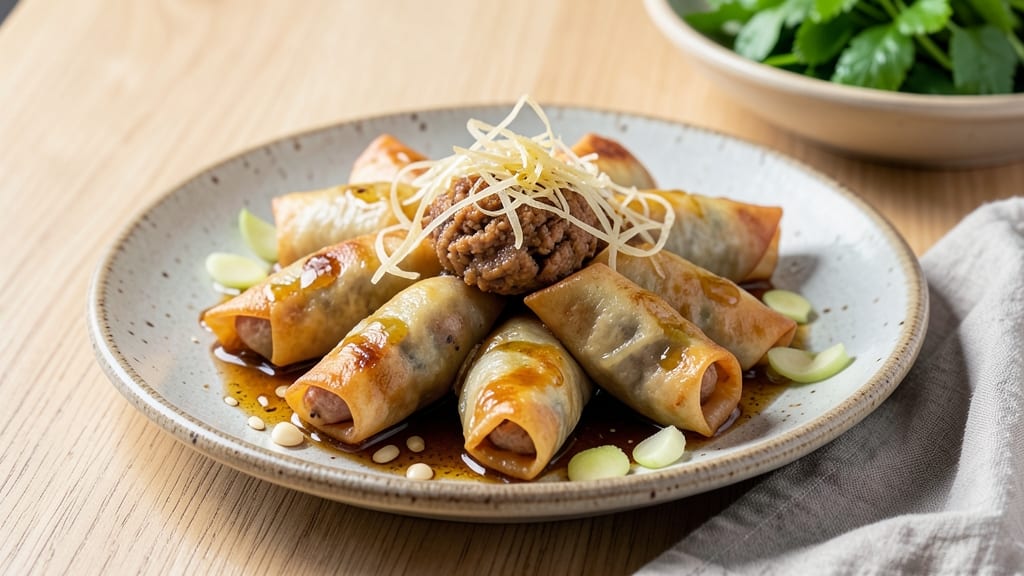
This authentic pork lumpia recipe brings the vibrant flavors of Filipino street food to your kitchen, where crispy golden wrappers hide silky pork fillings packed with aromatic garlic and ginger. 🌟 After perfecting this dish during my time in Southeast Asia, I've adapted it for home cooks—keeping the soul of the original while making it approachable for any kitchen.
The secret lies in the balance of textures: a shatteringly crisp exterior meets a filling so tender it practically melts in your mouth.
The filling starts with ground pork seared to perfection, then simmered with garlic, ginger, and just enough soy sauce to create deep umami flavor without overpowering. I use lumpia wrappers for that signature delicate crispness, but spring roll skins work beautifully too.
The key to wrapping is speed—keep the filling warm while you work, and seal those edges tightly to prevent leaks during frying. For that restaurant-quality crunch, we'll deep-fry until golden brown, but an air fryer works too for a lighter version.
What makes these lumpia truly special is how they transform any meal into a celebration. Serve them hot with a side of atchara (Filipino pickled papaya) and garlic vinegar for dipping, or pair them with a simple cucumber salad.
The aroma alone—garlicky, slightly sweet, with that unmistakable porky richness—will have everyone at your table asking for seconds. This isn't just a recipe; it's an experience that brings the energy of Manila street carts to your home.
My grandmother used to say good food should make you feel like you're being hugged, and these lumpia deliver that warmth in every crispy bite. The technique might seem fussy at first, but once you master the wrapping rhythm, you'll be making them in minutes.
Let's get cooking—your taste buds are about to be taken on a journey.
Ingredients for authentic pork lumpia
Pantry staples meet Filipino street food magic—just 13 ingredients for crispy, aromatic lumpia.
| Ingredient | Amount | Notes |
|---|---|---|
| Ground Pork 🥩 | 1 ½ lb | 80% lean, finely ground |
| Lumpia Wrappers 🥟 | 18 pieces | Square or round, store-bought |
| Garlic Cloves 🧄 | 8 cloves | Minced, fresh preferred |
| Fresh Ginger 🌿 | 2 tbsp | Finely grated, peeled |
| Soy Sauce 🍶 | 2 tbsp | Light or regular, not low-sodium |
| Oyster Sauce 🍜 | 1 tbsp | Thick consistency preferred |
| Sesame Oil 🫒 | 1 tbsp | Toasted, for aroma |
| White Vinegar 🍋 | 1 tbsp | For brightness |
| Green Onions 🧅 | 4 whole | Thinly sliced, white and green parts |
| Vegetable Oil 🫒 | 3 cups | For deep-frying, high smoke point |
| Salt 🧂 | ½ tsp | Kosher or sea salt |
| Black Pepper 🌶️ | ¼ tsp | Freshly ground |
| Spring Roll Skin 🥟 | 12 pieces | Alternative to lumpia wrappers |
The pork is non-negotiable here—80% lean ground pork gives that perfect balance of tenderness and richness. Look for it in the meat section at Whole Foods or your local Asian market, where they often have it pre-ground for lumpia. If you can't find it, substitute ground chuck but pat it extra dry to avoid excess moisture. Fresh garlic and ginger are worth the investment—Filipino markets often sell them pre-peeled and grated, saving you time. The wrappers? Lumpia wrappers are the gold standard, but spring roll skins work too if you're in a pinch.
No oyster sauce? Soy sauce plus a splash of fish sauce gets you close, but the umami depth won't be quite the same. Swapping sesame oil? Toasted peanut oil adds a different but delicious nuttiness. The green onions can be subbed with scallions or chives, though they won't have the same sharpness. For the wrappers, if you can't find lumpia wrappers, egg roll wrappers are the next best thing—just brush them with a bit of oil to mimic that delicate crispness. And trust me on the high smoke point oil
Keep the pork filling in the fridge for up to 2 days before wrapping—it actually tastes better after the flavors meld. Wrappers? Store them in a cool, dry place (not the fridge) in an airtight container for up to 1 month. Once fried, these stay crispy for 2 days if reheated in the oven at 350°F for 10 minutes. Pro tip: Freeze uncooked lumpia on a tray first, then bag them—they'll reheat like a dream straight from frozen.
Why You'll Love This Recipe
- No-Fuss Assembly: I swear by the "dump-and-roll" method here—just mix the ground pork with minced garlic, ginger, and a splash of soy sauce, then stuff those wrappers like you’re wrapping a burrito. No fancy folding skills required, and the filling stays juicy.
- Umami Bomb: That combo of fresh ginger and garlic fried in the pork? It’s the secret weapon. The soy sauce ties it all together with just the right salty depth, while the wrappers add a satisfying crunch that disappears the second you take a bite.
- Party in a Box: These freeze like champs, so I make a double batch and keep them stashed for lazy Fridays or last-minute potlucks. Fry them up fresh for maximum crispiness, or reheat in the oven for a quick snack—no one will guess they’re reheated.
- Budget Crunch: Ground pork stretches far, wrappers are cheap in bulk, and you’re using pantry staples. Honestly, it’s one of those recipes where you end up with leftovers because it’s so good, not because you wasted money. Win-win.
Step-by-step instructions for authentic pork lumpia
Here's how to make restaurant-quality spring rolls with that perfect crispy crunch and flavorful filling.
👨🍳 Step 1: Prepare the Signature Filling
In a large mixing bowl, combine the 1.5 lb ground pork, 8 cloves minced garlic cloves, 2 tbsp finely grated fresh ginger, 2 tbsp soy sauce, 1 tbsp oyster sauce, 1 tbsp sesame oil, 1 tbsp white vinegar, 0.5 tsp salt, and 0.25 tsp black pepper. Use your hands to mix everything thoroughly until the pork changes color and becomes uniformly seasoned.
Here's the thing—don't skip the vinegar. It brightens the flavors and prevents the filling from becoming too heavy. The mixture should look moist but not soupy, with the pork breaking down slightly from the acidity. If it feels too dry, add 1 teaspoon water at a time until it reaches a workable consistency.
🍳 Step 2: Shape the Lumpia with Precision
Set up your workspace with the 18 lumpia wrappers and the 4 whole green onions thinly sliced (save some for garnish). Place about 1 tablespoon of filling near one corner of a wrapper. Fold the corner over the filling, then fold the sides inward like an envelope, leaving the top open.
This is where authenticity matters most. The traditional method creates a half-moon shape. Roll the filled wrapper tightly but gently—too much pressure will tear the delicate skin. Seal the edge with a tiny dab of water to help it stick. Repeat until you've used all the filling, keeping the sealed lumpia on a clean surface covered with a damp towel to prevent drying.
🔥 Step 3: Deep-Fry to Golden Perfection
Heat 3 cups vegetable oil in a deep pot or fryer to 350°F (use a thermometer—this is critical). The oil should be hot enough to create small bubbles around the lumpia when you test with a small piece. Fry 3-4 lumpia at a time for 3-4 minutes until they turn a beautiful golden brown color.
Here's what I do: I use a slotted spoon to gently lower the lumpia into the oil, keeping them submerged. Watch carefully—they'll float when ready. Remove with tongs and drain on a wire rack or paper towels. If they brown too quickly, lower the heat slightly. The key to crispy lumpia is maintaining that 350°F temperature consistently.
🍽️ Step 4: Serve with Traditional Flair
While still warm, arrange the crispy lumpia on a serving platter. Garnish with the remaining thinly sliced green onions for that authentic touch. Serve immediately with a side of sweet chili sauce or peanut sauce for dipping—this is what makes them taste like your favorite takeout spot.
Real talk: these are best eaten fresh while the wrappers are still crispy. The filling stays warm from the residual heat, and the contrast between the crunchy exterior and silky pork filling is what makes them irresistible. Double the batch—they disappear fast!
Pro Tips For Making Authentic Pork Lumpia
- Sear the Pork First: Before mixing anything, cook the ground pork in a dry pan over medium-high heat until it loses its raw color—about 3-4 minutes. This step removes excess moisture, so your lumpia filling stays firm and doesn’t turn soggy when frying. (Yes, even if you’re impatient like me.)
- Grate That Ginger Fine: Skip the food processor—use a box grater or microplane for fresh ginger. You want it almost paste-like, not chunky, so it blends smoothly into the pork mixture. My grandmother swore by this, and she was right: lumpy ginger ruins the texture.
- Keep Wrappers Damp: Dampen your lumpia wrappers with a spray bottle or damp paper towel before filling. This prevents them from cracking when you roll, especially if they’re thin or dried out. (Your future self will thank you when the first few don’t unravel mid-roll.)
- Fry in Small Batches: Overcrowding the pan drops the oil temperature and makes your lumpia greasy instead of crispy. Work in batches of 4-5 at a time, and keep the oil at 350°F (175°C)—use a thermometer if you’re skeptical. Sounds weird, but it works: golden, not soggy.
Wine and beer pairings for authentic pork lumpia
Filipino White Wine
For a true taste of the Philippines, pair your lumpia with a crisp Fernando Placer Pinot Grigio from Luzon. This wine's bright acidity and citrus notes cut through the rich pork filling while complementing the garlic and ginger.
I've found that a chilled glass (around 45°F) enhances the crispness of both the lumpia and the wine. 🍷
Light Lager Balance
A San Miguel Light lager is my go-to for balancing the lumpia's richness. The subtle malt sweetness and light carbonation cleanse your palate between bites, making each crispy lumpia taste fresh.
Serve it well-chilled (40°F) and watch how the effervescence contrasts with the fried texture. This pairing is especially popular in Filipino street food culture.
Spiced Rum Cocktail
For a boozy twist, try a Calamansi Rum Punch—mix 2 oz spiced rum, 1 oz calamansi juice, and a splash of soda water. The tartness of calamansi (Filipino lime) mirrors the vinegar in the filling, while the rum adds warmth.
Serve over ice with a lime wedge for that authentic fiesta vibe. 🍹
Beer Pairing Hack
If you can't find Filipino beer, Asahi Super Dry works beautifully. Its clean, crisp profile highlights the lumpia's garlic and sesame notes without overpowering them. For a fun twist, try Sapporo—its slightly sweeter malt character complements the pork's umami.
Just remember: keep it cold (38°F) for the best experience.
Non-Alcoholic Option
For a refreshing non-alcoholic choice, serve hibiscus iced tea (salabat). The tart, floral notes balance the lumpia's richness perfectly. Add a slice of calamansi and a pinch of salt to enhance the flavors. This drink is a staple in Filipino households and pairs wonderfully with fried foods. 💧
Regional Adaptation
In the Visayas region, locals often pair lumpia with banana ketchup and a coconut drink called nata de coco. For a modern twist, try coconut water chilled to 38°F—its natural sweetness contrasts beautifully with the savory filling. This combination is especially popular during fiestas and family gatherings. 🥥
Nutrition facts
Frequently asked questions
What's the difference between lumpia and spring rolls?
While they look similar, lumpia is the Filipino version of spring rolls—it's lighter, fluffier, and often includes vinegar in the filling for brightness. Traditional spring rolls (like Chinese ones) tend to have a heavier, sweeter filling with cabbage or carrots. The wrappers are also thinner for lumpia, which helps create that signature delicate crispness.
Can I make lumpia without deep-frying?
For a lighter version, try air-frying at 375°F for 8-10 minutes, flipping halfway. The texture will be less crispy but still delicious. You can also bake at 400°F for 15-18 minutes with a light oil spray, though the wrappers won't be as crunchy. The filling flavor stays the same—just the texture changes!
How do I prevent the filling from leaking during frying?
This happens when the wrappers aren't sealed tightly. Seal each edge with a tiny dab of water before frying—it acts like glue. Also, don't overfill the wrappers (use 1 tbsp filling max) and keep them covered with a damp towel until ready to fry. If you see leaks while frying, remove them immediately to avoid soggy wrappers.
What's the best way to reheat leftover lumpia?
Oven is your friend! Place lumpia on a baking sheet and reheat at 350°F for 5-7 minutes until crispy again. Avoid the microwave—it makes wrappers soggy. For extra crunch, sprinkle with a tiny bit of water before reheating, then bake until golden. Leftovers stay crispy for 2 days if stored in an airtight container.
Can I make lumpia ahead of time?
Yes! Assemble the lumpia (uncooked) and refrigerate for up to 2 days or freeze for 1 month. For freezing, lay them on a tray first to prevent sticking, then transfer to a bag. Fry from frozen (add 1 minute to cooking time). The filling actually tastes better after resting—flavors meld beautifully!