
Main Courses
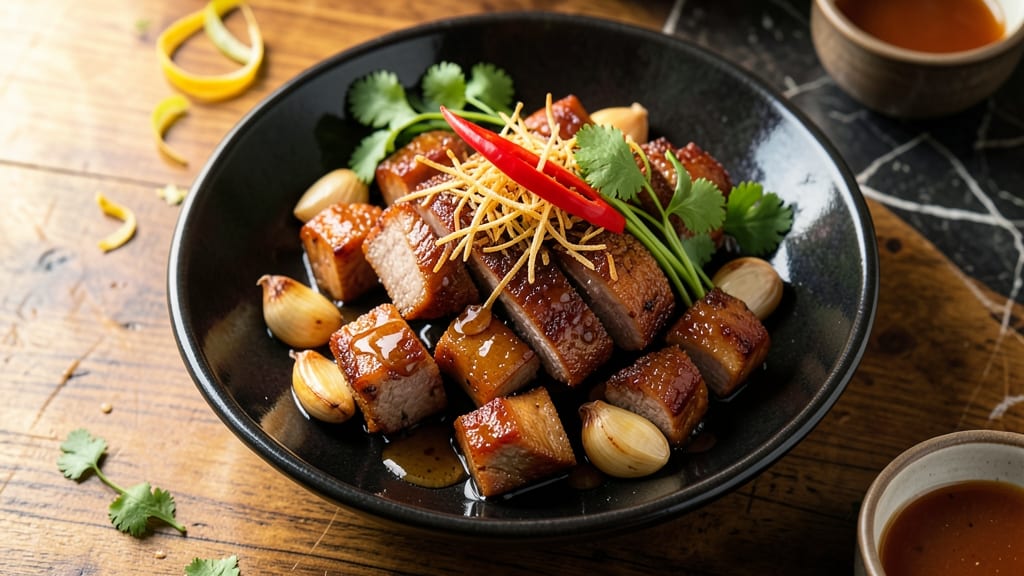
Mastering authentic Chinese roast pork means capturing that perfect balance of caramelized glaze and melt-in-your-mouth tenderness—just like the Cantonese-style char siu that makes every bite unforgettable. My years of working with heritage pork and traditional five-spice blends have taught me that patience and precision transform simple ingredients into something extraordinary.
This isn't just a recipe; it's a celebration of technique honed across generations.
The secret lies in the marinade—where soy sauce, honey, and Shaoxing wine meld with star anise, cinnamon, and cloves to create layers of flavor that penetrate the meat.
I use a two-stage cooking process: first searing the pork to render fat and build flavor, then slow-roasting until the edges crisp and the interior becomes so tender it practically shreds at a touch. Every step preserves authenticity while making it achievable at home.
What you'll end up with is restaurant-quality roast pork with a glossy, crackling exterior that gives way to juicy, silky shreds beneath. The five-spice glaze caramelizes beautifully, offering a perfect sweet-savory contrast that's impossible to resist.
This dish deserves to be the centerpiece of your table—whether served over steamed rice, in bao buns, or alongside stir-fried greens.
The beauty of this recipe is its versatility. Use it for family dinners, holiday feasts, or even as a showstopper for gatherings. The leftovers reheat beautifully, making it perfect for meal prep. Now let's get to work—your kitchen is about to smell like a bustling Hong Kong dim sum shop.
Ingredients for authentic chinese roast pork
Sixteen ingredients transform your kitchen into a Hong Kong dim sum shop—where heritage pork meets five-spice magic.
| Ingredient | Amount | Notes |
|---|---|---|
| Pork Shoulder (Bone-In) 🐖 | 4 lb | Heritage pork preferred, cut into 1-inch chunks |
| Light Soy Sauce 🥄 | ½ cup | Kikkoman or Diamond preferred |
| Honey 🍯 | ⅓ cup | Wildflower or clover variety |
| Shaoxing Wine 🍷 | ¼ cup | Dry Chinese cooking wine |
| Brown Sugar 🍚 | ⅓ cup | Packed firmly |
| Garlic Cloves 🧄 | 8 cloves | Minced, fresh preferred |
| Fresh Ginger 🌿 | ¼ cup | Grated, peeled |
| Five-Spice Powder 🌶️ | 2 tsp | Authentic Chinese blend |
| Star Anise 🌟 | 2 whole | Crushed lightly |
| Cinnamon Sticks 🌿 | 2 whole | 1-inch pieces |
| Cloves 🌿 | 4 whole | Whole, lightly crushed |
| Sesame Oil 🫒 | 1 tbsp | Toasted sesame preferred |
| Cornstarch 🌾 | 2 tbsp | For glaze thickening |
| Vegetable Oil 🫒 | 2 tbsp | High smoke point |
| Kosher Salt 🧂 | 1 ½ tsp | Diamond Crystal preferred |
The pork shoulder is non-negotiable—heritage cuts from Whole Foods or your local butcher deliver that authentic marbling and flavor. Look for bone-in pieces; they render fat beautifully during cooking. If you can't find heritage pork, pork butt works in a pinch, but trim excess fat to avoid greasiness. The five-spice blend is the soul of this dish—Penzeys or Hinode brands are my go-tos, but any authentic Chinese five-spice will do. Shaoxing wine is essential; Trader Joe's carries a decent version, but Asian markets have better options. Always use fresh garlic and ginger—freeze them in ice cube trays if you buy in bulk. The honey should be wildflower or clover; Manuka honey adds a luxurious touch but isn't required.
No Shaoxing wine? Dry sherry or mirin works in a bind, but the flavor won't be identical. Substituting brown sugar with white sugar? Add 1/4 tsp cinnamon to compensate for the missing molasses notes. Fresh ginger too pungent? Ground ginger at half the amount softens the bite. The star anise and cloves can be omitted if you dislike their intensity, but I recommend keeping them—they infuse subtle warmth. For a quicker prep, pre-minced garlic and ginger from the jar save time, though fresh is always better. The sesame oil should be toasted; La Choy or Kadoya brands are reliable. If you're short on time, 1 tbsp regular sesame oil plus 1/2 tsp toasted sesame seeds mimics the flavor.
This pork tastes even better the next day—3-4 days in the fridge, wrapped tightly in parchment. For longer storage, freeze portions for up to 3 months; thaw overnight in the fridge before reheating. The glaze thickens as it cools, so reheat with 1 tsp water to restore shine. Leftovers reheat beautifully in a 350°F oven for 15 minutes or on the stovetop with a splash of water. Portion into containers for easy meal prep—perfect for lunches or potlucks. The crispy edges soften when reheated, so save a piece for the next day to enjoy that perfect crunch.
Why You'll Love This Recipe
- One-Pan Magic: I swear by this—just toss the pork shoulder on a sheet, slather it with honey and soy, and let the oven do the work. No chopping, no fuss, no cleanup that’ll make you groan.
- Sweet-Savory Balance: That sticky glaze? Pure perfection. The Shaoxing wine deepens the flavor while the honey caramelizes into a glossy finish—crispy outside, tender inside, with just the right amount of umami.
- Leftovers? Please.: This roast pork keeps for days, and honestly? It gets better the second time around. Slice it thin for congee, toss it in fried rice, or just reheat with a splash of water—it’s my lazy Sunday lunch.
- Budget Stretch: A bone-in pork shoulder costs less than half the price of pre-sliced cuts, and this recipe turns it into something restaurant-worthy. Between us, I’ve fed six people for under $15 with this—no joke.
Step-by-step instructions for authentic Chinese roast pork
Here's the method that delivers restaurant-quality roast pork with that signature five-spice crunch and melt-in-your-mouth tenderness.
Prepare the Pork and Aromatics
Begin by cutting the 4 lb pork shoulder (bone-in) into 1-inch chunks, leaving the skin intact on some pieces for added flavor. In a large bowl, combine the pork with 0.5 cup light soy sauce, 0.25 cup shaoxing wine, 1.5 tsp kosher salt, 2 tsp five-spice powder, 8 cloves minced garlic, 0.25 cup grated fresh ginger, 2 whole lightly crushed star anise, 2 whole cinnamon sticks (cut into 1-inch pieces), and 4 whole lightly crushed cloves. This marinade will infuse the pork with deep, aromatic flavors.
Use your hands to massage the marinade into every piece of pork, ensuring each chunk is well-coated. Cover the bowl and refrigerate for at least 4 hours (overnight is ideal) to allow the flavors to penetrate deeply. The pork should absorb the marinade completely, taking on a rich, reddish hue.
Parboil for Tenderness
In a large pot, combine 8 cups water, 0.33 cup brown sugar, and 0.33 cup honey. Bring to a boil over high heat, then add the marinated pork. Reduce heat to medium-high and simmer for 45-60 minutes until the pork is 80% cooked—it should be tender but still slightly firm to the touch.
This parboiling step is crucial for breaking down the connective tissue, ensuring the pork shreds effortlessly later. Skim off any foam that rises to the surface during cooking. Once done, drain the pork and set it aside in a colander to cool slightly. The liquid should reduce to a syrupy consistency, which you'll use later for the glaze.
Create the Glaze
In a clean saucepan, combine the reduced parboiling liquid with 1 tbsp sesame oil and 2 tbsp cornstarch. Whisk vigorously to dissolve the cornstarch completely, then cook over medium heat for 3-5 minutes until the glaze thickens to a glossy, syrup-like consistency. It should coat the back of a spoon smoothly.
This glaze is what gives the final dish its signature sticky, caramelized exterior. If the glaze thickens too quickly, add 1-2 tablespoons of water to adjust the consistency. Once ready, set the glaze aside and let it cool slightly—it should be warm but not hot when applied to the pork.
Roast for Crispy Perfection
Preheat your oven to 375°F. In a large baking dish or roasting pan, spread the parboiled pork in a single layer. Pour the cooled glaze evenly over the pork, ensuring each piece is fully coated. Roast for 20-25 minutes until the pork is deep golden brown and the glaze has caramelized into a glossy, crackly crust.
For extra crispiness, broil the pork for the last 2-3 minutes, watching closely to prevent burning. The pork should be firm to the touch and have a beautiful mahogany color. If the glaze starts to darken too quickly, move the pan slightly away from the broiler.
Shred and Serve
Remove the pork from the oven and let it rest for 10 minutes before shredding. Using two forks or tongs, pull the pork apart into silky shreds, discarding any large fat chunks. The pork should be tender enough to pull apart easily but still hold its shape slightly.
Serve the shredded pork immediately, drizzled with any remaining glaze from the pan. The contrast of the crispy, five-spice glaze with the silky, tender pork is what makes this dish so unforgettable. Pair it with steamed jasmine rice and quick-pickled vegetables for an authentic Chinese feast.
Pro Tips For Making Authentic Chinese Roast Pork
- Trim the Fat First: I learned this the hard way—skipping this step means your pork won’t render crispy edges. Use a sharp knife to slice off all the surface fat (about ¼-inch thick), leaving just the thin layer clinging to the meat. That’s where the flavor hides, and it’ll caramelize into a sticky, savory crust.
- Braise Low and Slow: After searing, drop the heat to lowest possible (170–180°F/77–82°C) and cover tightly. I used to rush this, and the pork turned out dry or greasy. Let it cook for at least 3 hours—the collagen breaks down slowly, turning into silky, melt-in-your-mouth texture. Patience here is non-negotiable.
- Reduce the Sauce Hard: Don’t pour the honey-soy-sugar mixture over the pork until it’s thickened to syrup consistency—about 3 minutes of simmering on high heat. Too much liquid early on dilutes the glaze, and you’ll end up with soggy skin instead of that glossy, sticky finish. Taste it first; it should coat the back of a spoon.
- Rest Before Slicing: Give it a solid 5–10 minutes under foil after pulling from the oven. I know, I know—you’re starving. But cutting into it too soon means juices spill everywhere, and your slices turn dry. Let the residual heat redistribute, and you’ll get clean, juicy slices every time. (Your future self will thank you.)
Perfect pairings for this authentic chinese roast pork
Rice Pairings
Steamed jasmine rice is the classic accompaniment, absorbing the five-spice glaze beautifully. Use 2 cups uncooked jasmine rice to 3 cups water ratio—it should be fluffy and slightly sticky.
I like to cook mine in a bamboo steamer for that authentic aroma. For extra richness, stir in 1 tsp toasted sesame oil at the end. 🍚
Vegetable Sides
Quick-pickled cucumbers add refreshing acidity to cut through the pork's richness. Thinly slice 2 Persian cucumbers, toss with 2 tbsp rice vinegar, 1 tsp sugar, and ½ tsp red pepper flakes.
Let sit for 30 minutes before serving. Stir-fried bok choy with garlic and oyster sauce is another winner—just 3 minutes over high heat preserves its crisp texture.
Bread Options
For a hands-on experience, serve with steamed bao buns or mantou—their soft, pillowy texture contrasts perfectly with the crispy pork. I make my own bao by steaming 2-inch dough balls for 12 minutes until golden.
If short on time, store-bought Chinese steamed buns work beautifully. Warm them slightly before serving to maintain freshness.
Drink Pairings
A crisp green tea like Longjing cleanses the palate between bites. For something stronger, try a dry Shaoxing wine (the same used in the marinade) or a light Chinese jasmine tea with honey.
Iced jasmine tea with lemon is perfect for hot days—just brew 2 tbsp loose tea in 4 cups hot water, chill, and serve over ice. 🍵
Garnishes
Fresh cilantro or scallions add a bright finish. Chop ¼ cup cilantro and sprinkle over the pork just before serving. For heat, add 1 tsp chili crisp or ½ tsp Sichuan peppercorns—they bring a tingling kick that pairs perfectly with the five-spice flavors.
A drizzle of toasted sesame oil right before serving enhances the aroma.
Leftovers Strategy
Use leftover pork in fried rice or egg rolls the next day. For fried rice, scramble 2 eggs in a wok, add 2 cups day-old rice, and stir-fry with ½ cup diced pork and 1 tbsp hoisin sauce.
For egg rolls, mix shredded pork with ½ cup shredded cabbage, wrap in wonton wrappers, and pan-fry until golden. Both dishes reheat beautifully! 💡
Nutrition facts
Frequently asked questions
Can I use pork tenderloin instead of pork shoulder for this recipe?
While pork tenderloin is leaner, it's not ideal for this dish because it lacks the connective tissue needed for that signature silky texture. The pork shoulder's fat marbling is what creates the melt-in-your-mouth quality. If you must use tenderloin, cut it into very thin strips and reduce the cooking time by 20-25 minutes, but expect less tender results. For the best experience, stick with pork shoulder or pork butt.
Why does the recipe call for parboiling the pork?
The parboiling step is essential for breaking down collagen and rendering fat, which ensures the pork shreds beautifully and develops that authentic texture. Without it, the meat might remain tough. This two-stage cooking method—parboiling followed by roasting—is what gives char siu its signature tenderness. Think of it as pre-cooking the pork to make the final roasting step more effective.
What's the best way to store leftover roast pork?
Wrap the pork tightly in plastic wrap, then place it in an airtight container. It keeps well in the fridge for 3-4 days, though the texture becomes slightly softer after the first day. For longer storage, freeze portions for up to 3 months. When reheating, use a splash of water or the reserved glaze to restore moisture—simmer gently over low heat for 10-15 minutes to avoid drying it out.
Can I make this recipe without Shaoxing wine?
Yes, but the flavor will differ slightly. Substitute with dry sherry or mirin in equal amounts. For a non-alcoholic option, use apple cider vinegar mixed with 1 tsp sugar per ¼ cup of vinegar. The wine's depth of flavor is hard to replicate, but these alternatives will still work in a pinch. The dish will be less aromatic but still delicious.
How do I achieve that perfect crispy glaze?
The key is patience and temperature control. Roast at 375°F until the edges are golden, then finish under the broiler for 2-3 minutes—watch closely to avoid burning. The glaze should caramelize into a glossy, crackly crust. If it's not crispy enough, broil for another 1-2 minutes. For extra shine, brush with a little more glaze before the final broiling step. The cornstarch in the glaze is what creates that signature stickiness and crunch.