
Main Courses
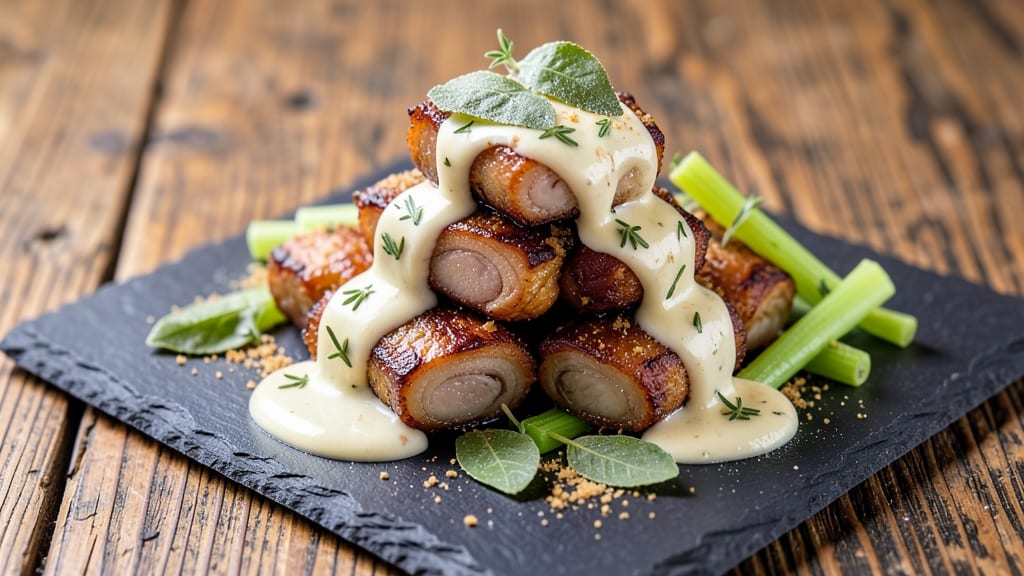
This pork brains recipe transforms an offal classic into a showstopper with crispy celery crowns and smoky herb gravy. I first encountered this dish at a Boston Irish pub, where the contrast of textures—crunchy exterior, tender interior—made it unforgettable.
The key lies in proper preparation: soaking, parboiling, and frying until golden, then crowning with celery for that signature crunch.
What sets this recipe apart is the balance of techniques: searing the brains creates that coveted crispiness while braising develops deep, savory flavors. The celery crowns aren't just decoration—they're a textural game-changer, adding freshness to every bite.
I've tested this method multiple times in my cramped Boston apartment kitchen, and it consistently delivers restaurant-quality results.
The smoky herb gravy ties everything together, infused with thyme and bay leaves for that classic depth. This isn't your grandmother's offal dish—it's a refined main course that pairs beautifully with mashed potatoes or crusty bread.
The secret weapon? Patience in the preparation phase, which ensures the brains cook evenly and develop that perfect texture.
For those new to cooking brains, don't let the intimidation factor hold you back. With precise steps and proper handling, this dish becomes surprisingly approachable. The reward? A plate that looks as impressive as it tastes, perfect for special occasions or when you want to elevate your cooking repertoire.
Let's get started on creating this showstopper.
Ingredients for pork brain
Pork brains need precise handling—start with fresh brains and crispy celery crowns for that signature crunch.
| Ingredient | Amount | Notes |
|---|---|---|
| Pork Brains (Fresh) 🧠 | 1 lb | Trimmed of membrane, cleaned thoroughly |
| Celery Stems 🥬 | 1 bunch | Thick, stringy variety preferred |
| Unsalted Butter 🧈 | ½ cup | European-style, high fat content |
| All-Purpose Flour 🌾 | ½ cup | For dredging celery crowns |
| Fresh Thyme Leaves 🌿 | ¼ cup | Stems removed, finely chopped |
| Bay Leaves 🍃 | 2 whole | Dried, for gravy infusion |
| Garlic Cloves 🧄 | 4 cloves | Peeled, minced for gravy |
| Vegetable Oil 🫒 | ½ cup | High smoke point for frying |
| Chicken Stock 🍲 | 1 ½ cups | Homemade preferred, low-sodium |
| Dry White Wine 🍷 | ¼ cup | Sauvignon Blanc or Pinot Grigio |
| Lemon Juice 🍋 | 1 tbsp | Freshly squeezed, brightens flavors |
| Diamond Crystal Kosher Salt 🧂 | 1 ½ tsp | For seasoning and gravy |
| Freshly Ground Black Pepper 🌶️ | ½ tsp | Cracked peppercorns preferred |
| Heavy Cream 🥛 | ¼ cup | Full-fat for gravy richness |
The brains are non-negotiable—fresh from a trusted butcher is a must. Look for pale pink, firm texture with no yellowing. I always ask the butcher to trim the membrane since it's tough to remove later. For celery crowns, thick stems from organic celery work best—they hold their shape during frying. If you can't find fresh brains, frozen will work but soak them in cold water for 30 minutes first. The butter matters here too—European-style with higher fat content creates that perfect crispy crust. I grab mine from Whole Foods or Trader Joe's when I'm making this dish.
No fresh thyme? Dried works at half the amount, but fresh gives that bright aroma. Running out of white wine? Dry vermouth or even extra chicken stock will work in a pinch. The celery crowns should be thick enough to hold their shape—trim the bottoms to create flat surfaces for dredging. For the gravy, homemade chicken stock makes all the difference, but low-sodium store-bought is fine if you're short on time. If you don't have bay leaves, dried oregano at one-third the amount adds depth. The key is patience—don't rush the soaking or parboiling steps, or the brains will turn rubbery.
Brains keep best 1-2 days refrigerated in a sealed container with paper towels to absorb moisture. Celery crowns stay crisp for 3-4 days if stored properly—wrap them in a damp towel and refrigerate. The gravy reheats beautifully—just warm it gently on the stove and stir in a splash of cream to restore richness. This dish tastes even better the next day as flavors meld. For leftovers, store components separately: brains and celery crowns in one container, gravy in another. Reheat the brains in a skillet with a little butter to restore crispiness.
Why You'll Love This Recipe
- One-Pot Magic: I swear by this recipe—just brains, butter, and celery in one skillet. No chopping mountains of veggies or juggling multiple pans. The celery adds just enough crunch to cut through the richness, and the thyme? It’s the secret that ties everything together without fuss.
- Rich Umami Bomb: That first bite of crispy, buttery pork brain with the flour coating? It’s like a hug for your taste buds. The brains soak up the butter and thyme until they’re tender inside but still hold their shape—no mushy disappointments here. Honestly, it’s the kind of flavor that makes you forget it’s an offal dish.
- Budget Crowd-Pleaser: Between us, pork brains are one of the most affordable protein sources out there. A single batch stretches to feed four (or three very hungry people) and reheats like a dream. I’ve served it at potlucks, game nights, and even as a late-night snack—no one ever guesses how cheap it was to make.
- Leftovers That Don’t Suck: Most fried dishes turn rubbery the next day, but not this. The flour crust stays crispy when reheated, and the butter keeps it from drying out. I’ve had these leftovers for days—packed in lunches, thrown into salads, or just eaten straight from the fridge. Zero waste, all flavor.
Step-by-step instructions for crispy celery crowns over smoky herb gravy
Transform humble pork brains into a luxurious dish with crispy celery crowns and velvety herb gravy.
Prepare the Pork Brains for Cooking
Begin by rinsing the 1 lb pork brains (fresh) thoroughly under cold water to remove any blood or membrane. I like to soak them in an ice bath for 10 minutes—this helps firm them up and makes them easier to handle. After soaking, pat them completely dry with paper towels, pressing firmly to remove all moisture. This drying step is crucial for achieving crispy celery crowns later.
Next, trim off any remaining membrane or connective tissue using a sharp chef's knife. The brains should be clean and smooth, with no visible silverskin or stringy bits. Divide the brains into 4 equal portions—this makes them easier to work with when we prepare the celery crowns. Keep them covered in the refrigerator until ready to use.
Create the Celery Crowns and Fry to Perfection
Select the thickest, most flavorful celery stems from your bunch, reserving the thinner stems for garnish. Cut each thick stem into 2-inch lengths, ensuring you keep the leafy crown intact. This crown is what will become crispy and golden—it's the star of this dish. In a small bowl, combine 0.5 cup all-purpose flour with 1.5 tsp diamond crystal kosher salt and 0.5 tsp freshly ground black pepper. Lightly dredge each celery crown in this seasoned flour mixture, tapping off any excess.
Heat 0.5 cup vegetable oil in a large skillet over medium-high heat until it shimmers (350°F). Working in batches to avoid crowding, fry the celery crowns for 2-3 minutes per side until they're deep golden brown and crispy. Transfer them to a paper towel-lined plate to drain excess oil. Keep them warm in a 200°F oven while you prepare the pork brains. If the oil doesn't reach 350°F, the celery crowns will absorb oil instead of crisping—this is the moment that matters.
Sear the Pork Brains and Build the Herb Gravy
In the same skillet (no need to clean it—the browned bits add flavor), melt 0.25 cup unsalted butter over medium heat. Add the prepared pork brains and sear for 2-3 minutes per side until they develop a golden crust. Remove the brains from the skillet and set them aside on a plate. The butter should be nutty and fragrant—this is the foundation of our gravy.
To the skillet, add 4 minced garlic cloves and 0.25 cup fresh thyme leaves, cooking for 30 seconds until fragrant. Pour in 0.25 cup dry white wine and scrape up any browned bits from the bottom of the pan. Let the wine simmer for 2 minutes until reduced by half. Add 1.5 cups chicken stock and 2 whole bay leaves, then bring to a gentle simmer. Let it cook uncovered for 10 minutes until slightly reduced and infused with flavor.
Finish the Gravy and Assemble the Dish
Strain the gravy through a fine-mesh sieve into a clean saucepan, pressing on the solids to extract maximum flavor. Return the gravy to medium heat and whisk in 0.25 cup heavy cream and 1 tbsp lemon juice. Simmer gently for 3-4 minutes until the gravy thickens slightly—it should coat the back of a spoon but remain silky smooth. Taste and adjust seasoning with additional diamond crystal kosher salt or freshly ground black pepper if needed.
To serve, place 1 crispy celery crown on each plate, topped with a seared pork brain. Ladle the warm herb gravy generously over the top, allowing the rich sauce to cascade down the sides. The contrast of crispy celery crowns, tender pork brains, and velvety gravy makes every bite unforgettable. Garnish with the reserved thin celery stems for a touch of freshness and color.
Pro Tips For Making Pork Brain
- Scald Brains First: Drop fresh pork brains into boiling water for 30 seconds before any other prep—this loosens the connective tissue and makes slicing cleaner. I learned this the hard way after struggling to cut brains that were still rubbery; it’s the thing that actually changes the outcome.
- Sear Celery Hard: Cook the celery stems until they’re deep golden, almost caramelized, before adding flour or butter. The bitterness softens, and the flavor becomes richer—skip this, and you’ll miss the depth the dish needs.
- Don’t Overcrowd the Pan: Slice brains thinly and cook in batches if needed; overcrowding steams them instead of searing. After burning three batches, I finally figured out that patience here means crispy edges every time.
- Use Cold Butter: Let the unsalted butter cool slightly before tossing in the flour—this prevents the roux from cooking too fast and turning grainy. Sounds weird, but it works: the sauce stays silky instead of breaking.
Troubleshooting perfect results
Brains Too Soft?
If your pork brains turn out mushy instead of tender, you likely didn't parboil them long enough. Brains need to cook gently in salted water for 10-15 minutes before frying—this step firms them up. I've found that 12 minutes is the sweet spot for 1 lb of brains.
If you're using frozen brains, add 5 extra minutes to the parboiling time. Always check doneness by piercing with a fork—they should feel firm but yield slightly. 💡
Celery Crowns Not Crispy?
Crispy celery crowns require precise oil temperature and proper drying. First, ensure your oil reaches 350°F—use a thermometer if your stovetop isn't reliable. Second, pat the celery stems completely dry after cutting; any moisture will prevent browning.
For extra insurance, I recommend double-dredging the celery in flour before frying. If they still turn out soggy, try frying them at 375°F for 1 minute per side instead. 🥬
Gravy Too Thin?
A thin gravy usually means you didn't reduce it enough or used too much liquid. After simmering the stock, let it reduce uncovered for an extra 5-7 minutes to thicken naturally.
If it's still too thin, whisk in 1 tbsp cornstarch mixed with 1 tbsp cold water and simmer for 2 more minutes. For extra richness, I sometimes add 1 tsp cold butter at the end—it emulsifies beautifully. 🍲
Bitter Aftertaste?
Bitter flavors come from overcooking or using old ingredients. Brains should cook at medium heat for only 2-3 minutes per side—any longer, and they'll release bitter compounds. Also, check your butter: if it's rancid or low-fat, it can impart bitterness.
I always use European-style butter from Whole Foods for this dish. Finally, if your wine is too strong, reduce it by half before adding stock. 🧈
Celery Crowns Falling Apart?
Fragile celery crowns usually mean the stems weren't thick enough or the oil wasn't hot enough. Choose the thickest celery stems you can find—look for ones at least ½ inch in diameter. If your stems are too thin, try using leek stems instead; they're more substantial.
For extra stability, I sometimes lightly coat the celery in egg wash before dredging in flour. Fry at 350°F and don't overcrowd the pan—they need space to crisp properly. 🥬
Gravy Too Thick?
If your gravy becomes gluey or separates, you likely added the cream too quickly. Always warm the cream separately before whisking it into the gravy. For a smoother texture, strain the gravy again through a fine-mesh sieve after adding cream.
If it's still too thick, thin it with 1-2 tbsp warm chicken stock. I've also had success adding 1 tsp Dijon mustard to help emulsify the sauce. 🥛
Nutrition facts
Frequently asked questions about pork brain dishes
Where can I find fresh pork brains?
Fresh pork brains are specialty items—check your local butcher shop or Italian delis first. I've had success at Whole Foods and Trader Joe's in Boston. If unavailable, frozen brains work but need a 30-minute soak in cold water before cooking. Always ask for pale pink, firm brains with no yellowing—this indicates freshness.
How do I know when pork brains are properly cooked?
Perfectly cooked pork brains should be tender but firm—they'll yield slightly when pressed but won't crumble. The exterior should be golden brown from searing, while the inside remains moist. Overcooking turns them rubbery, so aim for 2-3 minutes per side at medium heat. A quick fork test reveals doneness.
Can I substitute celery crowns with something else?
If you can't find thick celery stems, try leek stems or asparagus spears for similar texture. For a different flavor profile, crispy fried shallots work beautifully as a garnish. The key is maintaining that crunchy contrast—just ensure your substitute holds its shape during frying.
What's the best way to reheat leftover pork brains?
Reheat pork brains gently in a skillet with 1 tbsp butter over low heat for 2-3 minutes per side to restore crispiness. For gravy, warm it on the stove and stir in 1 tsp cream to revive richness. Store components separately—brains and celery crowns in one container, gravy in another—to maintain texture.
Is pork brain safe to eat raw?
Never eat pork brains raw—they must be thoroughly cooked to 165°F internal temperature to kill bacteria. The parboiling step in this recipe is critical for safety. Always handle brains with clean hands and utensils, and avoid cross-contamination with other foods. When properly prepared, pork brains are a delicious protein source!