
Main Courses
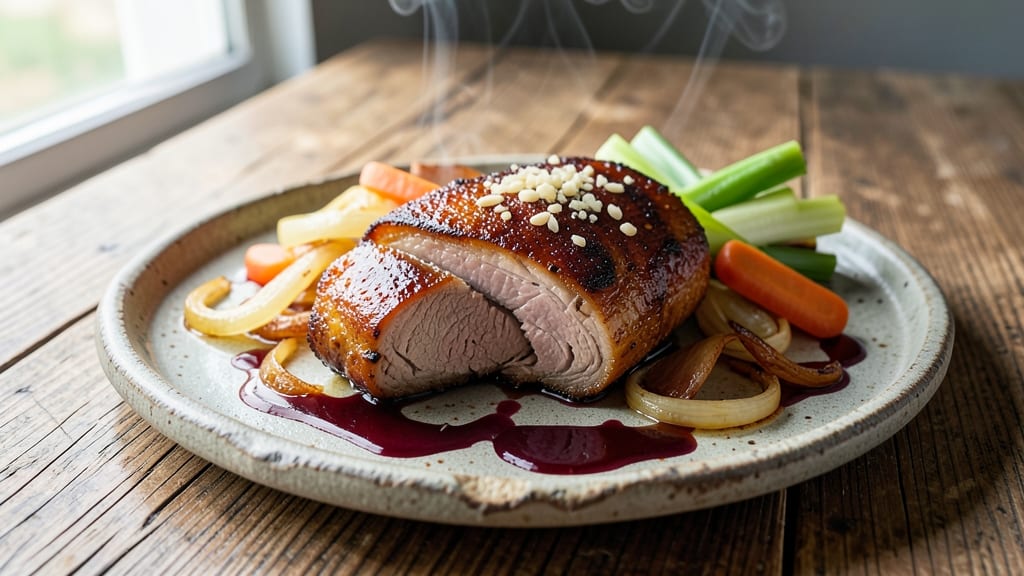
This crispy pork shank recipe delivers restaurant-quality results with a perfect balance of slow-braised tenderness and golden, shatteringly crisp edges.
The secret lies in a two-stage cooking process: first searing the meat to lock in juices, then slow-braising until fork-tender before finishing with a high-heat roast to achieve that coveted crunch.
What makes this recipe stand out is the rich onion gravy that transforms simple braising liquid into a velvety sauce worthy of any special occasion.
The process begins with a deep sear in a cast-iron skillet, creating a flavorful crust that forms the foundation for the crispy finish.
After hours of gentle braising in aromatic vegetables and herbs, the pork becomes impossibly tender, while the final roast at 450°F transforms the surface into a golden, crackling exterior. This technique ensures every bite delivers both texture contrast and deep, savory flavor that lingers long after the last forkful.
What you'll end up with is a dish that's elegant enough for dinner parties but approachable enough for weeknight suppers—juicy, fall-off-the-bone pork shanks resting on a bed of rich onion gravy, garnished with fresh herbs for brightness.
The crispy edges add a satisfying textural element that elevates this classic braise into something truly special.
Pair with creamy mashed potatoes or buttery egg noodles to soak up every last drop of that luxurious gravy. The balance of textures and flavors makes this pork shank a showstopper that will have everyone asking for seconds. Let's get started on creating this perfect dish.
Ingredients for crispy pork shank
Four pork shanks and aromatic vegetables transform into restaurant-worthy crispy perfection.
| Ingredient | Amount | Notes |
|---|---|---|
| Pork Shanks 🍖 | 4 whole | Bone-in, 1.5-2 lb each |
| Yellow Onions 🧅 | 2 whole | Large, thinly sliced |
| Carrots 🥕 | 4 whole | Medium, peeled and chopped |
| Celery Stalks 🌿 | 4 whole | Fresh, chopped |
| Garlic Cloves 🧄 | 6 cloves | Fresh, minced |
| Dry Red Wine 🍷 | 1 cup | Bold, like Cabernet |
| Beef Broth 🥄 | 2 cups | Low-sodium preferred |
| Tomato Paste 🍅 | 2 tbsp | Smooth, not chunky |
| Olive Oil 🫒 | ½ cup | Extra-virgin for searing |
| Fresh Thyme 🌿 | 2 sprigs | Or 1 tsp dried |
| Fresh Rosemary 🌿 | 1 sprig | Woodsy flavor |
| Salt 🧂 | 2 tsp | Kosher or sea salt |
| Black Peppercorns 🌶️ | 1 tsp | Freshly cracked |
| All-Purpose Flour 🌾 | 2 tbsp | For gravy thickening |
| Fresh Parsley 🌿 | ¼ cup | Chopped, for garnish |
The pork shanks are the star—look for bone-in cuts with good marbling. Whole Foods or your local butcher often carry the best quality. If buying pre-cut, check for even thickness around 1.5-2 pounds each. The onions and carrots should be firm with no soft spots—Trader Joe's bulk bins are great for affordable, fresh produce. For the wine, any bold red like Cabernet or Merlot will work, but avoid sweet varieties. The beef broth? Low-sodium is key—you'll be reducing it, so excess salt becomes concentrated.
No red wine? Substitute with extra beef broth plus 1 tbsp balsamic vinegar for depth. Fresh herbs wilt fast, so dried thyme and rosemary work in a pinch—use half the amount. The tomato paste can be skipped entirely if you prefer a lighter gravy, but it adds that rich umami base. For the flour, King Arthur or Bob's Red Mill brands work perfectly for thickening. If you're short on time, pre-chop the vegetables using a food processor—just don't overdo it, we want some texture in that braising liquid.
Pork shanks keep 3-4 days in the fridge once cooked—store in their braising liquid to maintain moisture. The gravy thickens as it cools, so reheat gently with a splash of water if it gets too stiff. For make-ahead convenience, freeze portions of the cooked pork and gravy separately for up to 3 months. The crispy edges are best enjoyed fresh, so plan to finish roasting just before serving. Garnish with fresh parsley right before eating to keep those vibrant green notes popping against the rich brown colors.
Why You'll Love This Recipe
- Here’s the secret weapon: this dish tastes better the next day. I’ll make a double batch on Sundays, and by Wednesday, I’m reheating it with a splash of broth because the meat stays juicy and the flavors deepen. Zero waste, all win.
- One-Pot Magic: I swear by this trick—just toss the pork shanks, onions, carrots, and celery into one pot with garlic and broth, then let it do its thing. No chopping boards full of mess, no extra pans to wash. That golden-brown crust? Worth every minute of hands-off time.
- Crispy-Creamy Payoff: Between us, that first bite of crispy edges melting into tender meat is chef’s kiss. The onions and carrots caramelize right into the sauce, so you’re not just eating pork—you’re getting a full-flavored hug in every forkful.
- Leftovers That Beg for More: Here’s the secret weapon: this dish tastes better the next day. I’ll make a double batch on Sundays, and by Wednesday, I’m reheating it with a splash of broth because the meat stays juicy and the flavors deepen. Zero waste, all win.
Step-by-step instructions for slow-braised crispy pork shanks
Here's the method for achieving that coveted crispy exterior with melt-in-your-mouth tenderness underneath.
Sear the Pork Shanks for Maximum Flavor and Crisp
Pat the 4 whole pork shanks completely dry with paper towels—this is crucial for developing that crispy crust. Heat 0.5 cup olive oil in a large Dutch oven over medium-high heat until shimmering. Place the pork shanks fat-side down in the pan and sear undisturbed for 8-10 minutes until deeply golden brown.
I press down gently on the shanks during the first minute to prevent curling, which ensures even contact with the pan. Flip carefully and sear the other side for another 6-8 minutes until golden. The fat should render out and create a rich, flavorful base for the braise. Remove the pork and set aside—we'll return to these later.
Build the Aromatic Base for Deep Flavor
In the same Dutch oven, add 2 whole yellow onions, 4 whole carrots, and 4 whole celery stalks, all chopped into even pieces. Cook over medium heat for 8-10 minutes, stirring occasionally, until the vegetables soften slightly and begin to caramelize. Add the 6 cloves minced garlic and cook for 30 seconds until fragrant.
This step develops the foundational flavors—don't rush it. You'll know it's ready when the vegetables release easily from the bottom of the pan and smell sweetly aromatic. Stir in the 2 tbsp tomato paste and cook for another 1 minute to deepen the color and enhance the umami.
Deglaze and Simmer the Braising Liquid
Pour in the 1 cup dry red wine, scraping up any browned bits from the bottom of the pan with a wooden spoon. Let it simmer for 3-4 minutes until reduced by half. Add the 2 cups beef broth, 2 sprigs fresh thyme, 1 sprig fresh rosemary, 2 tsp salt, and 1 tsp black peppercorns, bringing everything to a gentle boil.
Return the seared pork shanks to the pot, arranging them fat-side up. The liquid should come about halfway up the shanks. Cover the pot and transfer to a 325°F oven. This low-and-slow approach ensures the pork becomes fork-tender while maintaining that crispy exterior we worked so hard to create.
Braise Until Tender and Develop the Crisp
Braise the pork shanks for 2.5-3 hours until they're fork-tender. You'll know they're ready when a knife slides in easily and the meat pulls apart cleanly. During the last 30 minutes of cooking, increase the oven temperature to 400°F to crisp the exterior.
This final high-heat phase is critical—it transforms the tender pork into that coveted crispy texture. The liquid should reduce to a rich, gravy-like consistency. If it gets too thin, uncover and simmer for an additional 10 minutes to thicken naturally.
Finish with Gravy and Garnish
Remove the pork shanks and set them aside. Transfer the braising liquid to a saucepan and whisk in the 2 tbsp all-purpose flour to thicken the gravy. Simmer for 3-5 minutes until it reaches your desired consistency—it should coat the back of a spoon smoothly. Strain the gravy if you prefer a smoother texture, or leave it slightly chunky for added depth.
Return the pork shanks to the gravy and let them soak for 5 minutes to absorb the flavors. Garnish with 0.25 cup chopped fresh parsley and serve immediately. The contrast of crispy exterior over tender meat with rich onion gravy makes this dish truly unforgettable.
Pro Tips For Making Crispy Pork Shank
- Sear Until Browned: Don’t rush the initial sear—get those pork shanks deep golden, not just light brown. I used to flip too soon, and the crust stayed pale. High heat, 3-4 minutes per side, until the fat sizzles and pulls away easily. That’s your flavor foundation.
- Cut Onions Small: Dice those yellow onions into ¼-inch pieces, not thick slices. Thick pieces turn mushy and watery while the shanks cook, drowning your sauce. Small bits caramelize faster and blend right into the braise. (Yes, it takes 5 extra minutes—trust me.)
- Deglaze Immediately: As soon as you remove the pork, pour in that ½ cup of liquid—wine, broth, whatever—and scrape every last bit of browned bits from the pan. Those bits pack flavor. Let it simmer 2 minutes before adding the rest of the ingredients. Lazy deglazing = lost flavor.
- Rest Before Serving: Pull the pork shanks from the oven or pot and let them sit, tented with foil, for 10 minutes. Skipping this step means dry, stringy meat. The juices redistribute, and the crust stays intact. (I know, you’re hungry now—wait.)
Best sauces and condiments for this crispy pork shank
Classic Onion Gravy
This rich, velvety gravy transforms simple braising liquid into a luxurious sauce that elevates your crispy pork shanks. After removing the pork, transfer the braising liquid to a saucepan and simmer for 10 minutes to reduce further.
Whisk in 2 tbsp all-purpose flour and cook for 3-5 minutes until thickened to a spoonable consistency. For extra depth, add 1 tbsp unsalted butter at the end. This gravy soaks perfectly into creamy mashed potatoes or buttery egg noodles. 🥄
Red Wine Reduction
If you prefer a more concentrated flavor, reduce the wine separately before adding it to the braising liquid. Pour 1 cup dry red wine into a small saucepan and simmer over medium-high heat until reduced by half (3-4 minutes).
This creates a more intense wine flavor that complements the pork beautifully. I like to add ½ tsp brown sugar during reduction to balance any bitterness in the wine. 🍷
Mustard Cream Sauce
For a tangy twist, blend ½ cup crème fraîche with 1 tbsp Dijon mustard and 1 tsp fresh tarragon. Drizzle this sauce over the finished pork shanks just before serving.
The bright acidity cuts through the richness while adding a sophisticated herbal note. I recommend using Whole Foods brand crème fraîche for its perfect balance of tang and creaminess. 🌿
Horseradish Cream
Add a kick of heat with a horseradish cream sauce. Mix ¼ cup sour cream with 1 tbsp prepared horseradish and 1 tsp lemon juice. Dollop this alongside the pork shanks or use it as a dipping sauce for the crispy edges.
The sharpness enhances the pork's flavor while adding a refreshing contrast. For extra vibrancy, garnish with chopped chives. 🌶️
Herbed Butter
Melt 4 tbsp unsalted butter with 1 tbsp chopped fresh parsley, 1 tsp minced garlic, and ½ tsp lemon zest. Drizzle this herbed butter over the finished pork shanks right before serving.
The butter adds richness while the herbs brighten the dish. I use Plugrá brand unsalted butter for its perfect balance of fat and flavor. 🧈
Spiced Apple Compote
For a sweet contrast, prepare a simple apple compote by simmering 1 cup diced apples with 2 tbsp apple cider, 1 tsp cinnamon, and 1 tsp brown sugar for 10 minutes.
Spoon this alongside the pork shanks to balance the savory flavors. The natural sweetness complements the rich gravy beautifully. 🍎
Nutrition facts
Frequently asked questions
Why does my pork shank turn out tough instead of tender?
The key to tender pork shanks is patience and proper timing. Braising at 325°F for 2.5-3 hours is crucial—rushing this step results in chewy meat. Also, ensure you're using bone-in shanks (the bone helps tenderize) and don't skip the final 400°F crisping phase. If your oven runs hot, reduce the temperature by 25°F.
Can I make this recipe in a slow cooker instead of the oven?
Yes! Sear the shanks first, then transfer everything to a slow cooker and cook on low for 8-10 hours or high for 5-6 hours. For crispy edges, transfer the cooked pork to a baking sheet and broil for 3-5 minutes at the end. The slow cooker method works well but requires extra attention to achieve that perfect crust.
What's the best way to reheat leftovers without losing crispiness?
Reheat the pork shanks in their gravy over low heat for 10-15 minutes, then transfer to a baking sheet and broil for 2-3 minutes to restore crispiness. Never microwave—it turns the meat rubbery. The gravy can be reheated separately on the stovetop. For best results, store leftovers in the gravy to keep them moist.
How do I know when the pork shanks are fully cooked?
Use the fork test: A fully cooked shank should pull apart easily with minimal resistance. The internal temperature should reach 195°F (well-done for pork). The meat should look opaque and pull away cleanly from the bone. If it's still slightly firm, return it to the oven for 30-45 minutes more at 325°F.
What are the best sides to serve with crispy pork shanks?
Classic pairings include creamy mashed potatoes, buttery egg noodles, or roasted root vegetables. For a lighter option, try a fresh green salad with a tangy vinaigrette. The rich gravy soaks perfectly into starchy sides, while vegetables add a nice contrast. I especially love serving it with crusty sourdough bread for dipping.