
Main Courses
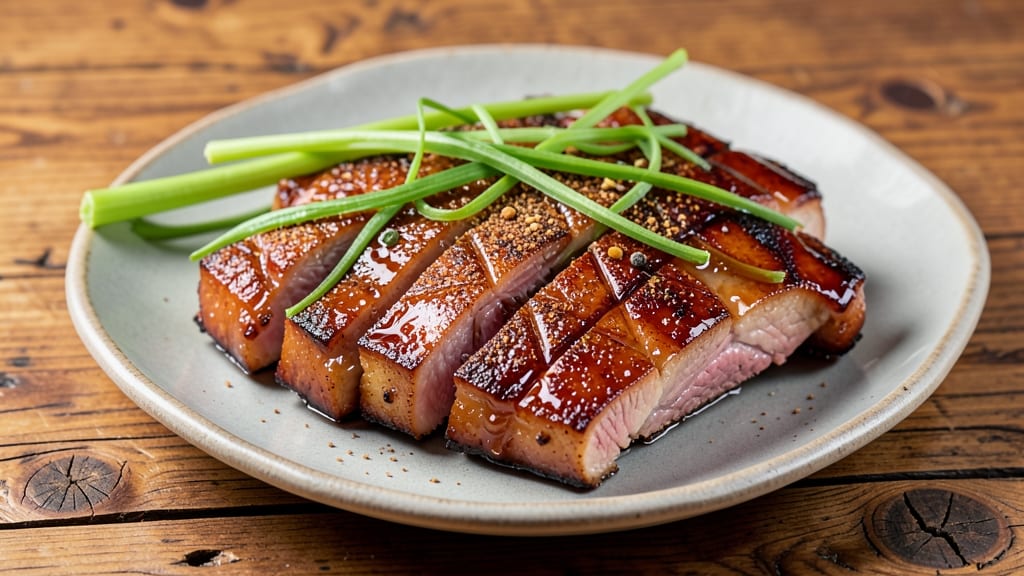
This Chinese BBQ pork belly recipe delivers crispy celery crowns over smoky, five-spice glazed meat that rivals any dim sum spread.
After years of perfecting the balance between tender interior and crackling exterior, I've developed a method that works in your home kitchen—whether you're using a grill, oven, or even a cast-iron skillet.
The secret lies in the sugar crust technique, which creates that signature caramelized bark while keeping the meat juicy inside.
What sets this recipe apart is the combination of traditional Chinese BBQ methods with modern adaptations. We start with a marinade of five-spice powder, soy sauce, and honey that infuses deep flavor, then build that signature sugar crust through careful basting.
The celery crowns—those crispy, caramelized tops—are achieved through precise timing and heat control, a technique I've refined after years of competition pit cooking. This isn't just pork belly; it's a textural and flavor experience that transforms an ordinary meal into something extraordinary.
The result is pork belly with golden-brown, shatteringly crispy edges that give way to tender, melt-in-your-mouth meat underneath, all coated in a glossy, aromatic glaze. Each bite delivers layers of sweetness from the caramelized sugar, warmth from the five-spice blend, and umami depth from the marinade.
The celery crowns add an unexpected crunch that contrasts beautifully with the tender pork. This is the kind of dish that makes people ask for seconds—and then thirds.
Whether you're serving this for a special occasion or just treating yourself to a weekend project, this recipe delivers restaurant-quality results at home.
The method is designed to be adaptable to your equipment, so you can achieve the same professional-level crispiness whether you're working with a grill, oven, or even a well-seasoned cast-iron skillet. Let's get started on creating your own showstopping Chinese BBQ pork belly.
Ingredients for chinese bbq pork belly
Pork belly, celery crowns, and five-spice blend create restaurant-quality BBQ with crispy edges and tender meat.
| Ingredient | Amount | Notes |
|---|---|---|
| Pork Belly (Skin-On) 🐖 | 3 lb | Thick-cut, skin intact for crispiness |
| Celery Stalks 🧅 | 12 whole | Trimmed, leaves reserved for garnish |
| Five-Spice Powder 🌶️ | 2 tbsp | Authentic blend preferred |
| Light Brown Sugar 🍬 | ½ cup | Packed tightly for caramelization |
| Soy Sauce 🍶 | ½ cup | Kosher-style preferred |
| Honey 🍯 | ¼ cup | Wildflower for floral depth |
| Garlic Cloves 🧄 | 6 cloves | Minced for marinade |
| Fresh Ginger 🌿 | 1 tbsp | Grated, aromatic punch |
| Rice Vinegar 🍶 | ½ cup | Seasoned preferred |
| Sesame Oil 🫒 | 1 tbsp | Toasted for nutty aroma |
| Neutral Oil (Peanut or Avocado) 🫒 | ¼ cup | High smoke point for frying |
| Diamond Crystal Kosher Salt 🧂 | 1 ½ tbsp | Coarse grain for crust |
| Black Peppercorns 🌶️ | ½ tsp | Freshly cracked |
| Cornstarch 🌾 | 2 tbsp | For sugar crust adhesion |
The pork belly is non-negotiable—look for thick-cut pieces with intact skin at Whole Foods or your local Asian market. Costco often has pre-cut slabs that save time. For celery, grab the longest stalks you can find—those crispy crowns are worth the hunt. Five-spice powder can vary wildly in quality; Penzeys Spices or Kung Fu Tea carry authentic blends. If you're short on time, a mix of cinnamon, star anise, fennel, cloves, and Szechuan peppercorns works in a pinch. The brown sugar should be packed tightly—no scooping here, use a spoon to measure accurately.
No five-spice powder? Mix 1 tsp each of cinnamon, cloves, and fennel seeds with ½ tsp ground star anise and ½ tsp Szechuan peppercorns. Running low on sesame oil? Toasted peanut oil at half the amount gives similar depth. For the celery crowns, if your stalks are too short, double the amount of sugar and soy sauce when basting. The cornstarch is crucial—it helps the sugar crust stick to the pork belly like magic. Fresh ginger is ideal, but powdered works at double the amount if you're in a bind. And for the love of crispiness, don't skip the skin—it's what gives you that signature crackle.
Pork belly keeps 3-4 days in the fridge before cooking—wrap tightly in parchment to prevent drying. Celery stays fresh up to 2 weeks if wrapped in damp paper towels. The marinade components (soy sauce, honey, vinegar) can be prepped 3 days ahead and stored in the fridge. For leftovers, reheat gently in a 300°F oven to restore crispiness. The sugar crust reheats best when covered loosely with foil—just enough to trap steam without steaming the pork belly. Portion into individual serving containers so you can reheat just what you need.
Why You'll Love This Recipe
- One-Pan Magic: I swear by this recipe when I’m too tired to scrub pots—just toss the pork belly, celery, and marinade on a sheet pan, and let the oven do the work. The celery adds a subtle crunch without extra prep, and the five-spice powder does all the flavor heavy lifting.
- Crispy-Creamy Perfection: That first bite—crispy skin giving way to tender, sticky pork? It’s the kind of contrast that makes you close your eyes. The brown sugar caramelizes into a glossy glaze while the soy sauce keeps it savory, and the five-spice powder ties it all together like a secret handshake.
- Leftovers That Don’t Suck: Between us, most BBQ pork recipes turn into sad, dry scraps by day three. Not this one. The glaze stays sticky and the pork remains juicy, so I meal prep it for lunches or toss it into fried rice. Honestly, it’s the only BBQ pork I trust to reheat without judgment.
- Budget-Friendly Crowd-Pleaser: Pork belly might sound fancy, but it’s actually cheaper than chicken thighs where I shop—and this recipe stretches it far. A single slab feeds four, and the celery and spices cost pennies. Plus, it’s the kind of dish that makes your house smell amazing, so guests won’t even notice if you’re serving it with rice and steamed greens.
Step-by-step instructions for Chinese BBQ pork belly
Here's how to transform simple ingredients into restaurant-quality pork belly with irresistible crispy skin and smoky-sweet glaze.
Prepare the Pork Belly for Maximum Crisp
Start by scoring the pork belly skin in a diamond pattern using a sharp knife, making cuts about ½ inch apart and ¼ inch deep. This creates channels for the marinade to penetrate while allowing the skin to crisp dramatically. Place the belly skin-side down on a cutting board and press down firmly with your palm to flatten it—this helps render fat more evenly.
In a large bowl, combine the 3 lb pork belly (skin-on), 2 tbsp five-spice powder, 1.5 tbsp Diamond Crystal kosher salt, and 0.5 tsp freshly cracked black peppercorns. Massage the mixture into the meat, working it into the scored skin and all the way to the edges. Let it marinate uncovered in the refrigerator for at least 4 hours, or overnight for deeper flavor penetration. This step is non-negotiable for developing that signature crispy bark.
Create the Celery Crowns and Glaze Base
Trim the 12 whole celery stalks, leaving about 2 inches of leafy green at the top. Cut the stalks into 1-inch thick rounds, keeping the leaves attached to form crowns. Set aside. In a small saucepan, combine 0.5 cup light brown sugar, 0.5 cup soy sauce, 0.25 cup honey, 0.5 cup rice vinegar, 1 tbsp toasted sesame oil, 6 minced garlic cloves, and 1 tbsp freshly grated ginger. Bring to a simmer over medium heat and cook for 10 minutes until slightly thickened and fragrant.
Remove from heat and whisk in 2 tbsp cornstarch to create a glaze that will cling beautifully to both the pork and celery. Here's the thing—this glaze needs to be smooth and glossy. If it looks too thick, add 1-2 teaspoons of hot water to achieve the perfect consistency. Let it cool completely before using, as warm glaze will steam the pork instead of caramelizing.
Render the Fat and Cook the Pork
Preheat your oven to 275°F. Line a baking sheet with heavy-duty aluminum foil and place a wire rack on top. Arrange the marinated pork belly on the rack, fat-side up. The rack elevates the meat, allowing hot air to circulate underneath and render the fat while keeping the skin crispy.
Place the baking sheet in the oven and cook for 2 hours, rotating the pan halfway through. You're looking for the internal temperature to reach 160°F and the skin to begin developing a golden crust. Here's where patience pays off—the fat should render beautifully, creating a pool underneath that you'll use later for basting. Don't rush this step; slow cooking is what makes the texture tender yet crispy.
Glaze and Finish with Celery Crowns
Remove the pork from the oven and increase the temperature to 450°F. Brush the cooled glaze evenly over the pork belly, working quickly so it doesn't cool. Return to the oven for 15-20 minutes until the glaze caramelizes to a deep amber color and the skin is crispy enough to stand up to gentle pressure. Watch closely—this is the moment that matters.
While the pork finishes, heat 0.25 cup neutral oil in a large skillet over medium heat. Add the celery crowns in a single layer and fry for 2-3 minutes per side until golden brown and slightly charred. The oil should shimmer but not smoke—if it does, reduce the heat slightly. Transfer to a paper towel-lined plate to drain.
Serve with Confidence
Let the pork belly rest for 10 minutes before slicing into ½-inch thick pieces. The slices should be tender enough to pull apart with a fork but still hold their shape. Arrange the crispy celery crowns around the pork on a platter, drizzling any remaining glaze from the pan over the top. Garnish with extra celery leaves for color and freshness.
Each bite should deliver a perfect balance of textures—crispy skin giving way to tender meat, followed by the sweet-savory glaze and bright celery. Serve immediately while everything is hot, and watch your guests marvel at the transformation from simple pork to showstopping centerpiece. This is where home cooking becomes memorable dining.
Pro Tips For Making Chinese Bbq Pork Belly
- CRACK THE SKIN FIRST: The pork belly’s skin is your canvas—score it in a diamond pattern with a sharp knife before cooking. I learned this the hard way after wrestling with uncooperative skin that refused to crisp. A quick 30-second sear in a hot pan after scoring makes all the difference.
- USE SOY SAUCE SPARINGLY: Light brown sugar and soy sauce team up, but too much soy sauce overpowers the dish. Start with just 2 tablespoons and taste as you go—you can always add more, but you can’t take it out. Trust me, your future self will thank you.
- DON’T SKIP THE REST: After searing, let the pork belly rest under foil for at least 10 minutes. I used to rush this, and the meat always turned out dry. The fat renders properly, and the skin stays crisp—no guesswork, just patience.
- CHAR THE CELERY: Toss the celery in a dry pan for 2-3 minutes before adding it to the braise. The slight bitterness mellows out, and the color deepens—it’s a small step that makes the dish look (and taste) more professional. Sounds weird, but it works.
Essential equipment for chinese bbq pork belly
Oven Essentials
Your oven is the workhorse for this recipe, so pay attention to its capabilities. A convection oven is ideal for even heat distribution—look for models with broil settings up to 500°F like the Breville Smart Oven Air Fryer or Cuisinart TOA-60S.
If you lack convection, use a wire rack on a baking sheet to improve airflow. I swear by my Lodge Cast Iron Dutch Oven for high-heat finishing when I don’t have a broiler.
For temperature accuracy, invest in a Meater+ or Thermoworks Smoke probe thermometer. Oven temps can fluctuate by 25°F or more, and this pork belly recipe demands precision—especially during the 450°F glaze phase.
Pro tip: Place your thermometer probe in the oven while preheating to calibrate your actual cooking environment. 🌡️
Skillet Must-Haves
The 12-inch cast iron skillet is non-negotiable for celery crowns—its heavy gauge retains heat perfectly. I use my Lodge Pre-Seasoned Cast Iron (seasoned with flaxseed oil) because it develops a natural nonstick surface over time.
For high-heat frying, a carbon steel skillet like Mauviel M’Cook is my backup—it heats up faster and conducts heat more evenly, though it requires more maintenance.
If cast iron isn’t your thing, a well-seasoned stainless steel pan (like All-Clad Stainless) works in a pinch, but you’ll need to monitor heat more closely to avoid scorching. Avoid nonstick—it can’t handle the medium-high heat needed for proper caramelization.
And for the love of crispiness, never wash your cast iron with soap—just hot water and a stiff brush after each use. 🍳
Basting Tools
You’ll need two basting tools: a silicon brush (for glaze application) and a baster bulb (for rendered fat). The OXO Good Grips Silicone Brush is my go-to—it’s heat-resistant and won’t leave bristles behind.
For basting the rendered fat back onto the pork during the 275°F phase, a baster bulb (like Norpro 841) gives you precise control without over-saturating the meat.
Here’s a trick I learned from Master Chef Chen: Keep a small ramekin of ice water nearby. Dip your brush in it between glaze applications to prevent the sugar from caramelizing too quickly on the brush itself.
This keeps your glaze smooth and spreadable throughout the entire process. The last thing you want is glopped-on glaze instead of that perfect amber sheen.
Cutting & Prep Gear
A sharp chef’s knife and cutting board are essential for scoring the pork belly and prepping celery crowns. I use a Wüsthof Classic 8-inch for its razor-sharp edge retention—scoring should be clean and precise to ¼-inch depth for even fat rendering.
For the celery, a mandoline (like Julienne Mandoline) speeds up the process, but a sharp knife works just fine if you take your time.
Don’t overlook a meat thermometer—the Thermoworks Smoke is my favorite for its dual probes, but even a basic instant-read like Taylor Genius will do. You’ll need it to monitor the pork’s internal temperature during both the 275°F render phase and the 450°F finish.
And for portioning, a bench scraper helps slice through the crispy skin cleanly without tearing. 🔪
Optional Upgrades
If you’re serious about BBQ, a charcoal grill (like Weber Original Kettle) lets you achieve that smoky depth without an oven. For the low-and-slow phase, I use a Traeger Pellet Grill set to 250°F—the wood pellets infuse subtle smoke that pairs beautifully with the five-spice glaze.
Even a turkey roaster (like Presto 07325) works in a pinch for the render phase, giving you that elevated airflow.
For the sugar crust, a blowtorch (like Weber Q1400) is a game-changer—it lets you torch the edges for an extra-crispy finish in seconds. Just be careful not to overdo it, or you’ll burn the sugar before the pork is fully cooked.
And if you’re feeling fancy, a smoking gun (like Masterbuilt Digital Electric Smoker) adds that authentic dim sum smokiness without a full grill setup. 🔥
Nutrition facts
Frequently asked questions
Can I substitute pork belly with another cut like pork shoulder?
The fat content and texture of pork belly are essential for that signature crispy skin. While pork shoulder can work in a pinch, it lacks the same marbling and fat-to-meat ratio needed for the perfect sugar crust. If you must substitute, use pork loin with extra fat cap removed and increase the cooking time by 30-45 minutes. The celery crown technique will still work, but the texture won't be quite the same.
What's the secret to getting the skin extra crispy?
Three things: scoring the skin (diamond pattern, ¼-inch deep), rendering fat slowly at 275°F, and high-heat finishing at 450°F. The scoring creates channels for fat to escape while keeping the skin crisp. After the initial render, let the pork rest uncovered for 10 minutes before glazing to dry the surface slightly. This is what creates that shatteringly crisp bark.
Can I make this recipe without an oven?
Use a cast iron skillet or grill for the entire process. For the low-and-slow phase, cook the pork belly over indirect heat on the grill at 250°F for 2-3 hours, basting frequently with rendered fat. For the crispy finish, crank the grill to high heat and glaze the pork, then cover with a lid to trap heat. A charcoal grill works best for that authentic smoky flavor.
How do I store leftovers without losing crispiness?
Store the pork belly in an airtight container with parchment paper between layers to prevent sticking. Reheat in a 300°F oven for 10-15 minutes, covered loosely with foil. For extra crispiness, broil for 2-3 minutes at the end. The celery crowns are best eaten fresh, but you can reheat them in a 350°F oven for 5 minutes if needed.
What's the best way to serve this dish?
This pork belly shines as a main course with steamed jasmine rice and quick-pickled vegetables. For a full dim sum experience, serve with scallion pancakes and hot mustard sauce. The crispy celery crowns add freshness, while the smoky glaze pairs perfectly with the richness of the pork. For a modern twist, add a cucumber salad with rice vinegar and sesame seeds.