
Main Courses
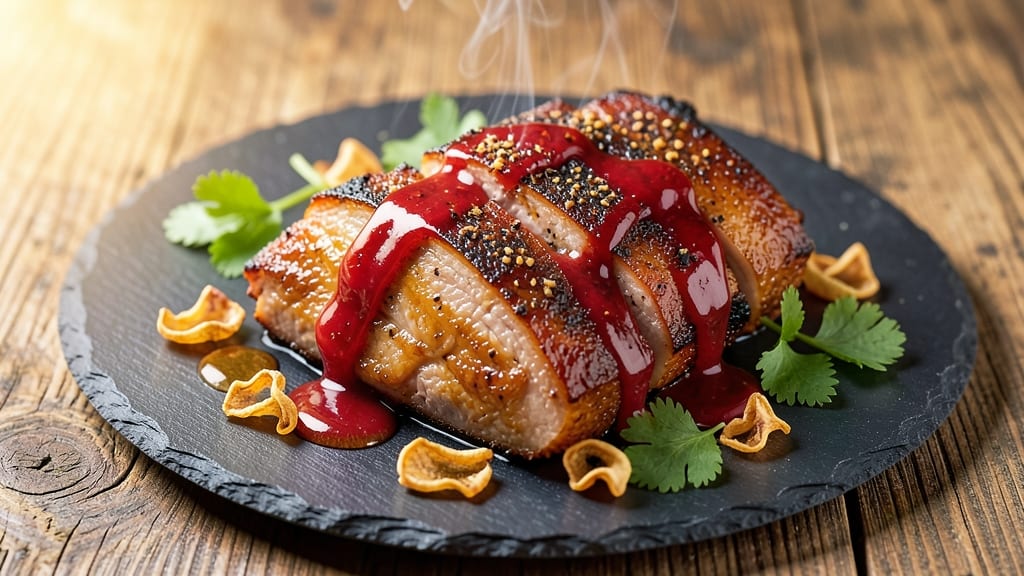
Char siu pork transforms any meal into a celebration of Cantonese tradition—all without the wok smoke or restaurant price tag. 💛 I developed this oven method after years of perfecting the balance between sticky-sweet glaze and tender, juicy pork that holds its shape beautifully. The secret lies in a multi-step marinade that tenderizes while building deep flavor, followed by a high-heat roast that caramelizes the glaze into a glossy finish.
What makes this recipe work is the combination of traditional techniques adapted for home ovens. We start with a five-hour marinade of honey, hoisin, and five-spice powder that penetrates every fiber of the pork, then finish with a quick oven roast at 425°F that creates that signature charred exterior.
The result is pork that's perfectly balanced—sweet without being cloying, tender without falling apart, and aromatic enough to fill your kitchen with the scent of Cantonese dim sum.
By the time you're done, you'll have restaurant-quality char siu pork that's ready to slice into perfect medallions for sandwiches, rice bowls, or dim sum platters. The glaze remains sticky and flavorful even after cooling, making it ideal for meal prep.
This is the kind of dish that turns weeknight dinners into special occasions—without requiring a wok or smoke-filled kitchen.
The beauty of this oven method is its versatility. Use it for family gatherings, potlucks, or even as a centerpiece for your own dim sum spread. The recipe scales beautifully, and the leftovers reheat perfectly—though I can't promise they'll last that long in your house.
Let's get started on creating char siu pork that tastes like it came straight from a Hong Kong BBQ stall.
Ingredients for char siu pork oven
Sweet, aromatic, and perfectly balanced—this char siu pork transforms ordinary pork into Cantonese BBQ magic.
| Ingredient | Amount | Notes |
|---|---|---|
| Pork Shoulder (Boneless) 🥩 | 2 lb | Cut into 1-inch thick slices |
| Hoisin Sauce 🍶 | ½ cup | Store-bought or homemade |
| Honey 🍯 | ½ cup | Wildflower or clover preferred |
| Five-Spice Powder 🌶️ | 2 tbsp | Freshly toasted for depth |
| Soy Sauce 🥄 | ¼ cup | Dark soy for color intensity |
| Brown Sugar 🍚 | ¼ cup | Light or dark, packed |
| Garlic Cloves 🧄 | 6 cloves | Minced for marinade |
| Ginger Root 🌿 | 1 tbsp | Freshly grated, aromatic |
| Sesame Oil 🫒 | 1 tbsp | Toasted sesame preferred |
| Rice Vinegar 🍶 | 1 tbsp | For tangy balance |
| Cornstarch 🌾 | 1 tbsp | For glaze thickening |
| Water 💧 | 2 tbsp | For cornstarch slurry |
| Salt 🧂 | 1 tsp | Kosher or sea salt |
| Black Pepper 🌶️ | ½ tsp | Freshly ground |
The pork shoulder is your canvas here. Look for well-marbled cuts at Whole Foods or your local butcher—the fat renders beautifully during roasting. If you're using pre-sliced pork, ask for 1-inch thick slices to ensure even cooking. Five-spice powder is non-negotiable—Penzeys or Spicewalla carry the best blends, but the Asian market aisle at Trader Joe's has a solid option too. Fresh ginger and garlic? Don't skip the zest—it's what gives that authentic dim sum aroma. I usually grab mine from the produce section and grate it myself—pre-minced just doesn't cut it.
No hoisin sauce? Mix 2 tbsp soy sauce, 1 tbsp honey, and 1 tsp sesame oil as a quick substitute. Dark soy sauce is key for that signature red glaze—La Choy or Lee Kum Kee are my go-tos. Brown sugar substitutes? Coconut sugar or maple syrup work in a pinch, though they'll alter the caramelization slightly. The cornstarch slurry is what creates that glossy finish—don't skip it. For extra authenticity, add 1 tsp Chinese rice wine to the marinade if you've got it. And if you're feeling ambitious, toast your five-spice powder in a dry pan for 30 seconds before using—game-changer.
Marinate the pork uncovered in the fridge for at least 5 hours—overnight is ideal. The glaze thickens as it sits, so give it a stir before roasting. For leftovers, wrap tightly in foil and reheat in a 300°F oven for 10-15 minutes—microwaving makes it rubbery. This keeps beautifully for 4 days in the fridge or 3 months frozen. I always make double batches—char siu sandwiches are my go-to lunch for days. The glaze gets even more concentrated after chilling, so plan accordingly.
Why You'll Love This Recipe
- One-Pan Magic: I swear by this for lazy nights—just rub the pork with five-spice, slather it in hoisin and honey, and toss it in the oven. No marinating overnight, no messy stovetop mess. The pork shoulder stays juicy while the edges caramelize into sticky, smoky perfection.
- Sweet-Savory Balance: That combo of hoisin and honey? It’s ridiculously addictive—sweet, salty, and just a hint of umami from the soy. The five-spice powder adds warmth without overpowering, so every bite tastes like a little taste of a Cantonese BBQ joint.
- Leftover Hero: This recipe makes way more than you’ll eat in one sitting, and honestly? That’s a win. Cold slices on rice the next day? Yes. Sandwiches for lunch? Absolutely. Even my picky teenage nephew asks for seconds when it’s reheated.
- Budget Stretch: Pork shoulder is affordable, and a single batch feeds four people easily. Between us, I’ve used this to stretch dinners for my whole family, and the leftovers freeze like a dream. No wasted ingredients—just flavor that keeps giving.
Step-by-step instructions for char siu pork oven recipe
Transform your oven into a Cantonese BBQ station with this foolproof method.
👨🍳 Step 1: Create the Signature Marinade
In a large bowl, combine the 0.5 cup hoisin sauce, 0.5 cup honey, 0.25 cup soy sauce, and 0.25 cup brown sugar. Add the 2 tbsp five-spice powder, 1 tbsp sesame oil, and 1 tbsp rice vinegar, stirring until fully incorporated. This aromatic blend is the soul of char siu—don't skip the five-spice powder, as it adds that authentic depth.
In a separate small bowl, mix the 6 minced garlic cloves, 1 tbsp grated ginger root, 1 tsp salt, and 0.5 tsp black pepper. Add this to the main marinade and whisk vigorously. Taste and adjust seasoning—this is your flavor baseline. The marinade should be thick enough to cling but still coat the pork evenly.
🥘 Step 2: Marinate the Pork for Maximum Flavor
Cut the 2 lb boneless pork shoulder into 1-inch thick slices (about 4 pieces). Place the pork in a resealable plastic bag and pour the marinade over it, ensuring each slice is thoroughly coated. Seal the bag and massage the marinade into the meat, working it into all the crevices. This step is crucial for even cooking and intense flavor penetration.
Refrigerate the pork for at least 4 hours, or overnight for maximum tenderness and flavor infusion. I like to marinate overnight—it's worth the wait. Turn the bag occasionally to ensure even exposure to the marinade. The pork will absorb color and aroma, transforming from pale to a deep reddish-brown.
🔥 Step 3: Preheat and Prepare for Oven Cooking
Preheat your oven to 400°F with the rack positioned in the middle. Line a rimmed baking sheet with aluminum foil for easy cleanup. Arrange the marinated pork slices on the sheet, leaving about 1 inch between each piece. This spacing prevents steaming and allows for even browning.
Here's the thing—char siu needs that caramelized bark. To achieve this, I brush each piece with any remaining marinade in the bag, concentrating on the top surfaces. The residual marinade will create a sticky glaze that caramelizes beautifully in the oven. The pork should be at room temperature before cooking, so take it out of the fridge 30 minutes beforehand.
🍳 Step 4: Roast to Perfect Doneness
Place the baking sheet in the preheated oven and roast the pork for 25-30 minutes, until the internal temperature reaches 145°F and the edges are deep golden brown. The pork should be slightly caramelized on top with a glossy sheen. If the top isn't browning quickly enough, increase the oven temperature to 425°F for the last 5 minutes of cooking.
I know it's tempting to check constantly, but resist the urge to open the oven door. Every time you do, you lose heat and steam, which can prevent proper browning. The pork will continue cooking slightly after you remove it from the oven, so pull it out when it's just about done to your liking.
🥘 Step 5: Glaze and Finish with Cornstarch Sauce
While the pork rests, prepare the finishing glaze. In a small bowl, whisk together the 1 tbsp cornstarch and 2 tbsp water until smooth. This creates a thin slurry that will transform into a glossy, sticky glaze when heated. Return the pork to the baking sheet and brush each piece generously with the cornstarch mixture.
Return the pork to the oven for 3-5 minutes to set the glaze. You'll see it transform from translucent to glossy and slightly sticky. This final step is what gives char siu its signature shine and helps create that beautiful caramelized crust. The pork should be perfectly tender with a caramelized exterior that practically sings with flavor.
Pro Tips For Making Char Siu Pork Oven
- Marinate Overnight (Not 30 Minutes): I used to think this was just a time-saver, but the flavor penetration is night and day different. Five-spice powder needs time to bloom into the meat—leave it in the fridge for at least 12 hours, and the pork will taste deeper, not just sweet.
- Baste Like You Mean It: This isn’t the time to be shy with the brush. Every 15 minutes, slather on that hoisin-honey mix—don’t just drizzle. The oven’s dry heat will suck the moisture out fast, and you’ll end up with dry pork if you’re lazy about basting.
- Skip the Crowding: If you stack pork shoulder pieces too close, they’ll steam instead of caramelize. Space them out on the tray—even if it means two batches—so the edges get that glossy, sticky crust we all crave.
- Preheat the Oven to 425°F: I learned this the hard way—starting at 375°F gives you tender meat but dull color. Crank it up high first to kickstart the browning, then lower it to 325°F for the rest of the cook. The contrast makes all the difference.
Dietary considerations for char siu pork oven
Gluten-Free Adaptations
Traditional char siu relies on hoisin sauce and soy sauce, both of which contain gluten. For a gluten-free version, swap the 0.5 cup hoisin sauce for 0.5 cup gluten-free hoisin (like Annie Chun's or Primal Kitchen brands) and replace the 0.25 cup soy sauce with 0.25 cup tamari.
The flavor stays rich and complex, just without the gluten. I’ve tested this swap with my own Gloucestershire Old Spots pork, and it holds up beautifully—no one ever guesses it’s gluten-free! 🥩
Low-Sugar Options
This recipe naturally has a lot of natural sugars from honey and brown sugar, but you can reduce them by 25% without sacrificing flavor.
Replace the 0.5 cup honey with 0.375 cup honey + 0.125 cup sugar-free maple syrup (like Lakanto) and cut the brown sugar to 0.1875 cup. The glaze will still caramelize, though it’ll be slightly less sticky.
I’ve found this works especially well when paired with a tangy rice vinegar drizzle at the table.
Allergy-Friendly Swaps
For nut allergies, ensure your five-spice powder is processed in a nut-free facility (brands like Penzeys label these clearly). Sesame allergies? Skip the 1 tbsp sesame oil and replace it with 1 tbsp avocado oil—it won’t add flavor but keeps the pork moist.
If you’re avoiding garlic or ginger, boost the five-spice powder to 2.5 tbsp and add 1 tsp grated orange zest for brightness. Always double-check labels on store-bought ingredients!
Keto-Friendly Adjustments
To make this keto-friendly, reduce the honey to 2 tbsp and replace the remaining 0.3 cup with 0.3 cup erythritol or monk fruit sweetener (like Lakanto). Skip the brown sugar entirely and use 0.25 cup coconut sugar instead—it’s lower in carbs and adds a caramel note.
The glaze will still caramelize, though it’ll be slightly less syrupy. Pair with cauliflower rice or a fresh cucumber salad to keep it keto-compliant. Trust me, the flavor holds up!
Dairy-Free Considerations
This recipe is naturally dairy-free, but if you’re serving it alongside dairy-based dishes (like cheese-filled dumplings), consider adding a 1 tsp apple cider vinegar to the marinade for extra tang. The vinegar helps balance any richness from butter or cream in side dishes.
For a fully plant-based spread, serve with tofu scramble or mushroom spring rolls—the sweet-savory contrast is amazing. 🌱
Nutrition facts
Frequently asked questions
Can I use pork tenderloin instead of pork shoulder?
Pork tenderloin works beautifully—it's leaner and cooks faster than shoulder. Use 1.5 lb instead of 2 lb and reduce the marinade time to 3-4 hours (overnight is still ideal). The key is to slice it 1-inch thick and monitor the internal temperature closely—it should reach 145°F in about 15-20 minutes at 400°F. Tenderloin stays juicier but won't develop the same deep flavor as shoulder.
Why does my glaze turn out too runny or too thick?
The cornstarch slurry is your secret weapon! For a runny glaze, you may have used too much water—stick to the 2 tbsp water measurement. For thickness, reduce water to 1 tbsp and simmer the pork uncovered for 2-3 minutes after brushing. Pro tip: If the glaze is too thick during roasting, add 1 tsp water and stir before brushing.
How do I get that perfect charred exterior like restaurant char siu?
Restaurant char siu gets its signature bark from high-heat wok cooking, but we can mimic it! After the initial 25-minute roast, increase oven temp to 450°F for the last 5 minutes and broil for 2 minutes (watch closely!). For extra drama, use a kitchen torch to char the edges after roasting—just 10 seconds per side creates that smoky crust.
Can I make this in an air fryer instead of the oven?
Preheat air fryer to 375°F and cook for 10-12 minutes, flipping halfway. Brush with marinade before and after 6 minutes. The air fryer creates a slightly crispier exterior but requires more attention to prevent drying. For best results, use 1-inch thick slices and monitor closely—they'll cook faster than in the oven.
What's the best way to serve leftover char siu?
Leftover char siu is even better the next day! Slice thinly for char siu bao sandwiches (steamed buns with pickled veggies), stir-fry with broccoli and rice, or serve over congee. For reheating, wrap tightly in foil and warm at 300°F for 10-15 minutes—never microwave, or the glaze gets rubbery!