
Main Courses
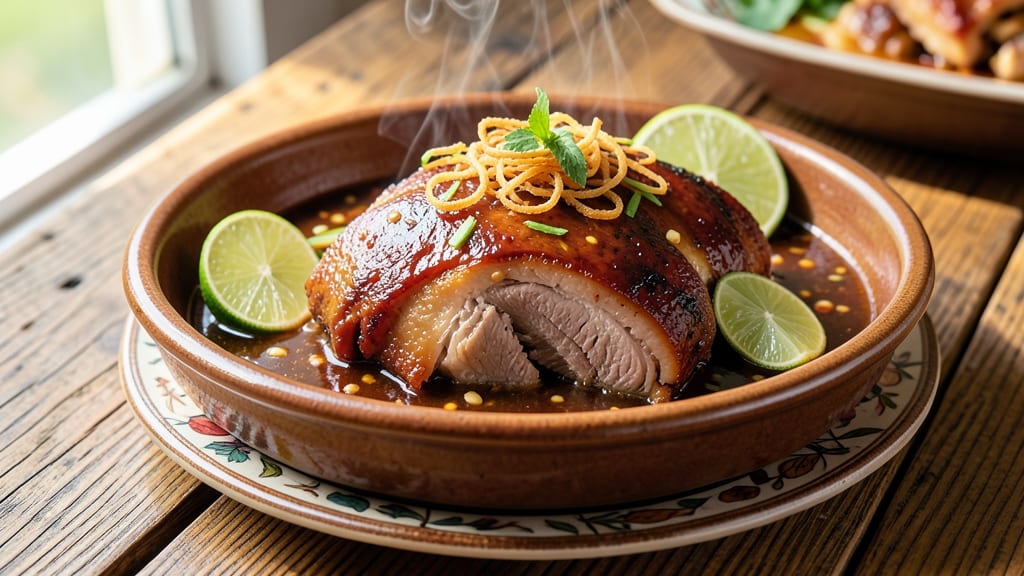
This Chamorro pork adobo recipe brings the bold flavors of Guam’s island cuisine to your kitchen with its signature tangy-sweet profile. 🌟 As someone who’s spent years perfecting pork dishes, I can tell you the secret lies in the long, slow braise that transforms tough cuts into melt-in-your-mouth perfection.
The vinegar and citrus create that signature zing while tenderizing the meat, a technique I’ve adapted from my time working with heritage pork cuts.
The beauty of this dish is its balance—sharp vinegar cuts through the richness of the pork, while citrus brightens every bite. Traditional Chamorro cooking relies on simple ingredients to create complex flavors, and this recipe stays true to that philosophy.
What makes it special is the foolproof method that ensures tender results without requiring special equipment—just time and patience, which is exactly what makes this dish so rewarding.
By the end, you’ll have succulent pork that falls apart at the touch of a fork, bathed in a glossy sauce that’s equal parts tangy and sweet. The aroma alone will transport you to Guam’s coastal villages, where this dish is a staple.
It’s the kind of meal that commands the table, perfect for family gatherings or when you want to impress with authentic island flavors.
Serve it over steamed rice to soak up every last drop of that flavorful sauce, or pair it with sautéed greens for a complete meal. The leftovers? Even better the next day as the flavors deepen. Let’s get cooking—this is pork at its most tender and delicious.
Ingredients for chamorro pork adobo
Simple ingredients that transform into melt-in-your-mouth pork with island-inspired tangy-sweet magic.
| Ingredient | Amount | Notes |
|---|---|---|
| Pork Shoulder 🐷 | 2 lb | Bone-in for best flavor |
| White Vinegar 💧 | 1 cup | Distilled preferred |
| Brown Sugar 🍚 | ½ cup | Packed firmly |
| Fresh Lime Juice 🍋 | ½ cup | Freshly squeezed |
| Garlic Cloves 🧄 | 6 cloves | Minced finely |
| Fresh Ginger 🌿 | 1 tbsp | Grated finely |
| Soy Sauce 🥢 | ¼ cup | Light or all-purpose |
| Olive Oil 🫒 | 2 tbsp | For searing |
| Bay Leaves 🌿 | 2 whole | Dried, standard size |
| Black Peppercorns 🌶️ | 1 tsp | Crushed lightly |
| Salt 🧂 | 1 ½ tsp | Kosher or sea salt |
| Green Onion 🧅 | 2 whole | Sliced for garnish |
The pork shoulder is non-negotiable here—bone-in cuts stay juicier. Ask your butcher for a well-marbled piece if possible. Most grocery stores carry pork shoulder in the meat section, but Costco or local butchers often have better quality. Look for cuts with good fat distribution—this is what makes the meat tender. If you can't find bone-in, boneless works too, but expect slightly less flavor. I've used both and the bone-in version always wins for me. For the vinegar, distilled white vinegar gives the cleanest tang, but apple cider vinegar adds a nice depth if you prefer.
No brown sugar? White sugar works in a pinch, but the molasses notes in brown sugar are key. Fresh lime juice is ideal, but bottled lime juice in a squeeze bottle saves time—just check it's 100% juice with no additives. The ginger can be substituted with 1 tsp ground ginger, though fresh is always better. For soy sauce, Kikkoman or La Choy are reliable brands. If you're avoiding soy, coconut aminos work well. The garlic and ginger are the aromatic backbone—don't skip them. For extra depth, add a 1-inch piece of turmeric root if you have it, though it's not traditional.
This sauce gets better with time—3-4 days in the fridge is perfect. The pork will stay tender for 4-5 days if stored properly. For leftovers, I like to portion it into containers with a bit of the sauce—freezes beautifully for 3 months. The sauce thickens as it cools, so add a splash of water when reheating. For serving, I always sprinkle with fresh green onions right before eating—they add a bright contrast to the rich pork. Make extra sauce—it's amazing on rice or even as a marinade for grilled chicken.
Why You'll Love This Recipe
- Fewer Ingredients, More Bang: Honestly, you’re looking at a pantry raid of five things max—vinegar, sugar, lime, garlic, and pork. That’s it. No fancy blends or hard-to-find spices cluttering your cabinets. The vinegar and sugar do all the heavy lifting while you chop one onion and crush a handful of garlic. (Yes, even on a Tuesday night.)
- Tangy-Sweet Magic: Between us, that brown sugar and vinegar combo is chef’s kiss—caramelized edges, tender meat, and a bright finish from the lime. The pork shoulder stays juicy while the sauce clings like a flavor hug. It’s the kind of dish where your first bite makes you go, “Wait, how is this so good?”
- Leftover Heaven: This recipe actually improves the next day. The flavors meld into something deeper, and the meat falls apart at the touch of a fork. I’ve reheated portions in foil packets for lunch or tossed them into rice for a quick dinner—no one ever complains. (My daughter picks out the crispy bits first, but still asks for seconds.)
- Budget Meal, Big Flavor: Pork shoulder is forgiving and affordable, and you’re not sacrificing taste for savings. A single cut feeds four, and the vinegar and sugar stretch your dollar further than takeout ever could. Plus, the leftovers? Free meals for days. Not the prettiest, but the taste makes up for it every time.
Step-by-step instructions for chamorro pork adobo
This method delivers melt-in-your-mouth pork with a perfect balance of tangy and sweet flavors.
🍳 Step 1: Sear the Pork Shoulder for Deep Flavor
Heat the 2 tablespoons olive oil in a large Dutch oven over medium-high heat until shimmering. Pat the 2 lb pork shoulder completely dry with paper towels—this ensures maximum browning. Working in batches if needed, sear the pork on all sides until deeply golden brown, about 8-10 minutes total.
Here's the thing—don't rush this step. You want that beautiful crust that carries all the caramelized flavors into your braising liquid. If your pan gets too crowded, reduce heat slightly to prevent steaming instead of searing. Once browned, transfer the pork to a plate and set aside.
👨🍳 Step 2: Build the Aromatic Base
In the same Dutch oven, add the 6 cloves minced garlic and 1 tablespoon grated fresh ginger. Cook for 30 seconds until fragrant—you should smell that bright, zesty aroma. Immediately add the 1 cup white vinegar and scrape up all those delicious browned bits from the bottom of the pan.
This deglazing step captures all the flavor you worked so hard to create. Let the vinegar simmer for 2-3 minutes until it reduces by about half and becomes slightly syrupy. That's when you'll know it's ready for the next ingredients.
🥘 Step 3: Combine All Ingredients for Braising
Return the seared pork to the Dutch oven. Add the 0.5 cup packed brown sugar, 0.5 cup fresh lime juice, 0.25 cup soy sauce, 1.5 teaspoons salt, 1 teaspoon crushed black peppercorns, and 2 whole bay leaves. Stir gently to combine, making sure the pork is well-coated with the sauce.
Here's where it gets fun—the sauce should look vibrant and slightly thick. If you notice any dry spots on the pork, use a spoon to spread some of the braising liquid over the top. This ensures even cooking and maximum flavor infusion throughout.
🔥 Step 4: Braise Until Fork-Tender
Bring the mixture to a gentle simmer over medium-low heat. Once simmering, cover the Dutch oven with a tight-fitting lid and transfer to a preheated 300°F oven. Braise for 2.5-3 hours, turning the pork occasionally to ensure even cooking and sauce distribution.
You'll know it's done when a meat thermometer inserted into the thickest part reads 200-205°F and the pork falls apart easily with a fork. The sauce should have thickened into a glossy, sticky glaze that clings beautifully to the meat. If it looks too thin, uncover and simmer for another 10-15 minutes to reduce further.
🍽️ Step 5: Rest and Garnish
Remove the pork from the oven and let it rest in the braising liquid for 15-20 minutes. This resting period allows the juices to redistribute, ensuring each bite is incredibly tender. While it rests, skim off any excess fat that has risen to the surface if you prefer a lighter sauce.
Before serving, garnish with the 2 sliced whole green onions. The contrast of their fresh, bright flavor against the rich, tangy pork is what makes this dish truly special. Serve the pork with its braising sauce spooned over the top and enjoy immediately while still warm.
Pro Tips For Making Chamorro Pork Adobo
- Sear the Pork First: Hit that pork shoulder with a screaming-hot pan before braising—no, it’s not just for looks. The crust locks in flavor and keeps the meat from turning into mush when it hits the vinegar. I used to skip this, and the adobo always tasted like it needed more oomph.
- Simmer Vinegar Slowly: Don’t dump all the white vinegar at once and expect magic. Start with half, let it cook down for 10 minutes, then add the rest. This keeps the pork from getting overwhelmed and turning rubbery—trust me, I’ve seen it happen.
- Toast the Garlic: Smash those garlic cloves flat, then fry them in the same pan you seared the pork until they’re golden and fragrant. This isn’t just flavor insurance—it’s the difference between "meh" and "wow" in the final bite. (Yes, even if you’re impatient like me.)
- Balance the Lime: Chamorro adobo needs that bright kick, but too much lime juice can overpower the brown sugar’s caramel depth. Add it in the last 15 minutes of cooking—just a splash, not a flood—and taste as you go. You can always add more, but you can’t take it out.
Regional styles of this recipe
Guam's Traditional Style
On Guam, this dish is often made with whole cuts of pork, like the shoulder, which are slow-cooked until they're so tender they practically melt. The traditional version uses coconut milk instead of soy sauce, creating a creamier sauce that's equally tangy.
I've seen families prepare this for gatherings, where the pork is served with steamed rice and pickled vegetables to balance the richness. The key is patience—the longer it cooks, the more flavorful it becomes. 🌴
Northern Mariana Islands Twist
In the Northern Mariana Islands, you'll find a variation that incorporates local citrus, like calamansi, which adds a sharper tang to the dish. The marinade often includes chamorro pepper (a local chili) for heat, giving it a unique kick.
I've made this version with 1-2 teaspoons of chamorro pepper—it's a game-changer if you can find it. The sauce is also sometimes thickened with taro root instead of sugar for a slightly earthier flavor. This version is perfect for those who love a bit of spice with their pork.
Modern Adaptations
For a quicker version, I've experimented with pressure cooking—it cuts the braising time down to 90 minutes while still delivering tender results. Just
Cooking Methods
The traditional method is stovetop braising, but I've also perfected it in a slow cooker for hands-off cooking. For the slow cooker, sear the pork first, then add all the ingredients and cook on low for 8 hours or high for 5-6 hours. The oven method I shared earlier is my favorite for weekdays because it's set-it-and-forget-it while still delivering restaurant-quality results. Each method brings out different nuances in the dish, so
Nutrition facts
Frequently asked questions
Can I substitute bone-in pork shoulder with boneless?
Yes, you can use boneless pork shoulder, but expect slightly less flavor and juiciness. Bone-in cuts stay more moist during braising, and the marrow adds depth to the sauce. If using boneless, trim excess fat to prevent greasiness in the sauce. The cooking time remains the same—just monitor for tenderness with a meat thermometer.
How do I make the sauce less tangy?
To reduce the vinegar's sharpness, increase the brown sugar to ¾ cup and add 1 tablespoon honey or 1 teaspoon molasses to the sauce. You can also replace ¼ cup of vinegar with extra lime juice for a sweeter, brighter profile. Taste as you go—adjust gradually to avoid overwhelming the pork's natural flavor.
What's the best way to reheat leftovers?
Reheat gently in the oven at 300°F for 20-30 minutes to maintain tenderness. Avoid microwaving—it dries out the pork. If using the stovetop, simmer covered with a splash of water or broth for 5-10 minutes until warmed through. The sauce thickens when cooled, so add a little water if it's too stiff.
Can I use chicken instead of pork?
While possible, chicken won't have the same rich texture. For a lighter version, use bone-in chicken thighs (2 lbs) and reduce cooking time to 1.5-2 hours. Skip the soy sauce and add 1 teaspoon smoked paprika for depth. The vinegar and citrus will still shine, but the dish loses its signature hearty quality.
Why did my pork turn out dry?
Overcooking is the most common cause—pork is done at 200-205°F, not higher. If your oven runs hot, reduce the temperature to 275°F. Also, avoid lifting the lid frequently during braising, as steam escape causes moisture loss. For extra insurance, baste the pork with its juices every 30 minutes.