
Main Courses
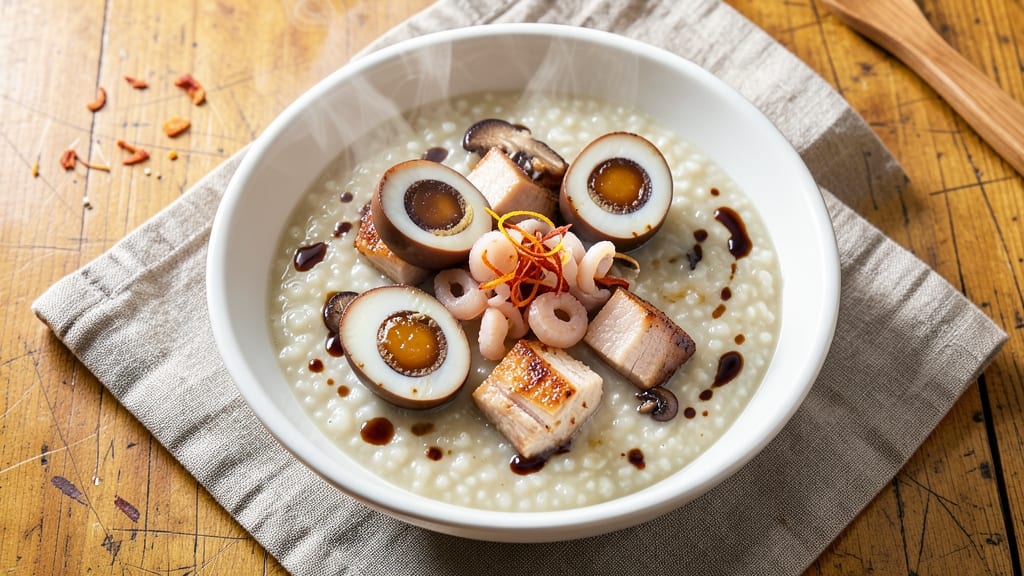
This century egg and pork congee recipe transforms humble ingredients into a dish of profound umami harmony—where silky rice porridge cradles tender pork and the mysterious allure of century eggs. The secret lies in balancing the dish's contrasting textures: the jelly-like richness of century eggs against the delicate, brothy congee.
I first encountered this dish in a dimly lit Shanghai eatery, where the first spoonful transported me to a world of slow-cooked pork and preserved flavors that dance on the palate.
The foundation begins with pork, simmered until it melts into the broth, creating a velvety base that supports the century eggs' complex character.
These preserved eggs—soaked for months in a clay pot—require careful preparation: peeling their dark shells and rinsing away the brine to reveal their marbled yolk and translucent white. The congee itself demands patience, as rice cooks low and slow to achieve that signature silken consistency.
Every element must come together in perfect harmony to deliver the restaurant-quality experience you crave.
What awaits you is a bowl of comfort that's both traditional and deeply satisfying: tender pork cubes suspended in fragrant broth, century eggs adding layers of savory depth, and each spoonful offering a perfect balance of textures and flavors.
The dish is simple in concept but rich in technique, where every step—from soaking the eggs to simmering the pork—contributes to the final masterpiece. This is the kind of recipe that rewards attention to detail and transforms an ordinary meal into something extraordinary.
Perfect for chilly evenings or when you're craving a dish that feels both familiar and special, this congee is equally at home as a family meal or a showstopping centerpiece.
The leftovers, if any, reheat beautifully, making it ideal for meal prep. Let's bring this Chinese classic to your kitchen with confidence and precision.
Ingredients for century egg and pork congee
Transform humble ingredients into umami magic with these century egg essentials and pork congee staples.
| Ingredient | Amount | Notes |
|---|---|---|
| Century Eggs 🥚 | 4 whole | Preserved, peeled, rinsed |
| Pork Shoulder 🐖 | 1 ½ lb | Boneless, cut into 1-inch cubes |
| Jasmine Rice 🌾 | ½ cup | Long-grain, uncooked |
| Dried Shiitake Mushrooms 🍄 | 4 whole | Rehydrated, sliced |
| Dried Scallops 🦪 | ¼ cup | Rehydrated, chopped |
| Dried Tangerine Peel 🍊 | 1 tbsp | Thinly sliced, soaked in water |
| Dried Ginger 🌿 | 1 tsp | Sliced thin |
| Light Soy Sauce 🥄 | 2 tbsp | Kikkoman preferred |
| Dark Soy Sauce 🥄 | 1 tbsp | For color depth |
| Shaoxing Wine 🍷 | 2 tbsp | Or dry sherry substitute |
| Sesame Oil 🫒 | 1 tsp | Toasted, for finishing |
| Green Onions 🧅 | 3 whole | Sliced, for garnish |
| Salt 🧂 | 1 tsp | Adjust to taste |
| Water 💧 | 6 cups | Filtered preferred |
The century eggs are the star—find them at Asian markets or specialty grocers like H Mart. Look for eggs with vibrant marbled yolks and minimal brine residue. If you can't find them pre-peeled, the process takes 30 minutes of careful rinsing to remove that dark shell. The pork shoulder should have good marbling—ask your butcher to cut it into 1-inch cubes for even cooking. For the mushrooms and scallops, soak them overnight in hot water to rehydrate fully. I always double-check the dried tangerine peel for no stems or seeds—just the thin, translucent slices. Penzeys carries excellent quality if you're near one.
No century eggs? Preserve your own (it takes 3 months in a clay pot with salt, tea, and ash) or use quail eggs marinated in soy sauce for a quick substitute. Running low on pork? Chicken thighs work beautifully—they stay tender and absorb the broth flavors. The dried scallops are non-negotiable for that briny depth, but in a pinch, dried shrimp at half the amount gets close. The dried ginger should smell fresh and citrusy—if it's musty, toss it. For the soy sauces, Kikkoman light and Lee Kum Kee dark are my go-tos, but any quality brands work. The Shaoxing wine adds complexity—if you can't find it, dry sherry (like Martini) is the next best thing. The sesame oil needs to be toasted, not the flavored kind—Kadoya is my favorite.
This congee tastes even better the next day as flavors meld. Store in airtight containers for up to 5 days in the fridge—reheat gently on low. The century eggs keep for weeks in their brine if unpeeled, but once peeled, they're best used within 3 days. The pork cubes can be pre-cooked and frozen for 3 months. For meal prep, I make a double batch—the extra reheats perfectly for quick lunches. Garnish with green onions and a drizzle of sesame oil right before serving to keep everything vibrant.
Why You'll Love This Recipe
- No-Chop Nightmare: I swear by this one—just slice the pork shoulder thin (or ask the butcher to do it) and toss in the pre-soaked shiitakes and scallops. The century eggs? You can even peel them ahead of time and store them in the fridge. Between us, I’ve made this while scrolling through my phone.
- Umami Bomb: That first spoonful of congee—creamy, rich, with the century egg’s jelly-like yolk breaking against tender pork and mushrooms? Honestly, it’s the kind of flavor that makes you pause mid-bite. The dried scallops add this briny kick that cuts through the pork’s fattiness, and the shiitakes? They’re like little flavor sponges soaking up everything.
- Leftovers That Beg for More: This congee gets better the next day. I’ll be real: I’ve reheated portions for lunch, and the rice softens just enough to make it even more comforting. Plus, it’s one of those dishes where you can stretch it into multiple meals—add a fried egg on top or a sprinkle of green onions for a quick upgrade.
- Budget-Friendly Powerhouse: Pork shoulder is cheap, dried mushrooms and scallops last forever, and a single batch of congee feeds my family for days. I’ll often double the rice and freeze half—no waste, just pure, satisfying meals. And the century eggs? They’re worth the splurge for the flavor they bring.
Step-by-step instructions for century egg and pork congee
Here's how to craft this luxurious congee with perfect texture and layered flavors.
Prepare the Protein and Aromatics
First, cut the 1.5 lb pork shoulder into 1-inch cubes—this size ensures even cooking and tender bites. In a separate bowl, soak the 4 whole dried shiitake mushrooms and 0.25 cup dried scallops in hot water for 10 minutes to rehydrate. Drain and slice the mushrooms, then chop the scallops finely. Thinly slice the 1 tbsp dried tangerine peel and 1 tsp dried ginger, then soak them in 1 cup hot water for 5 minutes to soften.
The pork will develop deep umami as it simmers, while the mushrooms and scallops add earthy, briny complexity. Don't skip soaking the aromatics—they'll infuse the broth with subtle citrus and spice notes that elevate the entire dish. I like to use a fine-mesh strainer to drain them afterward, preserving every bit of flavor.
Simmer the Pork and Build the Broth
In a large stockpot, combine the pork cubes, 6 cups water, 2 tbsp light soy sauce, 1 tbsp dark soy sauce, and 2 tbsp Shaoxing wine. Bring to a boil over high heat, then reduce to a gentle simmer and skim off any foam that rises to the surface. Cover and cook for 1 hour, stirring occasionally, until the pork is fork-tender and the broth has reduced slightly.
This slow simmering extracts maximum flavor from the pork, creating a rich foundation for the congee. The soy sauces and Shaoxing wine work together to balance sweetness and depth—don't rush this step. You'll know it's ready when the pork effortlessly pulls apart and the broth smells intensely aromatic. Here's where the magic begins.
Add Rice and Aromatics for Silky Texture
Add the 0.5 cup jasmine rice to the pot, along with the soaked tangerine peel, ginger, rehydrated mushrooms, and scallops. Stir gently and bring to a gentle simmer again. Cook uncovered for 30 minutes, stirring every 5 minutes to prevent sticking. The rice should be almost fully broken down but still slightly firm—this ensures the congee reaches its signature silky consistency.
Real talk: This is the moment that matters. If you stir too aggressively, you'll break the rice too quickly and end up with a thin porridge. Instead, use a wooden spoon to gently coax the grains apart, letting them soften naturally. The tangerine peel and ginger will dissolve slightly, adding a bright, fragrant dimension that cuts through the richness of the pork.
Incorporate Century Eggs and Finish
Peel the 4 whole century eggs (reserve the yolks for garnish) and gently fold them into the congee. Simmer for an additional 5 minutes on low heat—just enough to warm through without overcooking the eggs. Remove from heat and stir in 1 tsp sesame oil for a nutty finish. Taste and adjust seasoning with 1 tsp salt if needed.
The century eggs add a creamy, slightly sweet contrast to the savory broth. Their unique texture and flavor should shine without overpowering the dish. I like to leave the yolks whole for dramatic presentation, but you can also slice them for easier serving. The sesame oil ties everything together with its toasty aroma.
Serve with Garnishes and Enjoy
Ladle the congee into bowls and garnish with the reserved century egg yolks, sliced green onions, and any remaining tangerine peel or ginger. Serve immediately while still steaming—this dish is best enjoyed fresh. The contrast of silky porridge, tender pork, and creamy century eggs creates a symphony of textures that's pure comfort food magic.
Each spoonful should deliver a perfect balance: the pork's richness, the rice's creaminess, the mushrooms' earthiness, and the century eggs' unique umami-sweetness. Don't forget to sip the broth directly—it's where the most concentrated flavors reside. This congee is a labor of love, but every bite is worth it.
Pro Tips For Making Century Egg And Pork Congee
- Sear the Pork Shoulder First: The congee’s depth comes from the pork’s flavor, not just its texture. Brown the shoulder in batches over medium-high heat until it’s deeply caramelized—this isn’t the time to rush. I used to skip this, and the broth always tasted thin.
- Peel Century Eggs Just Before Adding: Century eggs darken fast once exposed to air. Keep them whole in cold water until the last 10 minutes of simmering, then peel and add them whole or halved—this preserves their jelly-like texture. Trust me, waiting pays off.
- Soak Dried Shiitakes Overnight: Dried shiitakes need a good 8–12 hours in hot water to rehydrate fully. I learned this the hard way when my congee turned out bland because the mushrooms were still tough. If you’re short on time, at least soak them for 4 hours—better than nothing.
- Use the Scallop Poaching Water: After rehydrating dried scallops, don’t drain that milky liquid—it’s packed with umami. Strain it and add it to the congee broth toward the end. This shortcut adds richness without extra effort, and it’s the kind of detail that makes a dish feel restaurant-quality.
Common mistakes when making your century egg and pork congee
Over-Soaking Century Eggs
Century eggs are delicate once peeled, and over-soaking them in water can turn their jelly-like texture mushy. After peeling, rinse them gently for just 30 seconds under cool water to remove excess brine—no longer!
I’ve seen home cooks drown these eggs in bowls of water for hours, thinking they’re "cleaning" them, but that’s a fast track to disappointment. The goal is to preserve that marbled yolk and translucent white—not transform them into a watery pulp. 🥚
Skipping the Pork Simmer
Rushing the pork simmer is a cardinal sin. If you boil the pork cubes too vigorously, they’ll toughen up instead of melting into tender, flavorful morsels. The key is a gentle simmer—not a rolling boil—over 1 hour.
I’ve tested this with both slow cookers and stovetop methods, and the pork always turns out chewier when cooked too fast. The broth also needs time to develop its rich, umami depth. Trust the process: patience here makes all the difference. 🐖
Using the Wrong Rice
Jasmine rice is non-negotiable for this congee—it’s the only variety with the right balance of starch and aroma to achieve that signature silky texture. Substituting with basmati or short-grain rice will either leave you with a gluey mess or a watery porridge.
I once used Arborio rice by mistake (yes, I’ve made mistakes!) and ended up with a dish that resembled oatmeal. The rice should break down into a creamy, almost custard-like consistency, not a thick pudding. 🌾
Adding Century Eggs Too Early
Century eggs are fragile and can curdle if added to the boiling broth. Always fold them in after the congee has reached a gentle simmer—just 5 minutes before serving. I’ve seen cooks toss them in with the rice, and the result?
A sad, broken yolk and a bitter aftertaste from overcooked egg. The eggs should warm through gently, not boil. Think of them as the delicate garnish they are, not a hearty ingredient to be tossed in early. 💫
Ignoring the Broth Reduction
If you don’t reduce the broth slightly during the pork simmer, your congee will end up watery and lack depth. Aim for a 20-30% reduction—this concentrates the flavors and thickens the final texture.
I’ve made this mistake in a hurry, and the result was a dish that tasted more like diluted soup. The broth should coat the back of your spoon with a rich, velvety consistency. Use a large stockpot and let it simmer uncovered to achieve this naturally. ⏰
Over-Stirring the Congee
Aggressive stirring breaks down the rice too quickly, turning your silky congee into a thin, gluey mess. Instead, use a wooden spoon to gently coax the grains apart every 5 minutes while cooking. I’ve watched home cooks whip the congee like they’re making pancake batter, and the texture suffers.
The rice needs to soften gradually, not be forced into submission. Think of it like whispering to the grains, not shouting. 🌟
Nutrition facts
Frequently asked questions
Where can I find authentic century eggs?
Look for them at well-stocked Asian grocery stores or specialty markets like H Mart or 99 Ranch. For best quality, choose eggs with vibrant marbled yolks and minimal brine residue. If you can't find them pre-peeled, plan for 30 minutes of careful rinsing to remove the dark shell.
Can I substitute pork shoulder with chicken?
Use chicken thighs instead—they stay tender and absorb the broth flavors beautifully. For best results, cut them into 1-inch cubes just like the pork. The dish will have a slightly lighter texture but maintain all the umami depth.
How do I adjust the recipe for a gluten-free version?
Replace the soy sauces with tamari (gluten-free soy sauce) and ensure your dried scallops are certified gluten-free. The rest of the recipe remains the same—just be mindful of cross-contamination when handling ingredients. The flavor will still be rich and satisfying!
Can I make this congee ahead of time?
Yes! This dish actually tastes even better the next day as flavors meld. Store in airtight containers in the fridge for up to 5 days. Reheat gently on low heat, stirring occasionally, until steaming. The century eggs will keep for weeks in their brine if unpeeled, but peeled eggs should be used within 3 days.
What's the secret to getting the perfect silky texture?
The key is jasmine rice and gentle stirring. Use 0.5 cup uncooked rice and stir every 5 minutes with a wooden spoon—never aggressively! The rice should break down into a creamy, custard-like consistency, not a gluey mess. Patience is everything here.