
Sauces & Condiments
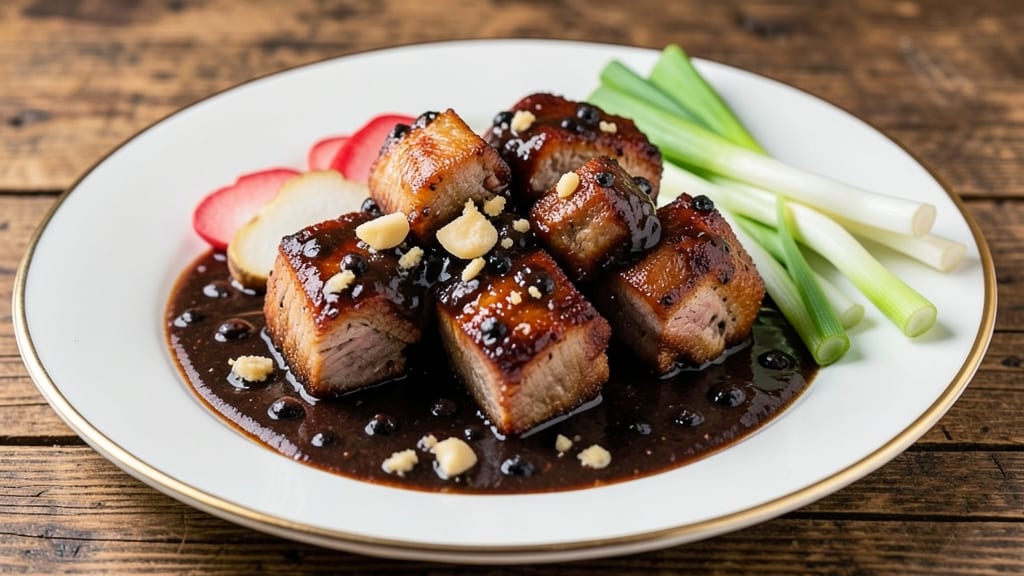
This black bean sauce pork recipe delivers deep umami flavor in a single pot, transforming simple ingredients into a restaurant-worthy dish. I developed it after years of perfecting pork glazes, balancing sweet and savory notes without overpowering the meat.
The secret lies in simmering black beans with soy, garlic, and ginger until they break down into a velvety sauce that clings perfectly to tender pork.
What makes this recipe stand out is the one-pot technique that minimizes cleanup while maximizing flavor development. You'll start with seared pork shoulder, then build layers of complexity by reducing the black bean sauce until it's glossy and concentrated.
The result? Juicy, caramelized pork with a glossy glaze that's both sweet and subtly funky from the fermented black beans.
By the time you're done, you'll have a dish that's rich enough for dinner parties but simple enough for weeknights. The pork falls apart with each bite, coated in that irresistible sauce that balances earthy black beans with bright ginger and aromatic garlic.
Serve with steamed jasmine rice to soak up every last drop of that silky glaze.
This method works equally well for pork tenderloin or shoulder, making it versatile for different occasions. The sauce keeps well in the fridge, so you can make extra for stir-fries or marinades. Let's get cooking with this umami-packed one-pot wonder that'll become your new go-to pork recipe.
Ingredients for black bean sauce pork
Simple ingredients that pack serious umami punch in one pot.
| Ingredient | Amount | Notes |
|---|---|---|
| Pork Shoulder 🥩 | 1 ½ lb | Boneless, cut into 1.5-inch cubes |
| Black Beans 🌱 | 1 can | Drained, rinsed, fermented preferred |
| Light Soy Sauce 🍶 | ½ cup | Kikkoman recommended for balance |
| Dark Soy Sauce 🍶 | 1 tbsp | For deep umami color |
| Garlic Cloves 🧄 | 6 cloves | Minced, not pre-minced jar |
| Fresh Ginger 🌿 | 2 tbsp | Finely grated, about 1-inch piece |
| Brown Sugar 🍯 | ¼ cup | Packed, light variety |
| Sesame Oil 🫒 | 1 tbsp | Toasted, not flavored |
| Rice Vinegar 🍶 | 1 tbsp | Seasoned preferred |
| Cornstarch 🌾 | 1 tbsp | For sauce thickening |
| Vegetable Oil 🫒 | 2 tbsp | High smoke point |
| Green Onions 🧅 | 3 whole | Sliced, for garnish |
| Salt 🧂 | 1 tsp | Kosher or sea salt |
| Black Pepper 🌶️ | ½ tsp | Freshly ground |
The pork shoulder is your flavor anchor here—bone-in, skin-on if you can find it, but boneless works fine. Costco or butcher counters usually have the best cuts for this recipe. Look for good marbling; that's where the flavor hides. If you're using tenderloin instead, cut it into 1-inch chunks so it cooks evenly. The black beans should be fermented (like those from Mexico City or La Cocina brands)—they're funkier and add depth. Regular canned beans work, but you'll miss that umami complexity. For the ginger, young, plump rhizomes grate best; skip the powdered stuff unless you're in a pinch.
No light soy sauce? Coconut aminos or tamari work in a bind, though the flavor will be slightly different. Swapping dark soy for extra light soy? Use half the amount—it's more concentrated. Fresh ginger missing? Powdered at half the quantity, but toast it first in a dry pan for 30 seconds to wake up the flavors. The brown sugar can be swapped for honey or maple syrup, but the caramelization won't be as rich. Sesame oil giving you sticker shock? Toasted sesame seeds ground in a mortar make a decent substitute—just add 1 tsp more. The cornstarch is non-negotiable for that silky glaze; arrowroot works too if you're gluten-free.
Pork keeps best in the fridge for 3 days before cooking—it needs time to develop flavor. The sauce doubles as a marinade, so make extra and store it in a jar for up to 1 week. Freeze portions in ice cube trays for stir-fry boosts later. If you're prepping ahead, par-cook the pork and refrigerate it in the sauce—finish cooking when ready. Garnish with green onions right before serving, as they wilt fast. This dish tastes even better the next day as flavors meld; portion leftovers into containers for easy lunches.
Why You'll Love This Recipe
- One-Pan Magic: I swear by this recipe because it’s actually one pan—no chopping boards, no extra dishes. The pork shoulder gets tender right in the same pot where the black beans caramelize, and the soy sauces reduce into a glossy, sticky sauce that coats everything. Honestly, I’ve made it on a Tuesday night with takeout containers still sitting on the counter.
- Umami Bomb: That combo of light and dark soy sauce? It’s like a flavor explosion. The dark soy gives it that deep, molasses-like richness, while the light keeps it bright and savory. Add the garlic cloves roasted right in the pan, and suddenly you’ve got a dish that tastes like it simmered for hours—even if it didn’t.
- Leftover Goldmine: Between us, this recipe begs to be made in bulk. The pork stays juicy for days, and the sauce only gets better as it sits, deepening in flavor. I freeze portions for lazy nights or pack it in lunches—my coworkers still ask where I get my "fancy" takeout.
- Budget Stretch: Pork shoulder is affordable, black beans are a pantry staple, and a few cloves of garlic won’t break the bank. Yet it feels like a restaurant-quality meal. I’ll be real: this is the kind of dish that makes me feel like I’m feeding a crowd without emptying my wallet. (Yes, even on a Tuesday night.)
Step-by-step instructions for black bean sauce pork
This one-pot method delivers tender pork and rich sauce with minimal cleanup—just follow the sequence.
Sear the Pork Shoulder for Maximum Flavor
Heat the 2 tablespoons vegetable oil in a large, heavy-bottomed pot or Dutch oven over medium-high heat until shimmering. Add the 1.5 lb pork shoulder cut into 1.5-inch cubes, working in batches if needed to avoid crowding. Sear each piece for 2-3 minutes per side until deep golden brown forms on all surfaces.
This step is critical—it develops the Maillard reaction that creates deep flavor. Don't rush it, but don't walk away either. The pork should release easily when ready to flip. Once all pieces are seared, remove them from the pot and set aside on a plate.
Build the Aromatic Base with Garlic and Ginger
In the same pot, reduce heat to medium and add the 6 cloves minced garlic and 2 tablespoons finely grated fresh ginger. Cook for 1-2 minutes until the garlic becomes light golden and fragrant—this prevents bitterness. Be careful not to let it burn, as garlic turns bitter quickly.
Here's the thing—adding these aromatics after searing ensures they infuse into the rendered pork fat rather than just burning. The ginger should sizzle gently, releasing its warm, citrusy aroma that will permeate the entire dish.
Combine Sauce Ingredients and Simmer
Return the seared pork to the pot. Add 0.5 cup light soy sauce, 1 tablespoon dark soy sauce, 0.25 cup packed brown sugar, 1 tablespoon rice vinegar, and 1 teaspoon salt. Stir to combine, then pour in 1 cup water (enough to just cover the bottom of the pot). Bring to a gentle boil over medium-high heat, then reduce to low heat to maintain a barely simmering state.
Simmer uncovered for 45 minutes, stirring occasionally. This slow cook allows the pork to tenderize while the sauce begins to develop its signature depth. You'll notice the pork gradually releases its juices into the sauce, creating a rich, glossy liquid.
Thicken the Sauce with Black Beans and Cornstarch
Add the 1 can drained and rinsed black beans to the pot and stir gently to distribute them among the pork. In a small bowl, whisk together 1 tablespoon cornstarch with 1 tablespoon cold water until smooth. Slowly pour this mixture into the pot while stirring constantly.
The black beans will break down slightly as they cook, creating a velvety texture in the sauce. The cornstarch slurry will thicken the sauce to a silky consistency—this is where the magic happens. Keep stirring for another 5-7 minutes until the sauce coats the back of a spoon and the pork is fork-tender (a knife should slide in easily).
Finish with Sesame Oil and Garnish
Remove the pot from heat and stir in 1 tablespoon sesame oil and 0.5 teaspoon black pepper. The sesame oil adds a nutty aroma and rich depth of flavor. Taste and adjust seasoning if needed—you might need a touch more soy sauce for saltiness or a bit of sugar to balance acidity.
Ladle the black bean sauce pork into serving bowls, garnishing each portion with sliced green onions. The contrast of fresh green onions against the dark, glossy sauce adds both visual appeal and a bright, crisp finish. Serve immediately over steamed rice for the full experience.
Pro Tips For Making Black Bean Sauce Pork
- CRISP THE BEANS FIRST: Toss your black beans in a hot, dry pan for 2-3 minutes before adding them to the pork—just until they’re lightly toasted and smell earthy. I learned this the hard way when my sauce tasted flat; the toasted beans add depth that soaking or raw beans can’t match.
- SALAMI-SLICE THE GARLIC: Cut your garlic cloves into thin slivers (not minced) and fry them in the pork fat until they’re golden, not just fragrant. After burning three batches, I finally figured out that whole cloves or fine minces burn before they flavor—slivers strike the perfect balance.
- LOW AND SLOW FOR SOY: Simmer the sauce on actual low heat after adding soy sauces—no rushing. Dark soy sauce burns faster than you’d think, and light soy loses its brightness when it boils hard. I was skeptical until I tried it: the colors stay rich, and the flavors meld instead of clashing.
- PORK SHOULDER REST IS NON-NEGOTIABLE: Let the pork shoulder rest under foil for 10 minutes after cooking, even if you’re starving. Cutting into it too soon turns tender meat into dry, shredded sawdust—trust me, your future self will thank you (yes, even if you’re impatient like me).
Essential equipment for perfect results
Heavy-Bottomed Pot
I swear by my Le Creuset Dutch oven for this recipe—it's heavy enough to distribute heat evenly while searing pork and simmering the sauce. If you don't have one, a 5-6 quart stainless steel pot with thick walls works just as well.
The key is preventing hot spots that can burn your sauce or cook pork unevenly. Avoid thin, flimsy pots—they'll warp under high heat and ruin your sear. 🔥
Cast Iron Skillet
For a more rustic approach, I use my Lodge cast iron skillet when making smaller batches. The cast iron retains heat beautifully and creates that perfect crust on the pork. Just be sure to preheat it thoroughly—cast iron takes longer to heat up than stainless steel.
Season your skillet well before use, and never soak it after cooking to preserve that natural non-stick surface.
Immersion Circulator
If you're making this for a crowd, consider using an Anova sous vide immersion circulator for the simmering phase. Set it to 185°F for 2 hours before finishing with the black bean sauce. This method ensures perfectly tender pork every time.
I use mine when I'm prepping for big gatherings—it's a game-changer for consistent results. The sauce can be added and thickened separately after the sous vide process.
Measuring Spoons
Precision matters with this recipe, especially when balancing flavors. My OXO Good Grips measuring spoons are my go-to—they're durable and have clear markings for accurate measurements. For the cornstarch slurry, use 1 tablespoon cornstarch mixed with 1 tablespoon cold water—this is non-negotiable for that perfect silky texture.
A cheap set of spoons can lead to over-thickening or a grainy sauce.
Chef's Knife
You'll need a sharp 8-inch chef's knife for mincing garlic and ginger. I recommend the Shun Premier—it stays sharp longer than most knives I've used. For the pork, a boning knife works best if you're trimming fat, but a chef's knife will handle the cubing just fine.
Keep your knives sharp; dull blades make prep more dangerous and less precise. Honestly, this is where most home cooks mess up—don't skip the sharpening step!
Tongs and Slotted Spoon
Invest in a good pair of heat-resistant silicone tongs and a stainless steel slotted spoon—they're essential for flipping pork and removing it from the pot without losing sauce. My OXO Good Grips silicone tongs have lasted through years of cooking.
The slotted spoon helps you lift pork pieces while keeping them submerged in the sauce during simmering. These tools make the difference between a messy, stressful cooking experience and a smooth, controlled process. 💪
Nutrition facts
Frequently asked questions
Can I use pork tenderloin instead of pork shoulder?
Yes, but you'll need to adjust the cooking time. Pork tenderloin is more delicate, so cut it into 1-inch chunks and reduce the simmering time to 20-25 minutes instead of 45. It cooks faster because it has less connective tissue. The black bean sauce will still cling beautifully to the tender meat. For extra tenderness, sear the tenderloin first, then finish it in the oven at 375°F for 10 minutes after adding the sauce.
What makes fermented black beans better than regular canned beans?
Fermented black beans add a funky depth that regular beans can't match. The fermentation process creates natural umami compounds that enhance the sauce's complexity. If you can't find fermented beans, soak regular black beans overnight and rinse them well before using. For extra flavor, add 1 teaspoon fish sauce or ½ teaspoon MSG to the sauce to mimic the fermented bean's umami punch.
Can I make this recipe in a slow cooker?
Brown the pork first in a skillet, then transfer everything (including the seared pork) to your slow cooker. Cook on LOW for 6-7 hours or HIGH for 3-4 hours. The slow cooking enhances the pork's tenderness and lets the sauce develop even more depth. Just skip the cornstarch slurry—stir in 1 tablespoon arrowroot powder during the last 30 minutes to thicken the sauce. The flavor will be even richer!
How do I fix a sauce that's too thin or too thick?
For a thin sauce, mix 1 teaspoon cornstarch with 1 tablespoon cold water and stir it in while the pot is off heat. For a thick sauce that's too stiff, thin it with 1-2 tablespoons hot water while stirring constantly. The key is to adjust gradually—you can always add more, but you can't take it out! If the sauce separates, whisk in 1 tablespoon neutral oil (like vegetable or canola) to emulsify it back together.
What are the best sides to serve with this dish?
Steamed jasmine rice is classic, but you could also try forbidden black rice for a striking color contrast. For a lighter option, serve with stir-fried bok choy or quick-pickled cucumbers. In my restaurant, we often pair it with scallion pancakes for a crispy, savory bite. The key is balancing textures—something crunchy or fresh cuts through the rich, glossy sauce beautifully.