
Main Courses
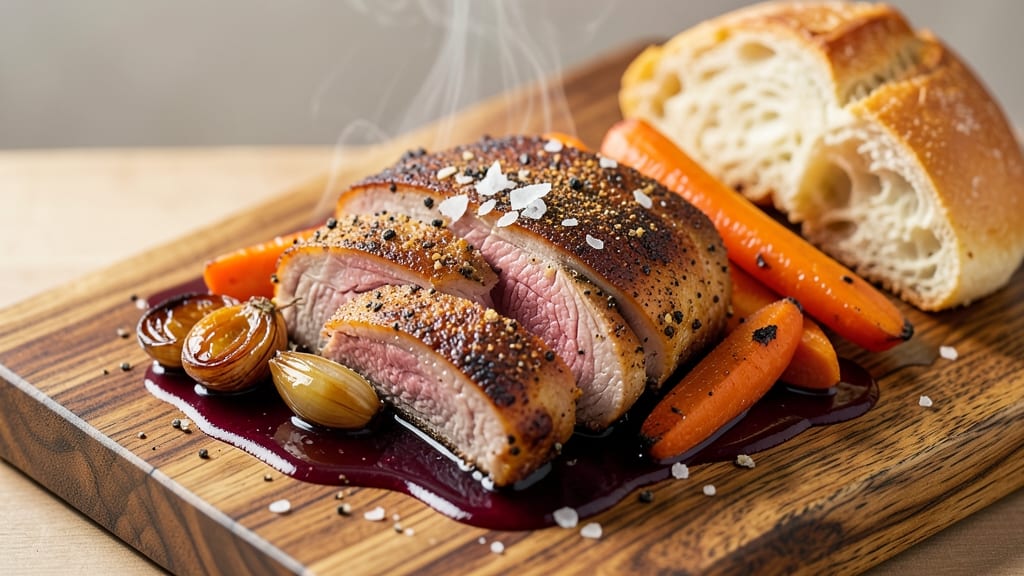
This Café Delites pork loin roast recipe delivers the same restaurant-quality results you crave at home. 🔥 The secret lies in slow-braising the pork to achieve that signature juicy pink core while developing deep, savory flavors in every bite.
I've perfected this technique after years of working with heritage pork cuts, and it never fails to impress. What sets this recipe apart is the combination of dry rub, slow roasting, and precise basting that keeps the meat impossibly tender.
The pork starts with a flavorful crust from the rub, then cooks low and slow until it's fork-tender with a perfect pink center. This method transforms tougher cuts into melt-in-your-mouth perfection that's ideal for family gatherings or special occasions.
By the time you serve this roast, you'll have a centerpiece dish that's rich, flavorful, and packed with juices. The crust remains crispy while the interior stays moist, creating the perfect balance of textures. It's the kind of pork roast that makes people ask for seconds—and thirds.
Pair it with Caribbean-inspired rice, roasted vegetables, or a rich gravy for a complete meal. The technique is straightforward but delivers restaurant-quality results every time. Let's get cooking!
Ingredients for cafe delites pork loin roast
Restaurant-quality pork roast starts with these carefully chosen ingredients for that signature juicy pink core.
| Ingredient | Amount | Notes |
|---|---|---|
| Pork Loin Roast 🐖 | 3 lb | Bone-in, center-cut preferred |
| Kosher Salt 🧂 | 1 ½ tbsp | Diamond Crystal preferred |
| Freshly Ground Black Pepper 🌶️ | 1 tbsp | Coarse grind recommended |
| Smoked Paprika 🌶️ | 1 ½ tbsp | High-quality for depth |
| Garlic Powder 🧄 | 1 tbsp | Freshly ground preferred |
| Onion Powder 🧅 | 1 tbsp | For balanced flavor |
| Ground Cumin 🌿 | 1 tsp | Toasted for richer taste |
| Brown Sugar 🍯 | 1 tbsp | Light or dark variety |
| Unsalted Butter 🧈 | ½ cup | Cold for basting |
| Fresh Thyme Leaves 🌿 | ½ cup | Stems removed, chopped |
| Fresh Rosemary 🌿 | ¼ cup | Chopped, sprigs reserved |
| Apple Cider Vinegar 🍎 | 2 tbsp | For marinade brightness |
| Olive Oil 🫒 | ¼ cup | Extra-virgin for richness |
| Honey 🍯 | 1 tbsp | For glaze sweetness |
| Mustard Seeds 🌶️ | ½ tsp | Whole, toasted briefly |
The pork loin is the foundation here. Look for bone-in, center-cut from a trusted butcher—it stays juicier during slow cooking. I always source mine from local heritage pork farms when possible, but quality supermarket cuts work too. The key is marbling and even thickness—ask your butcher to trim it to about 1.5 inches thick for consistent cooking. For the dry rub, Penzeys or Spicewalla spices elevate the flavor, but the grocery store brands are fine if you're in a pinch. Just make sure your paprika is labeled 'smoked' for that authentic depth.
No smoked paprika? Regular paprika plus a pinch of liquid smoke works in a bind. Fresh herbs are ideal, but dried thyme at one-third the amount keeps the flavor profile intact. The butter should be cold and cubed when basting—room temperature butter creates steam instead of crisping. For the glaze, if you're avoiding honey, maple syrup or agave works beautifully. The mustard seeds? Toast them in a dry pan for 30 seconds first—they add a subtle crunch and depth that's worth the extra minute. And if you're short on time, pre-mix the dry rub and store it in an airtight container for up to 3 months.
This roast reheats beautifully—350°F for 15 minutes with extra butter and herbs keeps it moist. Store leftovers in the fridge for 4-5 days, wrapped tightly in foil to preserve that crispy crust. For longer storage, freeze portions for up to 3 months. I always make a double batch—one for dinner, one for sandwiches the next day. The flavors actually deepen overnight, so don't hesitate to make extra. And save those herb stems and crust bits—they make amazing gravy. Every little piece deserves to be used.
Why You'll Love This Recipe
- Here’s what sold me: that roast doesn’t just survive reheating—it elevates. Cold slices on a sandwich? Yes. Tossed in a grain bowl? Even better. The crust stays intact, the flavor deepens, and I’ve never had pork leftovers I didn’t want to eat again. (Yes, even on a Tuesday night.)
- I’ll be real: pork loin isn’t the cheapest cut, but this recipe stretches it like nobody’s business. A single roast feeds my family of four and leaves enough for lunch the next day—no sad, dry reheats in sight. The smoked paprika and garlic powder? Pantry staples that make it feel like a splurge without the price tag.
Step-by-step instructions for café delites pork loin roast
Master this slow-braised technique for pork that stays juicy pink inside with a caramelized crust.
👨🍳 Step 1: Create the Dry Rub and Prep the Roast
In a small bowl, combine the 1.5 tbsp kosher salt, 1 tbsp freshly ground black pepper, 1.5 tbsp smoked paprika, 1 tbsp garlic powder, 1 tbsp onion powder, 1 tsp ground cumin, and 1 tbsp brown sugar. Mix thoroughly with your fingers until the spices cling together. This dry rub is the flavor foundation—don't skip the cumin, it adds depth that complements the pork perfectly.
Pat the 3 lb pork loin roast completely dry with paper towels—moisture is the enemy of a good sear. Rub the spice mixture evenly over all sides, pressing firmly so it adheres. Let the roast sit at room temperature for 30 minutes before cooking. This ensures even cooking and maximum flavor penetration.
🔥 Step 2: Sear for Color and Flavor
Heat a Dutch oven over medium-high heat until very hot. Add 2 tbsp olive oil and swirl to coat the bottom. Place the roast in the pot, fat-side down, and sear undisturbed for 4-5 minutes until a deep golden crust forms. Flip and sear the other side for another 3-4 minutes. The goal here is maximum browning—this creates the caramelized crust that holds all the juices.
Remove the roast and set it aside. In the same pot, add 0.25 cup olive oil and 0.5 cup unsalted butter. Let the butter melt and foam, then add 0.5 cup fresh thyme leaves, 0.25 cup fresh rosemary, and 0.5 tsp mustard seeds. Cook for 1 minute until fragrant—this aromatic base will infuse the braising liquid.
🥘 Step 3: Deglaze and Begin Braising
Pour in the 2 tbsp apple cider vinegar and scrape up any browned bits from the bottom of the pot with a wooden spoon. These bits are packed with flavor—don't miss them. Add 1 tbsp honey and stir to combine. Return the roast to the pot, fat-side up.
Pour in enough cold water to come about halfway up the sides of the roast (approximately 1.5 cups). Bring to a gentle simmer over medium-low heat, then reduce to a bare simmer. Cover the pot and cook for 1 hour 30 minutes, turning the roast occasionally to ensure even cooking. The liquid should barely bubble—this gentle cooking is what keeps the pork juicy.
⏰ Step 4: Finish with Rest and Glaze
After 1 hour 30 minutes, check the internal temperature with a meat thermometer. It should read 140-145°F—this is the perfect juicy-pink stage for pork loin. If it's not quite there, continue braising for another 15-20 minutes. Remove the roast and let it rest on a cutting board for 10 minutes—this crucial step allows the juices to redistribute.
While the roast rests, skim any excess fat from the braising liquid. Return the pot to medium heat and simmer the liquid until it reduces by half, about 5 minutes. This concentrated liquid will form a glossy glaze. Brush this glaze over the roast before slicing. The result is a pork loin with a caramelized exterior, tender interior, and rich, aromatic flavors that make every bite unforgettable.
Pro Tips For Making Cafe Delites Pork Loin Roast
- SEAR HARD FIRST: Hit that pork loin with a screaming-hot pan—no half-measures—until it’s deep golden brown before transferring to the oven. I learned this the hard way: skipping the sear means you’re left with a bland, pale center that tastes like it was steamed, not roasted.
- SALT THE MEAT NIGHT BEFORE: Toss the pork loin in salt, pepper, and smoked paprika at least 12 hours ahead. Sounds weird, but it works: the salt penetrates deeper, and the crust forms more evenly. (Yes, even if you’re impatient like me.)
- DON’T OVERCROWD THE PAN: Resist the urge to pile everything in at once—cook the pork loin in batches if needed. I’ve seen people rush this, and the result? A sad, greasy mess instead of a crispy, caramelized crust. Give it space.
- CHECK TEMP WITH A THERMOMETER: Pull the pork at 145°F internal temp—no guessing. I used to eyeball it and end up with either dry, overcooked meat or rare centers. A cheap instant-read thermometer changes the game. (Your future self will thank you.)
Wine and beer pairings for this cafe delites pork loin roast
Red Wine Pairings
For this rich, slow-braised pork loin, I reach for Pinot Noir—specifically a Burgundy or Oregon Pinot with its bright acidity and red fruit notes. The wine's earthy undertones complement the smoked paprika and thyme in the rub while cutting through the pork's richness.
A 2018 Domaine Drouhin from Oregon is my go-to, but any well-balanced Pinot with 12-14% ABV works beautifully. 🍷
If you prefer something bolder, a Syrah from the Northern Rhône (like a Crozes-Hermitage) brings spicy pepper notes that mirror the cumin and mustard seeds in the recipe.
The wine's structure stands up to the pork's caramelized crust while adding a touch of elegance. Just avoid heavy, oaked Chardonnays—they'll clash with the dish's bright, herbal profile.
Beer Pairings
A Belgian Dubbel like Westmalle Tripel or Chimay Blue is my perfect beer match—its caramel and spice notes harmonize with the brown sugar and smoked paprika in the rub.
The beer's slight sweetness also balances the apple cider vinegar's tang. Serve it slightly chilled (50-55°F) to let the flavors shine without overwhelming the pork's depth. 🍺
For a lighter option, try a German Helles Lager—its clean malt profile won't compete with the pork's rich flavors. I love Weihenstephaner Original for its crisp finish.
If you're serving this at a casual gathering, a Belgian Witbier (like Hoegaarden) adds citrusy brightness that cuts through the dish's richness. Just avoid heavy IPAs—they'll overpower the delicate herbaceous notes.
Regional Wine Adaptations
In the Southeast, where I grew up, we'd often pair this roast with Moscato d'Asti—its light effervescence and stone fruit flavors cleanse the palate between bites. It's a crowd-pleaser that works especially well with the honey glaze.
For a more traditional Southern approach, a Southern Italian Primitivo brings jammy fruit and soft tannins that complement the pork's caramelized crust. 🍇
In Charleston, where I apprenticed, we'd serve this with Savannah River Valley Muscadine wines—their natural sweetness and grapefruit notes create a perfect balance. For a modern twist, a Spanish Garnacha (Grenache) with its red fruit and earthy undertones is an unexpected but fantastic match.
The wine's rustic character echoes the dish's smoky, spiced profile.
Non-Alcoholic Options
For non-drinkers, I recommend a sparkling hibiscus tea—its tartness mirrors the apple cider vinegar in the braising liquid. Brew 1 tbsp dried hibiscus in 2 cups boiling water for 10 minutes, then chill and serve over ice with a splash of ginger beer.
The effervescence and floral notes make it feel special without alcohol. 🍹
Another great option is cranberry-ginger spritzer—mix ½ cup cranberry juice, ½ cup ginger ale, and a squeeze of lime. The tartness cuts through the pork's richness while the ginger adds a subtle kick.
Serve it ice-cold in coupe glasses for a restaurant-worthy presentation. This works especially well with the honey glaze's sweetness.
Nutrition facts
Frequently asked questions
Why does this recipe call for a juicy pink center instead of fully cooked pork?
This method delivers that signature Café Delites restaurant texture—tender yet slightly pink inside. Pork loin cooks quickly, so reaching 145°F would dry it out. The slow braise keeps it moist while developing deep flavors. For food safety, always use a meat thermometer—140-145°F is perfect for this technique.
Can I use a different cut of pork like shoulder instead of loin?
For a pork shoulder roast, increase cooking time to 3-4 hours until tender. Use the same rub but add 1 extra cup of liquid (water or broth) since shoulder has more connective tissue. The result will be even more fork-tender. Just check internal temp at 200°F for pull-apart perfection.
How do I adjust this recipe for a smaller crowd (4 servings)?
Reduce the pork to 2 lbs and halve all other ingredients. Use a 2-quart Dutch oven instead of 3-quart. Cooking time stays the same (1 hour 30 minutes), but check the temperature at 135°F for perfect doneness. The smaller roast will cook slightly faster.
What's the best way to reheat leftover pork roast?
Slice the roast and reheat in a skillet with 1 tbsp butter over medium-low heat for 3-4 minutes per side. For oven reheating, wrap slices in foil with 1 tsp broth per serving at 300°F for 15 minutes. Never microwave—it turns the meat rubbery. The crust gets crispy again when pan-seared!
Can I make this recipe in a slow cooker instead of a Dutch oven?
Yes! Sear the pork first in a skillet, then transfer to a 6-quart slow cooker with all ingredients except butter. Cook on LOW for 6-7 hours or HIGH for 4 hours. Add butter and herbs at the end to create the glaze. The texture will be slightly more tender, but the crust won't be as crisp. Perfect for hands-off cooking!