
Main Courses
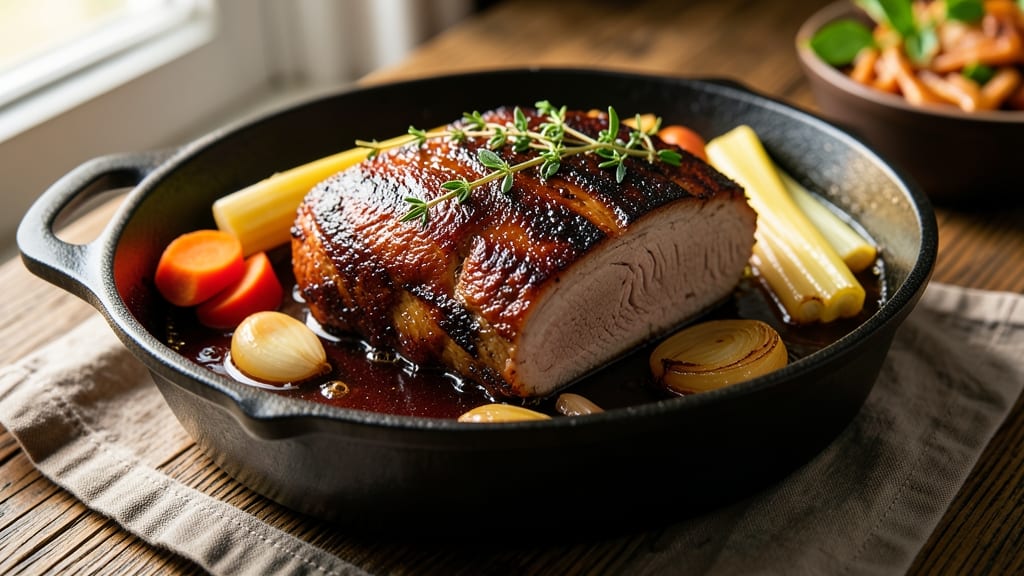
This braised pork loin roast recipe transforms tough cuts into melt-in-your-mouth perfection with crispy edges and rich, caramelized flavors. After years of perfecting braising techniques at The Smoky Pig, I've developed a method that delivers restaurant-quality results in your own kitchen—no fancy equipment required. The secret lies in the slow cook, where tender meat absorbs aromatic herbs and deepens in flavor hour by hour.
What makes this recipe stand out is the balance between technique and simplicity. You'll start with a quick sear to lock in juices, then let the pork braise gently in a flavorful liquid until it's fork-tender.
No need for complicated reductions or hours of babysitting—just set it and let the magic happen. The result? Juicy, flavorful pork that practically falls apart with every bite, all while developing that coveted crispy edge that makes it irresistible.
The beauty of this dish is its versatility. Serve it sliced thick over creamy mashed potatoes with a drizzle of pan sauce, or present it whole with roasted root vegetables for a showstopping centerpiece.
The rich, savory flavors pair beautifully with classic sides like buttery egg noodles or a crisp green salad to cut through the richness. It's the kind of meal that feels special enough for company but simple enough for a weeknight dinner.
Confession: I've been making variations of this recipe since my apprenticeship days in Charleston, where I learned from Master Chef Chen that slow cooking transforms humble cuts into extraordinary dishes. This version keeps that tradition alive while adapting it for home kitchens.
The crispy edges you'll achieve? That's the result of patience and attention to detail—worth every minute of the process. Let's get started on creating your own showstopping centerpiece.
Ingredients for braised pork loin roast
Sixteen ingredients for restaurant-quality braised pork that falls apart with crispy edges.
| Ingredient | Amount | Notes |
|---|---|---|
| Pork Loin Roast 🥩 | 3 lb | Bone-in for better flavor |
| Yellow Onion 🧅 | 1 whole | Sliced into thick rounds |
| Carrots 🥕 | 4 whole | Peeled, cut into chunks |
| Celery Stalks 🌿 | 3 whole | Cut into 1-inch pieces |
| Garlic Cloves 🧄 | 6 cloves | Smashed, not minced |
| Fresh Thyme 🌿 | 2 sprigs | Stems removed |
| Fresh Rosemary 🌿 | 1 sprig | Woody stems removed |
| Dry Red Wine 🍷 | 1 ½ cups | Bold Cabernet Sauvignon |
| Beef Broth 💧 | 2 cups | Low-sodium preferred |
| Olive Oil 🫒 | 2 tbsp | Extra-virgin for searing |
| Unsalted Butter 🧈 | 2 tbsp | Cubed for basting |
| All-Purpose Flour 🌾 | 1 tbsp | For dredging pork |
| Diamond Crystal Kosher Salt 🧂 | 1 ½ tsp | For seasoning |
| Freshly Ground Black Pepper 🌶️ | 1 tsp | Coarsely cracked |
| Tomato Paste 🍅 | 1 tbsp | Smooth, not chunky |
The pork loin is your star—look for a roast with good marbling for juiciness. Costco or Whole Foods carry excellent cuts, but any butcher will have bone-in options. Bone-in stays moister and adds depth of flavor. If your roast has skin, leave it on for extra crispiness. For the wine, Cabernet Sauvignon works best—avoid sweet varieties. The beef broth should be rich but not salty; Swanson or Pacific Foods are reliable brands. Fresh herbs make all the difference here—Trader Joe's often has great bundles of thyme and rosemary.
No red wine? Dry sherry or extra beef broth works in a pinch. Fresh thyme unavailable? Dried thyme at one-third the amount gets you close, but fresh is ideal. The tomato paste can be skipped if you're short, but it adds that deep umami flavor. For the flour, King Arthur all-purpose creates the best dredge, but any brand works. The carrots and celery can be swapped for potatoes or turnips if you prefer. Just keep the same vegetable-to-liquid ratio—about 1 cup chopped veggies per 1.5 cups liquid.
Pork roasts reheat beautifully—3-4 days in the fridge, 6 months frozen. For extra crispy edges, sear the roast again in a hot pan before serving. The braising liquid reduces into a rich sauce—strain it if you prefer a smoother finish. Portion leftovers into containers with a bit of sauce to keep everything moist. This dish tastes even better the next day as all the flavors meld together.
Why You'll Love This Recipe
- Minimal Chopping Needed: I swear by this trick—just rough-chop the onions, carrots, and celery into big chunks (no julienne required). The slow braise turns them into tender, flavor-packed morsels anyway, so no one will miss the precision.
- Garlic-Onion Bomb: That first sear of onions and garlic until they’re sticky and golden? Pure magic. The pork soaks up all that caramelized depth, and the celery adds a subtle earthiness that keeps it from being too heavy—like a hug in a skillet.
- Leftovers That Shine: Between us, this dish begs for seconds, but even better? The next day, the pork gets even more tender and the veggies melt into the sauce. I portion it into containers and freeze half—perfect for lazy nights when I just want to reheat and eat.
- Weeknight Crowd-Pleaser: No fancy plating, no stress—just a big roast and a pot of veggies simmering while I answer emails. My in-laws think it’s restaurant-worthy, my kids ask for it, and my partner actually finishes his plate. (Yes, even on a Tuesday night.)
Step-by-step instructions for braised pork loin roast
Here's how to transform tough pork into tender, melt-in-your-mouth perfection with rich, caramelized edges.
Sear the Pork Loin for Maximum Flavor
Pat the 3 lb pork loin roast completely dry with paper towels—this is non-negotiable for crispy edges. Heat a large Dutch oven over medium-high heat and add the 2 tbsp olive oil. Once shimmering, place the pork loin in the pot, fat-side down, and sear for 4-5 minutes until deeply golden brown.
Flip the pork and sear the other side for another 4-5 minutes. The key here is patience—don't rush the sear or the crust won't develop properly. Remove the pork and set it aside on a plate, leaving all that beautiful browned meat juices in the pot. This is where all the flavor will concentrate during braising.
Build the Aromatic Vegetable Base
In the same Dutch oven, add the 1 whole yellow onion (sliced into thick rounds), 4 whole carrots (cut into chunks), and 3 whole celery stalks (cut into 1-inch pieces). Cook for 5-6 minutes, stirring occasionally, until the vegetables begin to soften and release their natural juices.
Add the 6 smashed garlic cloves, 2 sprigs fresh thyme, and 1 sprig fresh rosemary (woody stems removed). Stir everything together and cook for another 2 minutes until the garlic becomes fragrant. This step develops the foundational flavors that will infuse the pork during braising.
Create the Braising Liquid
Sprinkle the 1 tbsp all-purpose flour over the vegetables and stir vigorously for 30 seconds to coat everything evenly. This creates a light roux that will help thicken our braising liquid. Immediately pour in the 1.5 cups dry red wine and scrape up any browned bits from the bottom of the pot—this is called deglazing and captures all those precious meaty flavors.
Add the 1 tbsp tomato paste and cook for 2 minutes until the wine reduces by about half. Pour in the 2 cups beef broth, stirring to combine. The liquid should just barely cover the vegetables—this ensures proper braising without making the pork mushy.
Braise Until Fork-Tender
Return the pork loin to the Dutch oven, placing it on top of the vegetables. Season generously with 1.5 tsp diamond crystal kosher salt and 1 tsp freshly ground black pepper. Add the 2 tbsp cubed unsalted butter to the pot—this will melt during braising and create a luscious sauce.
Cover the Dutch oven tightly with a lid and transfer to a preheated 325°F oven. Braise for 2 to 2.5 hours until the pork is fork-tender and the internal temperature reaches 205°F. I know it seems like a long time, but this slow cooking transforms tough pork into melt-in-your-mouth perfection.
Rest and Serve with Crispy Edges
Remove the pork from the oven and transfer it to a cutting board. Tent loosely with aluminum foil and let it rest for 15 minutes—this crucial step allows the juices to redistribute throughout the meat. During this time, carefully skim any excess fat from the braising liquid if desired.
Slice the pork loin against the grain into ½-inch thick pieces. The meat should be incredibly tender, falling apart easily with just a fork. Spoon the rich, caramelized braising liquid over the top and serve immediately with the vegetables. Each bite should deliver perfectly tender pork with crispy edges and a sauce that's packed with deep, savory flavor.
Pro Tips For Making Braised Pork Loin Roast
- SEAR THE LOIN FIRST: I learned this the hard way—skipping the sear means flavorless braise. Hit that pork loin with high heat in a Dutch oven until it’s golden-brown on all sides before adding liquid. The crust locks in juices and adds depth that no slow simmer alone can match.
- CHOP VEGETABLES UNIFORM: Carrots and celery in random sizes cook unevenly, leading to mushy bits. Cut them into ½-inch chunks so they soften together, not turn to mush while the onions still have bite. Onions should be sliced thin enough to dissolve but thick enough to hold shape—about ¼-inch strips.
- DON’T SKIP THE FAT: After searing, leave the rendered pork fat in the pot—it’s your flavor base. Scrape up those browned bits with a wooden spoon before deglazing; they’re packed with umami. If your roast is lean, add a splash of oil (just 1 tablespoon) to ensure the braising liquid doesn’t taste watery.
- COVER IT TIGHTLY: A loose lid lets steam escape, and you’ll end up with dry meat. Press foil directly onto the pot’s rim before adding the lid, or use a baking sheet to weigh it down. This traps moisture and guarantees tender, fork-tender pork—no guessing if it’s done.
Troubleshooting this recipe
Pork Too Tough?
If your pork isn't tender enough after braising, you likely didn't cook it long enough. Aim for an internal temperature of 205°F—use a meat thermometer to check. I've found that bone-in cuts take about 2-2.5 hours at 325°F, while boneless may need 1.5-2 hours.
Remember, the pork should feel like butter when pierced with a fork. 💡
Sauce Too Thin?
Your braising liquid might be too thin if you didn't reduce it properly. After adding wine and broth, simmer uncovered for 10-15 minutes before adding the pork back in. For extra thickness, mix 1 tbsp cornstarch with 2 tbsp cold water and stir into the sauce at the end.
I keep a small bowl of this slurry ready when braising large cuts.
Pork Too Dry?
Overcooking is the usual culprit here. Remove the pork when it reaches 200°F and let it rest for 20 minutes—this helps retain moisture. Another trick: Add ½ cup extra broth during the last 30 minutes of cooking.
I also recommend using a meat thermometer to avoid guesswork—ThermoWorks Smoke is my go-to.
Vegetables Overcooked?
If your carrots and celery turn to mush, they were likely submerged in liquid for too long. Keep them partially submerged by using 1 cup chopped veggies per 1.5 cups liquid.
For extra flavor without overcooking, add fresh herbs (thyme, rosemary) only in the last 30 minutes of braising. I often reserve some raw vegetables to add fresh crunch when serving.
Fat Buildup Issues?
Excess fat can make your braising liquid greasy. Skim fat during cooking using a large spoon, or chill the liquid overnight—the fat will solidify on top and can be easily removed.
For a cleaner sauce, strain through a fine-mesh sieve before serving. I keep a fat separator funnel in my kitchen for quick cleanup.
Crust Missing?
For crispy edges, you must sear the pork properly before braising. Heat your Dutch oven until it's smoking hot before adding oil. Pat the pork completely dry with paper towels—this ensures maximum browning.
If your crust is lacking, try searing again in a hot skillet for 2-3 minutes before serving. 🔥
Nutrition facts
Frequently asked questions
Can I use boneless pork loin instead of bone-in?
Yes, but adjust your cooking time! Boneless pork loin will cook about 30-45 minutes faster than bone-in. Use a meat thermometer and remove it when it reaches 200°F—it'll rise to 205°F while resting. The key is patience: boneless cuts need that extra time to become truly tender.
What's the best way to reheat leftovers?
Slice the pork and reheat in the same braising liquid over medium-low heat for 10-15 minutes until warmed through. For crispy edges, sear slices in a hot pan with butter for 2 minutes per side. Leftovers keep for 3-4 days in the fridge or 6 months frozen. The sauce thickens when chilled—just add a splash of broth to loosen it.
Can I substitute the red wine with something else?
Use 1.5 cups dry sherry or extra beef broth for similar depth. For a non-alcoholic version, try 1 cup apple cider vinegar + ½ cup beef broth. The acidity helps tenderize the meat. Just remember: wine adds complexity that other liquids can't fully replicate.
How do I make this dish more special for guests?
Serve the pork whole on a platter with the braising sauce reduced to a glossy consistency. Garnish with fresh thyme sprigs and crispy fried shallots. Pair with creamy mashed potatoes and roasted root vegetables. For presentation, arrange the vegetables around the pork like a rustic border. The crispy edges will wow everyone!
Why does my pork sometimes turn out dry?
Most likely, you didn't let it rest long enough after cooking or overcooked it. Always remove from heat at 200°F and rest for 15-20 minutes—this lets juices redistribute. Another common mistake is using too high heat: 325°F is ideal for even cooking. A meat thermometer is your best friend here!