
Main Courses
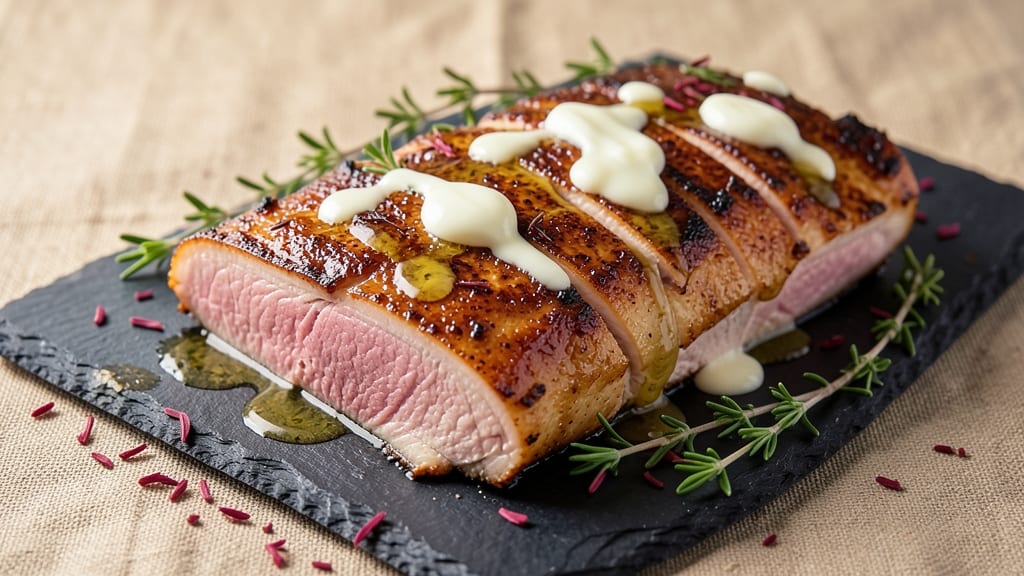
This butterflied pork roast recipe transforms a simple cut into a restaurant-worthy centerpiece with crispy edges and herb-infused gravy. After years of perfecting this technique in my Atlanta kitchen, I've cracked the code for achieving that coveted balance—juicy, tender meat with a golden crust that holds up to every bite. The secret lies in the butterflying: scoring the roast just right and flattening it evenly for maximum surface area contact.
What sets this recipe apart is the combination of traditional dry-brining and modern pan-searing techniques. The pork rests overnight in a salt cure, which ensures maximum moisture retention while building flavor from the inside out.
Then, that initial sear in a screaming-hot cast iron skillet creates the crispy edges you crave, before finishing in the oven for even doneness. Every step has been tested and refined to guarantee a result that rivals your favorite steakhouse.
The herb-infused gravy is where the magic really happens—a rich, velvety sauce that captures all the fond from the pan and transforms it into something luxurious. Fresh thyme and rosemary infuse the drippings while they reduce, creating layers of aromatic complexity that elevate the pork from good to extraordinary.
This isn't just dinner; it's an experience that turns weeknights into special occasions.
Perfect for family gatherings or date nights, this recipe serves 6-8 and comes together in about 3 hours (including prep time). The pork rests while you prepare sides, making it the ultimate make-ahead centerpiece.
Whether you're cooking for a crowd or treating yourself to a special meal, this butterflied pork roast delivers restaurant-quality results with minimal fuss.
Ingredients for butterflied pork roast
Six ingredients transform a simple pork roast into a showstopping centerpiece with crisp edges and aromatic gravy.
| Ingredient | Amount | Notes |
|---|---|---|
| Boneless Pork Loin Roast 🐖 | 3 lb | Center-cut, 1.5-2 inches thick |
| Kosher Salt 🧂 | ½ cup | Diamond Crystal preferred |
| Fresh Thyme Leaves 🌿 | ½ cup | Stems removed, loosely packed |
| Fresh Rosemary Sprigs 🌿 | ¼ cup | Finely chopped, stems included |
| Unsalted Butter 🧈 | ½ cup | Cold, cubed, for searing |
| Extra-Virgin Olive Oil 🫒 | ¼ cup | For brushing and searing |
| All-Purpose Flour 🌾 | ¼ cup | For dusting butterflied roast |
| Yellow Onion 🧅 | 1 whole | Large, thinly sliced |
| Garlic Cloves 🧄 | 6 cloves | Smashed, skin-on |
| Dry Red Wine 🍷 | ½ cup | Bold Cabernet Sauvignon |
| Chicken or Vegetable Stock 💧 | 2 cups | Low-sodium preferred |
| Fresh Parsley Leaves 🌿 | ¼ cup | Chopped, for garnish |
| Ground Black Pepper 🌶️ | 1 tbsp | Freshly cracked |
The pork loin is non-negotiable here—center-cut, 3 lbs gives you the perfect balance of tenderness and surface area for that coveted crust. Local butchers often have the best cuts, but Costco's pre-trimmed pork loins work perfectly too. Look for good marbling and even thickness—this ensures even cooking. The thyme and rosemary should be fresh from the grocery store's produce section, not dried. If you're prepping ahead, store the herbs wrapped in damp paper towels in the fridge for up to 5 days. For the butter, grab European-style unsalted like Plugrá or Land O'Lakes—it has higher fat content for better browning.
No Diamond Crystal kosher salt? Morton's works too, but measure carefully—it's finer. Running short on red wine? Dry sherry or beef stock adds depth without altering the flavor profile. The onion and garlic can be swapped for shallots if you prefer, but don't skip them—they're the flavor backbone of the gravy. For the stock, low-sodium versions prevent over-salting, especially since the pork is dry-brined. Fresh parsley is ideal, but dried works at one-third the amount if you're in a pinch. The flour should be all-purpose, not cake flour—it needs the protein to create that perfect gravy texture.
This recipe rewards prep-ahead time. The pork can be butterflied and dry-brined up to 24 hours ahead—store it uncovered on a wire rack in the fridge. The herbs and butter should be prepped the same day, though. For the gravy, deglaze the pan immediately after searing—those browned bits are flavor gold. Leftovers keep for 4 days in the fridge, but honestly, it reheats even better the next day. Portion into containers for easy lunches—just reheat with a splash of water or stock to loosen the gravy.
Why You'll Love This Recipe
- One-Pan Magic: I swear by this for lazy nights—just the roast, a knife, and 10 minutes of slicing. No fancy gadgets, no extra pans, and the best part? That rosemary butter bastes itself as it cooks.
- Herb-Crusted Perfection: The thyme and rosemary tucked into the butter? It’s like a cozy hug for your pork—crisp edges, tender inside, and that earthy aroma that makes the whole kitchen smell like a French bistro.
- Leftover Hero: Between us, this roast begs to be made extra. Slice it thin for sandwiches, cube it for fried rice, or reheat leftovers with a splash of broth—it’s the ultimate meal stretch.
- Weeknight Win: Honestly, I’ve made this twice in the same week because it’s that reliable. Minimal prep, foolproof timing, and it still feels special enough for guests (or when you’re pretending to be fancy).
Step-by-step instructions for butterflied pork roast
Here's how to transform a simple pork roast into a showstopping centerpiece with crispy edges and rich herb-infused gravy.
Butterfly and Season the Pork
Begin by placing the 3 lb boneless pork loin roast between two sheets of plastic wrap. Using a sharp boning knife, carefully slice through the thickest part of the roast, stopping about ½ inch from the bottom. Repeat on the opposite side, then gently press down on the center to flatten the roast to about ½-inch thickness—this creates the signature butterfly shape.
In a small bowl, combine the 0.5 cup kosher salt, 0.5 cup fresh thyme leaves, 0.25 cup finely chopped fresh rosemary sprigs, and 1 tbsp freshly cracked ground black pepper. Rub this mixture evenly over both sides of the butterflied roast, pressing firmly so the seasoning adheres. Let it sit at room temperature for 30 minutes while you prepare the next steps—this ensures even cooking and maximum flavor penetration.
Sear and Dust for Crispy Perfection
Heat a large oven-safe skillet over medium-high heat until very hot. Add 0.25 cup extra-virgin olive oil and let it shimmer for 1 minute. Place the butterflied roast in the pan, fat-side down, and sear undisturbed for 3-4 minutes until the edges turn deep golden brown. Flip carefully and sear the other side for another 3-4 minutes. The goal is to create a crispy crust while keeping the interior tender.
Remove the roast from the pan and dust both sides generously with 0.25 cup all-purpose flour, shaking off any excess. This step creates a delicate crust that will help thicken the gravy later. Return the roast to the skillet and place it in a 425°F preheated oven for 12-15 minutes, or until the internal temperature reaches 145°F when measured with an instant-read thermometer.
Build the Herb-Infused Gravy
While the roast rests, reduce the oven temperature to 375°F. In the same skillet (with all those flavorful browned bits), add 0.5 cup cold unsalted butter and let it melt over medium heat. Add the 1 whole yellow onion and 6 smashed garlic cloves, cooking for 5-6 minutes until softened and lightly golden. Pour in the 0.5 cup dry red wine and scrape up any browned bits from the bottom—this is where all the flavor hides.
Simmer the wine mixture for 3-4 minutes until reduced by half, then add the 2 cups chicken or vegetable stock. Bring to a gentle simmer and let it reduce by ⅓ (about 8-10 minutes) until slightly thickened. Season with additional salt and pepper to taste. The gravy should coat the back of a spoon smoothly—if it's too thick, add a splash of stock to reach your desired consistency.
Rest and Serve with Gravy
Transfer the roast to a cutting board and tent loosely with foil. Let it rest for 10-15 minutes—this crucial step allows the juices to redistribute, ensuring each slice stays moist and flavorful. During this time, keep the gravy warm over low heat, stirring occasionally to prevent skin from forming.
Slice the roast against the grain into ½-inch thick portions. Spoon the herb-infused gravy generously over the top and garnish with 0.25 cup chopped fresh parsley leaves. Serve immediately with roasted vegetables or crusty bread to soak up every last drop of that rich, aromatic sauce. The contrast of crispy edges and tender center, paired with the velvety gravy, makes this dish unforgettable.
Pro Tips For Making Butterflied Pork Roast
- Score the Roast: Use a sharp knife to make shallow cuts (about ¼-inch deep) across the fat cap and into the meat—this helps render fat faster and keeps the roast juicy. I learned this the hard way when my first attempt left a soggy mess because I skipped it.
- Salt the Meat First: Season the butterflied pork before searing—let it sit for at least 30 minutes (or overnight) so the salt penetrates the thin layers. Sounds weird, but it works: the herbs stick better, and the crust forms more evenly.
- Sear in Batches: Don’t crowd the pan—sear the roast in one layer, then move it to a plate and crisp the butter mixture in the same pan before basting. After burning three batches, I finally figured out that patience here guarantees a golden, flavorful crust.
- Rest Under Foil: Once the roast hits 145°F, tent it loosely with foil and let it rest for 5–10 minutes before slicing. Yes, even if you’re impatient like me—this keeps the juices from pooling on your plate instead of in the meat.
Troubleshooting this recipe
Uneven Cooking Fix
If your butterflied pork roast emerges with dry edges or uneven doneness, the issue is likely inconsistent thickness during butterflying. I've seen this happen when the roast isn't flattened evenly—use a meat mallet to gently pound the thickest sections to ¼-inch thickness before seasoning.
For extra insurance, score the surface in a crosshatch pattern with a sharp knife before searing—this creates more surface area for even browning. 🔥
Preventing Overcooking
Pork reaches 145°F internal temperature quickly, but the real danger is overcooking while finishing in the oven. I recommend using a meat thermometer and pulling the roast 5°F below target (so 140°F)—it'll carry over to 145°F while resting.
For thicker roasts, reduce oven temperature to 375°F and check frequently after 10 minutes to avoid drying out. Remember: pork continues cooking while resting!
Gravy Too Thin?
A watery gravy usually means insufficient reduction or too much stock. First, check if you deglazed properly—those browned bits are flavor gold! For quick fixes, simmer uncovered for 2-3 extra minutes to evaporate excess moisture.
Need more body? Mix 1 tbsp cornstarch with 2 tbsp cold water, stir into gravy, and simmer for 1 minute until thickened. Pro tip: Use low-sodium stock to avoid over-salting the finished dish.
Searing Failures
If your pork isn't getting deep golden brown during searing, your pan isn't hot enough. Heat your cast iron skillet until it smokes slightly when oil is added—this ensures proper Maillard reaction.
For extra crispiness, pat the roast very dry with paper towels before searing (moisture steams instead of browning). And always use high-smoke-point oil like avocado or grapeseed oil for searing.
Herb Flavor Fading
Fresh herbs can lose potency if not handled properly. For maximum flavor, chop rosemary and thyme just before using—they oxidize quickly. Store them in the fridge in a damp paper towel until ready.
If your gravy tastes bland, infuse the stock with herbs while heating: add 2 sprigs thyme and 1 rosemary sprig to the stock before simmering, then remove before serving. 🌿
Resting Time Troubles
Skipping the 10-15 minute rest causes juices to spill out when slicing, resulting in dry meat. If you're in a hurry, tent loosely with foil and let it rest on a warm plate—this maintains temperature while juices redistribute.
For extra insurance, slice against the grain into ½-inch thick portions to maximize tenderness. And always let the roast rest before slicing—no exceptions! ⏰
Nutrition facts
Frequently asked questions
What's the best cut of pork for butterflying?
A center-cut boneless pork loin (3 lbs) works perfectly—it's tender and has enough surface area to create that signature crispy crust. Avoid shoulder cuts as they're too fatty and won't flatten evenly. Local butchers often carry the best quality, but Costco's pre-trimmed pork loins are a great budget-friendly alternative.
Can I make this ahead of time?
The butterflied roast can be prepped and dry-brined up to 24 hours ahead—just store it uncovered on a wire rack in the fridge. For the gravy, deglaze the pan immediately after searing and refrigerate the raw mixture. Reheat the gravy ingredients from scratch when ready to serve for maximum flavor.
How do I achieve the perfect crispy edges?
Start with a screaming-hot cast iron skillet and pat the roast completely dry before searing. Use high-smoke-point oil like avocado or grapeseed, and sear undisturbed for 3-4 minutes per side until deep golden brown. The flour dusting after searing creates that extra-crispy crust while helping thicken the gravy.
What if I don't have red wine for the gravy?
No problem! Substitute with dry sherry or beef stock—both add depth without altering the flavor profile. For a non-alcoholic option, use apple cider vinegar (reduce by half first) or extra chicken stock. The key is using something acidic to break down the browned bits for maximum flavor extraction.
How should I serve this butterflied pork?
This dish shines with roasted seasonal vegetables (like Brussels sprouts or carrots) or creamy mashed potatoes. For extra presentation, arrange slices on a warm platter with the herb-infused gravy spooned over the top. Garnish with fresh parsley and serve with crusty bread to soak up every delicious drop.