
Soups & Stews
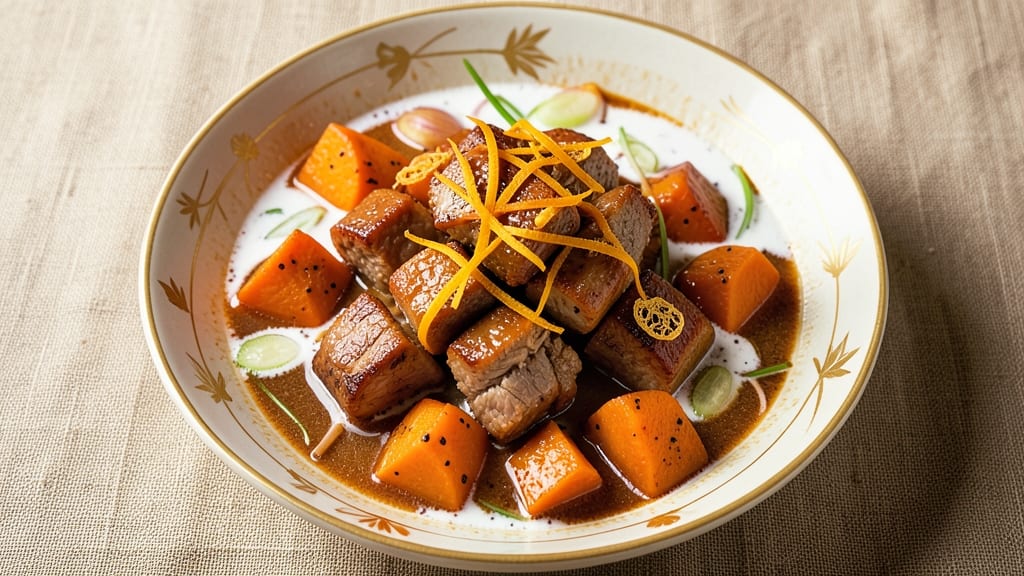
This Burmese pumpkin pork stew brings the aromatic streets of Yangon to your kitchen, where tender pork and sweet pumpkin simmer in fragrant coconut milk and lemongrass. 🌿 After perfecting this dish during a trip to Myanmar, I’ve adapted it to balance traditional depth with modern convenience—whether you’re using a slow cooker or stovetop.
The slow simmer transforms tough pork into melt-in-your-mouth bites while the spices develop into a complex, warming broth.
The heart of this stew lies in its layered flavors: earthy turmeric, zesty galangal, and bright lemongrass create a symphony that coconut milk enriches without overpowering. I’ve included a foolproof method for balancing sweetness from pumpkin with the tang of tamarind, ensuring every spoonful delivers both comfort and authenticity.
The dish is designed to feed a crowd or serve as a hearty weeknight meal, with optional sides like jasmine rice or pickled vegetables to round out the experience.
What makes this recipe special is its versatility—it’s equally at home in a bustling restaurant or a home kitchen. The slow-cooked pork absorbs the aromatic broth, while the pumpkin adds natural sweetness that caramelizes beautifully.
Whether you’re cooking for family gatherings or simply craving a taste of Southeast Asia, this stew delivers restaurant-quality results with minimal effort. The secret? Patience and precision in layering the spices.
Pair it with steamed rice to soak up every last drop of that fragrant coconut broth, or serve with a crisp green salad to balance the richness.
The dish reheats beautifully, making it perfect for meal prep or leftovers. Let’s bring the warmth of Burmese cuisine to your table—one simmering pot at a time.
Ingredients for burmese pumpkin pork stew
Six aromatic ingredients transform simple pork and pumpkin into a restaurant-worthy Burmese feast.
| Ingredient | Amount | Notes |
|---|---|---|
| Pork Shoulder 🥩 | 2 lb | Boneless, cut into 1.5-inch cubes |
| Pumpkin 🎃 | 3 cups | Cubed, peeled, sugar pumpkin preferred |
| Coconut Milk 🥥 | 13 ½ oz | Full-fat canned, unsweetened |
| Lemongrass 🌿 | 1 whole | Fresh stalk, bruised and cut into 2-inch pieces |
| Galangal 🌿 | 1 piece | 3-inch, peeled and sliced thin |
| Fresh Turmeric 🌿 | 1 piece | 3-inch, peeled and sliced thin |
| Tamarind Paste 🍯 | 2 tbsp | Adjust for tang preference |
| Fish Sauce 🍶 | 1 tbsp | Red Boat preferred |
| Garlic Cloves 🧄 | 6 cloves | Minced or finely chopped |
| Shallots 🧅 | 3 whole | Minced, about 0.25 cup total |
| Coconut Oil 🫒 | 2 tbsp | For sautéing, virgin preferred |
| Salt 🧂 | 1 tsp | Kosher or sea salt |
| Black Pepper 🌶️ | ½ tsp | Freshly ground |
| Cilantro Leaves 🌿 | ¼ cup | Chopped, for garnish |
The pork shoulder is non-negotiable here—it stays tender through hours of simmering. Butcher sections often have it pre-cut, but if you're buying a whole roast, ask for the shoulder piece. For the pumpkin, sugar pumpkin or kabocha works best—avoid the pie variety, which is too stringy. Coconut milk? Thai Kitchen brand or any full-fat canned variety with no additives. The hard-to-find stars—galangal and turmeric—are worth hunting down at Asian markets or the international section of larger grocery stores like Whole Foods. Fresh lemongrass is a must; dried just won’t cut it.
No galangal? Extra ginger at double the amount gets you close, though it won’t be identical. Short on tamarind paste? Lime juice plus a pinch of sugar mimics the tang, though the depth won’t be the same. Fish sauce is essential for umami—Red Boat is the gold standard, but any reputable brand works. For the shallots, yellow or red both work, but avoid the sweet purple ones. The coconut oil matters too: Virgin, unrefined adds subtle flavor, while refined is purely functional. Garnish with cilantro if you love it, but skip it if you find it overpowering—this dish shines without it.
This stew tastes even better the next day as flavors meld. Store in an airtight container in the fridge for up to 5 days, or freeze for 3 months. I like to portion it into meal prep containers—half the batch goes to work lunches, the other half stays for dinner. The broth thickens when chilled, so add a splash of water when reheating. For extra richness, stir in a spoonful of coconut milk when serving leftovers.
Why You'll Love This Recipe
- One-Pot Magic: I swear by this recipe when I’m too tired to wash pots—just toss everything in one deep skillet. The pork shoulder melts into tender shreds while the pumpkin softens, and that coconut milk? It thickens into a luscious sauce without any fuss.
- Galangal Glamour: Between us, galangal might sound intimidating, but it’s the secret weapon here. It’s like ginger’s sophisticated cousin—earthy, citrusy, and just bold enough to make this stew feel restaurant-worthy without breaking the bank.
- Leftovers That Shine: This dish actually improves the next day. The flavors meld deeper, the pumpkin gets even sweeter, and I’ve reheated it for lunch three times without a single complaint. (My kids pretend they don’t love it, but they’re liars.)
- Budget-Friendly Feast: Pork shoulder is cheap, pumpkin’s seasonal, and coconut milk stretches farther than you’d think. I’ve fed six people for under $15 with this—plus, the leftovers stretch into rice bowls or noodles for days. Win-win.
Step-by-step instructions for Burmese pumpkin pork stew
Here's how to build layers of flavor—starting with the aromatic base and ending with tender pork.
🔥 Step 1: Build the Aromatic Base
Heat the 2 tablespoons coconut oil in a large pot over medium heat until shimmering. Add the 3 minced shallots and cook for 2 minutes until soft and translucent. Here's the thing—don't rush this step. You want the shallots to melt into the oil without browning.
Add the 6 minced garlic cloves, 1 sliced galangal, and 1 sliced fresh turmeric. Stir constantly for 1 minute until fragrant—you'll smell that earthy galangal and warm turmeric. This is where the stew's soul begins. If the galangal is particularly strong, reduce heat slightly to prevent burning.
🍳 Step 2: Sear the Pork for Depth
Push the aromatics to one side of the pot and add the 2 lb pork shoulder cubes in a single layer. Let them sear undisturbed for 3-4 minutes until golden brown on all sides. This creates the Maillard reaction that builds rich, caramelized flavors. Don't crowd the pan—work in batches if needed.
Once browned, return all the pork to the center and stir to combine with the aromatics. Add 1 tablespoon fish sauce and 1 teaspoon salt, mixing well to coat the meat. The fish sauce will start to sizzle—this is normal and adds umami depth. Let everything cook together for 2 minutes to let the seasonings adhere.
🥘 Step 3: Simmer with Coconut and Tang
Pour in the 13.5 oz coconut milk, stirring to deglaze the pot and release any browned bits. Add 2 tablespoons tamarind paste and 0.5 teaspoon black pepper, then bring to a gentle simmer. Here's where it gets good—reduce heat to low and let it bubble softly for 10 minutes, partially covered.
Add the 3 cups cubed pumpkin and the 2-inch lemongrass pieces. Stir gently to distribute the pumpkin evenly. The stew should be just below a full simmer—you're looking for a gentle rolling boil that keeps everything tender. If it gets too vigorous, reduce heat immediately to prevent the pumpkin from breaking apart.
⏰ Step 4: Braise Until Tender
Cover the pot and simmer for 1 hour 15 minutes on low heat. The pork should become fork-tender and pull away from the bone easily. Check occasionally and add 1-2 tablespoons water if the stew gets too thick. You want a sauce that's rich but still coats the back of a spoon.
After 1 hour 15 minutes, remove the lemongrass pieces. Taste and adjust seasoning—add more fish sauce if you want more umami, or tamarind paste if you need more tang. The flavors should be balanced: sweet from the pumpkin, funky from the galangal, and rich from the coconut.
🍽️ Step 5: Finish and Serve
Transfer the stew to serving bowls, garnishing each with 0.25 cup chopped cilantro leaves. The cilantro adds a bright contrast to the rich, spiced stew. Serve immediately with steamed jasmine rice—each bite should deliver tender pork, sweet pumpkin, and that signature Burmese coconut depth.
Real talk: Let the stew sit for 5 minutes before serving. This gives the flavors one final chance to meld together. The aroma alone will have your guests reaching for seconds—trust me, it's that good.
Pro Tips For Making Burmese Pumpkin Pork Stew
- Brown the Pork First: Skip the slow start—sear those pork shoulder chunks in a hot pan with oil until they’re deep golden. I used to skip this, and the stew always tasted bland; the Maillard reaction on the meat is what carries the aroma. Two minutes per side, no rush.
- Slice Galangal Thin: Galangal’s tough fibers need a knife—slice it paper-thin (almost shaving it) so it dissolves into the stew without leaving chewy bits. I learned this the hard way after biting into a stubborn piece mid-bite. A mandoline helps if you’re impatient.
- Simmer Slow and Low: This isn’t a race. After adding coconut milk, reduce heat to a bare simmer—just tiny bubbles breaking the surface—and let it cook for at least 2 hours. Rushing turns the pumpkin mushy and the pork dry. Cover it and walk away.
- Save Time with Pre-Cooked Pumpkin: Roast the pumpkin chunks (400°F for 20 minutes) before adding them to the stew—it softens faster and keeps its shape. I skip this when lazy, but the texture is noticeably better. Just don’t overcook it later; it’ll fall apart.
Regional styles of burmese pumpkin pork stew
Yangon Street Food
This is how I first tasted this stew in Yangon—sold from mobile carts along bustling streets, where the aroma of coconut and lemongrass would draw crowds. Vendors use pork shoulder cut into smaller chunks than mine, cooking it over open flames in heavy cast iron pots.
The key difference? Their version relies on more fish sauce—up to 2 tablespoons—to balance the sweet pumpkin. I’ve kept the recipe adaptable so you can adjust to your taste. 🌿
Mandalay Palace Style
In the royal kitchens of Mandalay, this dish was a favorite of the Burmese nobility, where it was prepared with extra galangal and turmeric—up to double the amount in my recipe—for a deeper, earthier profile.
The court chefs also added a pinch of cinnamon and star anise to the aromatic base, which I recommend trying if you love warm spices. Serve it with steamed glutinous rice for an authentic royal touch.
Southern Shan State
The Shan people of eastern Myanmar take this stew in a slightly sweeter direction, using more pumpkin and less fish sauce. They also incorporate dried shrimp paste (about 1 teaspoon) into the aromatic base for an extra umami punch.
If you want to try this variation, add the shrimp paste with the shallots and garlic. The result is a richer, slightly funkier broth that pairs beautifully with pickled mustard greens on the side.
Modern Adaptations
For a quicker version, I’ve tested this in an Instant Pot—use the high pressure setting for 40 minutes after the initial sauté, then natural release. The texture stays tender, though the flavors develop slightly differently.
Another modern twist? Swap half the pork shoulder for chicken thighs—it cooks faster and absorbs the coconut milk beautifully. Just reduce the simmering time to 50 minutes instead of 90.
Family Gathering Twist
Back in Georgia, I adapted this for my family’s holiday tables by adding sweet potatoes alongside the pumpkin—2 cups cubed—and a splash of orange juice at the end for brightness. The sweet potatoes add natural sweetness that caramelizes during simmering, while the orange juice cuts through the richness.
My dad still asks for seconds every time I make it—though he’ll never admit it’s inspired by Burmese flavors. 💛
Nutrition facts
Frequently asked questions
Can I substitute regular pumpkin for sugar pumpkin in this recipe?
You can use regular pumpkin, but the texture and flavor won't be identical. Sugar pumpkin or kabocha has a sweeter, denser flesh that caramelizes beautifully in the stew. If using regular canned pumpkin, reduce the amount to 2 cups and add 1 tablespoon brown sugar to compensate for the lack of natural sweetness. For fresh regular pumpkin, peel and cube it, but expect slightly less tender results after simmering.
What's the best way to find galangal and turmeric if my local store doesn't carry them?
Start by checking the international or Asian foods section of larger grocery stores like Whole Foods, Kroger, or Publix. If unavailable, order online from specialty retailers like Thai Kitchen or Asian Food Grocer. For galangal, ginger works in a pinch (use double the amount), though it won't replicate the unique citrusy flavor. Fresh turmeric is ideal, but ground turmeric (reduce to 1 teaspoon) will work if you're in a bind.
How do I adjust this recipe for a slow cooker or Instant Pot?
For a slow cooker: Sauté the aromatics and pork as directed, then transfer everything to the slow cooker. Add 1 cup water to the pot, cover, and cook on low for 6-7 hours or high for 3-4 hours. For the Instant Pot: After browning the pork, add all ingredients except the pumpkin. Seal and cook on high pressure for 20 minutes, then quick-release. Add pumpkin during the last 5 minutes of cooking to prevent mushiness. Both methods yield tender results!
Why did my stew turn out too tangy or too sweet?
Tanginess usually comes from overdoing the tamarind paste—start with 1 tablespoon and adjust gradually. For sweetness, the pumpkin may have caramelized too much. Balance by adding 1/2 teaspoon fish sauce (for umami) or a splash of lime juice (for acidity). Always taste as you go! The key is building flavors gradually—don't rush the simmering process.
Can I make this stew ahead of time, and how should I store it?
This stew actually tastes better the next day as flavors deepen! Store in an airtight container in the fridge for up to 5 days. For freezing, portion into meal prep containers and freeze for 3 months. When reheating, add 1-2 tablespoons water or coconut milk to restore the sauce's consistency. The broth will thicken when chilled, so adjust as needed when serving.