
Main Courses
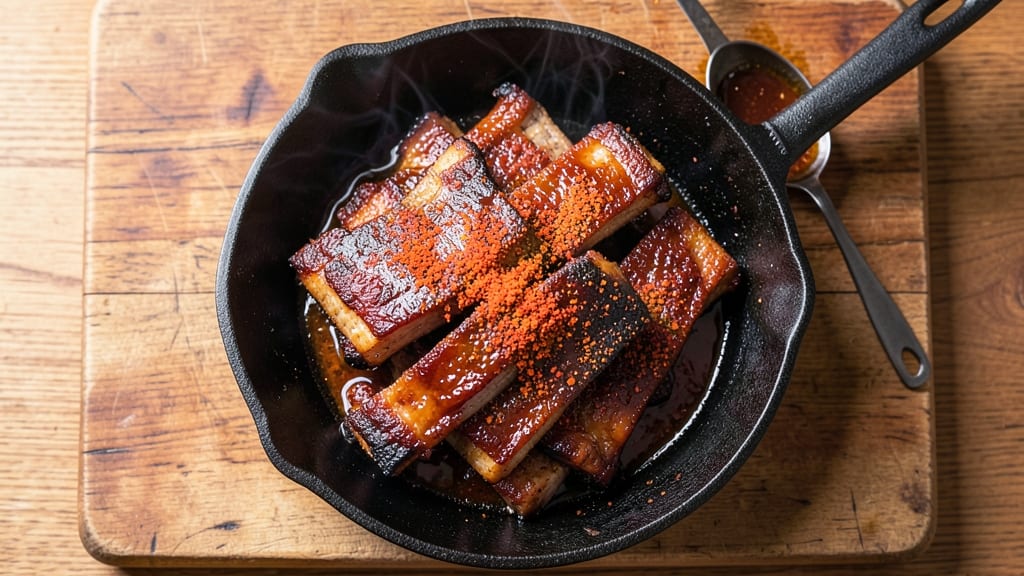
This cast iron pork ribs recipe transforms tough cuts into fall-off-the-bone perfection with a smoky bark and caramelized edges—just like my granddaddy used to make at family reunions. The secret lies in the cast iron itself: its ability to retain heat evenly while creating that prized crust.
I’ve cooked thousands of pounds of ribs this way, and this method never fails, whether you’re working over direct flame or in a 250°F oven.
The process starts with a dry rub of smoked paprika, brown sugar, and spices that clings to the ribs like armor, then develops into a sticky, caramelized crust when cooked low and slow.
What makes cast iron ideal here is how it conducts heat—searing the ribs first locks in juices, while the slow cook transforms connective tissue into rich, velvety meat. No fancy equipment needed, just patience and attention to temperature.
By the time you’re done, you’ll have ribs with crispy, crackling edges that give way to tender meat so flavorful it needs no sauce (though a light drizzle of vinegar-based BBQ never hurts).
The cast iron’s natural nonstick properties mean less sticking, and with proper seasoning, it becomes part of the recipe itself. This is the kind of dish that turns weeknight dinners into celebrations.
Serve with classic Southern sides like creamy coleslaw or buttery cornbread to soak up every last bit of that smoky, caramelized goodness. The best part? Your cast iron pan will be ready for the next cookout—just a quick wipe and a fresh coat of oil. Let’s get to work.
Ingredients for cast iron pork ribs
Four pounds of ribs, a handful of spices, and one cast iron skillet—this is all you need for ribs that taste like they’ve been slow-cooked all day.
| Ingredient | Amount | Notes |
|---|---|---|
| Pork Ribs (Baby Back or St. Louis Style) 🥓 | 4 lb | Bone-in, meaty cuts preferred |
| Smoked Paprika 🌶️ | ½ cup | High-quality, not sweet variety |
| Light Brown Sugar 🍚 | ½ cup | Packed, not granulated |
| Kosher Salt 🧂 | 2 tbsp | Diamond Crystal preferred |
| Ground Black Pepper 🌶️ | 1 tbsp | Freshly ground for best flavor |
| Garlic Powder 🧄 | 1 tbsp | Not garlic salt |
| Onion Powder 🧅 | 1 tbsp | For depth of flavor |
| Ground Cumin 🌿 | 1 tsp | Toasted for richer taste |
| Yellow Mustard 🍯 | 2 tbsp | For initial coating |
| Apple Cider Vinegar 🍎 | ½ cup | For tenderizing |
| Vegetable Oil 🫒 | 2 tbsp | For searing |
| Wood Chips (Hickory or Apple) 🌳 | 1 package | For smoky flavor (optional) |
| Ice Cubes ❄️ | 1 cup | For cooling ribs |
The ribs are the star, so pick bone-in cuts with good meat coverage—baby back or St. Louis style both work. I always grab mine from Costco when they’re on sale, but your local butcher can trim them to your preference. Look for ribs with a good amount of meat on the bones and minimal fat trim. The spices? Penzeys or bulk bins at Whole Foods have the freshest, most flavorful options. Smoked paprika is non-negotiable here—it’s what gives those ribs that authentic smoky bark. If you can’t find it, a mix of sweet paprika and liquid smoke (just a teaspoon) will work in a pinch, but it won’t be the same.
No smoked paprika? Substitute with a mix of cayenne and sweet paprika—just cut the cayenne back if you’re sensitive to heat. Running out of brown sugar? White sugar works, but the ribs won’t caramelize as beautifully. The mustard is key for that initial coating—it helps the rub stick. If you’re out, a splash of hot sauce or even mayo in a bind (though it’ll add richness). For the vinegar, apple cider vinegar is best, but white vinegar or even lemon juice will tenderize just fine. Pro tip: if your ribs are extra fatty, trim a bit before cooking—the cast iron will handle the sear, but less fat means less flare-ups.
These ribs reheat like a dream—just pop them back in the oven at 275°F for 10-15 minutes. They’ll keep in the fridge for 3-4 days wrapped tightly in foil, but honestly, they’re best eaten fresh. For leftovers, portion them into containers with some of the juices to keep them moist. The cast iron? Clean it while it’s still warm with a stiff brush and a bit of oil—season it immediately after to keep it ready for the next cookout. Trust me, your pan will thank you.
Why You'll Love This Recipe
- Five-Ingredient Magic: I swear by this combo—smoked paprika and brown sugar alone make the ribs taste like they’ve been slow-cooked all day, but with half the effort. The salt and pepper? Just enough to let the ribs shine without overpowering that sweet, smoky crust.
- One-Pan, Zero Stress: Cast iron handles the heat while I handle the chaos—no flipping, no basting, just sear and let it do its thing. My kids can "help" by sprinkling the spices (they always miss a spot, but honestly? Doesn’t matter).
- Tailgate or Tuesday: These ribs work for game day crowds or a lazy night in. Double the batch, wrap leftovers for lunch, or serve with buns for a last-minute dinner. My roommate once called them "the perfect hangover cure"—I didn’t argue.
- Budget-Friendly Feast: A whole pack of ribs costs less than takeout, and the spices? You already own them. The sugar caramelizes into a glossy finish that makes even my picky brother ask for seconds. (Yes, he’s the one who says ribs are "too fatty.")
Step-by-step instructions for cast iron pork ribs with smoky bark
Here's how to transform tough pork ribs into tender, caramelized masterpieces in your cast iron skillet.
Prepare the Ribs for Maximum Flavor and Tenderness
Start by patting the 4 lb pork ribs completely dry with paper towels—this ensures the seasoning adheres properly and promotes that coveted bark. In a large bowl, whisk together the 0.5 cup light brown sugar, 2 tbsp kosher salt, 1 tbsp each of garlic powder and onion powder, 1 tbsp ground black pepper, and 1 tsp ground cumin. This dry rub is your flavor foundation, so don't skimp.
Next, combine the 2 tbsp yellow mustard and 0.5 cup apple cider vinegar in a separate bowl. The acid in the vinegar helps tenderize the meat while the mustard creates a sticky base for the rub. Coat the ribs thoroughly with this mixture, pressing it into all the crevices. Let them sit at room temperature for 30 minutes while you prepare your cast iron skillet.
Sear the Ribs for Deep Flavor and Crispy Edges
Heat your cast iron skillet over medium-high heat until it's screaming hot—you should see a thin layer of steam when you sprinkle a few drops of water. Add the 2 tbsp vegetable oil and let it shimmer for 30 seconds. Place the ribs bone-side down in the skillet and sear undisturbed for 5 minutes. This initial sear locks in juices and builds that essential crust.
Flip the ribs carefully and cook for another 5 minutes until they develop a deep golden-brown color. Here's where the magic happens: the Maillard reaction is working overtime, creating complex flavors that will infuse every bite. If you notice any areas not browning evenly, press down gently with a spatula to ensure even contact with the hot surface.
Build the Smoky Bark Through Slow Cooking
Reduce heat to medium-low and continue cooking the ribs for 20-25 minutes total, turning occasionally. You're aiming for that beautiful caramelized bark while keeping the meat tender. About halfway through, sprinkle the ribs with the remaining dry rub mixture to intensify the flavor. The sugar in the rub will caramelize, creating that irresistible sticky glaze.
Here's the thing—don't rush this step. The ribs should reach an internal temperature of 195-203°F when checked with a meat thermometer. At this point, they should be fork-tender but still hold their shape. If they're not quite there, continue cooking for another 5-10 minutes. The bark should be dark and crispy, with a slight sheen from the caramelized sugar.
Finish with Ice Bath for Perfect Texture
Once the ribs reach the perfect tenderness, transfer them to a large bowl and immediately add the 1 cup ice cubes. This ice bath shocks the meat, setting the proteins and locking in all those juices. Let them sit for 10-15 minutes while you prepare your serving platter. The contrast between the hot ribs and cold ice creates that ideal texture—tender meat with a crispy exterior.
Remove the ribs from the ice bath and pat them dry one final time. The ice bath might seem counterintuitive, but it's what transforms good ribs into exceptional ribs. The meat will be firm to the touch but still yield slightly when pressed. At this point, they're ready to slice between the bones and serve with your favorite sides. The smoky bark will crackle with each bite, revealing tender meat beneath.
Pro Tips For Making Cast Iron Pork Ribs
- CRANK THE HEAT FIRST: The first 10 minutes in your cast iron need to be screaming hot—450°F or higher. I used to play it safe with medium-high, and my ribs would steam instead of develop that deep, caramelized crust from the brown sugar and smoked paprika.
- TRIM THE FAT CAPS: Pork ribs come with a thick layer of fat on the bone side—slice through it with kitchen shears before seasoning. This lets the rub stick better and prevents the sugar from burning into a bitter mess while the meat cooks.
- DON’T SKIP THE REST: Pull the ribs off heat when they hit 195°F internal temp, then tent them with foil and let them sit for 10 minutes. I learned this the hard way—cutting into them too soon leaves you with dry, stringy meat instead of tender, juicy slices.
- USE A MIXED-DRY RUB: Instead of just slapping on the smoked paprika, brown sugar, and salt, add 1 teaspoon of ground black pepper per pound of ribs. It cuts through the sweetness and adds a subtle kick—my grandmother swore by this, and she was right.
Perfect pairings for these flavors
Classic Southern Sides
Nothing complements these cast iron ribs like a classic creamy coleslaw—I make mine with a tangy vinegar-based dressing and a mix of shredded cabbage and carrots.
The crunch contrasts perfectly with the tender ribs, and the acidity cuts through the richness. For extra flair, add a pinch of cayenne pepper to the dressing. 🥬
Buttery cornbread is another must-have—its slight sweetness balances the smoky ribs beautifully. I use a cast iron skillet for baking (because, of course) and brush the top with melted butter while it cooks. Serve warm with a drizzle of honey for an extra touch of Southern charm.
BBQ Sauce Drizzle
While these ribs shine on their own, a light drizzle of vinegar-based BBQ sauce elevates them to new heights. I love Sweet Baby Ray’s Original for its perfect balance of tang and sweetness, but a homemade version with apple cider vinegar and brown sugar works wonders too.
Brush it on just before serving so it doesn’t soak into the meat.
Pickled Vegetables
For a refreshing contrast, serve quick-pickled jalapeños and red onions. Thinly slice the onions and jalapeños, then soak in a mix of apple cider vinegar, water, salt, and a touch of sugar for 15-20 minutes.
The bright acidity and slight heat make every bite of ribs even more exciting. 🌶️
Drink Pairings
A crisp Southern-style sweet tea is my go-to drink—its cool sweetness balances the smoky, spicy flavors of the ribs. For something stronger, a light lager like Bud Light or a dry Riesling complements the dish without overpowering it.
Avoid heavy beers or oaky whites that could clash with the smoky bark.
Garnish Like a Pro
Finish your plate with a sprinkle of fresh cilantro or chopped green onions for a pop of color and freshness. A few drops of hot honey drizzled over the ribs adds a sweet-spicy kick that guests will love.
The key is to garnish just before serving so everything stays vibrant and fresh.
Nutrition facts
Frequently asked questions
Why do you use an ice bath for the ribs?
The ice bath is a game-changer for texture! When hot ribs hit cold ice, the proteins set instantly, locking in all those juices that would otherwise leak out during resting. This creates that perfect contrast—crispy bark outside, tender meat inside—without drying the ribs out. It’s a technique I learned from my granddaddy in Georgia, and it’s non-negotiable for showstopping results.
Can I cook these ribs in the oven instead of on the stovetop?
Preheat your oven to 275°F and place the seared ribs on a wire rack over a baking sheet. Cook for 2-2.5 hours until tender, basting with melted butter every 30 minutes. The cast iron’s heat retention makes it ideal, but ovens work too—just watch for uneven cooking if your oven runs hot. For extra smokiness, add wood chips to a foil packet on the rack.
What if my cast iron pan isn’t seasoned well?
No worries! Before cooking, give your pan a quick oil-and-heat seasoning: rub it with vegetable oil, heat on medium-high for 10 minutes until it’s smoking, then wipe clean. This creates a temporary nonstick surface. For long-term care, season your cast iron after every use—just scrub, dry, and coat with oil while hot. A well-seasoned pan prevents sticking and adds flavor to every dish.
How do I know when the ribs are done?
Use a meat thermometer—the ribs are perfect at 195-203°F internal temp. The meat should pull away from the bones easily, and the bark should be dark and crispy. If they’re not quite there, keep cooking for 5-10 more minutes. Pro tip: Press between the bones—they should give slightly but not fall apart. Overcooking turns ribs tough, so don’t rush this step!
Can I make this recipe with spareribs instead of baby backs?
Yes, but spareribs need extra time—3-4 hours total cooking time due to their size and fat content. Trim excess fat to prevent flare-ups, and cook them at 225°F after searing. The bark will be thicker, and the meat will be even more tender. Just monitor closely and add more rub as needed for that perfect crust.