
Soups & Stews
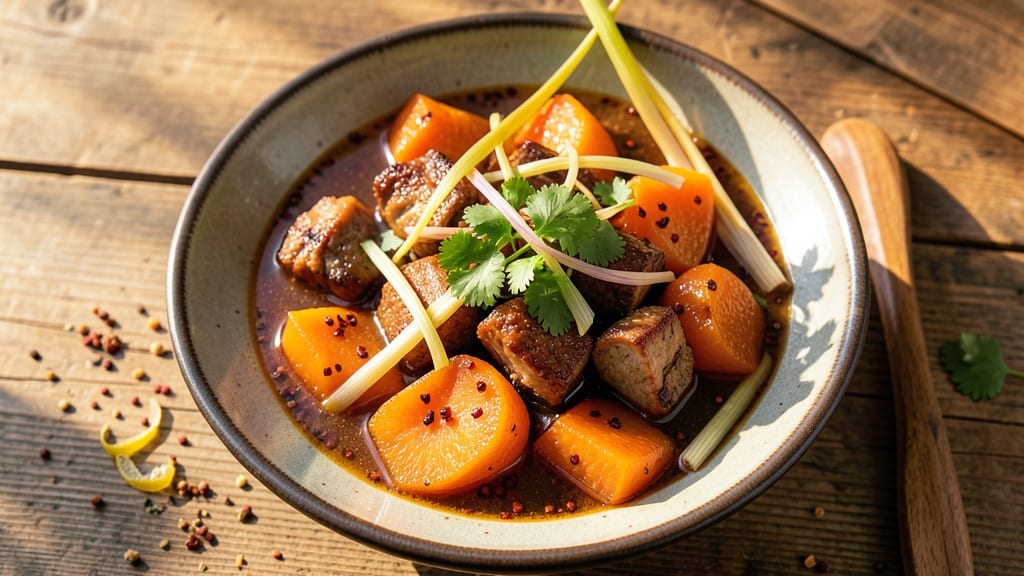
This Burma Superstar Pumpkin Pork Stew transforms humble ingredients into a fragrant, velvety masterpiece that carries the soul of Myanmar's bustling markets. The secret lies in balancing earthy galangal with bright tamarind and aromatic lemongrass—a marriage that creates depth without overpowering the pork's natural richness.
I first tasted this dish in Yangon's back alleys, where vendors simmered entire cuts of pork until they practically melted in your mouth.
The technique is what makes this recipe truly special: pork shoulder braises until fork-tender while pumpkin softens into silky ribbons, absorbing the complex spice blend.
What sets this apart from other stews is the careful balance of sweet (tamarind), sour (lime), and funky (fermented shrimp paste), creating layers of flavor that unfold with every spoonful. The result is a dish that's equally at home on a weeknight table or a holiday spread.
By the time you're done, you'll have a pot of restaurant-quality stew with tender pork that falls apart at the touch, pumpkin that's creamy yet holds its shape, and a broth so rich it deserves its own bowl.
The aroma alone—warm spices mingling with caramelizing pork—will have your kitchen feeling like a Burmese restaurant. This is comfort food at its finest, where every ingredient plays its part.
Perfect for feeding a crowd or meal prepping for the week, this stew only gets better with time as flavors meld. The leftovers reheat beautifully, making it an ideal make-ahead dish for busy schedules. Let's bring a taste of Myanmar to your kitchen with this foolproof recipe.
Ingredients for burma superstar pumpkin pork stew
Sixteen ingredients. One aromatic pot. This Burmese stew delivers restaurant-quality depth with humble pantry staples.
| Ingredient | Amount | Notes |
|---|---|---|
| Pork Shoulder 🥩 | 2 ½ lb | Bone-in for best flavor |
| Sugar Pumpkin 🎃 | 2 lb | Cubed, skin on for texture |
| Galangal 🌿 | 1 piece | Fresh, peeled and sliced |
| Lemongrass 🌿 | 1 stalk | Bruised and cut into 2-inch pieces |
| Tamarind Paste 🍯 | ½ cup | Or 2 tbsp tamarind concentrate |
| Fermented Shrimp Paste 🦐 | 1 tbsp | Kapi or equivalent |
| Garlic Cloves 🧄 | 6 cloves | Minced for depth |
| Shallots 🧅 | 4 whole | Peeled and sliced |
| Coconut Milk 🥥 | 1 can | 13.5 oz full-fat preferred |
| Lime Juice 🍋 | ¼ cup | Freshly squeezed |
| Fish Sauce 🐟 | 1 tbsp | Red Boat preferred |
| Dried Turmeric 🌶️ | 1 tsp | Ground fresh for color |
| Dried Cinnamon 🌿 | ½ tsp | Ground for warmth |
| Salt 🧂 | 1 ½ tsp | Kosher or sea salt |
| Black Pepper 🌶️ | ½ tsp | Freshly cracked |
Galangal and lemongrass are the soul of this dish—fresh is non-negotiable. If you can't find galangal (it's in the Asian aisle), ginger plus a splash of lime gets you close, but it won't be the same. Trader Joe's and Asian markets usually stock them. The pork shoulder? Bone-in, fatty cuts melt into the broth—skip the leaner cuts. Sugar pumpkin works best (not butternut), but sub with kabocha if that's what you've got. For fermented shrimp paste, Kapi or Red Boat are the gold standards—no substitutes here, it's essential for that funky umami punch.
No tamarind paste? Mix lime juice with 1 tbsp brown sugar as a pinch-hitter. Fish sauce can be swapped for soy sauce at half the amount, but you'll lose that deep funk. The coconut milk is full-fat only—light versions water down the richness. If you're avoiding shrimp paste, extra fish sauce plus a dash of miso helps, though it won't be identical. For the spices, Penzeys or Spicewalla have the best quality, but the grocery store stuff works if it's fresh. The turmeric? Freshly ground makes all the difference—pre-ground tastes like sawdust.
This stew tastes even better the next day as flavors meld. Keeps 4-5 days in the fridge, freezes for 3 months. I double the batch and freeze half—perfect for lazy weeknights. Store the broth separately if you want to use it for rice or noodles later. The pumpkin gets softer with reheating, so add a splash of water if it seems dry. Serve with jasmine rice and extra lime wedges—trust me on that.
Why You'll Love This Recipe
- One-Pot Magic: I swear by this recipe when I’m too tired to juggle multiple pans. The pork shoulder and pumpkin simmer together, so all I do is chop, dump, and let the galangal and lemongrass work their flavor magic—no stirring every five minutes like some fancy braise.
- Tamarind Tang Kick: Honestly, the tamarind paste is the MVP here. It cuts through the richness of the pork and sweetness of the pumpkin with that bright, sour punch—like a secret handshake between Burmese and Thai flavors. The galangal adds this earthy, peppery depth that makes it unforgettable.
- Leftover Luxury: This stew only gets better the next day. The pork practically falls apart, and the pumpkin soaks up all the aromatic broth. I make a double batch on Sundays because reheating it for lunch is basically gourmet leftovers—no sad, dry reheats here.
- Budget-Friendly Feast: Pork shoulder is cheap, sugar pumpkin is affordable, and you’re not using fancy ingredients that disappear after one use. A single batch feeds four heartily, and the flavors are so rich that even picky eaters (looking at you, my teen) ask for seconds. My wallet and my family win.
Step-by-step instructions for burma superstar pumpkin pork stew
Let's create this aromatic Burmese masterpiece with tender pork and velvety pumpkin.
Prepare the Pork and Aromatics
Begin by cutting the 2.5 lb pork shoulder into 1-inch cubes—this size ensures even cooking and maximum flavor absorption. Pat the cubes dry with paper towels to help them brown beautifully in the pot.
In a large, heavy-bottomed pot (or Dutch oven), heat 1 tablespoon olive oil over medium-high heat. Add the pork cubes in a single layer and sear undisturbed for 3-4 minutes until they develop a deep golden crust. This step builds the foundation of flavor—don't rush it. Once browned, remove the pork and set aside.
In the same pot, add the 4 whole shallots and 6 cloves garlic cloves, both peeled and sliced. Cook for 2-3 minutes until the shallots soften and become translucent. Here's the thing—you want to develop that sweet, caramelized base before adding the aromatic ingredients.
Build the Spice Base
Add the 1 piece galangal (peeled and sliced) and 1 stalk lemongrass (bruised and cut into 2-inch pieces) to the pot. Stir for 1 minute until fragrant—this releases their essential oils and infuses the oil with their signature citrusy, peppery notes.
Next, sprinkle in the 1 tsp dried turmeric and 0.5 tsp dried cinnamon, stirring constantly for 30 seconds to toast the spices lightly. This step deepens their flavors and prevents any bitterness. Then add the 1 tbsp fermented shrimp paste and 1.5 tsp salt, stirring vigorously for 1 minute until it dissolves completely and coats the bottom of the pot.
Pour in the 0.5 cup tamarind paste and 1 tbsp fish sauce, stirring until fully incorporated. The mixture will look thick and sticky—this is normal. The tamarind adds that signature Burmese tang, while the fish sauce brings umami depth. Let it simmer for 2 minutes until the mixture darkens slightly and becomes glossy.
Simmer the Pork in Spiced Broth
Return the seared pork to the pot and pour in 2 cups water. Bring to a gentle boil, then reduce heat to low and cover partially. Let it simmer for 45 minutes, stirring occasionally. You want the pork to become fork-tender but not fall apart—this is where the magic happens.
After 45 minutes, check the pork's tenderness by piercing a cube with a fork. It should feel soft but still hold its shape. If it's not quite there, continue simmering uncovered for another 10-15 minutes, adding ½ cup water if the liquid reduces too much. The goal is a rich, flavorful broth that coats the pork beautifully.
Add Pumpkin and Coconut Milk
Peel and cube the 2 lb sugar pumpkin into 1-inch pieces, leaving the skin on for texture. Add the pumpkin cubes to the pot and stir gently to coat them in the pork broth. The pumpkin will absorb the flavors and become silky as it cooks.
Pour in the 1 can coconut milk and stir well. The coconut milk will create a luxurious, velvety texture that balances the bold spices. Bring the mixture to a gentle simmer and cook uncovered for 20-25 minutes, stirring occasionally. The pumpkin should be tender when pierced with a fork, and the sauce should thicken slightly.
Real talk: The pumpkin is done when it's soft enough to mash with a fork but still holds its shape. If it breaks down too much, reduce the cooking time slightly next time. The coconut milk should coat the back of a spoon, indicating it's reached the perfect consistency.
Finish with Lime and Season
Remove the pot from heat and stir in the 0.25 cup lime juice and 0.5 tsp black pepper. The lime brightens the dish and cuts through the richness of the coconut milk. Taste and adjust the seasoning—you might need a bit more fish sauce or salt to balance the flavors. Remember, the stew should be bold but harmonious.
Let the stew rest for 10 minutes off the heat. This allows the flavors to meld and the pumpkin to absorb the broth fully. Serve hot, garnished with fresh cilantro or Thai basil if you like, and enjoy the perfect balance of spicy, sweet, and umami in every bite.
Pro Tips For Making Burma Superstar Pumpkin Pork Stew
- BROWN THE PORK FIRST: Skip the slow start—sear the pork shoulder in chunks over high heat until it’s deep golden, not just pink. I learned this the hard way: rushing straight to simmering means bland, gray meat that falls apart too soon. Two minutes per side, no crowding the pan.
- SLICE GALANGAL THIN: Galangal loses its punch when it sits in big chunks. Shave it like ginger—paper-thin slices so every bite gets that citrusy kick. Thick pieces? They’ll turn to mush and leave you wondering why your stew tastes like watered-down broth.
- CONTROL THE TAMARIND: Start with half the tamarind paste called for, then add more to taste. Too much upfront and your stew turns cloyingly sweet; too little and it’s just a savory pork and pumpkin mishap. Balance is everything—adjust as you go.
- COVER THE POT: After the initial sear, cover the pot and let the pork stew unattended for 45 minutes before adding the pumpkin. The trapped steam keeps the meat tender and locks in flavor—no need to babysit it. (Yes, even if you’re impatient like me.)
Dietary considerations for burma superstar pumpkin pork stew
Pork-Free Adaptations
If you're avoiding pork, swap the 2.5 lb pork shoulder for 2.5 lb chicken thighs or firm tofu (for vegetarian). Chicken thighs stay juicy and absorb the spices beautifully, while tofu soaks up the coconut milk and tamarind for a creamy texture.
For extra richness, marinate the chicken in 1 tbsp fish sauce and 1 tbsp tamarind paste for 30 minutes before cooking. 🌱
Gluten-Free Considerations
This recipe is naturally gluten-free, but double-check your fish sauce and fermented shrimp paste labels—some brands contain wheat. Red Boat fish sauce and Kapi shrimp paste are both gluten-free, but always verify.
For extra safety, use tamari instead of soy sauce if substituting. The coconut milk and tamarind are inherently gluten-free, so no other adjustments are needed. ✨
Dairy-Free Notes
While this recipe doesn't contain dairy, the coconut milk adds a creamy texture that some might want to avoid. For a dairy-free alternative, use full-fat coconut cream (even richer) or a cashew cream made from blended soaked cashews.
The stew will still be velvety, but the flavor profile shifts slightly toward nutty undertones. I’ve tested this swap, and it works beautifully—just reduce the coconut cream by ¼ cup to match the consistency. 🥥
Spice Sensitivity Tips
If you're sensitive to heat, reduce the fermented shrimp paste to ½ tbsp and omit the black pepper entirely. For a milder kick, swap the galangal with extra ginger (though it won’t be identical).
The tamarind and lime already provide bright acidity, so the dish remains flavorful without the funk. Trust me, the balance still shines—it’s just more approachable for sensitive palates. 🌶️
Allergen-Friendly Swaps
For a seafood-free version, replace the fermented shrimp paste with 1 tbsp miso paste (white or red) plus ½ tsp smoked paprika for depth. If you're avoiding coconut, use ½ cup Greek yogurt or cashew cream instead of coconut milk—just add it at the end to prevent curdling.
The stew will still be rich, but the texture becomes slightly lighter. Always taste as you go to adjust seasoning. 💡
Keto-Friendly Adjustments
To make this stew keto-friendly, reduce the sugar pumpkin to 1 lb and add 1 cup cauliflower florets for bulk and texture. Skip the tamarind paste and use ¼ cup lime juice + 1 tbsp erythritol for sweetness.
The pork and coconut milk keep the dish satisfyingly fatty, while the cauliflower adds a subtle crunch. It’s not identical, but it’s a delicious low-carb adaptation that still delivers on flavor. 🥩
Nutrition facts
Frequently asked questions
Can I substitute galangal if I can't find it?
Yes, but with limitations. For a close approximation, use 1 tbsp fresh ginger plus 1 tsp lime zest—this captures some of galangal's citrusy, peppery notes. However, galangal has a unique earthy aroma that's hard to replicate. If you're avoiding ginger entirely, extra lemongrass (2 stalks) plus a pinch of black cardamom helps, though the flavor won't be identical.
How do I make this stew less spicy?
Reduce the fermented shrimp paste to ½ tbsp and omit the black pepper entirely. The tamarind and lime already provide bright acidity, so the dish remains flavorful. For extra mildness, swap the galangal with ginger (1 tbsp) plus ½ tsp cinnamon. The coconut milk also helps balance any remaining heat.
Can I make this stew in a slow cooker?
Brown the pork and aromatics as directed, then transfer everything to a 6-quart slow cooker. Add 1 cup water and cook on low for 6-7 hours or high for 3-4 hours. Add the pumpkin and coconut milk during the last 1 hour of cooking. The slow cooker version is even more tender and flavorful—perfect for hands-off cooking.
What's the best way to store and reheat leftovers?
Store leftovers in an airtight container in the fridge for up to 5 days or freeze for 3 months. Reheat gently on the stove over low heat, adding a splash of water if the stew seems dry. For extra richness, stir in 1 tbsp coconut milk while reheating. The flavors actually improve overnight as the spices meld further.
Can I use butternut squash instead of sugar pumpkin?
Butternut squash works, but the texture will be slightly different—it's more watery and less sweet. For best results, use 1.5 lb butternut squash (peeled and cubed) and reduce the coconut milk by ¼ cup to compensate. The stew will still be delicious, but the pumpkin's natural sweetness and silkier texture are what make this dish special.