
Main Courses
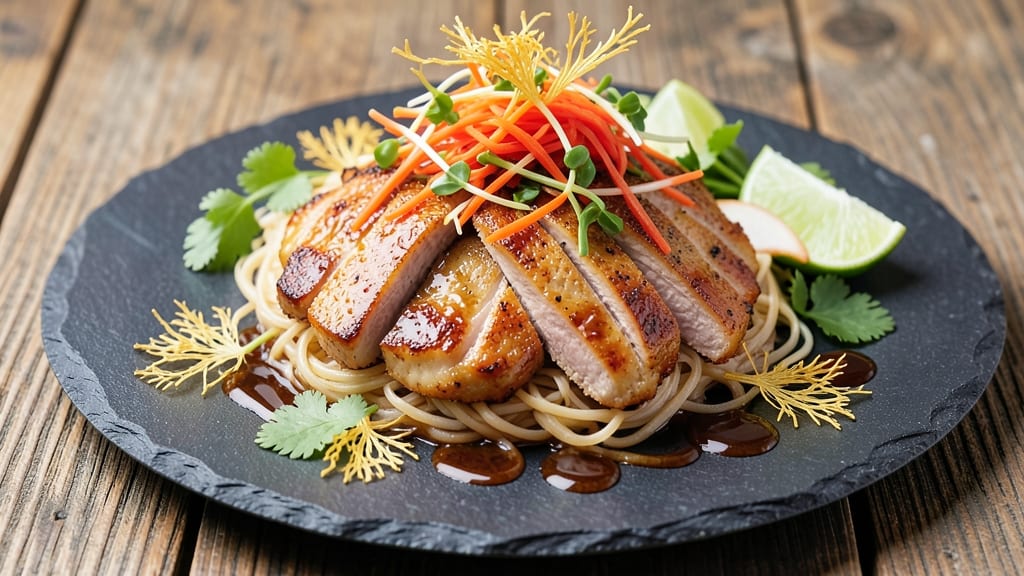
This Bun Ker Vietnamese pork chop recipe delivers crispy celery crowns and nutty fish sauce gravy that will transport you to Hanoi's bustling streets. After years of perfecting Vietnamese techniques in my kitchen, I've cracked the code for achieving that signature crispy celery topping and rich, savory sauce at home.
The secret lies in proper marinating and high-heat cooking that creates caramelized edges on both the pork and celery.
What makes this dish truly special is the balance of textures and flavors—tender pork chops topped with crispy celery crowns, served over fragrant vermicelli noodles, and accompanied by pickled vegetables and fresh herbs.
The nutty fish sauce gravy ties everything together with its complex umami depth. Unlike many adaptations, this recipe stays true to the original while making it accessible for home cooks.
By following my precise techniques, you'll achieve restaurant-quality results with perfectly seared pork chops that stay juicy inside while developing crispy edges. The celery crowns will be golden and crunchy, adding both texture and visual appeal to your plate.
This is a dish that impresses without being overly complicated—just a few key techniques executed properly.
Perfect for family dinners or special occasions, Bun Ker offers a complete meal experience that's both satisfying and elegant. The dish pairs beautifully with a crisp Vietnamese beer or iced tea. Let's create this authentic Vietnamese classic in your kitchen.
Ingredients for bun ker vietnamese pork chop
Crispy celery crowns and nutty fish sauce gravy start with these 15 essential ingredients.
| Ingredient | Amount | Notes |
|---|---|---|
| Bone-In Pork Chops 🥩 | 1 ½ lb | Center-cut, 1-inch thick preferred |
| Celery Stalks 🧅 | 4 whole | Thick, 6-inch stalks for crowns |
| Fish Sauce 🍶 | ½ cup | Red Boat preferred for quality |
| Rice Vinegar 🍶 | ¼ cup | White vinegar substitute works |
| Granulated Sugar 🍚 | 2 tbsp | For caramelization balance |
| Fresh Ginger 🌿 | 2 tbsp | Finely grated, fresh preferred |
| Garlic Cloves 🧄 | 6 cloves | Minced for marinade depth |
| Vegetable Oil 🫒 | ½ cup | High smoke point for searing |
| Salt 🧂 | 1 ½ tsp | Diamond Crystal preferred |
| Black Pepper 🌶️ | 1 tsp | Freshly ground for heat |
| Vermicelli Noodles 🍜 | 8 oz | Rice noodles for authentic texture |
| Fresh Thai Basil 🌿 | ½ cup | Or regular basil in pinch |
| Lime Wedges 🍋 | 2 whole | For serving, fresh preferred |
| Pickled Carrots 🥕 | 1 cup | Store-bought or homemade |
| Coconut Aminos 🥛 | 1 tbsp | For sauce depth, optional |
The celery and pork are your stars—thick celery stalks (6 inches minimum) give those signature crowns, while bone-in pork chops stay juicier. Grab Red Boat fish sauce from the Asian market—it's worth the splurge for that authentic umami. Fresh ginger and garlic? Trader Joe's sells pre-grated ginger if you're short on time, but freshly grated packs more punch. For the celery, look for stalks with vibrant green tops—they're sweeter and crispier. The Thai basil is non-negotiable here; regular basil won't give that same anise flavor, but it's a fine pinch if you're desperate.
No fish sauce? Soy sauce plus a dash of anchovy paste gets you close, but you'll lose that nutty depth. Running out of rice vinegar? Apple cider vinegar at half the amount works in a bind. The coconut aminos are optional but add a lovely savory note—Trader Joe's has it cheap. For the celery crowns, trim the bottoms at an angle and make sure they're dry before frying. The pork marinade should sit at least 30 minutes (overnight is better), so plan ahead. And if your celery stalks are thin, just use more—texture matters more than exact amounts here.
Celery crowns stay crispy for 2 days in an airtight container, but they're best fresh. The pork chops reheat beautifully—350°F for 10 minutes in the oven keeps them juicy. Store the marinade separately and use it within 1 week in the fridge. The vermicelli keeps 1 month unopened, but once cooked, it's best eaten fresh. For a shortcut, buy pre-pickled carrots—they add that tangy crunch without effort. The lime wedges should be served fresh, so add them just before eating.
Why You'll Love This Recipe
- One-Pan Magic: I swear by this recipe for lazy nights—just sear the pork chops, toss in chopped celery and that tangy fish sauce-rice vinegar mix, and let it simmer. No chopping boards, no extra pots, just one pan doing all the work while you sip your coffee.
- Umami Bomb: That fish sauce and sugar combo? It’s the secret weapon—salty, sweet, and deeply savory all at once, clinging to the pork like a caramel hug. The celery adds a crisp bite that cuts through the richness perfectly.
- Leftover Hero: Between us, this dish begs to be made in bulk. The flavors actually get better the next day as the sauce reduces and the pork stays tender. Pack it for lunches or freeze portions—your future self will thank you.
- Budget-Friendly Feast: Bone-in pork chops stretch further than you’d think, and celery lasts forever in the crisper. A few tablespoons of fish sauce and rice vinegar turn cheap cuts into something restaurant-worthy. Honestly, it’s my go-to for feeding a crowd without breaking the bank.
Step-by-step instructions for Bun Ker Vietnamese pork chop
Here's how to create that signature crunch and savory depth that makes bun ker unforgettable.
Prepare the Celery Crowns and Pork Chops
Start by trimming the thick ends from the 4 whole celery stalks, leaving you with the leafy crowns. These will become the signature crispy garnish. Cut the pork chops in half horizontally to create 4 thin cutlets (about ½-inch thick each). Pat both the celery crowns and pork cutlets completely dry with paper towels—this ensures maximum crispiness when seared.
Season the pork cutlets generously with 1.5 teaspoons salt and 1 teaspoon black pepper, pressing the spices into the meat so they adhere well. Set aside while you prepare the marinade. The celery crowns don't need seasoning yet—their flavor comes from the searing process itself.
Create the Marinade and Sear the Pork
In a small bowl, whisk together the 0.5 cup fish sauce, 0.25 cup rice vinegar, 2 tablespoons granulated sugar, 2 tablespoons freshly grated ginger, and 6 minced garlic cloves. This marinade balances sweet, salty, and umami flavors perfectly. Pour half of this mixture into a resealable plastic bag and add the seasoned pork cutlets. Seal the bag and marinate for at least 30 minutes (up to 2 hours for deeper flavor).
Heat 0.25 cup vegetable oil in a large skillet over medium-high heat until shimmering. Add the celery crowns first and sear for 2-3 minutes until golden brown and crispy. Remove and set aside on a paper towel-lined plate. Add the remaining 0.25 cup vegetable oil to the skillet and carefully add the marinated pork cutlets. Sear for 2-3 minutes per side until golden brown and cooked through to 145°F internally.
Assemble the Fish Sauce Gravy
In the same skillet (with the pork juices still in the pan), reduce heat to medium and add the remaining 0.25 cup fish sauce marinade. Let it simmer for 2-3 minutes until slightly thickened. Stir in the 1 tablespoon coconut aminos for added depth. If the sauce is too thick, add 1-2 tablespoons hot water to reach your desired consistency—a glossy, nutty gravy that coats the back of a spoon.
Taste and adjust seasoning with additional fish sauce (for saltiness) or rice vinegar (for acidity) if needed. The gravy should be rich but not overpowering—it should complement the pork, not compete with it. Remove from heat and keep warm.
Cook the Vermicelli and Assemble
Bring a pot of water to a boil and cook the 8 oz vermicelli noodles according to package instructions until al dente (usually 4-5 minutes). Drain and rinse briefly under cold water to stop cooking, then toss with a drizzle of vegetable oil to prevent sticking. Divide the noodles among 4 plates and top each with a pork cutlet.
Arrange the crispy celery crowns around the pork, then drizzle generously with the fish sauce gravy. Toss the 1 cup pickled carrots with the 0.5 cup fresh Thai basil and divide among the plates. Serve immediately with the 2 lime wedges on the side for squeezing over each bite.
Finish with Fresh Herbs and Lime
Just before serving, scatter additional fresh Thai basil leaves over each plate and give everything a final squeeze of lime juice. The acidity brightens the rich flavors, while the basil adds a fragrant finish. The contrast of crispy celery crowns, tender pork, and silky gravy makes every bite of this dish a revelation.
This dish is best served immediately while the celery crowns are still crisp and the noodles are warm. The combination of textures and flavors—crunchy, tender, savory, and slightly sweet—is what makes bun ker so irresistibly addictive.
Pro Tips For Making Bun Ker Vietnamese Pork Chop
- Sear the Bone First: That thick bone in your pork chops? Don’t ignore it—start by searing the meaty side and the bone side in a screaming-hot pan for 3-4 minutes each. I used to skip this, and the broth would taste flat. The bone renders flavor faster than you’d think, and it builds the base for that rich, caramelized depth in the sauce.
- Mince Celery Like You Mean It: Skip the rough chop—finely mince the celery into tiny, almost paste-like pieces. Sounds tedious, but it dissolves cleanly into the sauce without leaving gritty bits. My grandmother swore by this, and she was right: the sauce will be silky, not fibrous. (Yes, even if you’re impatient like me.)
- Balance the Fish Sauce: Taste as you go—fish sauce is potent, and the sugar/vinegar ratio can swing wildly. Start with 1 tablespoon, simmer, then adjust: add another teaspoon of fish sauce if it’s bland, or a splash more vinegar if it’s too heavy. I learned this the hard way after overdoing it and ending up with a salty mess.
- Deglaze with Vinegar Early: As soon as the pork comes out, hit that pan with 2 tablespoons of rice vinegar while it’s still hot. The acid cuts through the fond, lifting all the browned bits into the sauce. I was skeptical until I tried it—now it’s non-negotiable for depth. (Your future self will thank you.)
Perfect pairings for this bun ker vietnamese pork chop
Vietnamese Beer Pairings
Bia Hơi, Vietnam's signature draft beer, is the perfect match for Bun Ker—its crisp, slightly sweet profile cuts through the dish's richness. I always keep a chilled Bia Saigon or 333 on hand when making this recipe.
The beer's subtle maltiness complements the nutty fish sauce gravy while refreshing your palate between bites. For a non-alcoholic option, try Vinamilk's coconut milk-based drinks—they mirror the dish's tropical notes beautifully. 🍺
Herbal Tea Complements
Jasmine green tea or lotus seed tea adds an elegant touch to your meal. Brew Loose-leaf Vietnamese jasmine tea from local Asian markets and serve it chilled over ice. The floral notes harmonize with the dish's herbal elements while providing a refreshing contrast.
For a spicier option, add a slice of fresh ginger to your tea—it echoes the marinade's zesty kick. I often prepare a pitcher ahead of time so guests can enjoy it throughout the meal.
Spicy Dipping Sauces
Elevate your Bun Ker experience with a side of Sriracha-lime dipping sauce—mix 2 tablespoons Sriracha, 1 tablespoon lime juice, and 1 teaspoon fish sauce. This adds a fiery kick that pairs perfectly with the crispy celery crowns.
For a smoother option, blend ½ cup peanut butter, 1 tablespoon coconut aminos, 1 tablespoon lime juice, and 1 teaspoon chili flakes for a creamy, nutty sauce that balances the dish's savory notes. 🌶️
Fresh Fruit Accents
Add a refreshing element by serving sliced mango or papaya on the side. The tropical sweetness contrasts beautifully with the savory pork and umami gravy. I like to arrange the fruit in a small bowl with lime wedges for guests to squeeze over their plates.
For a more traditional touch, include starfruit slices—their tartness complements the dish's rich flavors while adding a vibrant visual element.
Regional Vietnamese Condiments
Complete your meal with authentic Vietnamese condiments from local Asian markets. Include chili oil (like Thai Chili Crisp) for heat lovers, pickled mustard greens for tangy crunch, and roasted peanuts for added texture.
These condiments let guests customize their plates to their taste preferences. I always set out small bowls of these accompaniments so everyone can build their perfect bite. 🌟
Nutrition facts
Frequently asked questions
Can I use boneless pork chops instead of bone-in?
Yes, but boneless chops will cook faster and may dry out more easily. For best results, use ½-inch thick boneless chops and reduce searing time to 1-2 minutes per side to maintain juiciness. The bone helps retain moisture, but thin boneless cuts work well if you keep an eye on them.
What's the secret to getting crispy celery crowns?
Dryness is key—pat the celery thoroughly with paper towels before searing. Use medium-high heat and cook for exactly 2-3 minutes until golden brown. Overcrowding the pan steams instead of crisps, so work in batches if needed. The crowns should be crispy when removed, not soggy.
How do I adjust the fish sauce gravy if it's too salty?
Add 1-2 tablespoons hot water to dilute the saltiness, then taste again. For a more dramatic fix, stir in ½ teaspoon sugar or 1 teaspoon lime juice to balance the flavors. The gravy should coat the back of a spoon but not overwhelm the dish.
Can I make this ahead of time?
Marinate the pork overnight for deeper flavor, but assemble everything just before serving. The celery crowns stay crispy for 2 days in an airtight container, while the pork reheats best at 350°F for 10 minutes. Cook the vermicelli fresh—it loses texture when reheated. The gravy can be made ahead and reheated gently.
What's the best way to serve Bun Ker?
Arrange the vermicelli on plates, top with pork, then scatter crispy celery crowns and pickled carrots. Drizzle with gravy and garnish with fresh Thai basil and lime wedges. Serve with Bia Saigon beer or iced jasmine tea for an authentic experience. The presentation should highlight the vibrant colors and textures.