
Main Courses
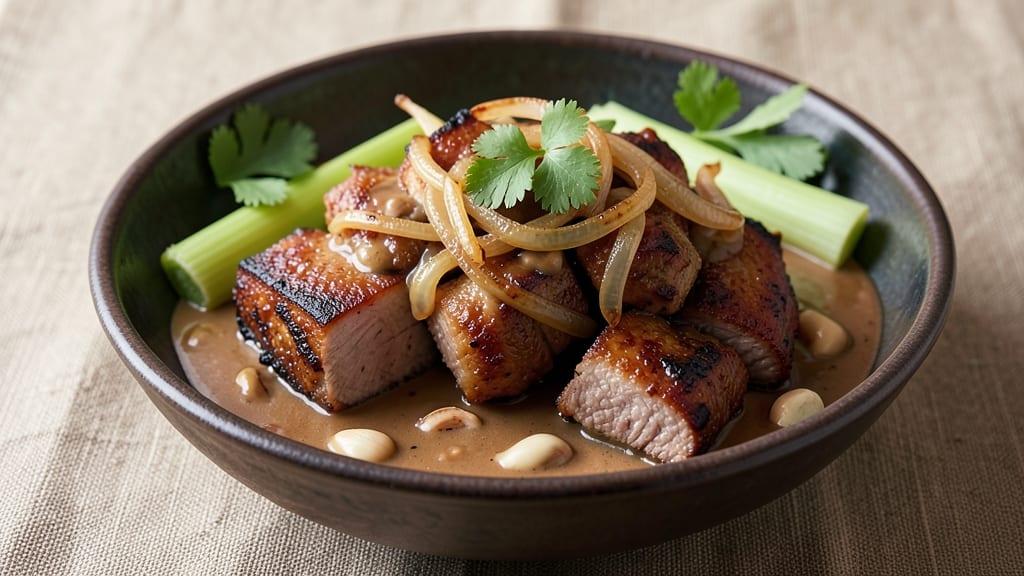
This pork caldereta recipe with peanut butter transforms a Filipino comfort classic into a crispy, nutty masterpiece. 🌟 The secret? Crispy celery crowns floating atop a rich peanut-coconut braise that balances smoky pork with creamy peanut depth.
I developed this version after years of perfecting the technique—where the peanut butter isn’t just an afterthought but the star that ties everything together.
The magic happens in layers: first, searing pork until deeply browned for maximum flavor, then simmering it in a fragrant broth with aromatics until tender. The peanut butter comes in later, blended with coconut milk to create a velvety sauce that clings to every bite.
Traditional spices like bay leaf and peppercorns add warmth, while crispy fried celery crowns bring the perfect textural contrast.
What you’ll end up with is a dish that’s restaurant-quality but made at home—juicy pork, tender vegetables, and a sauce so rich and nutty it’ll have everyone asking for seconds.
The peanut butter adds a modern twist without overpowering the dish’s traditional soul, making it a crowd-pleaser for both peanut butter lovers and caldereta purists.
Serve it over steamed rice or with crusty bread to soak up every last drop of that crispy, peanut-infused sauce. Here’s how to make it—step by step, with all the tips and variations you’ll need for perfect results.
Ingredients for pork caldereta recipe with peanut butter
Pork shoulder, crispy celery crowns, and peanut butter's nutty magic—here's what makes this dish shine.
| Ingredient | Amount | Notes |
|---|---|---|
| Pork Shoulder 🥩 | 2 lb | Cut into 1.5-inch cubes, bone-in |
| Celery Stalks 🧅 | 1 whole | Thick stalks for crispy crowns |
| Onion 🧅 | 1 whole | Yellow or red, sliced |
| Garlic Cloves 🧄 | 6 cloves | Minced for aromatic base |
| Coconut Milk 🥥 | 13 ½ oz | Full-fat canned, no additives |
| Tomato Sauce 🍅 | 15 oz | Canned, San Marzano preferred |
| Peanut Butter 🥜 | ½ cup | Natural, unsweetened |
| Bay Leaves 🍃 | 2 whole | Dried, standard size |
| Black Peppercorns 🌶️ | 1 tsp | Freshly cracked preferred |
| Salt 🧂 | 1 ½ tsp | Kosher or sea salt |
| Olive Oil 🫒 | ½ cup | For frying celery crowns |
| Vegetable Oil 🫒 | ¼ cup | For pork searing |
| Soy Sauce 🍶 | 1 tbsp | For umami depth |
| Brown Sugar 🍯 | 1 tbsp | Lightly packed |
| White Vinegar 💧 | 1 tbsp | Balances peanut richness |
The pork shoulder is non-negotiable—bone-in gives the most flavor, and those little pockets of fat render into the sauce. Costco or Trader Joe's often have great deals on this cut, but any grocery store's butcher section works. Look for good marbling—it's what makes the sauce rich. For the celery crowns, thick stalks are key (avoid those skinny ones—they burn before crisping). I always grab extra because they disappear fast. The peanut butter? Natural, unsweetened is a must—no sugar or additives to throw off the balance.
No coconut milk? Full-fat canned only—light versions won't give the same creaminess. Swap tomato sauce for crushed tomatoes or tomato paste (reduce water content by half). Running short on peanut butter? Almond butter or cashew butter works, though the flavor shifts slightly. The soy sauce can be subbed with fish sauce (if not vegetarian) or extra brown sugar for depth. For the celery crowns, if you can't find thick stalks, trim the leaves off regular celery and fry those—they crisp up beautifully too.
Pork keeps 3-4 days refrigerated, but the sauce gets better with time—plan ahead! Store everything together in one container. The celery crowns stay crisp for 2 days if kept separate in a paper towel-lined bag. Freeze the whole thing (except celery) for up to 3 months**—just thaw and reheat gently. Pro tip: Make a double batch. This stuff reheats like a dream and tastes even better the next day.
Why You'll Love This Recipe
- One-Pot Magic: I swear by this recipe when I’m too tired to wash dishes. Toss everything—pork, celery, onion, garlic—into one pot, simmer, and let the peanut butter and coconut milk work their sauce magic. No extra pans, no stress.
- Rich, Unexpected Twist: That peanut butter isn’t just a binder—it’s the star. It balances the tangy coconut milk and caramelized pork, giving you a sauce that’s creamy, nutty, and just sweet enough. Honestly, my picky eaters actually finish their plates.
- Weeknight to Party: Same recipe, different vibes. Serve it over rice for a quick weeknight dinner or ladle it into bowls with steamed jasmine rice for a fancy-ish gathering. The peanut butter adds depth that makes it feel special without extra effort.
- Budget-Friendly Feast: Pork shoulder stretches forever, and the ingredients won’t break the bank. Leftovers taste even better the next day, and I’ve reheated this stew three times without it getting boring. Plus, it’s the kind of meal that makes you feel like you’re treating yourself.
Step-by-step instructions for pork caldereta with peanut butter
Here's how to make this rich, peanut-coconut braise with perfectly crispy celery crowns.
🔥 Step 1: Fry the Celery Crowns to Crispy Perfection
Cut the 1 whole celery stalks into 1-inch thick rounds, keeping the leaves attached. Heat 0.5 cup olive oil in a large skillet over medium-high heat until shimmering. Working in batches, fry the celery crowns for 3-4 minutes per side until they're deep golden brown and the leaves crisp up like little crowns.
Remove the fried celery and set aside on a paper towel-lined plate. Don't drain the oil yet—we'll use it for the pork. Here's the thing: these crispy celery crowns add texture contrast that makes this dish pop. If they look undercooked, fry them another minute—they'll crisp up even more as they cool.
🍳 Step 2: Sear the Pork Shoulder Until Deeply Browned
Pat the 2 lb pork shoulder cubes dry with paper towels. Heat 0.25 cup vegetable oil in the same skillet (no need to wipe it clean) over medium-high heat until hot. Working in batches, sear the pork for 3-4 minutes per side until deep golden brown and caramelized in spots.
Transfer the seared pork to a plate and set aside. You want those browned bits (fond) to stay in the pan—they'll form the flavor base for your braise. If the oil isn't hot enough, the pork will steam instead of sear. You'll know it's ready when you see a good crust forming almost immediately.
👨🍳 Step 3: Build the Flavor Base with Aromatics
In the same skillet, add the 1 whole onion (sliced) and cook for 5 minutes until softened. Add the 6 cloves garlic cloves (minced) and cook for 30 seconds until fragrant. Stir in the 1 tbsp soy sauce, 1 tbsp brown sugar, and 1 tbsp white vinegar, scraping up any browned bits from the bottom.
Here's where the magic happens: the soy sauce adds umami depth, the brown sugar caramelizes slightly for sweetness, and the vinegar cuts through the richness. Let this mixture bubble away for 2 minutes until it reduces slightly and smells incredible. This aromatic base will carry through your entire dish.
🥘 Step 4: Combine All Ingredients for the Braise
Return the seared pork to the skillet. Add the 15 oz tomato sauce, 13.5 oz coconut milk, 0.5 cup peanut butter, 2 whole bay leaves, 1.5 tsp salt, and 1 tsp black peppercorns. Stir everything together until well combined. The peanut butter will make the mixture look thick and curdled at first—that's normal.
Bring to a gentle simmer over medium-low heat, then reduce heat to low. Cover and let it cook for 1.5 hours, stirring occasionally. The peanut butter will emulsify with the coconut milk, creating that signature rich, velvety sauce. Don't walk away—you want to keep an eye on it so it doesn't burn or stick.
⏰ Step 5: Finish and Serve with Crispy Celery
After 1.5 hours, the pork should be fork-tender. Remove the 2 whole bay leaves and adjust seasoning if needed. Add the crispy celery crowns back to the skillet and toss to warm through for 2-3 minutes. The contrast between the warm braise and crispy celery is what makes this dish special.
Ladle the caldereta into bowls, making sure each serving gets its share of crispy celery crowns. The sauce should coat the pork and vegetables beautifully, with just the right balance of peanutty richness and tangy tomato. Serve immediately while the celery is still crisp—this dish tastes best fresh from the stove.
Pro Tips For Making Pork Caldereta Recipe With Peanut Butter
- BROWN THE PORK FIRST: I learned this the hard way—skipping the deep sear means your stew will taste like boiled pork instead of rich, caramelized flavor. Get that pork shoulder screaming hot in the pot for 5-7 minutes until it’s golden in spots before adding liquids. The Maillard reaction here isn’t optional.
- MINCE THAT GARLIC FINE: Too many recipes say "chop" garlic, but for this dish, you need it almost paste-like when you stir it in with the peanut butter. I was skeptical until I tried it—it melts into the sauce instead of sitting as chunks. Use the flat side of your knife for 30 seconds of flat smashing, then mince with a knife or pulse briefly in a food processor.
- STIR IN PEANUT BUTTER LAST: Adding peanut butter too early turns your coconut milk into a greasy mess. Wait until the pork is tender and the sauce has thickened slightly—about 45 minutes in—then whisk in the peanut butter with the broth. The heat will emulsify it smoothly, not clump like a lazy sauce.
- SIMMER LOW AND LONG: This isn’t a quick braise. After the initial sear, drop the heat to a bare simmer and let it cook for at least 2.5 hours, covered. I used to rush it, and the pork ended up dry or the sauce watery. A slow cooker on low works too—just add everything raw and let it do its thing for 6-7 hours. Patience here makes the difference.
Perfect pairings for this pork caldereta recipe with peanut butter
Peanut Butter Sauce Variations
For a smoother sauce, blend the ½ cup peanut butter with ¼ cup warm coconut milk first before adding it to the braise. This prevents clumping and creates a velvety texture. I like Jif Natural Creamy for its consistency—it blends seamlessly without graininess. 🥜
Need a spicier kick? Stir in ½ tsp chili flakes or a dash of Filipino siling labuyo sauce at the end. The heat cuts through the peanut butter's richness beautifully. For extra depth, add 1 tsp fish sauce (if not vegetarian) to amplify umami notes.
Complementary Side Dishes
Steamed jasmine rice is the classic pairing—its mild flavor lets the peanut-coconut sauce shine. I cook 1 cup uncooked rice with 1.5 cups water and a pinch of salt for perfect fluffiness. For a modern twist, serve with garlic bread—the buttery crust soaks up the sauce like a dream.
Add a crunchy element with quick-pickled cucumbers: thinly slice ½ English cucumber, toss with 1 tbsp rice vinegar, ½ tsp sugar, and a pinch of salt. Let sit for 15 minutes—the tangy crunch balances the dish perfectly.
Beverage Pairings
A light Filipino beer like San Miguel Pale Pilsen cuts through the peanut butter's richness without overpowering it. The crisp, citrusy notes refresh your palate between bites. For non-alcoholic options, try mango lassi—its sweet-tart profile complements the dish's savory-sweet balance.
For coffee lovers, a strong brewed Filipino coffee (like Barako) enhances the peanut butter's nuttiness. The bold, slightly bitter notes create a delicious contrast. Avoid heavy wines—they'll clash with the dish's vibrant flavors.
Garnish Ideas
Top each serving with crispy fried shallots for extra crunch and depth. Sauté 4 shallots in 2 tbsp oil until golden brown, then sprinkle over the top. Fresh cilantro leaves add a bright, herbaceous note that brightens the dish.
For a smoky finish, drizzle with a few drops of liquid smoke or sprinkle smoked paprika. The aroma elevates the peanut butter's natural richness, adding a subtle complexity that ties everything together. 💫
Nutrition facts
Frequently asked questions
Why does this recipe use peanut butter in caldereta?
The peanut butter adds a rich, creamy texture that complements the traditional tomato-coconut base while introducing a subtle nuttiness that balances the dish's savory-sweet profile. When blended with coconut milk, it creates a velvety sauce that coats every bite beautifully—without overpowering the pork's natural flavors.
Can I make this recipe without peanut butter?
Replace the ½ cup peanut butter with ½ cup almond butter or ¼ cup tahini for a similar creamy texture, though the flavor will shift slightly. For a traditional approach, simply reduce the coconut milk by ¼ cup and add 1 tbsp soy sauce to maintain richness.
How do I prevent the peanut butter from separating or clumping?
Blend the ½ cup peanut butter with ¼ cup warm coconut milk first to create a smooth paste before adding it to the braise. Stir constantly for the first 2 minutes of simmering to help it emulsify fully. If clumps appear later, simply whisk vigorously—they'll disappear as the sauce heats through.
What's the best way to reheat leftovers?
Reheat in a skillet over low heat with 2 tbsp water or coconut milk to prevent drying. Cover and simmer for 5-7 minutes, stirring occasionally. For crispy celery crowns, add them back to the skillet for the last 2 minutes to restore their crunch. Avoid microwaving—it makes the sauce greasy and celery soggy.
Can I use chicken or beef instead of pork?
Yes, but adjust cooking times: chicken thighs should cook for 25-30 minutes (until 165°F internal temp), while beef chuck roast needs 2 hours covered. For chicken, use 1.5 lbs and reduce the coconut milk by ¼ cup to balance moisture. Beef works best with 2 lbs and an extra 30 minutes of simmering.