
Main Courses
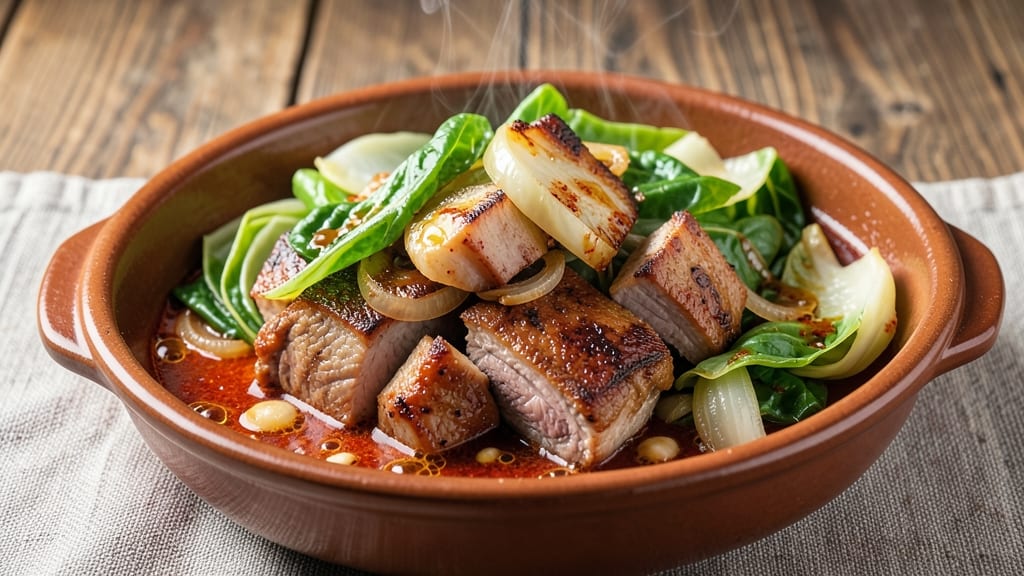
This Bulgarian pork and cabbage recipe brings the hearty flavors of the Balkans to your table with tender pork and cabbage braised in a rich, smoky paprika sauce.
I first tasted this dish in a mountain village near Sofia, where it was served in heavy clay pots—still steaming when it reached the table. The secret lies in slow-cooking the pork until it's fork-tender, then letting the cabbage absorb all those deep, earthy flavors.
The beauty of this dish is in its simplicity: just a few ingredients that work together to create something truly special. You'll start with pork shoulder, cut into generous chunks, then build layers of flavor with onions, garlic, and that signature Bulgarian blend of sweet and hot paprika.
The cabbage gets sautéed until it's just tender enough to hold its shape, then everything comes together in a single pot for a hands-off cooking process.
What you'll end up with is a stew that's rich and satisfying, with pork so tender it nearly falls apart and cabbage that's perfectly cooked—neither mushy nor crunchy. The sauce clings to every bite, carrying those smoky paprika notes that make this dish unforgettable.
Serve it with crusty bread to soak up every last drop of that flavorful sauce, or alongside a simple side salad for balance.
This recipe is perfect for family dinners or gatherings, especially during cooler months when hearty stews are most welcome. The aromas alone will have everyone gathering around the table, and the leftovers reheat beautifully—if there are any left. Let's get cooking!
Ingredients for bulgarian pork and cabbage
Pork shoulder, cabbage, and paprika transform into a smoky, hearty stew that tastes like home cooking.
| Ingredient | Amount | Notes |
|---|---|---|
| Pork Shoulder 🥩 | 2 ½ lb | Cut into 1.5-inch chunks |
| Green Cabbage 🥬 | 1 ½ lb | Outer leaves removed |
| Yellow Onion 🧅 | 1 whole | Medium size, sliced |
| Garlic Cloves 🧄 | 4 cloves | Freshly minced |
| Sweet Paprika 🌶️ | 2 tbsp | Hungarian or Bulgarian |
| Hot Paprika 🌶️ | 1 tbsp | For smoky depth |
| Carrots 🥕 | 3 medium | Peeled, sliced into rounds |
| Tomato Paste 🍅 | ¼ cup | High quality, not watery |
| Apple Cider Vinegar 🍏 | 1 tbsp | For brightness |
| Black Peppercorns 🌶️ | 1 tsp | Freshly cracked |
| Bay Leaves 🌿 | 2 whole | Fresh preferred |
| Vegetable Oil 🫒 | ¼ cup | For searing pork |
| Salt 🧂 | 1 ½ tsp | Kosher or sea salt |
| Crusty Bread 🍞 | 1 loaf | For serving |
The pork shoulder is the star—look for one with good marbling at Whole Foods or your local butcher. Costco often has great deals on larger cuts, but even the regular supermarket pork shoulder works if it's fresh. The cabbage should be firm and heavy for its size, with no yellowing leaves. Sweet and hot paprika are non-negotiable here—they're what give this dish its signature depth. Penzeys carries excellent Hungarian paprika if you want to splurge, but the regular grocery store stuff is fine. Just make sure it's labeled 'sweet' and 'hot' separately.
No sweet paprika? Substitute with smoked paprika plus a pinch of sugar—it won't be identical, but you'll still get that smoky flavor. Running low on apple cider vinegar? White wine vinegar works just as well. The carrots can be baby carrots if that's what you've got, but regular carrots hold up better during cooking. Fresh bay leaves make a difference, but dried at half the amount will work in a pinch. The tomato paste? San Marzano is ideal, but any good quality paste in a tube will do—just don't use the watery canned stuff.
This stew tastes even better the next day as all the flavors meld together. Keeps for 5 days in the fridge, and freezes beautifully for 3 months. I always make a double batch—one for dinner and one to freeze for lazy weeknights. The crusty bread? Store-bought sourdough works perfectly, or make your own if you're feeling ambitious. Just warm it up before serving so it's nice and toasty.
Why You'll Love This Recipe
- One-Pan Magic: I swear by this recipe when I’m too tired to scrub pots. The pork shoulder and cabbage braise together—no flipping, no fuss—just deep, smoky flavors that practically cook themselves. Honestly, the only thing I’m doing is stirring once in a while.
- Sweet and Smoky: That sweet paprika? It’s the star. It caramelizes into the pork, giving it this perfect balance of warmth and richness, while the cabbage stays tender-crisp. The garlic cloves? They melt into the onions, making every bite taste like a hug from your favorite cook.
- Leftovers for Days: Between us, this dish only gets better after sitting overnight. The pork gets fall-apart tender, and the cabbage soaks up all the juices—perfect for sandwiches, salads, or just reheating with a splash of water. I make a double batch on Sundays just to avoid takeout later.
- Budget-Friendly Feast: Pork shoulder is cheap, cabbage lasts forever, and you’re not buying fancy herbs. Yet it feeds four for under $15, and everyone at my table thinks they’re eating at a restaurant. (Yes, even on a Tuesday night.)
Step-by-step instructions for smoky Bulgarian pork and cabbage stew
This hearty stew delivers deep paprika flavor and tender meat every time—just follow these simple steps.
Sear the Pork Shoulder for Maximum Flavor
Heat the 0.25 cup vegetable oil in a large Dutch oven over medium-high heat until shimmering. Pat the 2.5 lb pork shoulder dry with paper towels and cut into 1.5-inch chunks. Working in batches, sear the pork until deeply browned on all sides—about 3-4 minutes per batch. This step builds the rich foundation for your stew.
As you sear, you'll notice golden-brown crust forming on the pork. Don't rush this—those caramelized bits pack serious flavor. Once all pork is browned, transfer it to a plate and set aside. The Dutch oven should have about 1-2 tablespoons of rendered fat remaining—this is your cooking liquid.
Build the Aromatic Base with Onions and Carrots
In the same Dutch oven, add the sliced 1 whole yellow onion and 3 medium carrots (peeled and sliced into rounds). Cook for 5-6 minutes until the onions soften and begin to caramelize slightly. You'll smell that sweet, oniony aroma developing—this is where the flavor really starts to come together.
Stir in the 4 cloves minced garlic and cook for another 30 seconds until fragrant. Here's where it gets good—sprinkle in the 2 tbsp sweet paprika and 1 tbsp hot paprika, stirring constantly for 1 minute. The spices will sizzle and release their aromatic oils, filling your kitchen with that unmistakable smoky Bulgarian flavor. Don't walk away—burnt paprika tastes bitter.
Develop the Sauce with Tomato Paste and Vinegar
Pour in the 0.25 cup tomato paste and stir vigorously to scrape up any browned bits from the bottom of the pot. This deglazing step captures all that meaty flavor. Add the 1 tbsp apple cider vinegar and let it simmer for 2 minutes until the raw taste of tomato paste disappears.
Now add 2 cups water (enough to mostly cover the pork), the 1.5 tsp salt, 1 tsp freshly cracked black peppercorns, and 2 whole bay leaves. Bring to a gentle boil, then reduce heat to medium-low and cover partially. Let it simmer for 1 hour, stirring occasionally, until the pork is tender and the liquid reduces slightly.
Add the Cabbage and Finish Cooking
After the pork has simmered for 1 hour, remove the lid and add the 1.5 lb green cabbage (outer leaves removed and roughly chopped). Stir gently to combine with the pork and sauce. The cabbage will wilt and soften as it absorbs the flavors—this is when the stew really comes together.
Continue simmering uncovered for another 30-45 minutes until the cabbage is tender and the sauce has thickened to a stew-like consistency. The pork should be fork-tender with no resistance. Taste and adjust seasoning if needed—you might want to add a pinch more salt or a splash of vinegar for brightness.
Rest and Serve with Crusty Bread
Let the stew rest for 10 minutes off the heat. This allows the flavors to meld and the juices to redistribute throughout the meat. Skim any excess fat from the surface if desired, though I like to leave some for richness.
Ladle the stew into bowls and serve immediately with slices of the 1 loaf crusty bread. The bread soaks up the delicious sauce while providing a satisfying contrast to the tender pork and cabbage. Each bite should deliver that perfect balance of smoky paprika, sweet cabbage, and rich pork—this is comfort food at its finest.
Pro Tips For Making Bulgarian Pork And Cabbage
- Sear the Pork Shoulder First: I learned this the hard way—skipping the sear means flavor hiding in the sauce instead of the meat. Get your pan screaming hot, pat the pork dry, and let it develop a deep crust for 5-6 minutes per side before adding anything else.
- Shred the Cabbage, Don’t Chop: Thin, even shreds cook faster and stay tender. Use a mandoline or sharp knife to slice the cabbage into matchstick-thin strips—this also keeps the texture consistent so nothing turns mushy while the pork finishes.
- Don’t Crowd the Pot: I was skeptical until I tried it: Cooking the pork and cabbage in one pot works, but only if you give it room to breathe. Start with a tight fit, then break up the meat as it renders so everything steams and caramelizes instead of stewing in its own juices.
- Add Paprika Late: Sweet paprika burns faster than you’d think. Toss it in with the garlic and onions during the last 5 minutes of cooking—this way, it infuses the dish without turning bitter or leaving a smoky aftertaste. (Yes, even if you’re impatient like me.)
Perfect pairings for this bulgarian pork and cabbage
Crusty Bread Pairing
Nothing complements this stew like a warm, crusty loaf of sourdough or rye bread. I love using Artisan Baker's sourdough from the grocery store—it's sturdy enough to hold up to the rich sauce without turning mushy. For an extra touch, brush the bread with garlic-infused olive oil before serving.
The crusty exterior contrasts perfectly with the tender pork and cabbage, while the soft interior soaks up every last drop of that smoky paprika sauce. 🍞
Simple Side Salad
A light shredded cabbage and carrot salad with a tangy dressing balances the heartiness of the stew. Toss 2 cups shredded green cabbage and 1 cup julienned carrots with 2 tbsp apple cider vinegar, 2 tbsp olive oil, and a pinch of salt and pepper.
The crispness of the raw cabbage cuts through the richness, while the vinegar ties back to the flavors in the stew. Serve chilled for the best contrast.
Pickled Vegetables
Bulgarian cuisine often includes pickled vegetables to add brightness and acidity. Quick-pickle ½ cup thinly sliced red onions and ½ cup grated carrots in a mix of ½ cup apple cider vinegar, 1 tbsp sugar, and 1 tsp salt for 30 minutes.
These pickles add a refreshing crunch and tangy contrast that elevates the dish. I like to scatter them on top of each serving for a pop of color and flavor.
Warm Polenta
For a creamy, comforting alternative to bread, serve the stew alongside creamy polenta. Cook 1 cup polenta in 4 cups chicken broth until thick and smooth, then stir in 2 tbsp butter and a pinch of salt.
The mild, buttery flavor of the polenta complements the bold paprika and pork beautifully. It's especially satisfying on cooler evenings when you want something hearty and warming.
Fresh Herbs Garnish
Finish each serving with a sprinkle of fresh herbs to brighten the dish. I love using chopped fresh dill or parsley—just 1 tbsp per serving adds a fresh, bright note that cuts through the richness.
The herbs also add a pop of color, making the dish look as inviting as it tastes. A few drops of hot sauce or sour cream on the side can't hurt either for those who like a little extra kick. 🌿
Nutrition facts
Frequently asked questions
Can I substitute pork shoulder with another cut of pork?
Yes, but choose wisely! Pork shoulder is ideal because it stays tender when slow-cooked. You could use pork butt (they're essentially the same cut) or pork loin, but it will be less flavorful. For best results, stick with a fatty cut like shoulder or pork ribs.
How do I prevent the cabbage from turning mushy?
Cook the cabbage just until tender—about 30-45 minutes—and avoid overcrowding the pot. Stir occasionally so it cooks evenly. For extra texture, add the cabbage leaves whole and let them wilt naturally rather than chopping it finely.
What's the best way to store leftovers?
Let the stew cool completely, then store in an airtight container in the fridge for up to 5 days. For longer storage, freeze portions for up to 3 months. Reheat gently on the stove with a splash of water to restore moisture. The flavors actually improve after the first night!
Can I make this dish in a slow cooker?
Brown the pork first, then transfer everything to a 6-quart slow cooker. Cook on low for 6-7 hours or high for 3-4 hours. The cabbage will soften perfectly without overcooking. Just add it during the last 30 minutes of cooking.
Why does my stew taste bland?
Check your seasoning—this dish needs bold flavors! Ensure you're using both sweet and hot paprika, and don't skip the apple cider vinegar for brightness. Taste as you go and adjust salt gradually. If it still tastes flat, simmer uncovered for 10 extra minutes to reduce the sauce and concentrate flavors.