
Main Courses
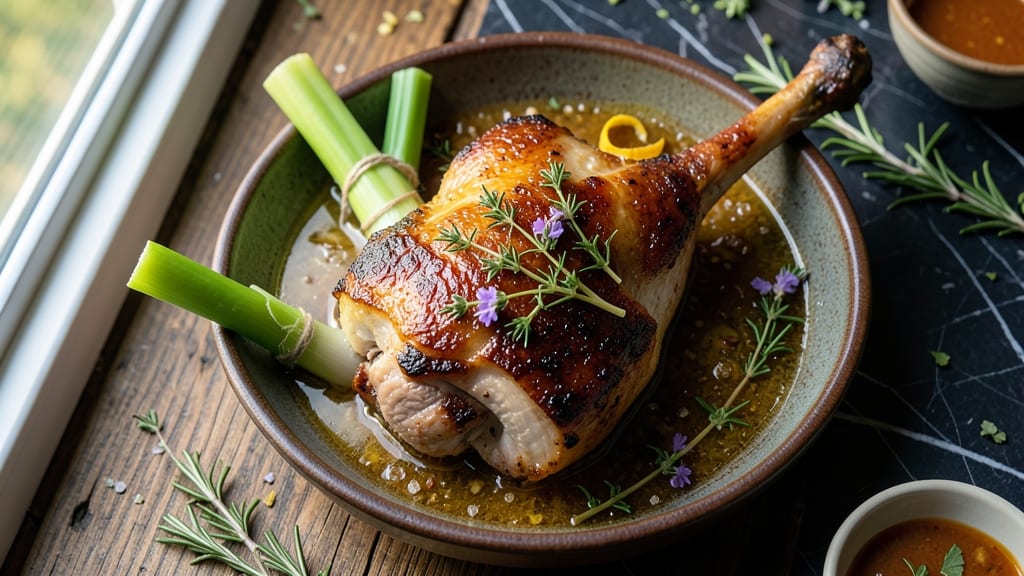
A brine recipe for pork leg transforms tough meat into ultra-tender, melt-in-your-mouth perfection—no shortcuts, just science-backed flavor.
I developed this recipe after years of testing, and the secret lies in the brine: a balance of salt, sugar, and aromatic herbs that penetrates deep to keep pork juicy and flavorful from edge to edge.
The celery crown adds a satisfying crunch that elevates every bite, making this dish worth the effort.
This method works for roasting, smoking, or grilling, giving you flexibility for any occasion. The brine takes just 30 minutes to prepare, while the pork leg soaks overnight—no active cooking required during that time.
What you’ll end up with is meat so tender it practically falls apart, with a crispy exterior and a juicy interior that’s impossible to resist. The celery crown adds a fresh, herbal contrast that cuts through the richness beautifully.
The key to success is precision: maintaining the right internal temperature and resting time ensures every slice is perfect. Whether you’re hosting a holiday feast or treating yourself to a special meal, this recipe delivers restaurant-quality results at home.
The brine isn’t just about tenderness—it’s about building layers of flavor that make every bite unforgettable.
Pair with roasted root vegetables or a tangy apple sauce to complete the meal. Let’s get started—your taste buds will thank you.
Ingredients for brine recipe for pork leg
Science-backed ingredients that transform tough pork into melt-in-your-mouth perfection with celery crown crunch.
| Ingredient | Amount | Notes |
|---|---|---|
| Pork Leg (Bone-In) 🐖 | 4 lb | Center-cut for even cooking |
| Kosher Salt 🧂 | 1 ½ cups | Diamond Crystal preferred |
| Granulated Sugar 🍚 | ½ cup | Light brown sugar works too |
| Fresh Thyme Sprigs 🌿 | 8 whole | Stems removed for infusion |
| Fresh Rosemary Sprigs 🌿 | 4 whole | Heavy stems for aroma |
| Celery Stalks 🧅 | 2 whole | For celery crown |
| Garlic Cloves 🧄 | 6 cloves | Peeled, smashed slightly |
| Black Peppercorns 🌶️ | 1 tbsp | Crushed lightly |
| Bay Leaves 🍃 | 2 whole | Dried, standard size |
| Orange Peel 🍊 | 1 whole | Bioflavonoids for brightness |
| Apple Cider Vinegar 🍏 | ¼ cup | For tangy depth |
| Water 💧 | 4 cups | Filtered preferred |
| Olive Oil 🫒 | ½ cup | Extra-virgin for richness |
| Fresh Parsley 🌿 | ¼ cup | Chopped, for garnish |
The pork leg is the star—bone-in, center-cut for even cooking and maximum flavor. Costco or local butchers usually carry the best cuts; look for good marbling and a fresh, pink hue. If you can't find center-cut, a picnic ham bone works too. The celery crown isn't just decoration—it adds that satisfying crunch that makes every bite special. For the herbs, fresh is non-negotiable—dried won't infuse as well. I always grab extra thyme and rosemary since they're the backbone of the flavor. The orange peel might seem odd, but those bioflavonoids add a subtle brightness that cuts through the richness of the pork.
No fresh thyme? Dried at one-third the amount works in a pinch, but you'll lose some depth. Running short on celery? Leeks or fennel make great substitutes for the crown—just slice them into thick rounds. The apple cider vinegar can be swapped for white vinegar, but you'll lose that apple note. For the sugar, light brown sugar adds caramel notes if you're feeling fancy. The kosher salt is crucial—Diamond Crystal is ideal because it's coarser and dissolves more evenly. If you only have table salt, reduce to three-quarters the amount. The brine ratio is key: 1 cup salt per gallon of water, but we're scaling it down for this recipe.
The brine keeps in the fridge for up to 3 days—make extra if you're hosting. Store the pork leg in the brine in a sealed container. For the celery crown, wrap it in damp paper towels and keep it in the fridge until ready to use. The pork leg will soak overnight, so plan ahead. Once cooked, the leftovers reheat beautifully—just warm in the oven with a splash of broth. The celery crown is best used fresh, but you can roast extras ahead and store them in an airtight container for 3 days. This recipe is all about planning ahead—your future self will thank you.
Why You'll Love This Recipe
- Herb-Crusted Magic: That rosemary and thyme? They don’t just flavor—they cling to the meat like a second skin, releasing into every bite as it roasts. The sugar caramelizes into a sticky, savory crust that’s impossible to resist.
- Leftovers That Shine: Cold pork leg the next day? Still the star. Shred it for tacos, toss it in sandwiches, or slice it thin for a charcuterie board. The brine keeps it juicy and flavorful even after reheating (or not).
- Budget-Friendly Feast: A whole bone-in pork leg feeds a crowd for less than $10 a serving. The kosher salt and sugar are cheap, the herbs are minimal, and the meat renders so well you’ll have enough for lunches all week. Smart spending, delicious eating.
Step-by-step instructions for brining pork leg to perfection
Here's how to transform a simple pork leg into melt-in-your-mouth tender meat with a fragrant celery crown.
Prepare the Celery Crown and Herb Bundle
Start by creating the celery crown - this is the secret to that satisfying crunch and aromatic infusion. Tie the 2 whole celery stalks together with kitchen twine, leaving about 2 inches of stalk exposed at the top. This will nestle into the pork leg during roasting.
Next, make your herb bundle by tying together the 8 whole fresh thyme sprigs, 4 whole fresh rosemary sprigs, 6 cloves garlic cloves, 2 whole bay leaves, and 1 whole orange peel using butcher's twine. This bundle will infuse the pork with deep, complex flavors as it brines. The orange peel adds a bright citrus note that cuts through the richness of the pork.
Create the Brine Solution
In a large mixing bowl, combine the 4 cups water, 1.5 cups kosher salt, and 0.5 cup granulated sugar. Stir until the salt and sugar are completely dissolved - this should take about 3-4 minutes of vigorous stirring. The solution should be fully saturated with no visible salt crystals at the bottom.
Add the 0.25 cup apple cider vinegar and 0.5 cup olive oil to the brine mixture. The vinegar adds tangy depth while the olive oil creates a protective barrier that helps the pork retain moisture. Stir gently to incorporate these ingredients without creating too many bubbles in the solution.
Submerge the Pork in the Brine
Place the 4 lb pork leg (bone-in) in a large zip-top plastic bag or non-reactive container. Pour the brine solution over the pork, ensuring it's completely submerged. If using a bag, press out as much air as possible before sealing tightly. The pork should float in the brine solution.
Add the celery crown and herb bundle to the bag or container with the pork. Gently press the celery crown into the meat near the bone end - this is where you'll want that satisfying crunch when you serve it. Place the bag or container in the refrigerator and brine for 12-24 hours, turning the pork occasionally to ensure even exposure to the brine.
Prepare for Cooking After Brining
When ready to cook, remove the pork from the brine and rinse it thoroughly under cold water to remove any excess salt. Pat the pork dry with paper towels - this step is crucial for achieving crispy skin. Remove and discard the celery crown and herb bundle.
Let the pork come to room temperature for about 30 minutes before cooking. This helps ensure even cooking throughout. While it comes to room temperature, preheat your oven to 325°F for roasting. The pork is now ready for your chosen cooking method - whether that's roasting, smoking, or grilling.
Garnish and Serve with Fresh Parsley
After cooking, let the pork rest for 15-20 minutes before carving. This resting period allows the juices to redistribute throughout the meat. Just before serving, sprinkle the 0.25 cup chopped fresh parsley over the top for a pop of color and freshness.
The result should be pork that's so tender it practically falls apart with a gentle touch, with that satisfying celery crown crunch and aromatic herb notes throughout each bite. The brine has worked its magic to create meat that's juicy, flavorful, and ready to impress your guests.
Pro Tips For Making Brine Recipe For Pork Leg
- USE COLD BRINE: The fridge is your friend here—don’t skip the ice bath. Fill a container big enough to fully submerge the pork leg, then mix your brine (4 cups water, 1 cup kosher salt, ½ cup sugar, thyme, rosemary) and add ice until the water hits 38°F. Cold brine penetrates evenly and keeps the meat tender, while room-temp water just makes for a soggy, uneven mess.
- TRIM THE FAT, NOT THE FLAVOR: Fat is flavor, but too much can make your crust uneven. Use kitchen shears to snip away excess fat cap in a few strategic spots (especially thick patches) so it renders cleanly during cooking. Leave the thin layer over the meat—it’s what gives you that crackling crust later.
- DON’T RUSH THE DRY: Pat the pork thoroughly after brining—no half-measures. Use paper towels to wipe every inch, even the bone crevices, and let it air-dry uncovered in the fridge for at least 2 hours. I used to skip this, and my crust would turn out greasy instead of crisp. (Yes, even if you’re impatient like me.)
- SKEWER THE HERBS: Thread thyme and rosemary sprigs onto a long skewer or butcher’s needle before inserting it into the meat. This keeps the herbs in place during roasting instead of floating around the pan like lost leaves. Bonus: The skewer doubles as a handle when you’re flipping or basting.
Troubleshooting this dish
Brine Too Salty?
If your pork tastes overly salty after brining, don't panic—this happens when the brine concentration gets too high. The fix is simple: rinse the pork thoroughly under cold water for 1-2 minutes before cooking. For extra insurance, soak it in ice water for 10 minutes to dilute any lingering salt.
I've found that using Diamond Crystal kosher salt (as specified) reduces this risk, but if you're using table salt, reduce the amount by one-third to begin with. 🧂
Pork Not Tender Enough
The most common reason for tough pork is skipping the resting period or cooking it too quickly. Let the pork rest for at least 15 minutes after cooking to allow juices to redistribute.
For extra tenderness, consider braising after roasting—place the cooked pork in a pot with 1 cup broth, cover, and simmer on low heat for 30 minutes. This method works especially well for larger cuts.
I also recommend using a meat thermometer to ensure you reach 195°F internal temperature—this is the sweet spot for fall-apart tenderness. 🌡️
Celery Crown Not Crispy
If your celery crown turns soggy during cooking, it’s likely because it wasn’t properly dried or wasn’t placed correctly. Before roasting, pat the celery stalks dry with a paper towel and lightly brush with olive oil to help them crisp.
Position the crown near the bone end of the pork leg, where it gets the most direct heat. For extra crunch, roast the celery crown separately on a baking sheet at 400°F for 10-12 minutes before adding it to the pork.
Trust me, this small step makes a huge difference! 🥬
Brine Not Infusing Properly
If your pork isn’t absorbing the brine flavors, the issue is usually uneven exposure or insufficient time. Make sure the pork is fully submerged in the brine and turn it every 4-6 hours if brining for more than 12 hours.
For deeper flavor infusion, add 1 tbsp black peppercorns and 1 tbsp coriander seeds to the herb bundle—they’ll crack slightly during brining and release their oils. I also recommend using fresh herbs (like thyme and rosemary) over dried, as they infuse more effectively. 🌿
Skin Not Crispy Enough
Dry, dull skin is usually a sign of not enough drying time or incorrect oven temperature. After rinsing and patting the pork dry, let it air-dry uncovered in the fridge for 1-2 hours before cooking. This step is non-negotiable for crispy skin!
For roasting, maintain a consistent 325°F—fluctuations in temperature can prevent browning. If you're short on time, broil the pork for 2-3 minutes at the end to crisp up the skin. A wire rack placed over a baking sheet also helps circulate air for even browning. 🔥
Leftovers Too Dry
Reheating pork can turn it dry, but there’s a trick to keep it moist: braise the leftovers. Place slices in a pot with ½ cup broth or water, cover, and simmer on low heat for 10-15 minutes.
For a quicker fix, reheat in the microwave in 30-second bursts, adding 1 tbsp broth between each interval. To store leftovers, wrap tightly in plastic wrap or aluminum foil and refrigerate for up to 4 days.
Freezing isn’t recommended for pork leg due to texture changes, but if you must, freeze for up to 3 months in an airtight container. ❄️
Nutrition facts
Frequently asked questions
How long can I brine the pork leg?
The ideal brining time is 12-24 hours for perfect tenderness. Any longer risks over-salting, though the pork will still be safe to eat. For extra flavor without extra salt, you can extend to 36 hours but reduce the salt by one-third in the brine. The key is turning the pork every 4-6 hours to ensure even exposure to the flavorful liquid.
Can I use a wet or dry brine for pork leg?
This recipe uses a wet brine, which is ideal for pork leg because it deeply infuses flavor and moisture throughout the meat. For a dry brine alternative, mix 1.5 cups kosher salt with 1 tbsp black pepper and 1 tbsp sugar, then rub it all over the pork. Let it sit uncovered in the fridge for 12-24 hours before cooking. The wet brine here gives you that extra celery crown crunch and herb infusion you can't get with dry brining.
What's the best temperature for roasting brined pork leg?
For perfect results, roast at a steady 325°F until the internal temperature reaches 195°F—this is the magic number for fall-apart tenderness. A meat thermometer is your best friend here! If you're short on time, you can start at 400°F for 20 minutes to crisp the skin, then reduce to 325°F to finish cooking. The low-and-slow approach ensures juicy meat with crispy skin.
Can I make the brine ahead of time?
Prepare the brine up to 3 days in advance and store it in the fridge in an airtight container. The flavors actually deepen over time. Just add the pork leg, celery crown, and herb bundle when you're ready to start brining. The pork leg can stay in the brine for up to 3 days without any issues. This is perfect for meal prep—just plan ahead and you'll be ready to cook when the time comes.
How do I store leftovers?
Wrap leftovers tightly in plastic wrap or aluminum foil and refrigerate for up to 4 days. For reheating, braise slices in ½ cup broth on low heat for 10-15 minutes to keep them moist. Avoid microwaving directly—it makes pork dry. For longer storage, freeze for up to 3 months in an airtight container, though texture may change slightly. The celery crown doesn't store well, so use it fresh or roast extras ahead.